

Humane pest control is defined as the management of pest populations through prevention, exclusion, and non-lethal deterrents, prioritising animal welfare and environmental responsibility. London homeowners and renters who choose these approaches protect their families, pets, and local wildlife without relying on toxic chemicals or cruel traps. Understanding why use humane pest control methods matters because the choices you make at home affect far more than the pests themselves. Methods such as structural exclusion, ultrasonic repellents, and Integrated Pest Management (IPM) deliver real results while keeping your household and the wider environment safe.
What are the main humane pest control methods and how do they work?
Structural exclusion is the most effective single humane technique available. Sealing gaps larger than 1/4 inch with steel wool, copper mesh, or metal flashing blocks up to 90% of rodent access points. Without sealing those entry points, any other measure you apply is temporary, because new animals simply re-enter through the same gaps. A thorough guide to pest exclusion practices explains exactly which materials hold up against gnawing and moisture over time.
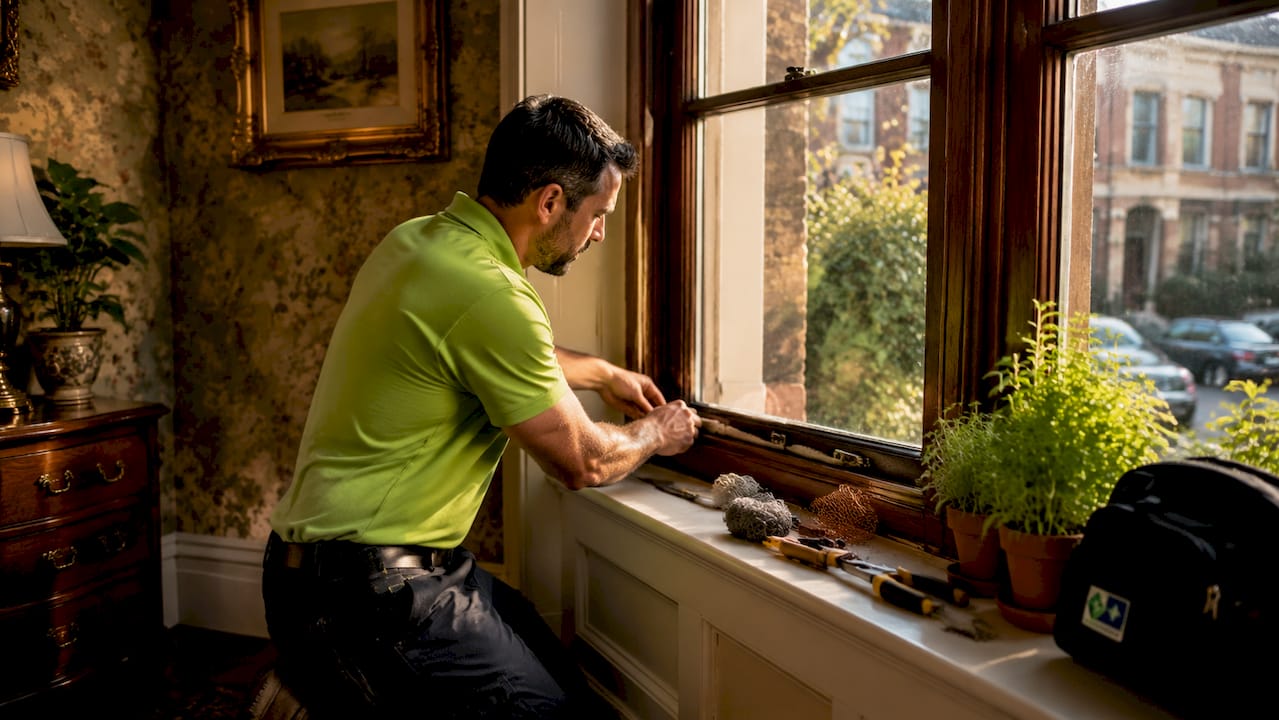
Sanitation and habitat modification work alongside exclusion to reduce pest attraction. Removing food sources, standing water, and shelter cuts pest activity by 70% within two weeks. That figure shows how much pests depend on the conditions you inadvertently provide, rather than simply choosing your home at random.
Additional humane methods include:
- Ultrasonic repellents: Devices emit high-frequency sounds that disturb rodents and insects without harming humans or pets.
- Natural repellents: Peppermint oil and citrus-based sprays deter rodents and some insects from treated areas.
- Live trapping: Catch-and-release traps capture animals without injury, though they require frequent monitoring and careful handling.
- Physical barriers: Door sweeps, chimney caps, and wire mesh screens prevent access without any chemical use.
Pro Tip: Combine at least three of these methods simultaneously. Combining multiple humane methods raises success rates to over 90%, compared to 70–85% when using a single approach alone.
Humane pest control vs traditional methods: which is more effective?
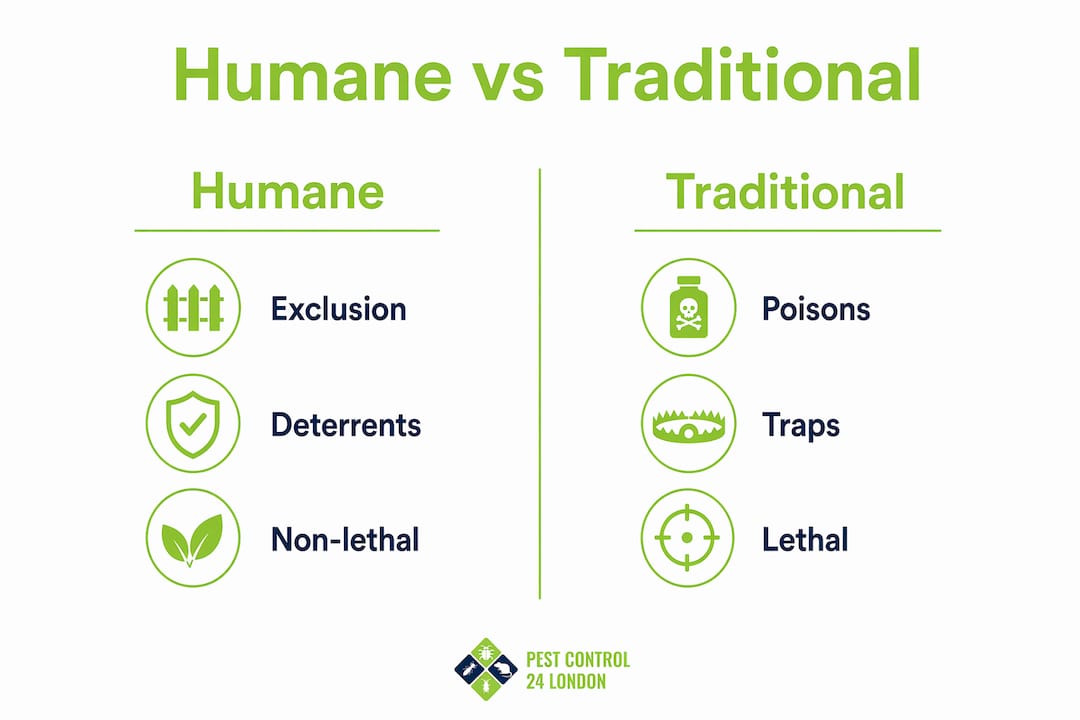
The comparison between humane and traditional pest control comes down to speed, cost, and long-term impact. Traditional lethal methods, including rodenticides and snap traps, achieve 90–95% effectiveness quickly. Humane methods reach 70–85% individually, but combining exclusion, sanitation, and deterrents pushes that figure above 90%.
| Factor | Humane methods | Traditional methods |
|---|---|---|
| Effectiveness (single method) | 70–85% | 90–95% |
| Effectiveness (combined) | 90%+ | 90–95% |
| Typical cost range | £50–£300 | £100–£500 |
| Animal welfare | Minimal harm | Can cause suffering |
| Environmental impact | Low | Chemical risk to non-target species |
| Long-term prevention | Strong with exclusion | Requires repeat treatments |
Traditional methods carry real environmental risks. Chemical rodenticides poison non-target species, including foxes, owls, and neighbourhood cats that feed on affected rodents. Humane methods, by contrast, address the root cause rather than just the symptom.
Pro Tip: If you face a severe infestation, IPM strategies combine humane prevention with targeted treatment, reducing chemical use and repeat infestations over 12–24 months.
Common misconceptions about humane pest control
The biggest misconception is that catch-and-release is always the kindest option. Relocated rodents face high mortality from predators, territorial conflicts, and stress. Releasing a mouse two streets away does not guarantee its survival. The most genuinely humane outcome is often preventing entry in the first place, rather than trapping and relocating.
Several other misunderstandings are worth addressing directly:
- Glue traps are not humane. Glue traps are banned for public use across Great Britain under the Glue Traps (Offences) Act 2022. Using one exposes you to a criminal offence, not just an ethical concern.
- “Natural” does not mean safe. Low-toxicity botanical pesticides, including pyrethrins, are broad-spectrum insecticides. They harm beneficial insects such as bees and should only be used after mechanical and cultural controls have been tried.
- Humane control requires ongoing effort. A single treatment does not end an infestation. Continuous monitoring and maintenance are needed to sustain results.
- IPM is the gold standard. Integrated Pest Management combines prevention, habitat modification, exclusion, and targeted treatment into a layered strategy that reduces both pest numbers and chemical reliance.
How London homeowners can implement humane pest control
A practical humane pest control plan starts with a thorough inspection. Walk the perimeter of your property and check for gaps around pipes, cables, air bricks, and door frames. Any opening larger than 1/4 inch is a potential entry point for mice. Exclusion materials must be durable and chew-proof, so use metal flashing or hardware cloth rather than foam or wood, which rodents gnaw through easily.
Follow these steps to build an effective humane strategy:
- Inspect thoroughly. Check loft spaces, under sinks, and behind appliances for droppings, gnaw marks, or grease trails.
- Seal all gaps. Use steel wool packed into gaps, then cover with metal mesh or caulk rated for exterior use.
- Remove attractants. Store food in sealed containers, fix leaking pipes, and clear garden debris that provides shelter.
- Deploy deterrents. Place pet-safe ultrasonic repellent units in rooms where activity has been spotted.
- Monitor live traps daily. If using catch-and-release traps, check them every few hours. Release captured animals at least two miles away in suitable habitat, following current guidelines.
- Call a professional for moderate to severe cases. A BPCA-qualified technician can assess the full extent of an infestation and apply safe pest removal techniques that go beyond what DIY methods can achieve.
Pro Tip: Pest control providers who explain welfare outcomes clearly and prioritise humane methods before resorting to poisons are the right choice for ethically minded homeowners. Ask your provider directly what their first-line approach is.
Key takeaways
Humane pest control works best as a layered strategy: structural exclusion, sanitation, and deterrents combined achieve over 90% effectiveness and protect both your household and the local environment.
| Point | Details |
|---|---|
| Exclusion is the foundation | Sealing gaps with steel wool or copper mesh blocks 90% of rodent entry points. |
| Combine methods for best results | Multiple humane methods together achieve over 90% effectiveness, versus 70–85% individually. |
| Glue traps are illegal in Great Britain | The Glue Traps (Offences) Act 2022 bans public use; use live traps or exclusion instead. |
| Sanitation reduces pests fast | Removing food and water sources cuts pest activity by 70% within two weeks. |
| Professional IPM delivers lasting results | Integrated Pest Management reduces repeat infestations and chemical use over 12–24 months. |
What I have learned from a decade of humane pest control in London
After more than ten years working across London properties, the pattern I see most often is this: homeowners reach for a quick fix first, then call us when it fails. The quick fix is almost always a poison or a glue trap. The call comes when the problem returns, often worse than before.
Exclusion is the step most people skip because it feels unglamorous. Filling gaps with steel wool and mesh is not exciting work, but it is the only measure that stops new animals entering once the current ones are gone. Structural exclusion without follow-through means infestations reoccur as new animals find the same routes in. I have seen this cycle repeat in the same property three or four times before the owner commits to proper proofing.
Patience is the other quality humane pest control demands. Humane pest management requires layered strategies rather than quick lethal fixes. That is not a weakness of the approach. It is a sign that you are addressing the cause, not just the symptom. The properties I have seen stay pest-free long term are always the ones where the owner committed to sanitation, proofing, and monitoring together.
My honest advice: act promptly, be thorough, and do not underestimate what a professional inspection reveals. The sooner you address an infestation humanely, the less disruption it causes to your home and to the animals involved.
— Dan
Pestcontrol24london: professional humane pest control for London homes
Pestcontrol24london has been serving London homeowners and renters since 2015, applying BPCA-qualified expertise to every job. The team prioritises exclusion, natural deterrents, and safe trapping before considering any chemical treatment, keeping your family, pets, and local wildlife protected throughout the process.

Whether you are dealing with mice in a Victorian terrace or pigeons on a flat roof, Pestcontrol24london offers 24/7 emergency pest control across London, with post-treatment cleaning and sanitisation services to restore your home after treatment. Request a free quote today and get a clear, honest assessment of the most humane approach for your situation.
FAQ
What is humane pest control?
Humane pest control is the management of pests through prevention, exclusion, and non-lethal deterrents that minimise harm to animals and the environment. Methods include structural exclusion, live trapping, ultrasonic repellents, and sanitation.
Is humane pest control effective?
Yes. Combining multiple humane methods achieves over 90% effectiveness, comparable to traditional lethal approaches. Individual methods such as exclusion alone reach 70–85% effectiveness.
Are glue traps legal in the UK?
Glue traps are banned for public use across Great Britain under the Glue Traps (Offences) Act 2022. Using one is a criminal offence; live traps and exclusion are the legal alternatives.
How long does humane pest control take to work?
Sanitation changes reduce pest activity by 70% within two weeks. Full results from a combined exclusion and deterrent programme typically take four to eight weeks, depending on infestation severity.
When should I call a professional pest controller?
Call a professional for moderate to severe infestations, or when DIY exclusion and deterrents have not resolved the problem within two to three weeks. A BPCA-qualified technician can identify entry points and apply targeted humane treatments safely.