

Most people see a wasp nest and face an immediate question: leave it alone or deal with it? The misconception that wasps are best left undisturbed unless they cause obvious trouble leads many homeowners and business owners to delay action until someone gets stung. Understanding why treat wasp nests properly is not simply about eliminating an inconvenience. It is about making an informed decision that weighs real safety risks against genuine ecological value, and knowing exactly when professional support is the right call.
Table of Contents
- Key takeaways
- Why treat wasp nests: understanding the core risk
- When should you treat a wasp nest?
- Treatment options: professional vs DIY
- Preventing wasp nests from forming
- My honest take on wasp nest decisions
- Professional wasp nest treatment in London
- FAQ
Key takeaways
| Point | Details |
|---|---|
| Location determines risk | Nests near high-traffic areas or play spaces present serious sting hazards that justify treatment. |
| Disturbance triggers aggression | Wasps attack primarily when their nest is disturbed, so proximity and activity levels matter most. |
| Professional treatment is safer | Large or hard-to-access nests carry significantly higher risks and are best handled by qualified technicians. |
| Ignoring nests is not always wrong | A nest in a remote garden corner may cause minimal risk and can be left alone in some cases. |
| Prevention reduces future problems | Sealing entry points and removing food sources significantly lowers the chance of nest formation. |
Why treat wasp nests: understanding the core risk
Wasps are not aggressive by nature. Risk comes from disturbance rather than mere presence, which means a nest tucked behind a rarely-visited garden shed poses far less threat than one built inside a roof cavity above a busy entrance. Common wasp species found in London properties include the common wasp (Vespula vulgaris) and the German wasp (Vespula germanica), both of which build papery nests from chewed wood pulp in cavities, roof spaces, garden walls, and under decking.
A single colony can grow to contain several thousand workers by late summer. When that colony is positioned near outdoor dining areas, children’s play spaces, or building entrances, the frequency of exposure significantly increases the likelihood of a sting. For businesses in particular, a nest near customer-facing zones is not just a nuisance. It is a liability.
Wasps do carry ecological value worth acknowledging. They contribute to pollination and act as natural predators of insects like greenfly and caterpillars. However, treating a nest in a high-risk location does not meaningfully damage the local ecosystem. The decision is a risk management question between human safety and environmental value, and in most residential or commercial settings, safety takes priority.
- Common wasp and German wasp are the most frequent species in London buildings
- Nests are typically found in roof voids, wall cavities, loft spaces, and underground burrows
- Colony size peaks between August and October, which is also when aggression peaks
- Life-threatening allergic reactions to wasp stings can occur in sensitive individuals, making proximity particularly dangerous
- Wasps benefit ecosystems through pest control and minor pollination roles
When should you treat a wasp nest?
Not every nest demands immediate treatment. The importance of removing wasp nests depends heavily on specific circumstances rather than a blanket rule. Here is a clear framework for making that assessment:
Check the location. A nest directly above a doorway, inside a loft hatch, near a children’s play area, or adjacent to outdoor seating warrants treatment. Nests near family outdoor areas present a direct sting hazard and should be addressed promptly.
Consider the season. Nests grow throughout summer and reach peak population in August through October. Treating a nest early in the season, when colonies are smaller, is considerably less hazardous than waiting until autumn.
Assess foot traffic. For businesses, the risks of ignoring wasp nests in operational zones are amplified by the volume of people present. A nest near a restaurant terrace or hotel garden is a serious concern. Assess whether the nest affects specific zones of operation, not just whether it exists on the premises.
Account for allergy risk. If anyone in your household or staff is known to have a severe allergy to wasp stings, the threshold for treatment should be lower. A sting triggering anaphylaxis requires emergency medical intervention, and that risk alone justifies removal even for nests that might otherwise be tolerated.
Evaluate the nest size. Small, early-stage nests may be manageable. A large nest in a confined space represents a significantly higher danger during any treatment attempt, which brings us to the question of how to deal with it safely.
Treatment options: professional vs DIY
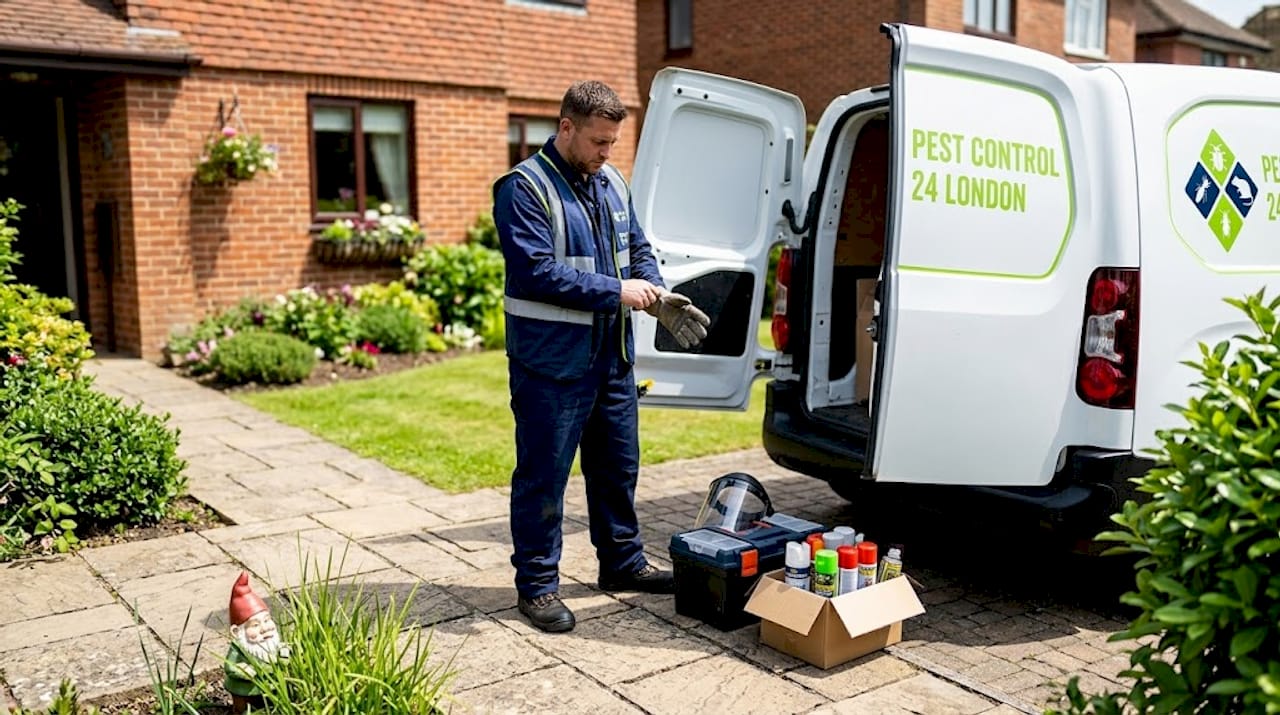
The method you choose for treating a wasp nest has a direct impact on both safety and effectiveness. Understanding your options clearly will help you avoid the common mistake of partial removal, which leaves the colony intact and does not resolve the problem.
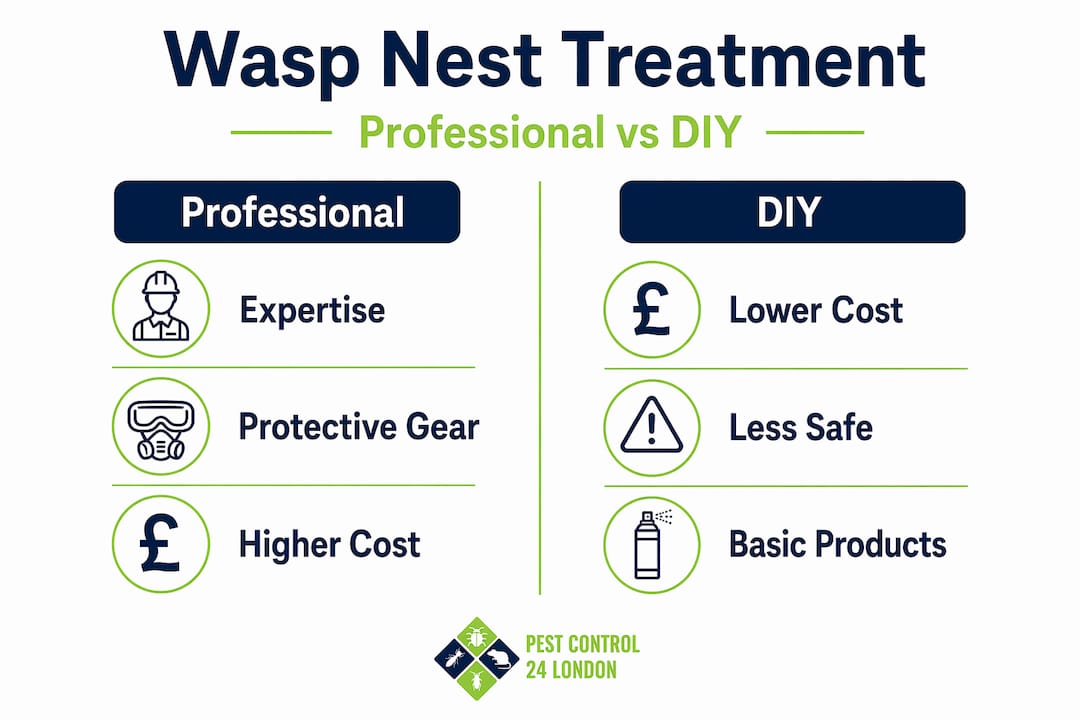
| Factor | Professional treatment | DIY treatment |
|---|---|---|
| Safety | High. Technicians use protective gear and work at low-activity periods | Moderate to low. Risk of multiple stings without proper kit |
| Effectiveness | High. Repeated insecticide applications used for full elimination | Variable. Single application may not reach the whole colony |
| Cost | Typically upwards of £100 including expertise and insurance | Lower upfront cost, but higher risk of repeat treatment needed |
| Best for | Large nests, confined spaces, allergic households, commercial sites | Small, accessible nests away from high-traffic areas |
| Timing | Treatment at night when wasps are least active | Early morning or late evening to reduce wasp activity |
DIY products typically use pyrethrin or pyrethroid sprays, which kill wasps on contact by paralysing the nervous system. They can be effective for small, exposed nests but carry real risk when the nest is large or in an enclosed space. Large or hard-to-access nests during peak season are best left to professional technicians.
Pro Tip: Never attempt to remove a nest physically without insecticide treatment first. Physical disturbance without chemical treatment leaves the colony active and considerably more aggressive.
Preventing wasp nests from forming
Reducing the likelihood of a nest forming on your property is the most cost-effective long-term strategy. The benefits of treating wasp nests extend beyond the immediate problem. Regular prevention removes the conditions that attract queens in spring when they are searching for nest sites.
- Seal gaps in roof soffits, fascia boards, and wall cavities before spring to block entry points
- Keep bin lids securely closed and clean outdoor eating areas thoroughly, as food waste attracts foraging wasps
- Remove old compost, unused garden furniture, and debris piles that provide sheltered nesting sites
- Consider hanging a fake wasp nest deterrent, as wasps are territorial and will typically avoid nesting near what they perceive to be an existing colony
- Schedule a professional inspection in early spring if your property has a history of infestations, particularly in loft spaces or outbuildings
Consistent vigilance from March onwards, when queens emerge and begin scouting, gives you the best window for prevention before colonies establish.
My honest take on wasp nest decisions
I have seen homeowners at both extremes. Some panic at the sight of a single wasp and call for immediate treatment of a nest that poses no real threat. Others dismiss an active nest inside their loft for an entire summer until a family member is stung repeatedly through the ceiling. Neither response is rational.
What I have found over years working in pest control is that the question “should you remove wasp nests” almost always comes down to where the nest is, not that it exists. A nest in an unused outbuilding far from daily activity can genuinely be left alone to die off naturally by November. A nest in a busy commercial kitchen extraction duct is a completely different matter.
The ecological argument for leaving nests undisturbed has merit in the right context. But I would caution anyone against using it as a reason to avoid treatment when real exposure risk is present. Wasps are not bees. They can sting multiple times, and for anyone with a known allergy, one encounter can be life-threatening. Informed caution is the right approach, and that sometimes means calling a professional rather than reaching for a can of spray at midday in August.
— Dan
Professional wasp nest treatment in London

If you have identified a wasp nest on your property and are unsure how to proceed, Pestcontrol24london offers emergency wasp nest removal across London, available 24 hours a day. As a BPCA-qualified team with over ten years of experience, Pestcontrol24london treats nests safely, thoroughly, and at the right time of day to minimise risk. After treatment, post-treatment sanitisation is available to ensure the area is properly cleared. For a free quote and fast response, contact Pestcontrol24london today.
FAQ
Is it safe to leave wasp nests untreated?
It depends on the nest’s location. A nest in a low-traffic, remote area poses minimal risk and may be left to die off naturally in late autumn. A nest near occupied spaces, children, or allergy sufferers should be treated.
What are the main dangers of wasp nests near homes?
The primary dangers are sting risk from disturbance, the potential for severe allergic reactions, and structural interference when nests are built inside roof voids or wall cavities. Risk increases significantly as colony size grows through summer.
When is the best time to treat a wasp nest?
Timely professional treatment during periods of low wasp activity, particularly at night or in the early season, reduces sting risk and improves the success rate of treatment.
Can I treat a wasp nest myself?
Small, exposed, and accessible nests can be treated with proprietary insecticide sprays in the early morning or evening. Larger nests, nests in confined spaces, and nests active during peak season (August to October) are best handled by a qualified pest control technician.
Do wasp nests cause property damage?
Nests themselves do not cause structural damage in the way timber pests do, but nests built inside roof spaces or wall cavities can cause minor damage to insulation and, if left untreated year after year, may attract repeat infestations as wasps are drawn to previously used nest sites.