

Call professional pest control when you find multiple signs of activity, evidence the problem is spreading, any risk to your health or your home’s structure, pests active in walls or lofts, or when your own efforts have failed to fix things. Two examples make this concrete. A wasp nest built above a doorway, or wiring that’s been gnawed near a live socket, needs an emergency callout, no delay. Mouse droppings turning up in the kitchen, the airing cupboard, and a bedroom over the same week is not an emergency, but it does warrant a proper inspection before the population grows further.
The rest of this guide walks through the specific signs to watch for, which pests demand faster action than others, when DIY genuinely makes sense, what a competent professional visit should look like, and what it typically costs.
- Multiple signs across different rooms usually means an established, not isolated, problem
- Structural damage or a health risk always outranks a “wait and see” approach
- Failed DIY attempts are themselves a signal, not just a delay
Key Takeaways
Calling professional pest control early, once multiple signs, spread, or a health or structural risk appear, consistently costs less than waiting for the problem to grow.
| Point | Details |
|---|---|
| Watch for pattern, not one sign | Two or more distinct signs, or activity in multiple rooms, usually justifies a professional inspection. |
| Match urgency to pest type | Bed bugs, termites, and wasp nests near entrances need faster action than a single ant trail. |
| DIY suits low-risk problems | Small, isolated issues like fruit flies or one ant trail are reasonable to handle yourself first. |
| Insist on inspection-first treatment | A proper visit includes species identification, a written plan, and an IPM approach, not just spraying. |
| Choose accredited, guaranteed providers | Pestcontrol24london is BPCA qualified, offers 24/7 emergency callouts, and backs treatments with a retreatment guarantee. |
Table of Contents
- When to call pest control: the key warning signs
- Pest-specific triggers that mean it’s time to call a professional
- DIY or call a professional? A practical checklist
- What a proper professional visit should look like
- Emergency pest situations that can’t wait
- What inspections and treatments typically cost
- Why a BPCA-qualified contractor makes a real difference
- Why the “wait and see” instinct usually backfires
- Book a professional pest inspection with Pestcontrol24london
- Sources
When to call pest control: the key warning signs
Some signs are worth acting on the moment you spot them, others are worth monitoring for a day or two first. Here’s how to tell the difference.
- Fresh droppings. Rodent droppings that are dark, moist, and clustered near food or nesting areas point to recent, active presence rather than an old, resolved issue. Old, dry, greyish droppings suggest past activity that may or may not still be ongoing.
- Shed skins and smear marks. Cockroaches and bed bugs leave shed exoskeletons behind as they grow, while rats and mice leave greasy smear marks along the same repeated routes, called runways, as their fur brushes against skirting boards and pipework.
- Repeated live sightings, especially by day. Most household rodents and cockroaches are nocturnal. Seeing them moving around in daylight usually means the population has outgrown the available hiding spaces.
- Scratching or movement in walls, ceilings, or under floors. This is one of the strongest indicators of an infestation you cannot see, and often the one that finally pushes people to call.
- Bites, rashes, or blood spotting on bedding. Small rust-coloured spots on sheets, alongside itchy bite clusters, are the classic presentation of bed bugs, and NHS guidance recommends professional treatment once an infestation is established rather than relying on over the counter sprays.
- Damage to packaging, cables, or timber. Gnawed food boxes, chewed electrical cables, or crumbling skirting boards signal rodents or wood-boring insects doing real, ongoing damage.
- Persistent unusual smells. A stale, ammonia-like odour in a loft or under floorboards often means a nest or a dead animal is present somewhere out of sight.
- Activity spread across multiple rooms. One dropping in a cupboard is worth a note. The same evidence in the kitchen, a bedroom, and the hallway within a fortnight is a clear signal of an established, breeding population, not a stray visitor.
Pro Tip: Photograph and date any droppings, damage, or sightings as you find them. A short timeline with photos helps a professional identify the pest and its spread far faster than a verbal description on the phone.
As a rule of thumb, two or more distinct signs, or evidence in more than one room, is usually the point at which a proper inspection makes more sense than another trip to the shop for spray.
Pest-specific triggers that mean it’s time to call a professional
Different pests carry different urgency levels, and knowing which is which stops you either overreacting to a single ant or underreacting to a genuine risk.
- Rodents. Repeated droppings, chewed wiring, scratching in walls or the attic, and traps that keep coming up empty or only catch one of several animals all point to an established colony rather than a lone intruder.
- Bed bugs. Clusters of bites in a line, rust coloured blood stains, and shed skins near the mattress seams usually mean pros are needed even for what looks like a small infestation, since bed bugs breed fast and hide deep in furniture seams.
- Termites and wood-boring insects. Mud tubes on external walls, timber that sounds hollow when tapped, discarded wings near windowsills, or a floor that has started to sag are all early warnings. Acting early avoids the far higher repair costs that come with structural timber replacement.
- Cockroaches. Multiple live sightings, especially in kitchens, bathrooms, or shared blocks of flats, alongside small oval egg cases tucked into cracks, indicate a population that has already established itself.
- Wasps and bees. A nest near a doorway, a children’s play area, or tucked into a roof vent or soffit is not a job for a can of shop-bought spray. Qualified removal keeps everyone safe and stops the nest simply relocating nearby.
- Wildlife in roof voids. Scratching at night, droppings in the loft, and chewed or flattened insulation usually mean squirrels or birds have moved in. This calls for humane removal followed by proofing work to stop it happening again.
DIY or call a professional? A practical checklist
Not every pest sighting needs a phone call. The useful question is whether you can identify the pest, reach where it’s living, and rule out any health or structural risk.
DIY tends to work fine for a single ant trail heading to a sugar bowl, the odd fruit fly around ripening fruit, or a small wasp nest tucked away in a quiet corner of the garden, well away from doors and windows.
Call a professional when any of the following apply:
- You cannot locate or reach the source of the activity (behind walls, under floors, deep in a loft)
- There’s a genuine health risk, such as bed bugs, or a structural risk, such as termites or extensive rodent gnawing
- You’ve already tried shop-bought traps or sprays and the problem has come back or spread
- The pest itself is dangerous to approach, such as a large wasp nest or wildlife that might bite or scratch
Professional guidance consistently distinguishes low-risk nuisances from problems that need trained intervention: DIY suits small, low-risk infestations, while termites, established bed bugs, large rodent colonies, and wasp nests in awkward spots sit firmly on the professional side of that line. If you’re genuinely unsure which category you’re in, an inspection usually settles it faster than another week of guessing.
What a proper professional visit should look like
A responsible pest control visit is a diagnosis first, treatment second. If a technician turns up, sprays without asking questions, and leaves within ten minutes, that’s a red flag rather than efficiency.
- Inspection and identification. A technician should examine the affected areas, identify the exact species involved, and explain how it likely got in before proposing anything.
- A written treatment plan. You should receive a clear plan setting out what will be done, which products or methods will be used, and roughly how many visits it’ll take.
- An Integrated Pest Management approach. This means targeted treatment combined with proofing work and practical advice on sanitation and prevention, not just chemical control on its own. The HSE’s guidance on pest control sets out this inspection-led, targeted approach as the standard for effective, lasting results.
- Safety information and documentation. Ask about product safety around children and pets, correct disposal of any contaminated items, and get written confirmation of what work was carried out and when.
Emergency pest situations that can’t wait
Most pest problems can wait for a scheduled appointment. A handful genuinely cannot.
- Chewed wiring near a live socket, or timber damage that’s affecting a structural beam
- A large or aggressive wasp or hornet nest near a door, window, or somewhere children or elderly residents pass regularly
- Heavy rodent contamination in a kitchen or food preparation area
- An animal trapped inside a living space, or a dead animal decomposing somewhere you can smell but not reach
If you’re facing any of these, isolate the area, keep children and pets well away, and resist the urge to disturb the nest or gnawed area yourself, since that can scatter pests further into the property; for expert advice on managing pest prevention within your property, consider Stress-Free Investment Property Management in Milwaukee. Pestcontrol24london’s guide to emergency call-out situations covers the full list of scenarios that justify an out of hours response.
What inspections and treatments typically cost
Many providers offer inspection-only visits at low cost or free, purely to confirm what you’re dealing with before any treatment is agreed. That inspection then determines whether you need a single visit or a longer programme.
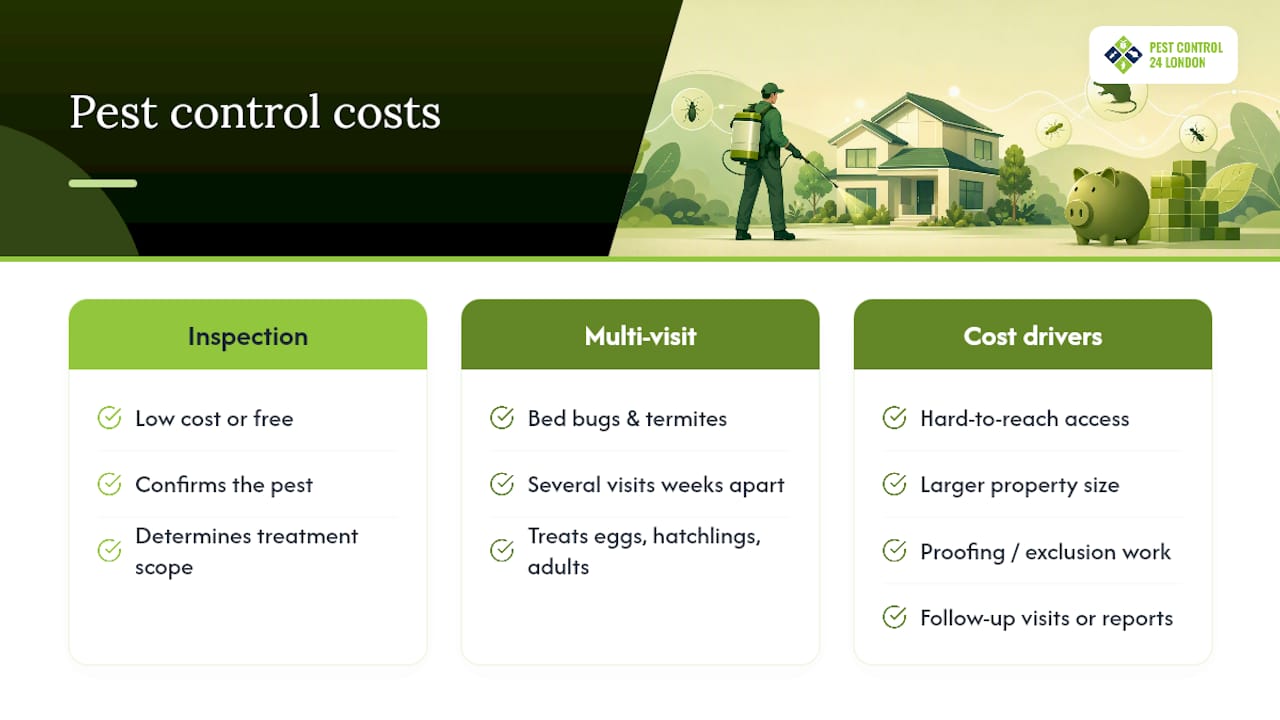
Bed bugs, termites, and heavy rodent infestations usually need multiple visits spaced a few weeks apart, since treatments target eggs and new hatchlings as well as adults. Costs rise with harder-to-reach access points, larger properties, the need for proofing or exclusion work, and any follow-up visits or written documentation you request. Delaying that first inspection tends to make the eventual job bigger and pricier, since most infestations expand well beyond their starting point if left untreated. Always ask for an itemised written quote and confirm the warranty or retreatment terms before you book anything.
Why a BPCA-qualified contractor makes a real difference
BPCA (British Pest Control Association) qualification signals that a technician has trained to a recognised standard covering safe product use, correct species identification, and compliant disposal, exactly the inspection-first, IPM-led approach that HSE guidance recommends.
Pestcontrol24london has worked across London since 2015, handling everything from hotels and restaurants to residential homes, and is fully BPCA qualified with 24/7 emergency cover.
Pro Tip: Before booking anyone, ask what chemicals they use, whether they offer a written treatment plan, what the warranty covers, and whether follow-up visits are included in the price.
- Ask for BPCA membership confirmation
- Request a written IPM plan, not just a verbal description
- Confirm the retreatment or warranty policy upfront
Why the “wait and see” instinct usually backfires
Most homeowners don’t call too early. They call too late, after a fortnight of telling themselves it’s probably nothing, or after a second round of shop-bought traps has failed. That hesitation is understandable. Nobody wants to pay for a callout over what might turn out to be one stray mouse.
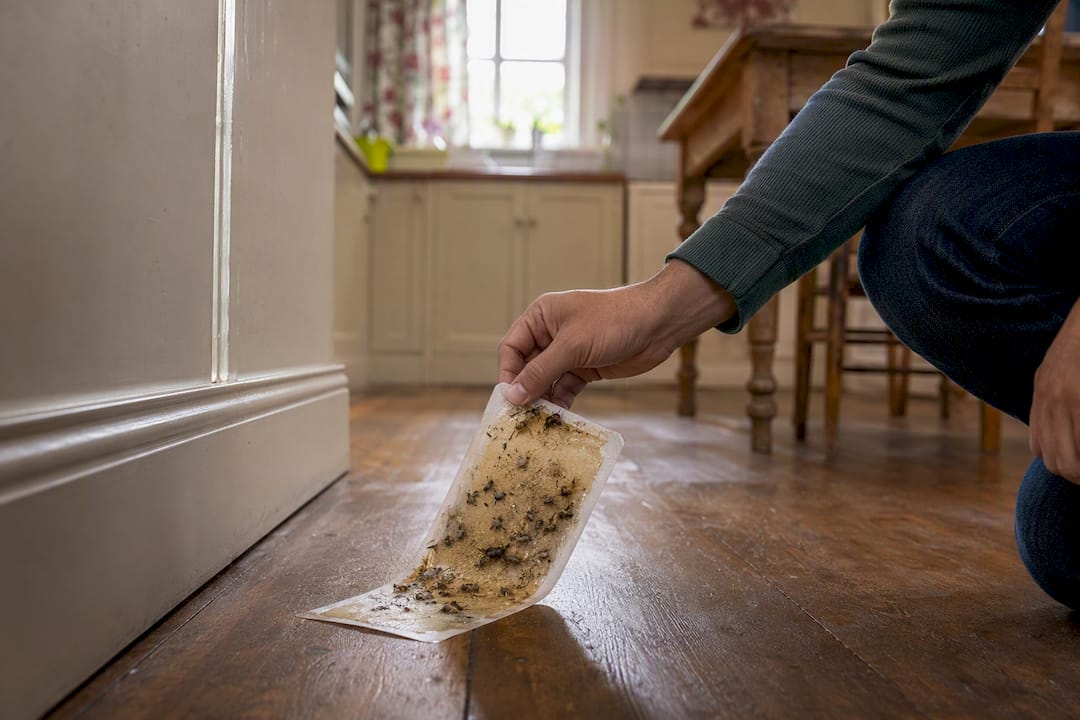
But the maths rarely works in your favour. Pest populations grow exponentially once established, which means the gap between “a bit of an issue” and “a genuine infestation” is often a matter of weeks, not months. The inspection-first model that BPCA-accredited firms use exists precisely to solve this dilemma: it gives you a low-cost, no-obligation answer to the question “is this actually a problem?” before you commit to anything bigger.
What’s underrated in most advice on this topic is how much value sits in that inspection stage alone. It’s not just a sales step before treatment. It’s the moment a trained eye can tell you whether you genuinely need chemical treatment or whether better bin management and a sealed gap under the decking will solve it. Skipping straight to DIY treatment, or skipping straight to panic, both waste money in different directions.
— Dan
Book a professional pest inspection with Pestcontrol24london
If you’ve spotted two or more of the signs covered above, the fastest way to know exactly what you’re dealing with is an inspection, not another trip down the pest control aisle. Pestcontrol24london has handled residential and commercial jobs across London since 2015, from single-family homes to hotel chains and restaurants, and every technician is BPCA qualified.

Unlike a one-off supermarket spray or a generic call centre booking, you get an inspection-first assessment, a clear treatment plan, and a retreatment guarantee if the problem returns. Domestic customers can book directly through the residential pest control page, while anyone facing an urgent situation, chewed wiring, an aggressive nest, or heavy rodent activity in a kitchen, can reach the 24/7 emergency line for same-day response. Get a free quote and a proper diagnosis before the problem has a chance to spread further.