

Residual pest treatment is the application of insecticides that remain active on surfaces after they dry, continuing to kill pests for weeks without any further intervention. Unlike a contact spray that works only on direct hit, a residual treatment deposits a lasting toxic layer that pests pick up simply by crawling across it. Indoors, that protection typically lasts 2–12 weeks, depending on the surface and environment. For homeowners and businesses dealing with recurring infestations, this sustained barrier is often the difference between short-term relief and genuine long-term control.
Key characteristics of residual pest treatment at a glance:
- Active ingredient remains on the treated surface after the product dries
- Pests pick up the chemical on their legs or bodies during normal movement
- Indoor effectiveness typically spans several weeks to a few months; outdoor efficacy is shorter
- Available as liquid sprays, dusts, and baits
- Used in both residential and commercial settings across the UK
How residual pesticides work to kill pests over time
The mechanism is straightforward. When a pest crawls across a treated surface, the insecticide adheres to its cuticle, the waxy outer layer of its exoskeleton. From there, the chemical either penetrates directly into the body or is ingested when the pest grooms itself, as cockroaches and ants routinely do.
Death can occur within hours after contact, depending on the active ingredient, the dose the pest absorbs, and the species involved. This delayed kill is by design, not a flaw. A pest that picks up a lethal dose but dies later may return to its harbourage first, exposing nest-mates to the residue on its body.
Several factors influence how well a residual treatment performs:
- Surface type: smooth, non-porous surfaces such as painted skirting boards retain residue longer than carpet or unsealed wood
- Environmental conditions: heat, humidity, and UV light all accelerate breakdown
- Pest behaviour: species that groom frequently, like cockroaches, tend to ingest higher doses
- Formulation: wettable powders and microencapsulated products generally outlast emulsifiable concentrates on the same surface
Pro Tip: If you see an insect walking across a freshly treated surface without apparent effect, do not assume the treatment has failed. The pest has almost certainly picked up a lethal dose and will die within hours.
Residual vs. nonresidual pesticides: what is the difference?
The core distinction is persistence. Nonresidual insecticides kill only when they make direct contact with a pest and leave no lasting protection once they disperse. Pyrethrum, an extract derived from chrysanthemum flowers, is a widely recognised nonresidual example. It produces rapid knockdown within seconds to minutes but offers no barrier once it has evaporated.
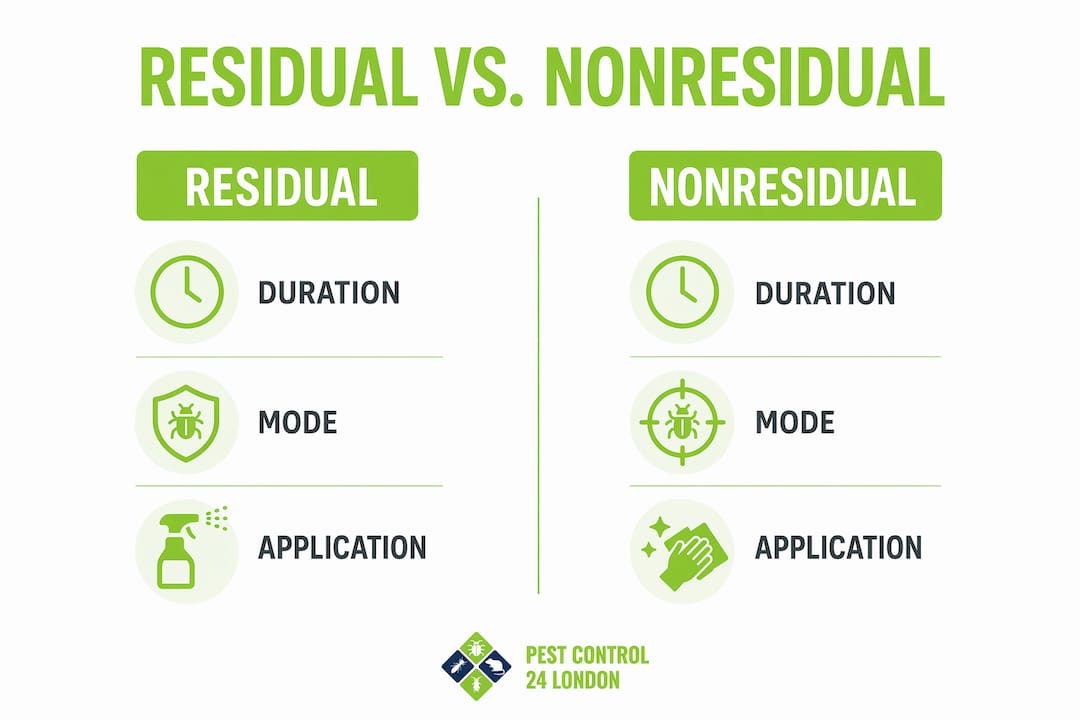
Residual products work on a different timescale entirely. They form a protective film that continues to affect any pest crossing the treated area for weeks or months after application.
| Feature | Residual pesticide | Nonresidual (contact) pesticide |
|---|---|---|
| How it kills | Pest picks up residue by crossing treated surface | Spray must hit the pest directly |
| Speed of kill | Minutes to several hours post-contact | Seconds to minutes on direct hit |
| Duration of protection | Several weeks indoors; shorter outdoors | No lasting protection |
| Best use case | Long-term population suppression | Immediate knockdown of visible pests |
| Common example | Pyrethroid liquid spray on skirting boards | Pyrethrum aerosol on flying insects |
In practice, professional pest controllers often use both types together. A nonresidual spray provides immediate knockdown of visible insects during an active infestation, while a residual treatment establishes a protective barrier that suppresses the population over the following weeks.
Common residual insecticides used in UK pest control
The most widely used residual insecticides in the UK belong to two chemical families: pyrethroids and neonicotinoids. Pyrethroids such as cypermethrin, deltamethrin, and lambda-cyhalothrin are synthetic versions of naturally occurring pyrethrins and form the backbone of most professional liquid treatments. Neonicotinoids work on a different receptor pathway and are often used where pyrethroid resistance is a concern.
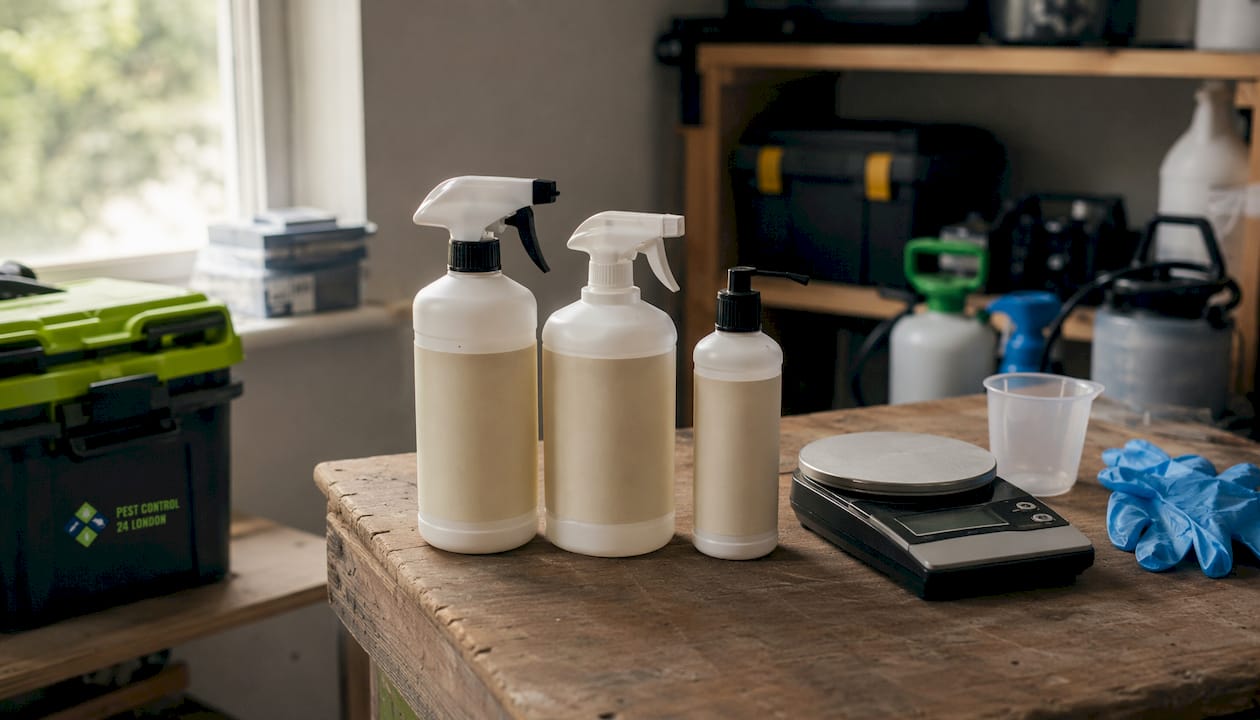
Termiticides represent a specialist category. Applied into the soil beneath and around a building’s foundations, they create a long-lasting chemical zone that subterranean termites cannot cross without picking up a lethal dose.
Common pests targeted by residual treatments in UK homes and businesses:
- Cockroaches (German and Oriental species) in kitchens, drains, and wall voids
- Ants along foraging trails, entry points, and perimeter foundations
- Spiders in sheltered corners, eaves, and undisturbed storage areas
- Silverfish in humid areas such as bathrooms and airing cupboards
- Beetles including carpet beetles and stored-product species in food premises
Application sites vary by pest. Interior treatments focus on skirting boards, door frames, cracks, and crevices. Exterior applications target foundations, eaves, and the perimeter band around a building’s base. The role of pest control in homes extends well beyond a single spray, and choosing the right product for the right surface is where professional knowledge genuinely counts.
Safety considerations and professional guidance
Residual pesticides remain active precisely because they do not break down quickly. That persistence is what makes them effective, but it also means exposure risk does not end the moment the spray dries. Children, pets, elderly people, and chemically sensitive individuals all require particular consideration, and the Health and Safety Executive sets clear regulatory limits on pesticide use in occupied premises.
Practical safety steps before and after treatment:
- Keep children and pets out of treated areas until surfaces are fully dry
- Ventilate rooms thoroughly after indoor application
- Cover or remove food preparation surfaces, utensils, and pet bowls
- Follow the product label precisely, including re-entry intervals
- Store unused product in its original container, away from children
Professional pest controllers tailor treatment plans to the specific pest, the level of infestation, and the environment. A BPCA-qualified technician will select the appropriate formulation, apply it only where needed, and advise on safe re-entry. For families with young children or pets, understanding safe pest control practices before any treatment begins is well worth the time.
Pro Tip: Targeted crack-and-crevice application is always preferable to broadcast spraying indoors. It places the active ingredient exactly where pests travel, reduces the total volume of chemical used, and minimises exposure for occupants.
Environmental impact and UK regulations
All pesticides used professionally in the UK must be approved under the Control of Pesticides Regulations and the Health and Safety at Work Act, with the Health and Safety Executive acting as the primary regulatory body. Products must carry a UK Pesticide Approval before any professional or domestic use, and operators applying pesticides commercially are required to hold a recognised qualification such as the NPTC Certificate of Competence.
Environmental concerns centre on two areas: off-target effects on non-pest species, particularly pollinators and aquatic invertebrates, and persistence in soil or water following outdoor application. Pyrethroids, while highly effective against insects, are toxic to aquatic organisms, so application near watercourses requires strict precautions. Responsible practitioners avoid treating flowering plants and apply outdoor residuals during periods of low pollinator activity, typically early morning or evening.
Integrated pest management, which combines residual treatments with sanitation, physical exclusion, and monitoring, reduces the total pesticide load needed to achieve control. Fewer applications mean less environmental exposure overall.
Methods and techniques for applying residual treatments
Professional application of residual insecticides follows a set of established techniques, each suited to a different situation.
Crack-and-crevice treatment is the most targeted method. A fine nozzle or precision tip directs the product into gaps along skirting boards, behind electrical fittings, under appliances, and into wall voids where pests harbour. This approach places the active ingredient directly on pest pathways while keeping it away from open surfaces.
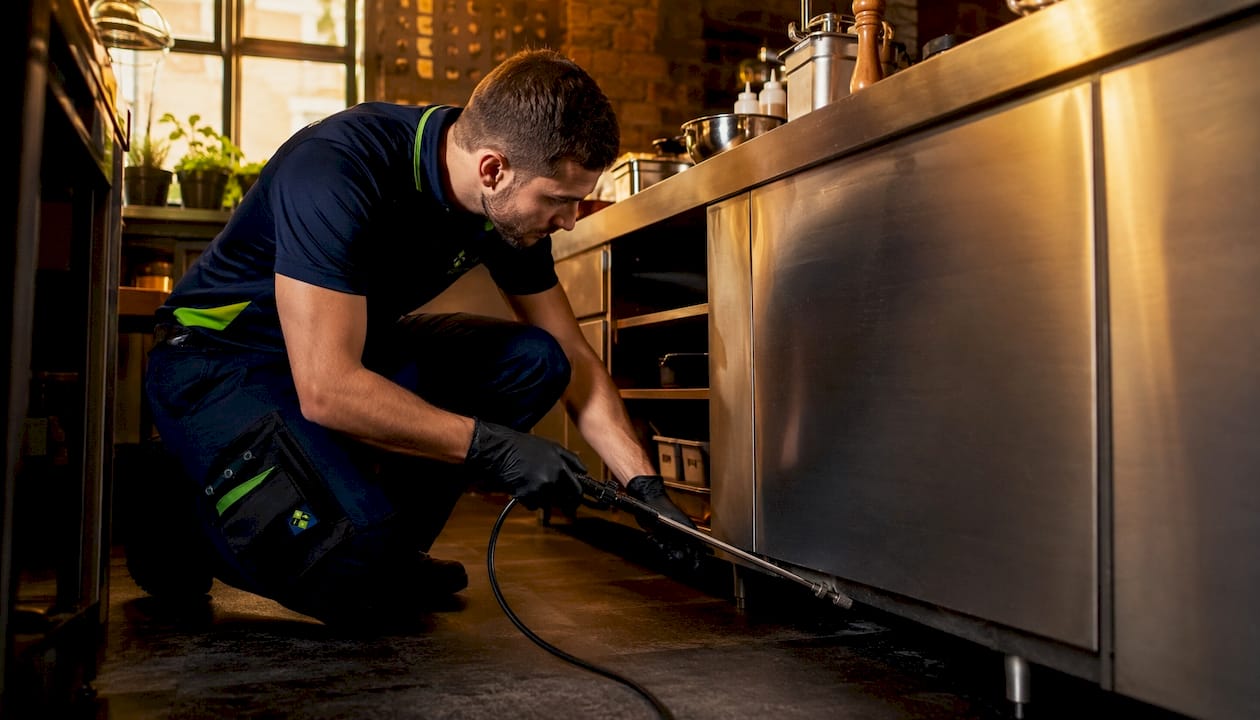
Spot treatment applies product to discrete areas of known pest activity, such as a corner where cockroaches have been sighted or a section of flooring near a drain. It is more localised than a perimeter spray but broader than crack-and-crevice work.
Perimeter barrier treatment targets the exterior band around a building’s foundations, door thresholds, and window frames. This creates an outdoor residual zone that intercepts crawling pests before they enter. Outdoor residual efficacy is generally around 60 days in areas with consistent rainfall, shorter than the indoor equivalent.
Dust application suits voids, roof spaces, and areas where liquid sprays are impractical. Diatomaceous earth and boric acid are common dust formulations used in UK pest control, working by physical abrasion of the cuticle rather than chemical toxicity.
Maintaining consistent spray concentration throughout application is critical. Agitating the formulation regularly during treatment prevents active ingredients from settling, which would result in uneven dosing and weaker protection in some areas.
How to prepare your property before a residual treatment
Good preparation directly affects how well a residual treatment performs. A clean, uncluttered surface allows the insecticide to make proper contact and dry without contamination.
Steps to take before a professional visits:
- Clear floor areas, especially along skirting boards and under furniture
- Remove pet food, water bowls, and any exposed food items
- Wash and put away dishes and kitchen utensils
- Vacuum thoroughly to remove debris that would dilute the product
- Seal or remove children’s toys from treatment areas
- Inform the technician of any known allergies or sensitivities in the household
After the treatment, avoid mopping or scrubbing treated surfaces for as long as the technician advises, typically several days at minimum. Cleaning too soon removes the residue and shortens the effective period considerably. For a broader checklist of preventative measures that complement residual treatments, the mice prevention checklist covers sanitation and exclusion steps that apply equally well to most crawling pest species.
Expert insights on residual pest treatment from a UK perspective
Residual treatments work gradually, and that is one of the most misunderstood aspects of professional pest control. Homeowners sometimes contact their pest controller the day after treatment, concerned that they are still seeing live insects. This is normal. Pests that have picked up a sub-lethal dose on their first crossing may take another pass or two before accumulating enough chemical to die.
Effective pest control depends on good housekeeping as a priority, with residual pesticides serving as a supplementary barrier rather than a standalone fix. A residual spray applied to a kitchen that still has food debris and moisture will underperform every time, because those conditions sustain the pest population faster than the treatment can suppress it.
Surface porosity is another factor that surprises many property owners. Smooth, non-porous surfaces retain residue far longer than carpet or unsealed wood, which absorb the active ingredient and reduce its surface availability. A treatment applied to painted skirting boards in a dry indoor environment will consistently outlast the same product applied to rough concrete or timber.
Pestcontrol24london’s BPCA-qualified technicians account for all of these variables when designing a treatment plan. The goal is not simply to spray and leave, but to place the right product in the right location at the right concentration, then support it with practical advice on sanitation and proofing. For property owners wanting to understand how preventative pest control fits into a longer-term strategy, combining residual barriers with physical exclusion produces the most durable results.
Key takeaways
Residual pest treatment works by leaving an active chemical layer on surfaces that kills pests through contact over 2–12 weeks indoors, making it a long-term population control tool rather than an instant fix.
| Point | Details |
|---|---|
| Definition and duration | Residual treatments leave active insecticide on surfaces, effective indoors for 2–12 weeks depending on surface and conditions. |
| Mechanism of action | Pests pick up residue by crossing treated surfaces; death occurs within hours after contact. |
| Residual vs. nonresidual | Nonresidual sprays like pyrethrum kill on direct hit only; residual products provide weeks of ongoing barrier protection. |
| Surface porosity matters | Smooth, non-porous surfaces retain residue longest; porous materials such as carpet or unsealed wood reduce effective life. |
| Professional application | Targeted crack-and-crevice treatment, combined with sanitation and exclusion, delivers the most reliable long-term results. |
Pestcontrol24london can help you get it right

Residual pest treatment is most effective when it is applied correctly, to the right surfaces, with the right product, by someone who understands pest behaviour. Pestcontrol24london has been delivering professional pest control across London since 2015, working with hotels, restaurants, commercial premises, and homeowners throughout the city. Every technician is BPCA fully qualified, and every treatment plan is tailored to the specific pest and property.
Whether you are dealing with a cockroach infestation in a commercial kitchen or ants returning each spring to your home, domestic and commercial pest control from Pestcontrol24london combines residual treatments with practical exclusion advice to give you lasting results. Get in touch for a free quote and same-day response across London.