

Pest-related damage is defined as any physical, physiological, or contamination harm caused by organisms such as termites, rodents, and wood-boring insects that compromises building integrity, human health, or property value. The industry term used by pest management professionals is “pest-induced deterioration,” which covers everything from chewed wiring and weakened beams to contamination and disease transmission. Property owners who understand this definition are far better placed to act before minor infestations become costly structural failures. Pestcontrol24london has managed these situations across London since 2015, and the pattern is consistent: early knowledge prevents the worst outcomes.
What types of damage do pests cause to buildings and property?
Pest-related damage falls into four distinct categories, each with serious consequences for property owners and managers.
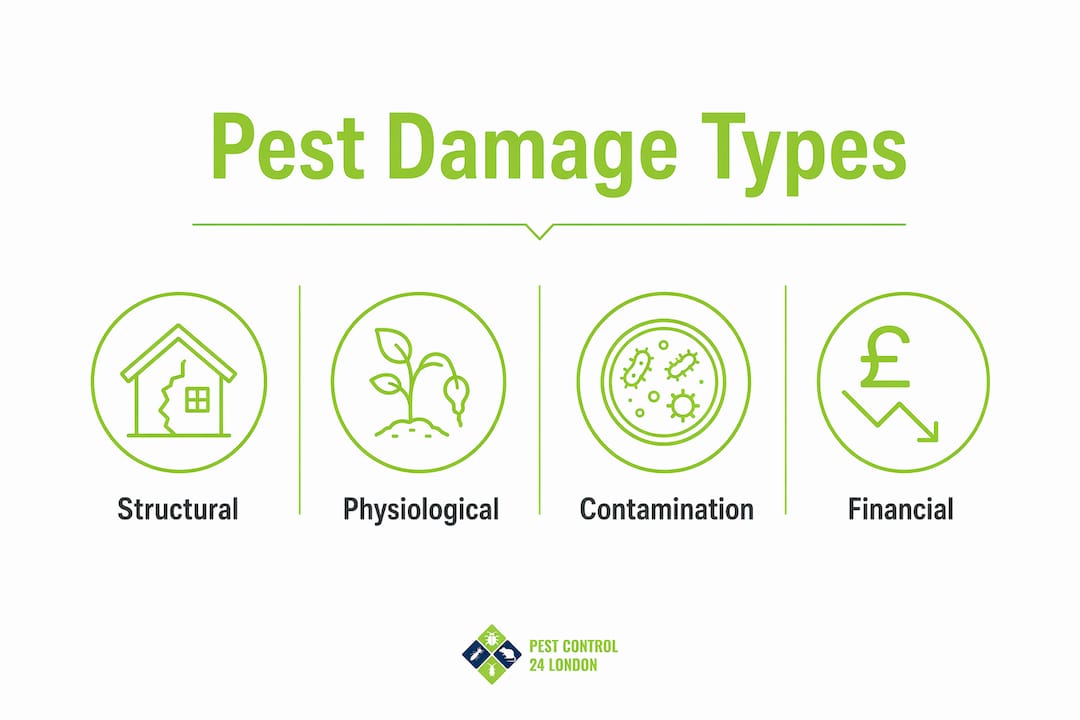
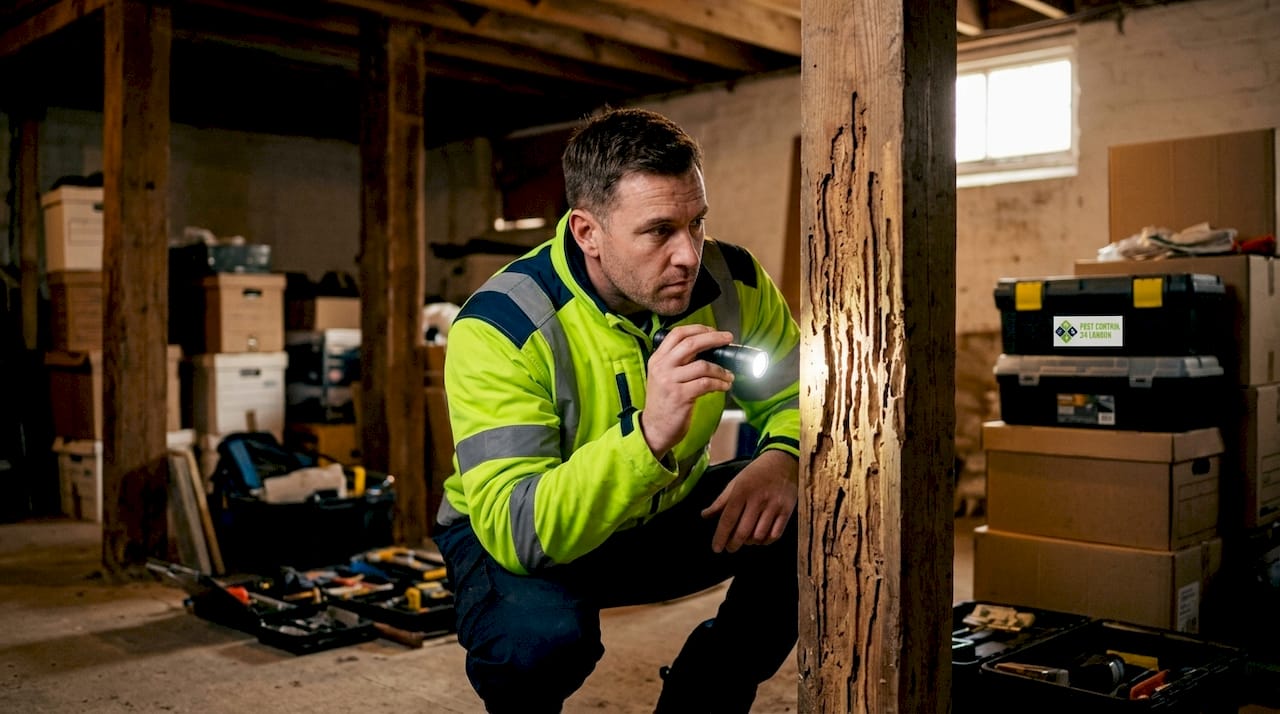
Structural damage is the most costly category. Termites consume timber from the inside out, leaving beams that appear sound but carry no load. Rodents gnaw through electrical cables, plastic pipework, and insulation boards. Wood-boring insects such as woodworm larvae tunnel through joists and floorboards, weakening the entire floor structure over time. You can find a detailed breakdown of common insect infestations and the structural risks they create.
Physiological damage affects living materials and building components. Sap-sucking insects attack garden trees and green roofs. Mould-spreading pests accelerate timber decay by introducing moisture and fungal spores into wall cavities.
Contamination is a serious risk in both residential and commercial properties. Rodent droppings and urine contaminate food stocks, insulation, and air handling systems. Nesting materials from birds or squirrels block ventilation ducts and create fire hazards.
Disease transmission extends the impact well beyond repair costs. Public health pests such as rats and cockroaches carry pathogens including Salmonella and Leptospirosis, creating liability risks that affect insurance premiums and regulatory compliance.
- Chewed electrical wiring from rodents is a direct fire risk
- Termite galleries cause sagging floors and sticking doors or windows
- Bird nesting blocks gutters and introduces mites into roof spaces
- Cockroach infestations contaminate food preparation surfaces
Pro Tip: If you notice a burning smell near skirting boards or junction boxes, treat it as a potential rodent wiring issue until a professional confirms otherwise.
How can property owners identify and assess pest damage?
Identifying pest damage early is the single most effective way to limit repair costs. Early evidence-based assessment consistently lowers the cost of remediation compared with late-stage discovery.
The most reliable visible signs of pest damage include:
- Mud tubes running along foundations or internal walls, which indicate subterranean termite activity
- Hollow-sounding timber when tapped, revealing internal galleries eaten by termites or wood-boring larvae
- Sagging floors or bubbling paint, which signal advanced infestation and often indicate moisture trapped by pest activity
- Grease marks and droppings along walls and behind appliances, confirming active rodent pathways
- Sticking doors or windows, caused by termite gallery expansion distorting timber frames
A common mistake is relying solely on visual inspection. Sounding wood by tapping with a screwdriver handle reveals hollow echoes that surface checks miss entirely. Pest damage also mimics moisture damage and normal wear, so professional inspection is often the only way to confirm the cause.
Pro Tip: Book a professional pest inspection before purchasing any property built before 1980. Timber-framed structures from that era carry the highest risk of concealed termite or woodworm activity.
| Sign | Likely pest | Urgency |
|---|---|---|
| Mud tubes on walls | Subterranean termites | High |
| Hollow-sounding timber | Termites or woodworm | High |
| Grease marks along walls | Rodents | Medium |
| Droppings near food storage | Rodents or cockroaches | High |
| Blocked gutters with nesting | Birds or squirrels | Medium |
What are the insurance and warranty implications of pest-related damage?
Insurance treatment of pest damage is one of the most misunderstood areas of property ownership. The core distinction is between sudden accidental damage and gradual deterioration. Most homeowner policies exclude termite and rodent damage as a maintenance failure, not a covered peril.
The practical consequences of this exclusion are significant:
- Termite structural damage is almost universally excluded as a maintenance issue
- Rodent damage to pipework and insulation is treated the same way
- A fire caused by rodent-chewed wiring may be covered as a sudden accidental event, provided the cause is documented
- Home warranty policies typically exclude pest-related failures from their structural guarantees
The critical factor in any claim is documentation. Insurers require clear evidence of inspection history and treatment contracts to distinguish a sudden event from long-term neglect. A claim can be denied even when the owner had no knowledge of the infestation, simply because no inspection records exist. Keeping annual inspection reports and treatment contracts on file is not optional for any property owner who wants to protect their position.
Structural and public health pests also create liability risks beyond the building itself. A tenant or visitor harmed by a pest-related health hazard can trigger a claim that standard property insurance does not cover without the right endorsements.
What practical steps can property owners take to prevent pest damage?
Prevention is always cheaper than remediation. A pest becomes a management priority only when its population crosses a damage threshold, which means the goal is monitoring and early intervention rather than waiting for visible harm.
The most effective prevention steps for property owners are:
- Schedule annual inspections using a qualified pest control professional, and keep written records of every visit
- Seal entry points around pipework, cables, and roof junctions using appropriate proofing materials
- Control moisture by repairing leaking gutters, fixing condensation issues, and ventilating subfloor spaces
- Maintain housekeeping standards by removing food waste promptly and storing dry goods in sealed containers
- Monitor timber structures in basements, loft spaces, and under floors at least twice a year
Regular pest control checks catch problems at the threshold stage, before populations cause unacceptable damage. For commercial properties, a formal pest management plan with scheduled visits and written reports is the standard approach. You can review examples of pest management plans to understand what a structured programme looks like in practice.
Pro Tip: Ask your pest control provider for a quarterly pest service schedule. Quarterly visits catch seasonal pest pressure before it builds into a full infestation.
Key takeaways
Pest-related damage is a property risk that combines structural, health, and financial consequences, and documentation is the single most important factor in both prevention and insurance claims.
| Point | Details |
|---|---|
| Definition matters | Pest-related damage covers structural, physiological, contamination, and disease transmission harm. |
| Early detection saves money | Hollow-sounding timber and mud tubes are signs to act on immediately, before damage spreads. |
| Insurance rarely covers gradual damage | Most policies exclude termite and rodent deterioration; only sudden events with documentation may be covered. |
| Inspections must be recorded | Written inspection and treatment records are the difference between a successful claim and a denied one. |
| Prevention beats remediation | Sealing entry points, controlling moisture, and scheduling regular inspections are the most cost-effective approach. |
What I have learned from a decade of pest damage cases
After more than ten years working across London properties, the pattern I see most often is not ignorance. It is underestimation. Property owners know pests exist. What they consistently underestimate is how much damage accumulates silently before any visible sign appears. Subterranean termite activity, in particular, can hollow out a floor joist over two or three years without a single surface clue. By the time a floor sags or a door sticks, the structural repair bill is already substantial.
The insurance gap surprises people even more. I have spoken with property owners who assumed their buildings insurance covered everything pest-related. The reality is that most policies treat pest damage as a maintenance failure. The owners who fare best in claims are the ones who kept annual inspection reports and treatment contracts on file, not because they anticipated a claim, but because they ran their property professionally.
My honest advice: treat pest inspection the same way you treat boiler servicing. It is not optional maintenance. It is the baseline standard for any property you own or manage. The cost of a professional inspection is negligible compared with the cost of a structural repair or a denied insurance claim.
— Dan
Protect your property with Pestcontrol24london
Pest-related damage rarely announces itself until it is expensive to fix. Pestcontrol24london has been protecting London properties since 2015, working with hotels, restaurants, commercial premises, and residential homes across the city.
Pestcontrol24london is BPCA fully qualified and available 24 hours a day, seven days a week. Whether you need an emergency response or a scheduled inspection programme, the team provides professional pest control services with free quotes and no obligation. For domestic properties, the domestic pest control service covers everything from rodent proofing to insect treatment. For commercial premises, the commercial pest control service delivers structured management plans with full written records.
FAQ
What is pest-related damage in simple terms?
Pest-related damage is any harm to a building, its contents, or the health of its occupants caused by organisms such as rodents, termites, or insects. It includes structural weakening, contamination, and disease transmission.
Does home insurance cover pest damage?
Most standard home insurance policies exclude pest damage as a maintenance issue. A sudden event caused by pests, such as a fire from chewed wiring, may be covered if the cause is properly documented.
How do I identify termite damage in my property?
Look for mud tubes near foundations, hollow-sounding timber when tapped, sagging floors, and sticking doors or windows. These signs indicate advanced termite activity and require professional assessment.
How often should a property be inspected for pests?
Annual professional inspections are the minimum standard for most properties. High-risk properties, including older timber-framed buildings and commercial premises, benefit from quarterly visits.
Can pest damage affect my property value?
Pest damage directly reduces property value by compromising structural integrity and creating health hazards. Undisclosed pest damage can also create legal liability during a property sale.