

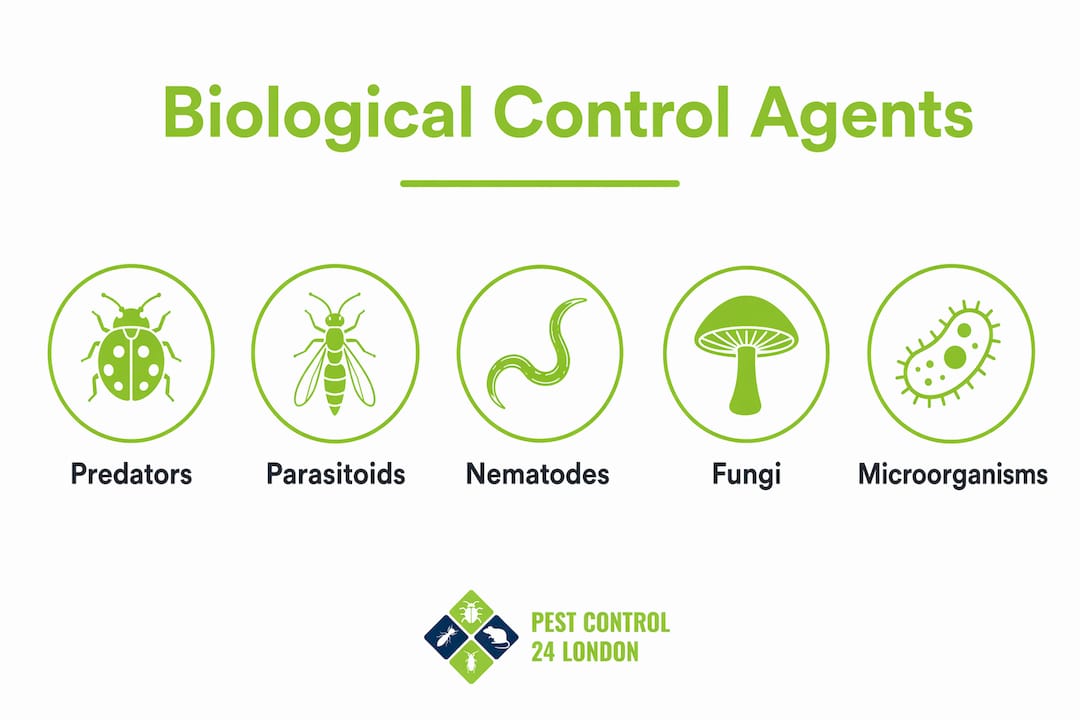
Biological pest control is the use of living organisms, specifically natural enemies such as predators, parasitoids, and pathogens, to suppress pest populations to manageable levels. Rather than eliminating pests entirely, the goal is to keep numbers below economic damage thresholds so that crops, gardens, and ecosystems remain in balance. It is a well-established discipline with roots stretching back to 324 BC, when Chinese growers used ants to protect citrus trees from insect pests.
Three core strategies underpin the entire field:
- Classical biological control: introducing natural enemies from a pest’s region of origin to establish long-term, self-sustaining populations
- Augmentative biological control: mass-producing and periodically releasing agents to deliver rapid, targeted suppression
- Conservation biological control: modifying habitats to support and increase populations of native beneficial organisms already present
These strategies share one defining characteristic: they work with natural processes rather than against them, making biological pest control fundamentally different from broad-spectrum chemical treatments.
What is biological pest control and how does it work?
Biological pest control works by exploiting the natural relationships between organisms. Predators consume pests directly. Parasitoids lay their eggs on or inside a host insect, with the larvae developing at the host’s expense and ultimately killing it. Pathogens, including bacteria, fungi, and viruses, infect and debilitate pest populations through disease. Each mechanism reduces pest numbers through a different biological pathway, which is why combining agents often produces better results than relying on a single species.
The process is not passive. Effective biological control requires human intervention to select the right agent, release it at the correct time, and maintain conditions that allow it to establish and reproduce. Natural control, by contrast, happens without any human input at all. The distinction matters because it shapes expectations: biological pest control is a managed tool, not simply leaving nature to sort itself out.
Crucially, the aim is population management, not eradication. Pest and natural enemy coexist in the agro-ecosystem at low densities, which is precisely what sustains the control over time. Once a classical programme is established, populations can remain self-sustaining for years, reducing the need for repeated intervention.
The three main types of biological control methods
Understanding which type of biological control to apply depends on the pest, the setting, and the timescale available.
Classical (inoculative) control targets exotic pests that have arrived in a new country without their natural enemies. Relatively small numbers of a natural enemy are collected from the pest’s native range, introduced into the new environment, and allowed to build up over time. The predatory ladybird Rodolia cardinalis, released in Mediterranean Europe around 1900 to control the cottony cushion scale Icerya purchasi on citrus, remains one of the most cited examples of this approach. Classical control suits perennial crops and long-term ecosystems where pest and natural enemy interactions can fully establish. It requires patience: classical programmes need multiple pest generations before their impact can be properly evaluated.
Augmentative control involves mass-rearing natural enemies commercially and releasing them in large numbers, either as a single inundative release to achieve rapid knockdown or as repeated seasonal inoculative releases across a growing season. This approach suits annual crops and greenhouse production, where the cultivation cycle disrupts natural enemy populations between seasons. Whiteflies, leafminers, thrips, aphids, and mites in UK glasshouses are commonly managed this way using parasitoids and predatory mites.
Conservation control focuses on native predators and parasitoids already present in the environment. Habitat modifications, such as creating beetle banks, planting flower strips, and providing overwintering refuges, increase the abundance and activity of these beneficial organisms. This is the most accessible approach for UK gardeners and mixed farmers, requiring no purchasing or releasing of agents.
Biological control agents used in the UK
The UK has a well-developed range of natural enemies used across horticulture, agriculture, and domestic gardens. Each agent targets specific pests and suits particular application contexts.
| Agent | Type | Primary pest targets | Typical UK application |
|---|---|---|---|
| Ladybirds (Coccinella spp.) | Predator | Aphids, scale insects | Gardens, allotments, soft fruit |
| Predatory mites (Phytoseiulus persimilis) | Predator | Two-spotted spider mite | Glasshouses, strawberry crops |
| Parasitic wasps (Encarsia formosa) | Parasitoid | Glasshouse whitefly | Tomato and cucumber production |
| Parasitic wasps (Aphidius spp.) | Parasitoid | Aphids | Glasshouses, outdoor crops |
| Beneficial nematodes (Steinernema spp., Heterorhabditis spp.) | Pathogen/parasite | Vine weevil larvae, leatherjackets, chafer grubs | Lawns, container plants, vegetable beds |
| Entomopathogenic fungi (Beauveria bassiana, Metarhizium anisopliae) | Pathogen | Whitefly, thrips, aphids, soil pests | Glasshouses, outdoor crops |
| Lacewings (Chrysoperla spp.) | Predator | Aphids, small caterpillars, mites | Gardens, soft fruit, vegetables |
Ladybirds are among the most familiar predators in UK gardens. Both adults and larvae feed voraciously on aphids, and a single larva can consume hundreds of aphids before pupating. They are naturally present across the UK and respond well to conservation measures such as leaving undisturbed leaf litter and planting nectar-rich flowers.
Predatory mites, particularly Phytoseiulus persimilis, are widely used in UK glasshouse production to control two-spotted spider mite (Tetranychus urticae). They are commercially available and released directly onto infested plants. Timing is critical: releases work best when spider mite populations are still low, before damage becomes visible.
Parasitic wasps cover a broad range of pest targets. Encarsia formosa parasitises glasshouse whitefly and has been used commercially in the UK since the 1970s, making it one of the longest-established augmentative biocontrol programmes in British horticulture. Aphidius species parasitise aphids by laying eggs inside them; the larvae develop inside the host, which eventually mummifies.
Beneficial nematodes are microscopic roundworms that enter soil-dwelling pest larvae and release bacteria that kill the host within a few days. In the UK, products containing Steinernema kraussei are widely used against vine weevil larvae in container plants and garden borders, while Heterorhabditis bacteriophora targets chafer grubs and leatherjackets in lawns. They are applied as a soil drench and require moist soil and temperatures above 5°C to be effective.
Entomopathogenic fungi such as Beauveria bassiana infect insects on contact, penetrating the cuticle and killing the host through a combination of physical damage and toxin production. They are registered for use in the UK against a range of glasshouse pests and are increasingly available to commercial growers.
UK regulatory considerations affect which agents are available. The Health and Safety Executive (HSE) oversees the approval of biological pest control products under the Plant Protection Products Regulations, and agents must be assessed for safety to non-target organisms before they can be sold commercially.
Advantages and benefits of biological pest control
The benefits of biological pest control extend well beyond simply avoiding chemical sprays. They span environmental, economic, and public health dimensions.
- Safe for humans, pets, and wildlife: Biological agents are highly specific to target pests and leave little to no toxic residue, making them suitable for use in food production, domestic gardens, and areas frequented by children and animals.
- Favourable cost-benefit ratios: Classical biocontrol programmes report cost-benefit ratios of 1:20 to 1:500, meaning every pound invested can return up to £500 in pest damage avoided. Augmentative approaches deliver ratios of 1:2 to 1:5, comparable to conventional insecticides but without the associated environmental costs.
- Supports biodiversity: By preserving beneficial insect populations and avoiding broad-spectrum pesticide use, biological control actively supports pollinator health and wider ecosystem function.
- Reduces pesticide resistance: Pests cannot develop resistance to a predator or parasitoid in the same way they can to a chemical compound. Biological control supports organic standards and is a recognised pillar of sustainable agriculture.
- Self-sustaining once established: Classical programmes, in particular, can maintain pest suppression indefinitely once natural enemy populations are established, reducing the need for repeated treatments.
- Global ecosystem contribution: Biological control contributes ecosystem services estimated at over US $400 billion annually worldwide, reflecting its scale and importance to global food security.
- Compatible with organic certification: Biological agents are approved under organic standards in the UK, making them the preferred choice for certified organic growers who cannot use synthetic pesticides.
Challenges and limitations of biological pest control
Biological pest control is not a quick fix, and setting realistic expectations is central to using it well.
- Slower action than chemical pesticides: Effects can take days for pathogen-based agents, or several pest generations for classical programmes, to become apparent. Growers accustomed to the rapid knockdown of synthetic insecticides often find this adjustment difficult.
- Classical programmes require six to ten pest generations for evaluation, meaning results may not be visible for months or even years depending on the pest’s reproductive rate.
- Complex implementation: Selecting the correct agent, matching release timing to the pest’s life cycle, and storing agents properly before release all require knowledge and planning. Augmentative release demands careful coordination with pest monitoring data.
- Risk of hyperparasitoids: Not every natural enemy is beneficial. Hyperparasitoids attack parasitoids rather than pests, potentially undermining control efforts. In one documented case in Maine, 22 parasitoids of aphids in potatoes were themselves attacked by 18 species of hyperparasitoids. Correct species identification is therefore non-negotiable.
- Population management, not eradication: Biological control reduces pest numbers to below economically damaging levels but does not eliminate pests entirely. Growers who expect complete eradication will be disappointed.
- Initial investment: Purchasing commercially reared agents, setting up monitoring systems, and acquiring the knowledge to deploy them correctly all carry upfront costs. Biological pest control is emphatically not a free or instant solution.
- Environmental constraints: Agent effectiveness depends on temperature, humidity, and habitat suitability. Beneficial nematodes, for example, require specific soil moisture and temperature conditions to survive and move through the soil effectively.
How to integrate biological pest control into UK pest management
Biological pest control works best as part of a broader Integrated Pest Management (IPM) framework rather than as a standalone treatment. IPM combines biological, cultural, physical, and chemical controls in a planned sequence, with biological methods forming the foundation and chemical intervention reserved as a last resort. For UK gardeners and farmers, this means building a pest management plan that actively supports beneficial populations rather than inadvertently destroying them.

Habitat management is one of the most practical starting points. Planting flower strips of phacelia, buckwheat, or pot marigold along field margins provides nectar and pollen for adult parasitic wasps, which need these resources to survive and reproduce. Creating flower strips and ecological focus areas has been shown to sustain beneficial insect populations across growing seasons. Beetle banks, which are raised, uncut grass strips within arable fields, provide overwintering habitat for ground beetles and other predators that suppress slugs and aphids.
Monitoring is equally important. Regular scouting of crops and garden beds allows you to detect pest populations early, when biological agents can still get ahead of an infestation. Releasing agents into an already severe outbreak is rarely effective; the timing window matters enormously.
- Introduce predatory mites and parasitic wasps at the first sign of pest activity, not after populations have peaked.
- Apply beneficial nematodes to moist soil in spring or early autumn when soil temperatures are suitable.
- Avoid disturbing overwintering habitats such as log piles, leaf litter, and dense hedgerows where beneficial insects shelter.
- Monitor pest and beneficial populations separately so you can assess whether the balance is shifting in the right direction.
- Integrate pest population management records to track trends across seasons and adjust your approach accordingly.
Pro Tip: After releasing biological agents, avoid applying any broad-spectrum insecticide for at least six to eight weeks. Chemical sprays can wipe out beneficial populations almost immediately, undoing weeks of careful establishment. If chemical intervention becomes unavoidable, choose a selective product with the shortest residual activity available.
How are biological pest control agents regulated in the UK?
The regulatory framework governing biological pest control agents in the UK is administered primarily by the Health and Safety Executive (HSE), with input from the UK Expert Committee on Pesticides. Any biological agent sold commercially as a plant protection product must undergo a formal approval process before it can be marketed or used. This process assesses the agent’s efficacy, its specificity to target pests, and its potential effects on non-target organisms, including beneficial insects, soil fauna, and mammals.
Macro-organisms, such as predatory insects and mites, are regulated differently from micro-organisms. Macro-organisms used in enclosed environments such as glasshouses have historically faced lighter regulatory requirements than those intended for open-field release, where the risk of unintended ecological effects is higher. Micro-organisms, including entomopathogenic fungi and bacteria, must be registered as plant protection products under the Plant Protection Products (Sustainable Use) Regulations 2012 and subsequent amendments following the UK’s departure from the EU.
The approval process for a new biological agent can take several years and requires substantial dossier preparation, including toxicological studies and environmental fate data. This is one reason why the range of commercially approved biological agents in the UK, while growing, remains smaller than the total number of natural enemies known to science. Growers and gardeners should always verify that any biological product they purchase carries a valid UK approval, as using an unapproved agent can carry legal consequences and may pose ecological risks. The BPCA-certified pest control professionals who work within this framework are well-placed to advise on which approved agents are appropriate for a given situation.
Biological pest control in UK agriculture and horticulture: real-world applications
The UK has a strong track record of applying biological control in commercial settings, particularly in protected horticulture. The glasshouse industry adopted augmentative biocontrol early, driven partly by the development of pesticide resistance in key pests and partly by consumer demand for residue-free produce.
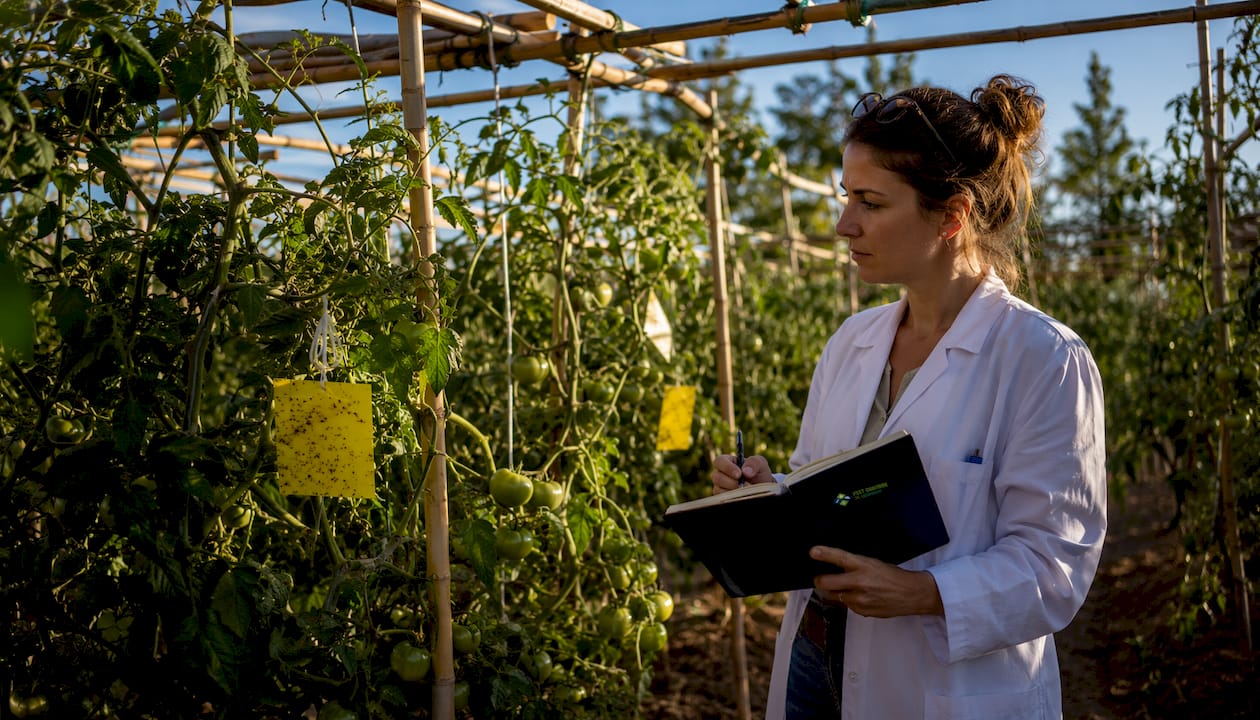
Glasshouse tomato and cucumber production represents the most mature application of biological control in the UK. Encarsia formosa against glasshouse whitefly has been in commercial use since the 1970s, and modern UK glasshouse programmes now routinely combine multiple agents: Phytoseiulus persimilis for spider mite, Aphidius species for aphids, and Amblyseius cucumeris for thrips. The result is a near-complete replacement of chemical insecticides in many operations, with growers reporting that biological programmes are both effective and economically viable once properly established.
Strawberry production has seen increasing adoption of predatory mites to manage two-spotted spider mite, a pest that rapidly develops resistance to acaricides. UK strawberry growers, particularly those supplying supermarkets with residue-free requirements, have found that Phytoseiulus persimilis releases, timed to coincide with early mite activity, can prevent populations from reaching damaging levels throughout the season.
Lawn and garden management across the UK has been transformed by the availability of beneficial nematodes to home gardeners. Products targeting vine weevil larvae, chafer grubs, and leatherjackets are widely sold through garden centres and online retailers, and their use has grown considerably as awareness of the damage these soil pests cause has increased. The key to success is application timing: vine weevil nematodes applied in late summer or early autumn, when larvae are small and soil temperatures are still adequate, consistently outperform spring applications.
Arable and mixed farming has seen conservation biological control gain traction through agri-environment schemes. Beetle banks, first developed by the Game and Wildlife Conservation Trust in the 1980s, are now a recognised feature of many UK farm plans. Research has demonstrated that ground beetle populations on farms with beetle banks are substantially higher than on farms without them, with measurable reductions in aphid pressure in adjacent cereal crops. Flower strips planted under Countryside Stewardship agreements similarly support parasitic wasp populations that suppress aphids and caterpillar pests in field vegetables.
If you are dealing with a pest problem that goes beyond what biological methods alone can address, professional pest control services from a qualified provider can assess the situation and recommend an integrated approach tailored to your property.

Pestcontrol24london has been providing professional, BPCA-qualified pest management across London since 2015. Whether you need advice on integrating biological methods into your property’s pest management plan or require direct intervention for an active infestation, the team is available around the clock. Contact Pestcontrol24london for a free quote and expert guidance on the most appropriate approach for your situation.
Key takeaways
Biological pest control manages pest populations through natural enemies, and its long-term cost-benefit ratios make it one of the most economically sound approaches available to UK growers and gardeners.
| Point | Details |
|---|---|
| Core definition | Biological pest control uses predators, parasitoids, and pathogens to suppress pests below economically damaging levels. |
| Three main strategies | Classical, augmentative, and conservation control each suit different pest types, timescales, and settings. |
| Cost-benefit ratios | Classical programmes report ratios of 1:20 to 1:500; augmentative approaches deliver 1:2 to 1:5. |
| Key limitation | Classical programmes require six to ten pest generations before their impact can be properly evaluated. |
| IPM integration | Biological control works best as a foundation within an Integrated Pest Management plan, not as a standalone treatment. |