

A pest inspection is a specialised visual assessment of a property carried out by a trained professional to identify the presence, evidence, or risk of pests that can damage structures or create health concerns. In the UK, this type of assessment is sometimes called a pest control survey, though the term “pest inspection” is widely understood across the industry. Whether you are buying a home, managing a rental property, or simply maintaining your investment, understanding what this process involves gives you a clear advantage in protecting your property and the people in it.
What does a pest inspection involve?
The pest inspection process is a structured, methodical assessment rather than a quick walk-through. A trained inspector examines the property from roof to subfloor, covering accessible interior spaces, the exterior foundation, and any outbuildings or garden structures. The goal is to identify live pests, physical damage, and conducive conditions such as moisture accumulation, wood-to-soil contact, or gaps in the building fabric that make infestation more likely.
Inspectors use tools including moisture metres, torches, and sometimes borescopes to examine cavities and wall voids without causing disruption. Moisture intrusion and persistent water sources are a primary focus because termite activity and timber decay correlate directly with damp conditions. Roof spaces, gutters, crawl spaces, and areas around pipework receive particular attention for this reason.
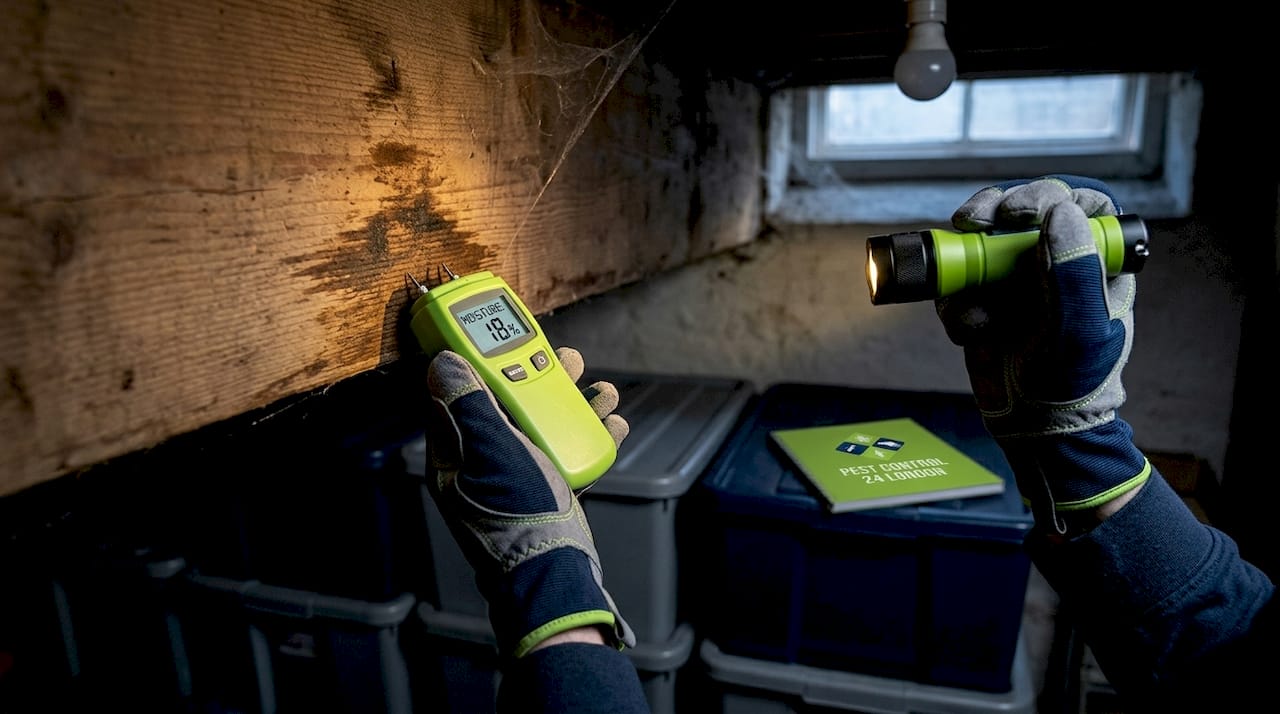
A typical residential inspection lasts between 30 and 60 minutes, though larger properties or more complex assessments take longer. This timeframe covers the physical survey only. Report preparation happens separately.
Here is what the inspection process typically covers, in order:
- Exterior perimeter — foundation walls, drainage, vegetation contact with the building, and entry points
- Roof space — timber condition, moisture signs, evidence of rodents or birds
- Subfloor or basement — timber pests, moisture, ventilation adequacy
- Interior rooms — skirting boards, window frames, built-in joinery, and wall cavities where accessible
- Outbuildings and fencing — timber structures that may harbour wood-destroying organisms
Pro Tip: Clear access to your loft hatch, underfloor vents, and any storage areas before the inspector arrives. Blocked access means those zones cannot be assessed, which limits the conclusions the report can draw.
Pest inspection vs termite inspection: what is the difference?
Pest and termite inspections serve complementary but distinct purposes, and confusing the two is one of the most common mistakes property owners make. A termite inspection focuses exclusively on wood-destroying organisms (WDOs) such as termites, wood-boring beetles, and wood-decay fungi. In the United States, this is formalised through the NPMA-33 standardised reporting form, which meets HUD requirements for real-estate transactions. In the UK, a similar level of specificity applies when timber pest surveys are commissioned separately.
A general pest inspection covers a broader range of species, including rodents, cockroaches, ants, wasps, bed bugs, and other pests that affect health or property condition. The scope depends on what you commission and what the inspector is qualified to assess.
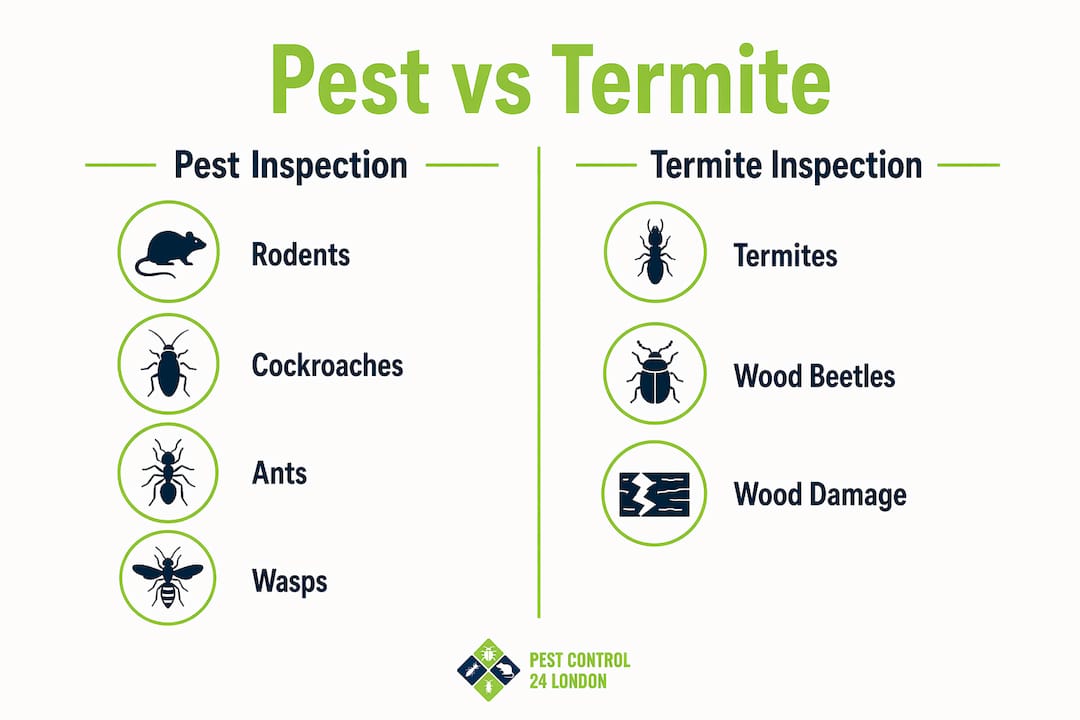
For property purchases or major refurbishments, both types of inspection are often recommended together. A combined building and pest inspection assesses structural integrity alongside pest activity, typically taking around two hours on site with reports delivered within 24 hours.
| Inspection type | Pests covered | Typical scope | Approximate cost range |
|---|---|---|---|
| General pest inspection | Rodents, cockroaches, ants, wasps, bed bugs | Whole property, health and nuisance pests | £0 to £150 |
| Termite / WDO inspection | Termites, wood-boring beetles, wood decay | Timber structures, subfloor, roof void | £75 to £300 |
| Combined building and pest | All of the above plus structural defects | Full structural and pest assessment | £150 to £350 |
Key reasons to consider both types together:
- Property purchases where structural integrity and pest risk both affect value
- Older properties with significant timber framing or original joinery
- Properties with a history of damp, flooding, or poor drainage
- Rental properties where landlord obligations require documented condition assessments
What does a pest inspection report include?
A pest inspection report is a written record of the inspector’s findings, supported by photographic evidence and recommendations for treatment or repair. Reports are written in plain language and classify findings into categories that help you prioritise your response.
Typical report classifications include:
- Active infestation — live pests confirmed on site, requiring immediate treatment
- Evidence of past activity — damage or droppings with no live pests currently present
- Conducive conditions — factors that increase infestation risk, such as moisture, gaps, or stored timber against walls
- Inaccessible areas — zones the inspector could not examine, with a note on how this limits conclusions
The last category matters more than most homeowners realise. Inaccessible inspection zones such as locked crawl spaces or sealed wall cavities prevent the inspector from definitively ruling out infestation. If a report lists several inaccessible areas, you should arrange access and commission a follow-up assessment before making any property decisions.
Next steps after inspection depend entirely on findings. Active infestations require professional treatment. Conducive conditions may call for repairs, improved ventilation, or proofing work. Monitoring items are reviewed at the next scheduled inspection. Understanding this distinction prevents unnecessary alarm and helps you spend money where it is genuinely needed.
Pro Tip: Ask your inspector to walk you through the report verbally after delivery. A good inspector will explain the difference between a serious finding and a low-risk observation, which is not always obvious from written classifications alone.
For a detailed breakdown of what a professional survey covers, the guide on pest control surveys explains the process from a homeowner’s perspective.
How much does a pest inspection cost?
Pest inspection cost varies based on property size, inspection depth, location, and whether the service is bundled with other assessments. The table below reflects typical pricing ranges drawn from current industry data.
| Service | Typical cost range | What is included |
|---|---|---|
| Free general inspection | £0 | Visual check, verbal findings, no written report |
| Standard pest inspection | £75 to £150 | Written report, photographic evidence, recommendations |
| Termite / WDO inspection | £100 to £300 | Specialist timber pest assessment, detailed written report |
| Combined inspection | £200 to £400 | Full structural and pest assessment, comprehensive report |
Many pest control companies offer free general inspections as part of a quote for treatment services. These are useful for identifying obvious problems but do not produce the written documentation needed for property transactions or insurance purposes. If you need a formal report, budget for a paid inspection.
Factors that increase cost include larger floor areas, properties with extensive subfloor or roof void access, rural locations, and inspections requiring specialist equipment. Bundling a pest inspection with a building survey almost always reduces the combined cost compared to commissioning each separately.
How to prepare for a pest inspection
Preparation directly affects the quality of results you receive. An inspector who cannot access key areas will produce a report with significant limitations, which reduces its value whether you are buying, selling, or maintaining a property.
Practical steps to take before the inspector arrives:
- Clear access to the loft hatch and remove any stored items blocking the entrance
- Move furniture, boxes, or stored goods away from skirting boards and wall edges in all rooms
- Unlock any outbuildings, sheds, or garages that form part of the property
- Ensure subfloor access panels or crawl space vents are unobstructed
- Notify tenants or occupiers in advance so they can prepare their areas accordingly
- Do not attempt any pest treatments before the inspection, as this can mask evidence and affect findings
For practical guidance on preparing your home ahead of a professional visit, Pestcontrol24london has published a step-by-step resource covering both inspection and treatment preparation.
The inspector will not carry out any treatments during the assessment. The inspection is an information-gathering exercise only. Treatment decisions are made after the report has been reviewed and discussed.
Key takeaways
A pest inspection is the most reliable way to identify hidden pest activity, structural damage, and risk conditions before they become costly problems.
| Point | Details |
|---|---|
| Definition and purpose | A pest inspection is a professional visual assessment identifying live pests, damage, and conducive conditions. |
| Inspection scope | Covers roof, subfloor, interiors, and exterior; duration is typically 30 to 60 minutes for residential properties. |
| Types of inspection | General, termite, and combined inspections serve different purposes and should be selected based on property type and transaction context. |
| Report content | Reports classify findings as active, historic, conducive, or inaccessible and recommend treatment or repair accordingly. |
| Preparation matters | Clearing access to all areas before the inspector arrives directly improves the accuracy and completeness of findings. |
Why pest inspections are worth more than most people expect
From years of working across London properties, I have seen the same pattern repeat itself. A homeowner skips the inspection to save £100 to £150, then discovers a rodent infestation or significant timber damage six months later that costs ten times that amount to resolve. The inspection is not the expensive part. The delay is.
What surprises many people is how much a report’s inaccessible-areas section can undermine its conclusions. I have reviewed reports where three or four key zones were listed as unexamined, yet the report was used to make a property purchase decision. That is not a reliable basis for anything. If your report lists inaccessible areas, treat it as incomplete and arrange proper access before proceeding.
The other misconception worth addressing is that a clean inspection report means no action is needed. Conducive conditions, such as moisture around a subfloor or stored timber against an exterior wall, are not infestations yet. But they are the conditions under which pest infestations develop. Addressing them proactively is far less disruptive than treating an established problem. Treat the inspection as a diagnostic tool, not a pass or fail verdict.
— Dan
Get a professional pest inspection from Pestcontrol24london

Pestcontrol24london has been providing professional pest inspections and treatments across London since 2015, working with residential properties, hotels, restaurants, and commercial premises. The team is BPCA fully qualified and available 24 hours a day, seven days a week, for both inspections and emergency treatments.
Whether you need a formal written report for a property transaction or a thorough assessment of a suspected pest problem in London, Pestcontrol24london offers free quotes and personalised pest management planning tailored to your property. Contact the team today to arrange an assessment and get clear, reliable answers about the condition of your property.
FAQ
What is included in a pest inspection?
A pest inspection includes a visual assessment of the property’s interior and exterior, identification of live pests or evidence of activity, and a written report with photographic evidence and treatment recommendations. Inaccessible areas are noted as limitations within the report.
How often should a pest inspection be carried out?
Annual inspections are the standard recommendation for most residential properties, with more frequent assessments for older buildings, properties with a history of infestation, or commercial premises with higher pest pressure.
How much does a pest inspection cost in the UK?
A standard written pest inspection typically costs between £75 and £150 for residential properties. Free inspections are available from some providers but do not include formal written documentation.
What is the difference between a pest inspection and a termite inspection?
A termite inspection focuses specifically on wood-destroying organisms such as termites and wood-boring beetles, while a general pest inspection covers a broader range of pests including rodents, cockroaches, and ants.
Can I stay in my home during a pest inspection?
Yes. A pest inspection is a non-invasive visual assessment and does not require occupants to vacate the property. Inspectors simply need clear access to all areas, including loft spaces, subfloor voids, and outbuildings.