

Most London homeowners assume pest control means calling someone out to spray for an active infestation. That assumption is understandable, but it misses the point entirely. A pest control survey is the diagnostic stage that comes first, identifying not just what pests are present, but why they are there and what conditions are allowing them to thrive. Without this step, treatments address symptoms rather than causes, and infestations return. This article explains what a pest control survey involves, why it matters, and how to act on the results to protect your property long-term.
Table of Contents
- What a pest control survey involves
- Why pest control surveys are essential for effective management
- How pest surveys inform risk assessments and visit frequency
- Common pitfalls and expert tips during pest control surveys
- How to apply pest control survey results to protect your London property
- Rethinking pest control surveys: beyond the checklist
- Trusted pest control surveys and services in London
- Frequently asked questions
Key Takeaways
| Point | Details |
|---|---|
| Surveys identify root causes | Pest control surveys uncover why pests are present, helping prevent future infestations instead of only treating symptoms. |
| Survey leads risk assessment | Results determine pest risk level and appropriate frequency of monitoring visits tailored to your property. |
| Legal wildlife considerations | Surveys include checks for protected species like bats, requiring specialist handling to comply with the law. |
| Expert collaboration vital | Effective pest control requires cooperation between homeowners and technicians based on survey insights. |
| Professional surveys save money | Early detection through surveys reduces costly treatments, repairs, and repeated infestations over time. |
What a pest control survey involves
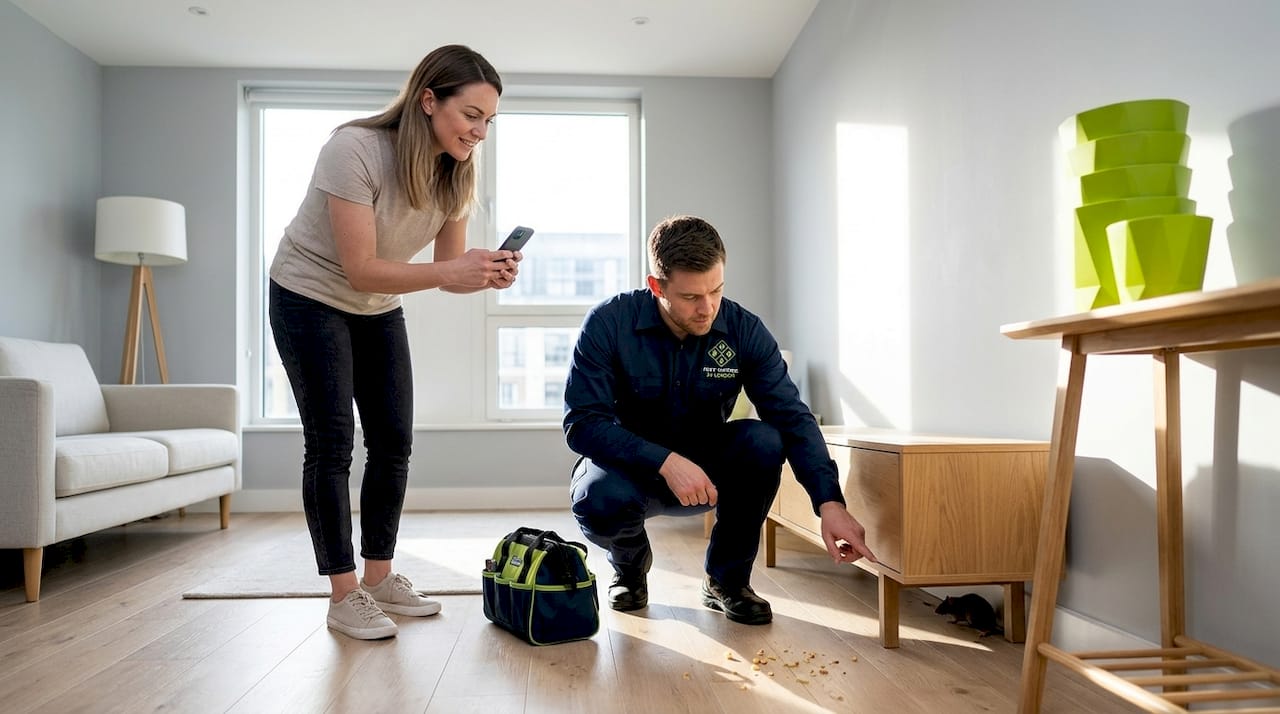
A pest control survey is a structured inspection carried out by a qualified technician before any treatment begins. It is the foundation of the pest control inspection process, and understanding what it covers helps you prepare and get the most from it.
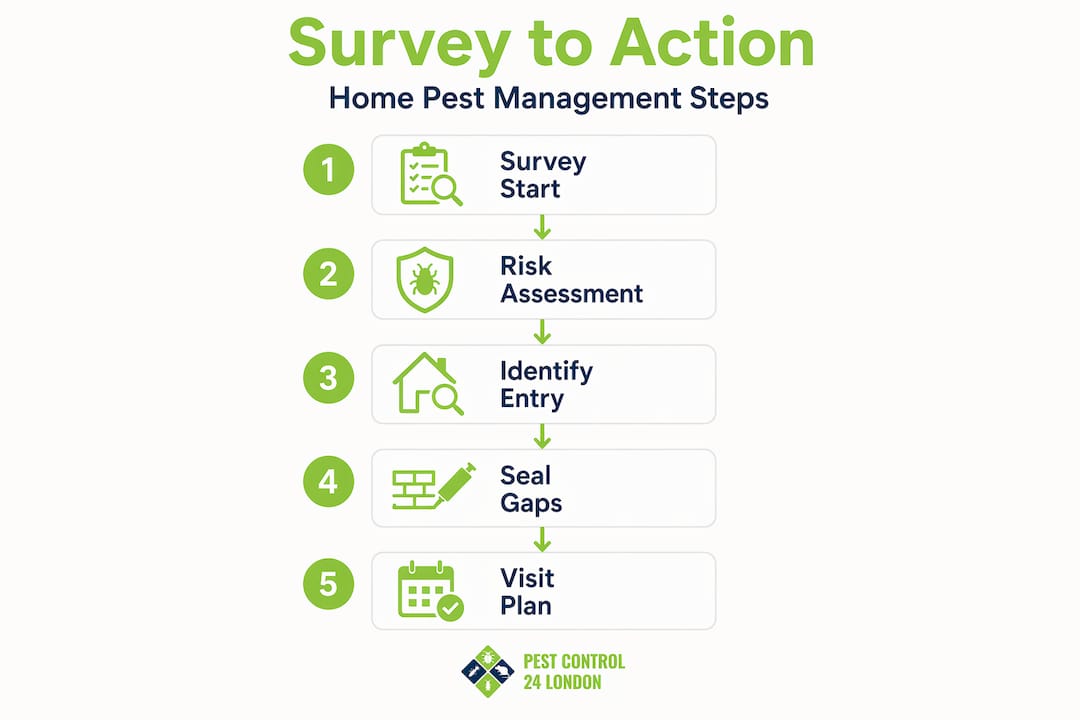
The survey typically follows this sequence:
- Exterior inspection. The technician examines the outside of your property for cracks, gaps around pipework, damaged air bricks, and signs of pest activity such as burrow entrances, droppings, or gnaw marks near the building’s perimeter.
- Interior inspection. Key areas checked include loft spaces, basements, kitchens, utility rooms, wall cavities, and anywhere with pipework or moisture. These are the routes and resting points most pests favour.
- Pest identification. The technician assesses which species are present or likely, the severity of the problem, and the specific conditions attracting them. This is where the role of pest identification becomes critical; different species require entirely different treatment approaches.
- Findings and recommendations. You receive a clear report covering the infestation level, risk factors identified, and the treatments or preventive measures recommended.
- Cost and service plan discussion. Based on the findings, the technician outlines appropriate treatment options and, where relevant, an ongoing monitoring schedule.
A professional inspection assesses hidden pest activity, risk factors, and creates a customised plan to protect your home long-term. Following essential pest control tips before the survey visit, such as clearing clutter from loft spaces and under kitchen units, also helps the technician access difficult areas more easily.
Common signs a technician looks for during the survey include:
- Droppings along skirting boards or inside cupboards
- Grease marks on walls and pipes, which indicate regular rodent pathways
- Larvae, shed skins, or webbing suggesting insect infestations
- Moisture damage or condensation that creates conditions pests exploit
- Structural gaps and entry points that need sealing
Why pest control surveys are essential for effective management
Treating a visible pest problem without understanding why it exists is like patching a leak without finding the source. The infestation returns, sometimes worse. A pest control survey breaks that cycle.
Surveys support what the industry calls Integrated Pest Management (IPM), an approach that combines preventive action, monitoring, and targeted treatment rather than routine chemical application. IPM is now the leading framework endorsed by professional bodies in the UK, and surveys are its starting point.
Pest control surveys enable Integrated Pest Management by identifying why pests are present, such as structural entry points, preventing recurrence more effectively than reactive approaches.
The role of pest surveys goes beyond the immediate. Once a survey identifies an entry point, that gap can be sealed permanently. Once moisture is flagged, the source can be addressed. These structural and environmental corrections reduce the likelihood of future infestations significantly, without relying on ongoing chemical treatments.
Understanding the role of pest surveys in IPM is particularly relevant for London properties, where terraced houses and shared walls mean a pest problem in one property can spread quickly to neighbouring homes. Catching and addressing the root cause early protects not just your home, but the wider building.
How pest surveys inform risk assessments and visit frequency
Survey findings do not just determine the immediate treatment. They feed directly into a pest risk assessment (PRA), a formal evaluation of how likely your property is to experience an infestation and how frequently it should be monitored.
Annual pest risk assessments via surveys determine monitoring frequency, with 8 visits per year recommended for low-risk sites, 12 for medium-risk, and 24 for high-risk properties. This helps property managers prioritise resources based on actual, site-specific conditions rather than guesswork.
The factors that push a property into a higher risk category include:
- Proximity to commercial waste areas or restaurant bins
- Neighbouring properties with known or untreated pest problems
- Recent building works that may have disturbed existing pest habitats
- Poor drainage or standing water on or near the property
The table below summarises how pest risk assessments frequency translates into monitoring requirements:
| Risk level | Visits per year | Typical property profile |
|---|---|---|
| Low | 8 | Well-maintained residential homes, no recent pest history |
| Medium | 12 | Properties near restaurants, high-density housing, or with previous infestations |
| High | 24 | Food businesses, properties with active infestations, or complex structural issues |
For property managers overseeing multiple units, this framework allows you to allocate pest control resources proportionally rather than applying a uniform schedule across all sites.
Common pitfalls and expert tips during pest control surveys
Even well-intentioned surveys can fall short if common errors are made. Knowing what to watch for helps you get the most from the process.
One of the most significant legal risks is overlooking protected species. BPCA professionals emphasise checking loft spaces for bats during surveys and warn against using ultrasonic devices near roosts, as disturbing bats without a licence is illegal and can result in prosecution. If a bat roost is found or suspected, work must stop and the appropriate nature conservation officer contacted before proceeding.
Beyond the legal dimension, these are the most commonly missed areas during surveys:
- Hidden entry points behind fitted kitchen units or inside wall cavities
- Moisture sources such as slow leaks beneath flooring that attract pests over time
- Secondary food sources including birdfeeders, compost bins, or uncovered pet food stored outdoors
- Loft insulation disturbance that may indicate rodent activity rather than settling
- Drainage grates that are cracked or incorrectly fitted, providing ground-level access for rats
Pro Tip: Before your technician arrives, clear access to loft hatches, under-sink areas, and any outbuildings. This is one of the most practical preparation tips for surveys and ensures the inspection is thorough rather than limited by obstructions.
Document any structural vulnerabilities the technician highlights. Photographs taken during the survey are invaluable when briefing builders or arranging repairs, particularly for entry-point sealing and proofing work.
How to apply pest control survey results to protect your London property
Receiving a survey report is the beginning, not the end. Acting on the findings promptly and methodically is what actually prevents future infestations.
A professional inspection ensures targeted treatments, preventive barrier applications, and entry-point sealing to protect homes long-term. Here is how to translate survey findings into action:
- Prioritise structural proofing. Entry-point sealing should be the first task completed after any treatment. Treating an infestation without closing the access route invites re-entry.
- Act on treatments promptly. Delays between survey and treatment allow populations to grow. Where bait stations or traps are recommended, have them installed as soon as possible.
- Schedule monitoring visits. Based on your risk classification, agree a monitoring schedule with your technician and stick to it. Consistency is what prevents small problems from becoming large ones.
- Reduce attractants inside the property. Store dry food in sealed containers, fix dripping taps, and keep bin areas clean. These simple steps remove the conditions that sustain pest populations.
- Brief other household members. Everyone in the property should understand what signs to report and what behaviours to avoid. Early reporting shortens response times dramatically.
Using surveys to protect your property through a formal contract arrangement is particularly cost-effective for property managers, as it bundles survey, monitoring, and treatment into a predictable annual programme.
Rethinking pest control surveys: beyond the checklist
After more than ten years working across London properties, from hotels in the West End to terraced houses in East London, one thing becomes clear: the quality of a pest control survey depends far more on professional judgement than on following a standard checklist.
There is no prescribed way to carry out a pest risk assessment, and that flexibility exists for good reason. A Victorian terraced house in Hackney presents entirely different risks from a 1980s flat in Croydon. A skilled technician reads the specific context of a property, its age, layout, surrounding environment, and the occupant’s habits, rather than simply ticking boxes.
This is why homeowner cooperation matters so much. Sharing information about recent structural work, previous pest problems, or changes in a neighbouring property gives the technician the context needed to form an accurate picture. A survey conducted in silence, where the occupant stands back and waits, will always produce a less accurate risk assessment than one involving an open conversation.
We also believe eco-friendly pest control approaches should be part of every survey conversation. A good survey identifies not just how to eliminate pests, but how to do so in a way that is proportionate and considerate of the wider environment. That means recommending proofing and habitat modification before chemical treatment, and being honest when a problem is minor enough not to require intervention at all.
The simplistic view of a pest survey as a quick walk-around before treatment undersells what it actually is. Done well, it is a collaborative assessment that shapes everything that follows.
Trusted pest control surveys and services in London
If you are ready to move from uncertainty to action, we are here to help. At Pest Control 24 London, we have been carrying out professional pest control surveys across London since 2015, working with residential homeowners, property managers, hotels, restaurants, and commercial premises. Every survey we conduct is carried out by BPCA-qualified technicians and shaped by over a decade of site-specific experience.

Our domestic pest control services begin with a thorough survey before any treatment is recommended, because we believe effective pest management starts with understanding, not assumptions. For property managers looking for ongoing protection, our pest control contracts integrate survey, monitoring, and treatment into a clear, cost-effective programme tailored to your risk level. Get in touch with us any time for expert advice and a prompt response.
Frequently asked questions
How often should I have a pest control survey for my London home?
A PRA needs to be completed at least annually and reassessed if there has been a significant infestation or building modification. Homes with previous pest issues or high-risk surroundings may need more frequent surveys.
What pests do pest control surveys typically check for in residential properties?
Surveys consider which pest types might infest a site, including internal rodents, crawling insects, and flying insects, depending on the specific property location and environmental factors.
Can pest control surveys detect hidden pest problems before symptoms appear?
Yes. Many pests live in a home long before obvious signs appear, and a professional survey is specifically designed to detect early activity and enable early intervention.
What should I do if bats are found during a pest control survey?
Stop work immediately if bat droppings or roosts are found, and contact your local Statutory Nature Conservation Officer. Disturbing bats or their roosts without approval is a criminal offence under UK law.