

Warehouse pest control is defined as the proactive, integrated system of preventing, detecting, and managing pest activity in storage and distribution facilities. The recognised industry standard for this is Integrated Pest Management, or IPM, which replaces reactive chemical spraying with prevention, monitoring, and targeted intervention. Pests such as rodents, cockroaches, and stored product insects threaten inventory integrity, food safety compliance, and BRC audit outcomes. For warehouse managers and logistics professionals, understanding how IPM, facility exclusion, and supply chain controls work together is the foundation of a pest-free, audit-ready operation. Pestcontrol24london has delivered BPCA-qualified commercial pest management across London since 2015.
What is Integrated Pest Management in warehouse pest control?
IPM is the industry gold standard for managing pests in commercial storage environments. It replaces the old spray-and-pray approach with a structured, evidence-based workflow built around six core components.
- Hazard analysis. Identify which pests pose the greatest risk to your specific facility, stock type, and regulatory obligations.
- Plan development. Create a written pest management plan that maps risk zones, sets intervention thresholds, and assigns responsibilities.
- Inspection and monitoring. Deploy traps, pheromone stations, and insect light traps at regular intervals to detect activity early.
- Exclusion. Seal structural entry points before pests find them.
- Sanitation. Remove the food, water, and shelter that sustain pest populations.
- Supply chain controls. Inspect inbound shipments to stop hitchhiker pests before they enter the building.
The critical difference between IPM and traditional methods is timing. Traditional pest control responds after an infestation is visible. IPM intervenes at the monitoring stage, before populations establish. That shift alone reduces chemical use, lowers treatment costs, and keeps audit records clean.
Pro Tip: Treat pest control as a compliance asset, not a vendor expense. Auditors under BRC and food safety standards assess your documentation and prevention systems, not just whether you have a contract in place.

How do exclusion and sanitation prevent pest entry?
Exclusion is the single most cost-effective strategy for keeping pests out of a warehouse. Physical barriers stop infestations before they start, removing the need for reactive treatments.
Practical exclusion measures include:
- Installing door sweeps and brush strips on all loading bay doors and personnel entrances
- Sealing gaps around utility penetrations, pipework, and dock levellers with appropriate proofing materials
- Repairing cracks in foundations and external walls, particularly at ground level where rodents probe for entry
- Removing vegetation, pallets, and debris from within 2–3 metres of the building perimeter to eliminate harbourage
Sanitation works alongside exclusion by eliminating the three basic needs that sustain any pest population: food, water, and shelter. Removing these attractants is far more effective and sustainable than defaulting to chemical controls. Spilled grain, standing water near drainage points, and cardboard accumulations are the most common attractants found in warehouse environments. Aligning your janitorial schedule with your pest management plan means cleaning teams actively support pest prevention rather than working in isolation.
Pro Tip: A professional cleaning workflow that documents waste removal, drain cleaning, and spillage response creates a paper trail that directly supports pest control audits.
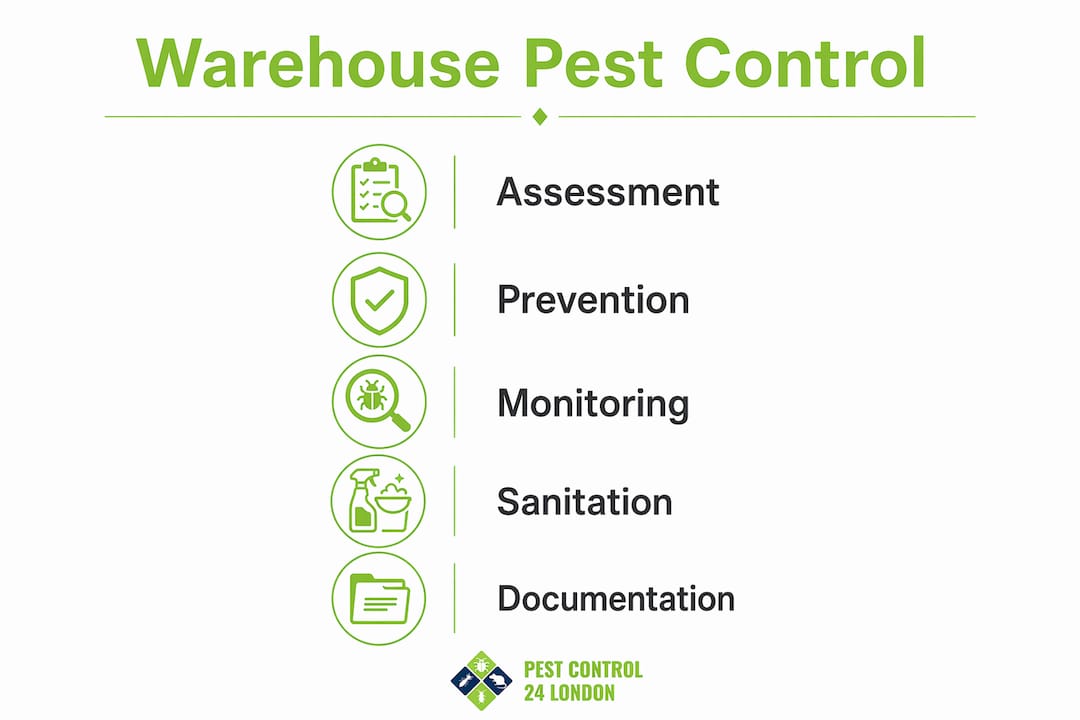
Which monitoring techniques support audit compliance?
Targeted monitoring transforms pest control from a reactive service into a data-driven management system. The key is mapping every monitoring device on a facility floor plan so that inspections follow a consistent route and results are comparable over time.
| Monitoring device | Primary target | Placement guidance |
|---|---|---|
| Rodent bait stations | Rats and mice | Along internal walls, near dock doors |
| Insect light traps (ILTs) | Flying insects | Near entrances, away from competing light |
| Pheromone stations | Stored product moths and beetles | Within racking and storage zones |
| Glue boards | Crawling insects and rodents | Corner positions, under shelving |
Trend analysis is what separates good monitoring from excellent pest management. A single rodent capture tells you there is activity. A pattern of captures in the same station over three consecutive visits tells you there is a structural entry point nearby that has not been sealed. Data-driven decisions like this prevent infestations from escalating.
Documentation ownership is equally critical. Auditors hold facility managers responsible for pest control records, not the contractor. If your pest control provider changes or a technician leaves, you must still be able to produce a complete, accurate service history. Modern pest control documentation systems allow managers to access records in real time, generate audit-ready reports, and maintain continuity regardless of contractor changes.
What role does supply chain control play in pest management?
Pests commonly enter warehouses on inbound pallets and cargo, making supply chain inspection a non-negotiable part of any warehouse pest control workflow. A facility with excellent exclusion and sanitation can still develop an infestation if incoming shipments are not checked.
Pre-entry inspection protocols should cover:
- Checking pallets and packaging for gnaw marks, droppings, larvae, or live insects before goods enter the building
- Refusing or quarantining shipments that show signs of pest activity
- Recording inspection outcomes as part of your pest management documentation
Seasonal and regional pest variations require locally tailored strategies rather than generic treatment plans. In London, rodent pressure increases significantly during autumn and winter as temperatures drop and rats seek warmth indoors. Stored product insects such as the grain weevil and the flour moth are more active during warmer months, making summer the critical period for monitoring within racking. A one-size-fits-all treatment plan applied uniformly across all seasons will miss these peaks. Effective pest management in warehouses accounts for these shifts and adjusts monitoring frequency and intervention thresholds accordingly.
Local expertise matters here. A pest control provider with direct experience of London’s pest pressures, building stock, and regulatory environment will design a programme that reflects actual risk rather than a generic national template.
Key takeaways
Effective warehouse pest management requires IPM, exclusion, sanitation, monitoring, and supply chain controls working together as a single integrated system.
| Point | Details |
|---|---|
| IPM is the industry standard | It replaces reactive spraying with prevention, monitoring, and targeted intervention across six core components. |
| Exclusion is the first line of defence | Sealing entry points and removing harbourage near the building perimeter stops pests before they enter. |
| Documentation must stay with the facility | Managers must own pest control records to pass audits, regardless of which contractor holds the service contract. |
| Supply chain inspection is non-negotiable | Inbound pallets and cargo are a primary route for hitchhiker pests and must be checked before entry. |
| Seasonal adaptation improves outcomes | Pest pressure in London shifts with the seasons, and monitoring frequency should reflect those changes. |
Why pest control documentation is the most overlooked risk in warehouses
After more than a decade working with commercial facilities across London, the single most common mistake I see is not a gap in exclusion or a missed inspection. It is a documentation gap that only becomes visible during an audit.
Warehouse managers frequently assume their pest control contractor holds all the records. That assumption is wrong. Regulatory responsibility sits with the facility owner, and when an auditor asks for a 12-month service history, the contractor’s portal is not an acceptable substitute for your own records. I have seen facilities with genuinely good pest control programmes fail audits because they could not produce their own documentation at short notice.
The other pattern I see is treating pest control as a background service rather than an operational function. Facilities that integrate pest control into their daily workflow, briefing staff on what to report and when, catch problems weeks earlier than those that leave it entirely to a monthly contractor visit. Early intervention is always cheaper than remediation. Viewing commercial pest control as a compliance function rather than a cost centre changes how you prioritise it, and that shift has a measurable impact on audit outcomes.
— Dan
Pestcontrol24london: professional warehouse pest control in London
Pestcontrol24london has supported warehouses, logistics hubs, and commercial facilities across London since 2015. The team is BPCA fully qualified and delivers IPM-based programmes designed specifically for the compliance demands of commercial storage environments.

Every service includes audit-ready documentation, site-specific monitoring plans, and 24/7 emergency response. Whether you need a full commercial pest management programme or a one-off inspection ahead of a BRC audit, Pestcontrol24london provides the expertise and records to keep your facility compliant. Contact the team at pestcontrol24london.co.uk for a free quote and a customised pest control plan built around your facility’s specific risk profile.
FAQ
What is Integrated Pest Management in a warehouse context?
IPM is a structured pest control approach built on six components: hazard analysis, plan development, inspection, exclusion, sanitation, and supply chain controls. It prioritises prevention over reactive chemical treatment.
How often should a warehouse be inspected for pests?
Inspection frequency depends on facility size, stock type, and pest pressure, but most commercial warehouses require monthly visits as a minimum, with increased frequency during high-risk seasons such as autumn and summer.
Who is responsible for pest control documentation during an audit?
The facility manager or owner is responsible. Auditors assess the facility’s own records, so relying solely on a contractor’s documentation creates a compliance risk if the contractor changes or records are inaccessible.
What are the most common entry points for pests in warehouses?
Loading bay doors, gaps around utility penetrations, and cracks in foundations are the most frequent entry points. Inbound pallets and cargo are also a primary route for hitchhiker pests such as stored product insects.
How does seasonal change affect warehouse pest control strategies?
Rodent activity increases in autumn and winter as temperatures fall, while stored product insects peak in warmer months. Effective pest management adjusts monitoring frequency and intervention thresholds to reflect these seasonal shifts.