

Many property managers and business owners in London treat pest control as something to deal with when a problem appears. Call someone out, resolve the issue, move on. This reactive approach may seem cost-effective in the short term, but it leaves businesses exposed to regulatory risk, reputational damage, and repeated infestations. A pest control contract is a formal agreement between a provider and a client that sets out scheduled inspections, preventative treatments, and emergency responses for specified pests. For London businesses operating under tight health and safety regulations, a contract is not a luxury. It is a practical necessity.
Table of Contents
- What is a pest control contract?
- Key components every contract should include
- Comparing contract types: long-term vs. pay-as-you-go
- Choosing a provider: accreditations, standards, and audit support
- The hidden value of contracts: consistency and compliance
- Get compliant, effective pest control in London
- Frequently asked questions
Key Takeaways
| Point | Details |
|---|---|
| Formal contract definition | A pest control contract is a formal agreement detailing regular treatments, inspections, and emergency support. |
| Essential contract elements | Specify species, site boundaries, compliance support, and reporting in every agreement. |
| Contract flexibility options | You can choose between long-term or flexible contracts to fit your compliance needs. |
| Provider accreditation | NPTA/BPCA-accredited providers ensure professional standards and audit-ready documentation. |
| Compliance value | Routine contracts simplify audits and minimise regulatory risks for London businesses. |
What is a pest control contract?
A pest control contract is a legally structured agreement between you and your chosen pest control provider. It defines the scope of work clearly so both parties know exactly what is expected and when. Rather than relying on ad hoc callouts, you have a documented programme of visits, treatments, and reporting built into your operations.
“A pest control contract is a formal agreement between a pest control provider and a client, outlining the scope of services, including regular inspections, preventative treatments, and emergency responses for specified pests.” Pest Control Contracts: What You Need to Know
In commercial settings, informal arrangements simply do not provide the paper trail that environmental health officers or insurance companies may request. If your premises undergo an inspection and you cannot produce documented pest control records, the consequences can be severe, from improvement notices to full closure orders.
The structure of a contract typically falls into three service categories:
| Service type | Description | Frequency |
|---|---|---|
| Scheduled inspections | Regular site visits to assess pest activity | Monthly or quarterly |
| Preventative treatments | Proofing, baiting, trapping as standard maintenance | Per visit schedule |
| Emergency callouts | Rapid response to active infestations | As required |
For pest control contracts for London property, having all three elements formally agreed in writing means you are covered whether an issue is discovered during a routine visit or reported urgently by a member of staff.
Key components every contract should include
Understanding the definition is the foundation, but scrutinising every clause in a contract ensures there are no unpleasant surprises later on. Not all contracts are written equally, and a poorly worded agreement can leave critical gaps in your coverage.
According to NPTA guidance, contracts should specify pest species covered, site boundaries, treatment methods, and compliance support requirements. Asking about technician training before signing is equally important. You need to know who will be attending your site and whether they hold relevant qualifications.
Here are the key components to look for in any commercial pest control agreement:
- Pest species covered: The contract must explicitly name which pests are included. Rats, mice, cockroaches, and flies are common, but if your premises are at risk of bed bugs or stored product insects, these need to be listed separately.
- Site boundaries: Clearly defined areas of responsibility avoid disputes. Does the contract cover internal areas only, or does it include external grounds, drainage, and outbuildings?
- Treatment methods: Specify whether the provider uses rodenticide bait stations, insecticide treatments, pheromone traps, or proofing services. Some sectors have restrictions on certain chemicals.
- Compliance with BPCA and NPTA standards: Your provider should demonstrate alignment with recognised industry standards, keeping your business in step with the pest control compliance guide requirements that regulators expect.
- Documentation and audit reporting: Every visit should produce a written report. These records form your evidence trail for health and safety inspections.
- Technician qualifications: Confirm your technicians hold RSPH or BPCA Level 2 qualifications as a minimum.
Pro Tip: Request a sample service report before signing. If a provider cannot demonstrate clear, professional documentation, their audit support will likely fall short when you need it most.
For businesses in food production, hospitality, or healthcare, checking that your provider meets compliance standards is not a formality. It is a direct requirement of operating within those sectors.
Comparing contract types: long-term vs. pay-as-you-go
Not all contracts are structured the same way. Understanding how different arrangements compare will help you choose the option best suited to your operational needs and the level of risk your premises carries.
Long-term contracts lock in consistent prevention and give providers the revenue stability to assign dedicated technicians to your account, while some providers offer no-contract flexibility for businesses with lower risk profiles or variable needs.
| Feature | Long-term contract | Pay-as-you-go |
|---|---|---|
| Cost predictability | Fixed annual cost, easier to budget | Variable, often higher per visit |
| Audit documentation | Comprehensive ongoing records | Limited or inconsistent records |
| Emergency response priority | Typically guaranteed priority | Subject to availability |
| Compliance suitability | Ideal for regulated sectors | Risk of compliance gaps |
| Flexibility | Less flexible, notice periods apply | High flexibility, no commitment |
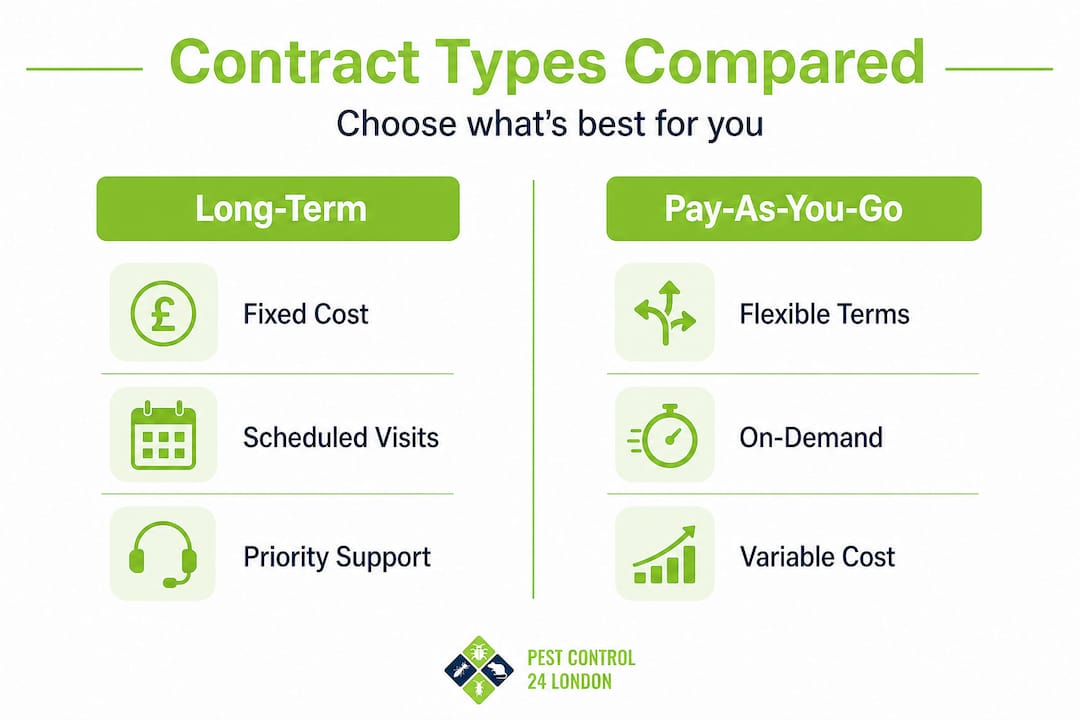
For property managers overseeing multiple sites, or businesses in regulated sectors such as restaurants or hotels, the choice is usually straightforward. A long-term contract provides the consistency, documentation, and priority response that those environments demand.
Here is a practical decision checklist for property managers:
- Assess your regulatory requirements. Food businesses and licensed premises need documented records.
- Evaluate pest pressure on your site. High-risk locations need scheduled prevention, not reactive callouts.
- Consider multi-site needs. Contracts can often be scaled across several properties under a single agreement.
- Review your insurance terms. Some policies require ongoing pest management programmes.
- Compare total annual costs between contract and pay-as-you-go before making a decision.
The commercial pest treatment guide for London businesses provides further detail on treatment options available under different contract structures.
Pro Tip: Even if you opt for a flexible arrangement initially, ensure your provider can transition you to a full contract quickly if your regulatory situation changes. This is particularly relevant for businesses seeking new licences or preparing for EHO inspections.
Choosing a provider: accreditations, standards, and audit support
Comparing contract options is key, but choosing the right accredited provider ensures your business stays compliant and properly covered. In London’s tightly regulated commercial environment, the credentials of your pest control provider carry real weight.
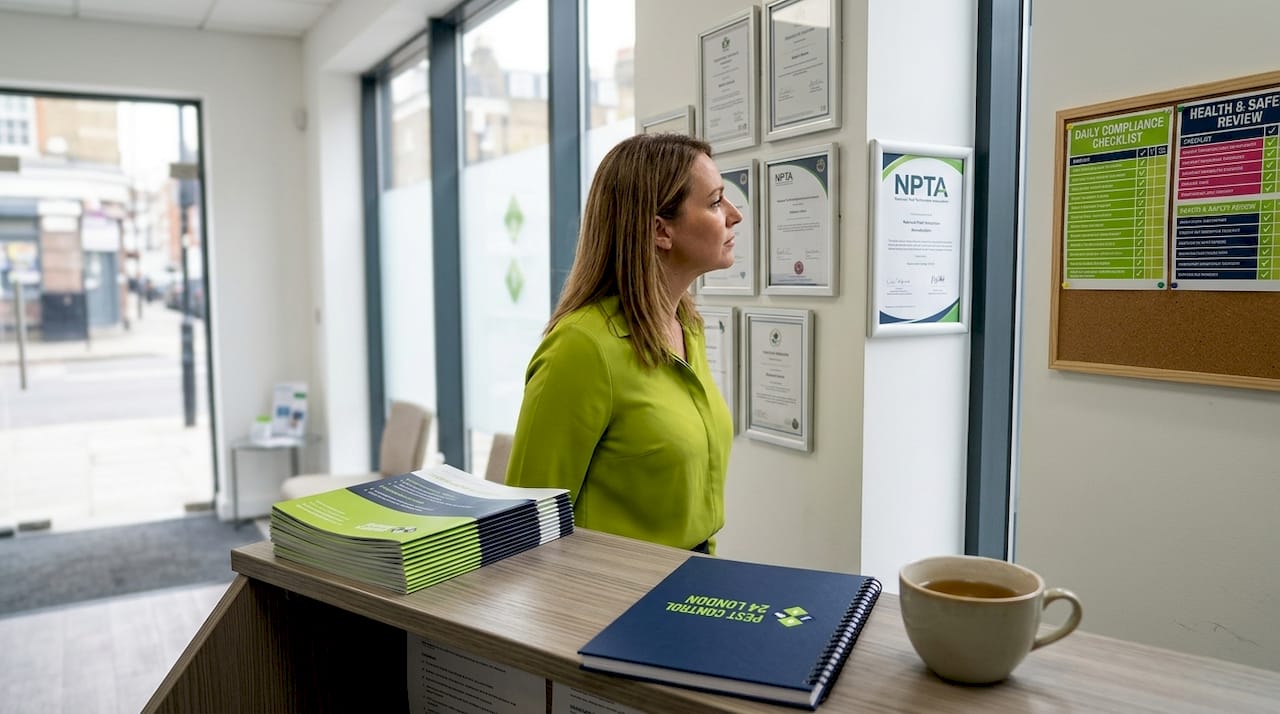
For London businesses in high-regulation sectors, choosing an NPTA-accredited provider guarantees professional standards, continual professional development for technicians, and access to formal complaints processes. This matters enormously when you are operating in hospitality, food service, or healthcare.
BPCA membership is equally significant. The British Pest Control Association sets industry benchmarks and provides independent oversight of its members. When a provider carries both BPCA and NPTA accreditation, you can be confident their practices are current, safe, and legally sound.
Before signing any agreement, consider asking your prospective provider the following:
- What qualifications do your technicians hold, and how often do they complete continuing professional development?
- How do you handle multi-site contracts, and can you scale service if we expand our London portfolio?
- What format does your audit documentation take, and how quickly do you supply reports after each visit?
- What is your average emergency response time in London?
- Can you provide references from businesses in regulated sectors similar to ours?
These questions separate genuinely professional providers from those offering low-cost, low-compliance services. For restaurants in particular, effective prevention goes well beyond basic treatments. The right provider will understand the specific risks of food service environments. Read more about restaurant pest control strategies to understand what a thorough programme should include.
The hidden value of contracts: consistency and compliance
Here is something worth saying plainly. The businesses that come to us after a failed EHO inspection almost always had one thing in common. They treated pest control as an occasional expense rather than a structured part of their operations. A single reactive callout costs less upfront. But the cumulative cost of non-compliance, reputational harm, and repeat infestations is considerably higher.
Contracts do more than schedule visits. They create a working relationship between your business and a knowledgeable technician who understands your site, your seasonal risk profile, and your compliance requirements. That continuity matters. A technician who visits your premises regularly will notice a change in rodent activity or insect pressure before it becomes a full infestation. A one-off contractor has no such baseline to compare.
There is also a practical reality about audits that many property managers only discover under pressure. When an environmental health officer asks for your pest control records, they are not looking for a receipt. They want dated visit reports, treatment records, and evidence of follow-up actions. A contract with a professional provider delivers exactly that.
At Professional Pest Control Services, we have observed that businesses with formal contracts handle inspections with far less disruption and stress. The paperwork is already in place. The records speak for themselves. This is the kind of operational advantage that rarely appears in a cost comparison spreadsheet but is felt immediately when it counts. You can reinforce this approach by reviewing best pest control practices and applying those principles to your broader property management strategy.
Get compliant, effective pest control in London
If you manage commercial or residential properties in London and you are ready to move from reactive callouts to a structured, compliant pest management programme, we are here to help.

At Professional Pest Control Services, we have been serving London businesses since 2015, from major hotel groups and restaurant chains to shops, takeaways, and residential properties. We are fully BPCA qualified and provide audit-ready documentation with every service visit. Our London commercial pest control contracts are tailored to your sector, your site, and your compliance requirements. We also offer domestic pest control services for property managers with residential portfolios. Contact us today for a free quote and a custom compliance plan built around your needs.
Frequently asked questions
Are pest control contracts mandatory in London businesses?
While not always a strict legal requirement, contracts in regulated sectors like food and hospitality are essential for compliance and audit readiness. An EHO can request documented pest control records at any time, and gaps in that documentation carry real consequences.
What services are typically included in a pest control contract?
Most contracts cover scheduled inspections, treatments, emergency callouts, and defined pest species, along with regular written reports and compliance records to support business audits.
How do I know if a provider is properly accredited?
Look for NPTA or BPCA certification, which confirm that the provider meets industry standards, maintains ongoing technician training, and participates in formal complaints and oversight processes.
Can I switch providers during a contract?
Switching mid-contract is often possible but may involve a notice period or early exit fees. Always review the termination clause carefully before signing any agreement.