

Many London homeowners assume that pest control simply means spraying chemicals around the kitchen and hoping for the best. That assumption leads to recurring infestations, wasted money, and unnecessary exposure to harmful substances. Modern pest management is far more structured than that. It involves careful inspection, precise identification, targeted treatment, and ongoing prevention. This article will walk you through what professional pest control actually involves, why prevention consistently outperforms reactive chemical sprays, and what UK law says about keeping your home protected safely and legally.
Table of Contents
- What pest control means for your home
- How professional pest control works
- Why prevention is better than cure
- Legal and safe pest control in London
- The uncomfortable truth about pest control in London homes
- Trusted pest control solutions for London homes
- Frequently asked questions
Key Takeaways
| Point | Details |
|---|---|
| Pest control is holistic | Modern pest control includes inspection, treatment, prevention, and ongoing monitoring for effectiveness. |
| Prevention reduces recurrence | Preventive Integrated Pest Management (IPM) methods lower repeat infestations and chemical reliance. |
| UK law protects residents | Certified professionals are legally required for effective and safe pest treatment in London. |
| Chemical spraying alone fails | Sole reliance on chemicals leads to recurring problems and is less effective than root cause solutions. |
What pest control means for your home
Pest control is not a single action. It is a structured process. According to Harrow Council’s official policy, pest control involves the regulation or management of species defined as pests, perceived to be detrimental to health, ecology, or economy, encompassing inspection, identification, treatment, prevention, and monitoring to manage infestations in residential properties.
In London, the range of pests that can affect your home is significant. The city’s density, older housing stock, and busy urban environment create ideal conditions for a wide variety of unwanted visitors. Common pests found in London homes include:
- Rodents such as rats and mice, which gnaw through wiring, pipework, and structural timber
- Cockroaches, which thrive in warm kitchens and bathrooms and spread harmful bacteria
- Bedbugs, which hide in mattresses, bed frames, and furniture seams
- Ants, both garden and pharaoh species, which invade food storage areas
- Moths, particularly clothes and carpet moths, which destroy fabrics and natural fibres
- Wasps and hornets, which nest in lofts, wall cavities, and garden structures
- Fleas, often introduced by pets and capable of infesting entire rooms rapidly
Each of these pests poses a different level of risk. Rodents are associated with Salmonella and Leptospirosis (Weil’s disease). Cockroaches trigger asthma and spread food-borne illness. Bedbugs cause significant sleep disruption and psychological distress. The health consequences are real, and property damage from unchecked infestations can be costly to repair.
Professional pest control protects more than your comfort. It protects your health, your property value, and your family’s safety.
For a thorough overview of your options as a London resident, our domestic pest control guide covers the practical steps involved in managing infestations at home. It is also worth considering external environments, since pests rarely arrive from nowhere. Addressing preventing pests outdoors around your property reduces the pressure on your indoor spaces considerably.
With a clear understanding of pest control, we can explore how professionals approach the process for London homes.
How professional pest control works
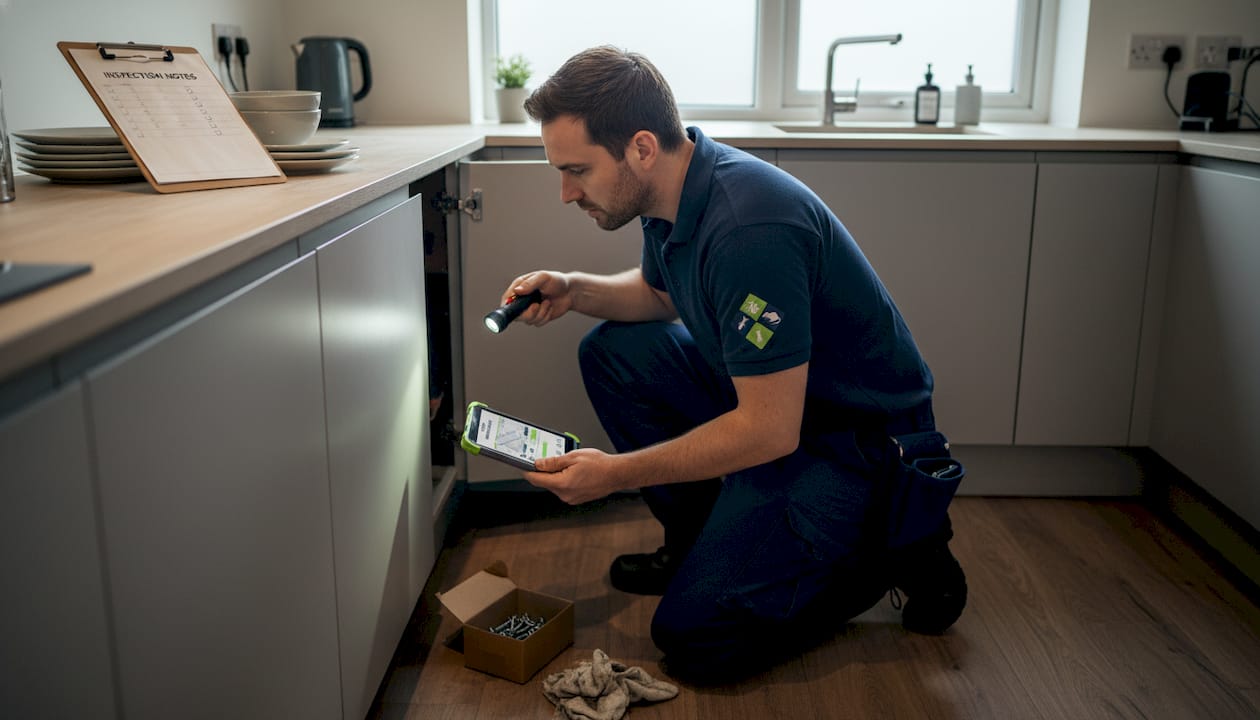
A professional pest controller does not simply arrive with a spray and leave. The process follows a structured sequence designed to achieve lasting results rather than temporary relief.
- Inspection — The technician conducts a thorough survey of your property, looking for signs of activity including droppings, gnaw marks, grease trails, nesting material, and entry points.
- Identification — The specific pest species is confirmed, which determines the appropriate treatment method and products.
- Treatment — Targeted interventions are applied. These may include baiting, trapping, residual insecticide application, heat treatment, or fumigation, depending on the pest and severity.
- Prevention — Entry points are sealed, sanitation advice is provided, and structural issues are highlighted. This step is what separates effective pest control from a temporary fix.
- Monitoring — Follow-up visits confirm that the treatment has worked and identify any signs of reinfestation early.
This approach is known as Integrated Pest Management (IPM). It is the gold standard in the industry and is endorsed by both UK government bodies and the British Pest Control Association (BPCA). IPM prioritises prevention and non-chemical methods first, using pesticides only when necessary and in the most targeted way possible.
| Feature | Reactive chemical spray | IPM approach |
|---|---|---|
| Focus | Immediate knockdown of pests | Long-term management and prevention |
| Chemical use | High, often repeated | Minimal, targeted only when needed |
| Root cause addressed | Rarely | Always |
| Recurrence risk | High | Significantly reduced |
| Cost over time | Increases with repeat visits | Decreases as prevention takes hold |
| Safety for occupants | Variable | Carefully controlled |
The contrast is striking. Reactive spraying might feel satisfying in the short term, but it rarely addresses why pests entered in the first place. IPM tackles the root of the problem. You can read more about how to prepare for pest treatment and what to expect, and our guide on best pest control practices outlines what a quality service should include. For exterior proofing, understanding how to prevent access points above ground level, such as keeping insects off your roof, is an important part of any prevention plan.
Pro Tip: Before your pest controller arrives, note where you have seen pest activity, what time of day, and any recent changes to your home such as building works or new furniture. This information helps technicians narrow down entry points faster.
Why prevention is better than cure
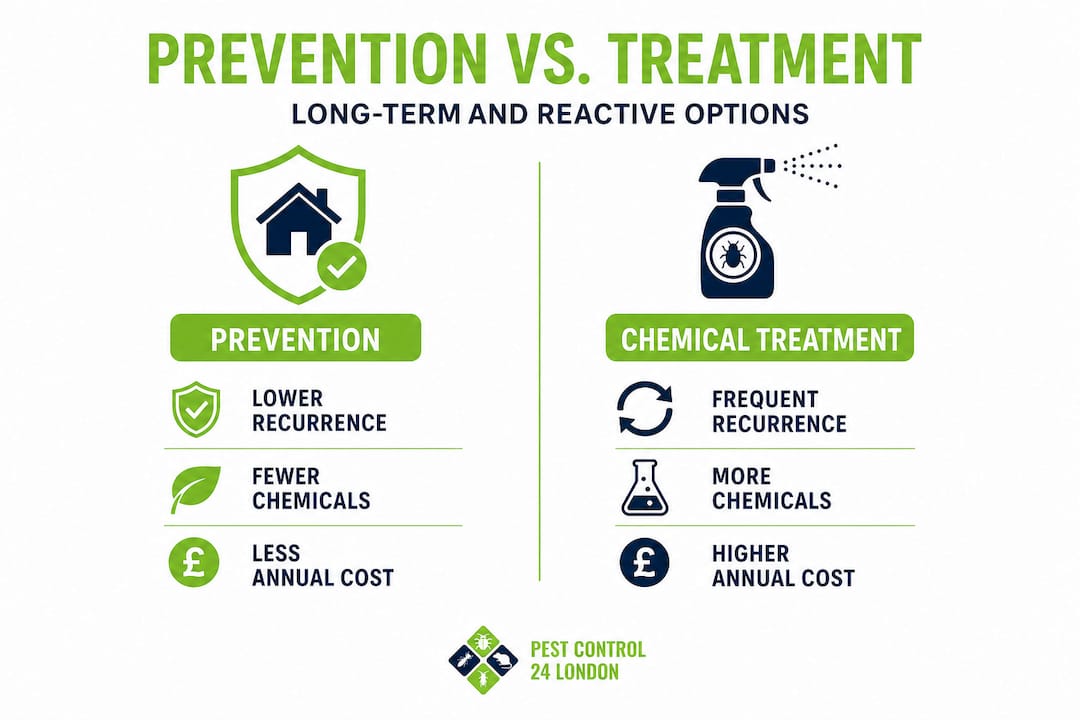
The evidence for prevention over reactive treatment is clear. Reactive chemical spraying fails frequently with recurring infestations, while preventive IPM programmes reduce long-term pest pressure and costs by addressing root causes like entry points and attractants.
Think about what a reactive spray actually does. It kills the pests present at that moment. But if the gap under your door remains unsealed, if food waste is left accessible, or if a moisture problem in your basement continues unchecked, new pests will arrive within weeks. The spray has solved nothing structurally.
Prevention targets the root causes that attract and enable pests to enter and survive in your home. These root causes include:
- Structural entry points such as gaps around pipework, cracked brickwork, and poorly fitted doors or windows
- Food and water sources including exposed bin storage, pet food left out overnight, and leaking pipes
- Harbourage sites such as cluttered storage areas, dense vegetation against walls, and undisturbed loft spaces
- Poor sanitation in kitchens, waste areas, and recycling storage
| Approach | Infestation recurrence rate | Chemical applications per year | Estimated annual cost |
|---|---|---|---|
| Reactive chemical spray | High | 4 to 6+ | £400 to £900+ |
| Preventive IPM programme | Low | 0 to 2 | £200 to £450 |
The financial argument alone is compelling. But when you factor in the reduced risk to your family’s health from repeated pesticide exposure, and the time saved not dealing with ongoing pest problems, the case for prevention becomes overwhelming. Our team at professional home pest removal builds prevention into every treatment plan as standard, not as an optional extra.
Legal and safe pest control in London
Not all pest control is equal under UK law. Understanding the regulatory framework helps you make safer choices and avoid ineffective or illegal treatments.
The Control of Pesticides Regulations 1986 (COPR) and Health and Safety Executive (HSE) guidelines establish strict controls over which pesticides can be used and by whom. Specifically, UK law requires that professional-use pesticides are handled only by trained technicians, with BPCA certification confirming competence, safety, and IPM adherence. DIY pest control is limited to approved amateur products, which are far less potent than professional-grade formulations.
Choosing a pest controller in London safely involves several clear steps:
- Verify that the company holds BPCA accreditation or equivalent professional certification.
- Confirm that the technician is trained to identify the specific pest you are dealing with.
- Ask what products will be used, and request safety data sheets if you have children, pets, or health conditions.
- Ensure the company provides a written treatment plan and follow-up monitoring.
- Check that treatments comply with current COPR 1986 and HSE guidance.
If you are interested in reducing chemical use further, our guide on eco-friendly pest control covers non-toxic and low-impact options available to London homeowners. Businesses with additional compliance responsibilities should also review our resource on pest control compliance standards.
Pro Tip: Always ask to see a pest controller’s BPCA certification card before allowing them to treat your property. A reputable provider will show this without hesitation.
The uncomfortable truth about pest control in London homes
Having worked across London since 2015, treating homes from Hackney to Harrow and everywhere in between, we have seen a pattern that most pest control guides do not address honestly. Many homeowners call us after months of failed attempts with shop-bought sprays, only to find the infestation has grown considerably worse. The chemical spray gave them a false sense of progress while the underlying problem continued to develop.
Here is the uncomfortable reality: a bottle of spray from a supermarket is not pest control. It is pest irritation. You disturb the population temporarily, perhaps drive some individuals into less visible areas, and then wonder why they return.
True pest management means understanding why pests are in your home, not just that they are there. IPM is endorsed by UK government bodies and BPCA as best practice precisely because it reduces chemical use while maintaining genuine efficacy. It is not a trend or a marketing buzzword. It is a methodology built on decades of evidence.
Local expertise also matters enormously. London’s housing stock is unique. Victorian terraces with original brickwork, modern flat conversions, and post-war council properties all present different vulnerabilities. A technician who understands the city’s specific building types and pest pressures is worth far more than a generic treatment plan copied from a national template.
When you engage a professional for domestic pest control, ask them specifically about their prevention strategy, not just their treatment plan. If they cannot explain how they will reduce the likelihood of reinfestation, that is a meaningful warning sign.
Trusted pest control solutions for London homes
If this article has helped you see pest control differently, the next step is straightforward. Professional, certified help is available across London, ready to assess your specific situation and provide a treatment plan built around your home’s needs.

We have been helping London homeowners and renters since 2015, tackling everything from single-room bedbug infestations to whole-building rodent problems. Our BPCA-qualified technicians use the IPM approach described throughout this article, prioritising your family’s safety and long-term results over quick fixes. Whether you need emergency pest control or planned domestic pest control services, we are here to help you get the problem resolved properly and keep it from returning.
Frequently asked questions
What types of pests are most common in London homes?
The most common pests in London homes include rats, mice, cockroaches, bedbugs, ants, clothes moths, and fleas, all of which respond well to professional IPM-based treatment when caught early.
Can I do pest control myself or do I need a professional?
DIY methods using approved amateur products can address minor issues, but UK law limits access to professional-grade pesticides to BPCA-certified technicians, making professional help essential for larger or persistent infestations.
How often should pest control treatments be done?
Treatment frequency depends on the pest type and severity, but preventive IPM programmes significantly reduce the need for repeated chemical treatments by addressing the root causes of infestation.
Are eco-friendly pest control methods available for homes?
Yes, eco-friendly options including physical proofing, heat treatment, and low-toxicity products are available and comply fully with COPR 1986 and HSE guidelines when applied by a certified professional.