

If you manage a commercial roof space, the six culprits behind most infestations are rats, mice, grey squirrels, roosting birds (pigeons, gulls and starlings), wasps or other stinging insects, and bats. Cockroaches and flies also turn up, usually drawn in by warmth from plant rooms or food waste stored nearby. Each leaves distinct evidence, and each carries a different level of urgency for a commercial property.
The moment you spot droppings, scratching, or staining on a ceiling tile, the priority order is the same regardless of species. Secure the area first, restrict staff access to the affected zone, then gather evidence before anyone attempts removal. Only after that should proofing or treatment begin.
- Rodents (rats, mice): gnaw marks, greasy smear trails, and a distinctive ammonia smell near nesting sites
- Grey squirrels: heavier scratching, chewed timber, and dislodged insulation
- Birds (pigeons, gulls, starlings): guano staining, feather debris, and nesting material blocking vents
- Bats: small black droppings that crumble to dust, found near roost entry points. Protected by law. Never disturb.
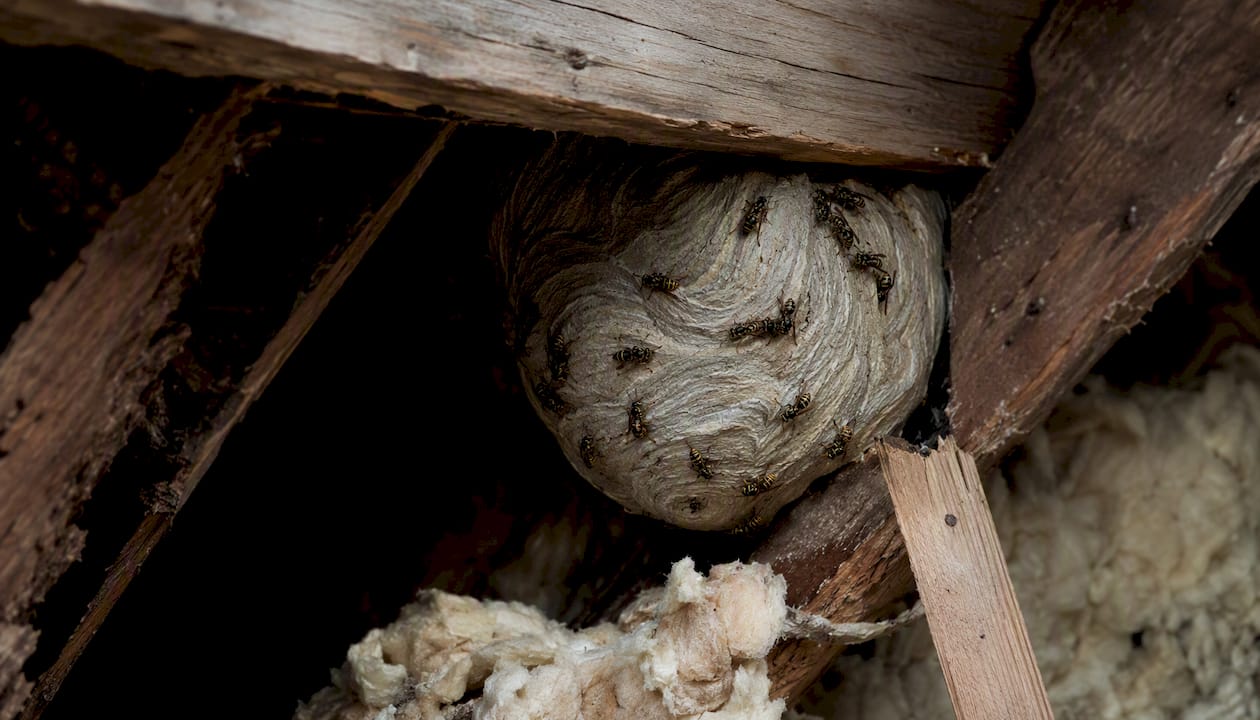
- Wasps and hornets: papery grey nests, usually in eaves or void spaces, most active from late spring
- Cockroaches and flies: sighted near warm plant equipment, often linked to a nearby food source
Priority order once you’ve made an identification: safety first, evidence second, containment third, professional survey fourth. Skipping the survey step is the single most common reason infestations come back within months.
Key Takeaways
Physical exclusion combined with habitat modification, not repellents or one-off treatments, is what actually stops roof-space pests returning to a commercial building.
| Point | Details |
|---|---|
| Identify before acting | Match droppings, noise timing and staining to a specific species before choosing a treatment approach. |
| Secure and gather evidence first | Restrict access to the affected area and photograph droppings, gnaw marks and nests before disturbing anything. |
| Seal gaps over 2cm | Rodents exploit openings as small as 2cm, so treat any gap that size or larger as a proofing priority. |
| Never disturb bats | Bats are a protected species in the UK; contact a licensed specialist rather than attempting removal. |
| Book a proofing survey | Pestcontrol24london offers BPCA-qualified commercial surveys that map and seal every roof access point in one visit. |
Table of Contents
- What are the signs of pests in a commercial roof space?
- Which species cause the most problems in commercial roofs?
- What damage and risks do roof pests cause?
- Where do pests get into commercial roofs?
- How can facilities teams prevent long-term pest problems?
- What do experienced technicians wish more facility managers knew?
- Book a commercial roof survey with Pestcontrol24london
- Frequently asked questions
- Sources
What are the signs of pests in a commercial roof space?
Scratching noises at night, often between dusk and early evening, typically indicate rodents or squirrels moving through voids as temperatures drop and activity increases. Squirrels tend to be heavier and more erratic in their movement pattern; mice produce a lighter, more continuous scuffling, often behind partition walls rather than directly overhead.
A persistent ammonia smell combined with dark, tapered droppings of certain noticeable length usually indicates rats. Smaller, rod-shaped droppings scattered more widely, rather than clustered, tend to indicate mice. Staining on ceiling tiles or insulation, often with a yellowish tinge and slightly greasy edge, typically indicates a well-used rodent runway rather than a one-off visit.
Bird activity announces itself differently. Look for a build-up of nesting material such as twigs, feathers and moss around vents or gaps in cladding, along with white or grey streaking on the roofline below a roost. Wasp activity is more seasonal and abrupt: a nest the size of a football can appear within four to six weeks during peak summer months, often first noticed as a low background buzz near a specific section of ceiling void.
Use this checklist during any roof-level inspection:
- Confirm safe access. Do not enter a roof void alone if structural integrity is in doubt.
- Photograph droppings, staining and nesting material before touching anything.
- Note noise timing and location, cross-referencing with staff reports if possible.
- Check insulation for compression, tunnelling or removal.
- Inspect visible wiring runs for chew marks or exposed copper.
- Rate urgency: low (old droppings, no fresh activity), medium (fresh droppings or noise, no visible damage), high (chewed wiring, active nest, or bat evidence).
Pro Tip: Place a strip of talcum powder or flour dust along a suspected rodent run and check it 24 hours later. Fresh paw prints confirm active movement far more reliably than droppings alone, which can be weeks old.
Which species cause the most problems in commercial roofs?
Identification matters because treatment, cost and legal obligations differ sharply between species. A wasp nest in an eaves void is a same-week job. A bat roost triggers a legal process that can take weeks to resolve properly.
Rats and mice nest in insulation, wall cavities and false ceilings, gnawing constantly to keep their incisors worn down. That habit is what makes them the leading rodent-related fire risk in commercial buildings, since they will chew through cable insulation without hesitation.
Grey squirrels favour loft voids and eaves, where they strip insulation for bedding and can chew through timber joists over time. They’re bulkier and noisier than rats, and tend to be most active at dawn and dusk.
Pigeons, gulls and starlings roost on flat roofs, ledges, and around HVAC platforms, where warmth from plant equipment is a draw in colder months. Their droppings are acidic enough to damage roofing membranes and corrode metal fixings over time.
Bats roost in soffits, ridge gaps and cavity walls, often going unnoticed because they leave the roost at dusk and return before dawn. They are a protected species under UK law, and disturbing a roost without a licence is a criminal offence.
Wasps and hornets build nests in void spaces, eaves, and occasionally within insulation itself, most visible from June through September.
Flies and cockroaches are drawn to warmth and food residue, commonly around kitchen extraction ducting or waste storage adjacent to a roof access point.
| Species | Signature sign | Typical nesting spot | Primary commercial risk |
|---|---|---|---|
| Rats | Greasy smear trails, gnawed cabling | Insulation, wall cavities | Fire risk from chewed wiring |
| Mice | Small rod-shaped droppings, scratching | False ceilings, partition voids | Contamination, minor structural gnawing |
| Grey squirrels | Chewed timber, displaced insulation | Loft voids, eaves | Structural damage, insulation loss |
| Pigeons/gulls/starlings | Guano staining, nesting debris in vents | Ledges, HVAC platforms | Membrane and metal corrosion |
| Bats | Small crumbling droppings near entry points | Soffits, ridge gaps | Legal restriction, no removal without licence |
| Wasps/hornets | Grey papery nest, buzzing | Eaves, void spaces | Sting risk to maintenance staff |
Photographic evidence should always include close-ups of droppings against a ruler or coin for scale, any gnaw marks on cabling or timber, and the full extent of a nest or roost site before any treatment begins. If bat droppings are suspected, do not disturb the area. Photograph from a distance and contact a licensed ecologist or a pest control provider familiar with the legal process for bat mitigation.
What damage and risks do roof pests cause?
Fire risk sits at the top of the list. Rodents gnaw through cable insulation as a matter of habit, not hunger, and a chewed live wire in a roof void is one of the least visible fire hazards a commercial building carries. The Health and Safety Executive treats pest-related electrical damage as a recognised workplace hazard precisely because it’s so often missed until an inspection forces the issue.
Beyond fire, the damage list runs long:
- Roofing membrane punctures from nesting activity, leading to water ingress
- Insulation compression and contamination, reducing thermal performance
- Blocked gutters and scuppers from nesting debris, causing water pooling
- Slip hazards on walkways from accumulated droppings
- Odour and hygiene issues affecting staff or customer-facing areas below the roof void
Bird droppings deserve particular attention because their corrosive effect is often underestimated. Guano buildup can corrode HVAC coils and metal roofing components because of its acidity, which shortens the working life of expensive plant equipment and can void manufacturer warranties on roofing systems.
Insurance and compliance sit quietly behind all of this. Many commercial buildings insurance policies require evidence of routine pest management, and a claim linked to pest damage can be reduced or refused if no inspection records exist. Larger sites or listed buildings may also need a structural surveyor’s report before repair work can proceed, particularly where nesting activity has affected load-bearing timber.
Where do pests get into commercial roofs?
Damaged flashing around chimney stacks, rooflights and parapet walls is one of the most common access points, because the seal degrades faster than most facility teams expect, particularly on older commercial stock. Ridge vents designed for airflow are another weak spot; a missing or torn mesh guard turns ventilation into an open door.
Pipe and cable penetrations through the roof deck rarely get sealed as tightly as the original installation intended, and gaps widen as sealant perishes with weather exposure. Damaged soffits, especially where timber has softened from long-term damp, give rodents and birds an easy foothold. Overhanging trees act as a bridge straight onto the roofline, letting squirrels and birds bypass ground-level barriers entirely.
The scale of the vulnerability is easy to underestimate. Rodents can squeeze through gaps as small as 2cm in diameter, roughly the width of a pencil. That figure should shape every proofing decision on a commercial roof: any gap wider than that around a pipe boot, vent, or flashing join is a viable entry point, not a cosmetic issue to defer. Pests generally don’t create new openings; they exploit existing ones that maintenance teams have overlooked.
Add these checks to routine roof inspections:
- Photograph and measure any gap around penetrations, flagging anything over 2cm
- Check flashing seals at every junction, not just the obvious ones
- Log vent mesh condition and replace torn or rusted sections immediately
- Inspect soffits for softening or gaps, particularly on the shaded side of the building
- Note overhanging branches within two metres of the roofline for trimming
How can facilities teams prevent long-term pest problems?
Physical exclusion and habitat modification are the only reliable long-term controls for roof-space pests. Ultrasonic repellers and most chemical deterrents don’t work against an established infestation; once a colony has settled, only sealing entry points and removing what attracted them in the first place will hold.
A practical prevention programme for a commercial site should run through these steps in order:
- Trim back branches and vegetation within two metres of the roofline.
- Secure all waste storage and food sources near the building, including bin stores adjacent to service entrances.
- Screen vents and ridge gaps with durable mesh rather than temporary fixes.
- Repair damaged flashing and reseal pipe and cable penetrations as part of routine maintenance, not as an afterthought.
- Install bird-netting on ledges and platforms prone to roosting, where structurally suitable.
- Schedule gutter and downpipe clearance at least twice yearly to prevent nesting material build-up.
Monitoring sits alongside prevention rather than replacing it. Regular visual checks during routine roof maintenance catch early signs before they become established colonies. Remote cameras positioned at known access points offer a low-disruption way to confirm activity without repeated site visits, and roof-level monitor stations, placed and checked by a qualified technician, provide hard evidence of rodent presence long before staff hear anything at all.
Left unchecked, a single breeding pair of rats can produce a colony numbering in the dozens within a few months, given typical breeding rates and a stable food source. A wasp nest can grow from a golf-ball-sized start to a mature colony of several thousand insects across a single summer season. Speed of escalation is exactly why a “wait and see” approach on a commercial roof almost always costs more than early intervention.
A formal proofing survey becomes worthwhile once evidence points to an established rather than transient presence, or where the roof’s complexity (multiple plant rooms, several penetration types, extensive ledge area) makes a DIY fix unreliable. A proper commercial survey should include a full written report, a defined proofing scope with materials specified, and confirmation of BPCA-accredited technicians carrying out the work. Larger commercial roofs, in particular, tend to need a coordinated approach involving exclusion work and scheduled follow-up monitoring rather than a single visit, given the number of access points typical of complex roof geometry.
Pro Tip: Fold pest checks into your existing roof maintenance schedule rather than treating them as a separate task. A technician already up there checking flashing and drainage can flag early pest signs at no extra visit cost.
One commercial kitchen client we worked with had persistent fly activity traced back to a single unsealed extraction duct penetration on the roof, missed during three previous general maintenance visits because nobody was looking for pest access specifically. Sealing that one gap, alongside a deep clean of the surrounding void, resolved an issue that had cost the client repeated call-outs over eight months.
What do experienced technicians wish more facility managers knew?
The single habit that cuts repeat call-outs more than anything else is mapping and sealing every roof penetration during the first visit, not just the one causing the current complaint. Most reactive pest visits treat the symptom: the nest, the droppings, the noise. They leave three or four other viable entry points untouched, which is why the same building calls again within a season.
Set realistic expectations for timelines. A wasp nest treatment resolves within days. A rodent infestation with an established colony typically needs a proofing pass followed by a re-inspection at around four to six weeks, because sealing entry points before confirming the colony has fully cleared can trap animals inside voids. Bird-related work moves slower still if any protected species is involved, since licensing timescales sit outside a contractor’s control.
The gap between reactive and proactive pest management on commercial roofs is larger than most facility teams assume. A single proofing survey, done properly with BPCA-qualified technicians and over a decade of commercial site experience behind it, tends to cost less across a year than three or four reactive emergency visits chasing the same underlying entry points.
Book a commercial roof survey with Pestcontrol24london
Pestcontrol24london gives commercial property owners something a one-off call-out never can: a single proofing survey that closes every access point at once, rather than a repeat visit every time a different pest finds the gap the last contractor missed.
We’re BPCA-qualified with more than ten years handling roof-space infestations for hotels, restaurants, shops and offices across London, and our commercial pest control service is built around exactly the risks covered here. A booked survey includes a full roof-void inspection, photographic evidence of entry points and nesting activity, a written proofing scope, and where needed, dead animal removal and post-treatment sanitisation of contaminated insulation.
Cost depends on roof size, access difficulty and how many penetration points need attention, so we scope each site individually rather than quoting blind. If you’ve spotted droppings, heard scratching, or found chewed cabling in your roof void, get in touch for a survey before the next breeding cycle turns a small problem into a structural one.
Frequently asked questions
What are the most common types of pests in commercial roof spaces?
Rats, mice, grey squirrels, roosting birds such as pigeons and gulls, wasps, and bats are the pests most commonly found in commercial roof spaces, with cockroaches and flies appearing where warmth or food waste is nearby.
How do I know if I have pests in my roof space?
Look for scratching noises at night, droppings, gnaw marks on cabling or timber, staining on ceiling tiles, and nesting material around vents or eaves. A detailed inspection checklist can help convert these signs into a confident identification.
Are bats in a commercial roof space illegal to remove?
Yes. Bats are a protected species in the UK, and disturbing or removing a roost without a licence is a criminal offence. Contact a specialist familiar with the legal mitigation process rather than attempting removal yourself.
How quickly can a roof pest infestation get worse?
Rodent colonies can grow from a single breeding pair to dozens of animals within a few months, and a wasp nest can expand from golf-ball size to several thousand insects across one summer, which is why early proofing matters more than a wait-and-see approach.
When should I call a professional pest control service for a commercial roof?
Call a professional once you find fresh droppings, active nesting, chewed wiring, or any sign of bat activity, or where the roof’s size and number of access points make DIY proofing unreliable.