

An occasional invader pest is any outdoor species that sporadically wanders indoors when conditions outside turn hostile, but that usually cannot breed or establish a lasting population inside your walls. The single best immediate action is basic exclusion: seal the obvious exterior gaps and clear the harbourage sitting against your foundation before you reach for a spray. Most sightings are seasonal noise, not the start of an infestation.
You’ll most commonly see:
- Centipedes and millipedes
- Earwigs and field crickets
- Boxelder bugs, stink bugs and cluster flies
- Ladybirds (lady beetles)
- Silverfish and springtails
- Pillbugs and sowbugs
Bodies like PestWorld and BPCA (the British Pest Control Association) treat this as a distinct pest category precisely because the response differs from a genuine infestation. An Integrated Pest Management approach, exclusion first, chemicals only as a last resort, is the standard professional framework, and it’s the one Pestcontrol24london applies on every job.
Key Takeaways
Occasional invader pests enter buildings seasonally in response to weather and moisture, and exclusion, not insecticide, solves most cases.
| Point | Details |
|---|---|
| Definition matters | Occasional invaders rarely breed indoors, so identification changes the correct response entirely. |
| Seal first | Caulking, weatherstripping, and fine mesh vent covers stop most species before they ever get inside. |
| Watch for silverfish | Unlike most on this list, silverfish can breed indoors and cause ongoing material damage. |
| Clear dead bodies promptly | Leftover carcasses attract secondary pests like carpet beetles if not vacuumed up quickly. |
| Call a professional when needed | Pestcontrol24london offers BPCA-qualified surveys and 24/7 emergency callouts across London. |
Table of Contents
- Common types of occasional invader pests and how to spot them
- Why do occasional invaders come indoors in the first place?
- What harm do occasional invaders actually cause?
- Prevention: an IPM-first checklist for your home
- When should you call a pest professional?
- How professionals diagnose and treat an occasional invader problem
- Get a professional survey before the next seasonal influx
- Frequently asked questions
- Sources
Common types of occasional invader pests and how to spot them
Recognising what you’re looking at matters more than most homeowners assume, because the right response for a boxelder bug is the opposite of the right response for a silverfish. Here’s what typically turns up, and when.
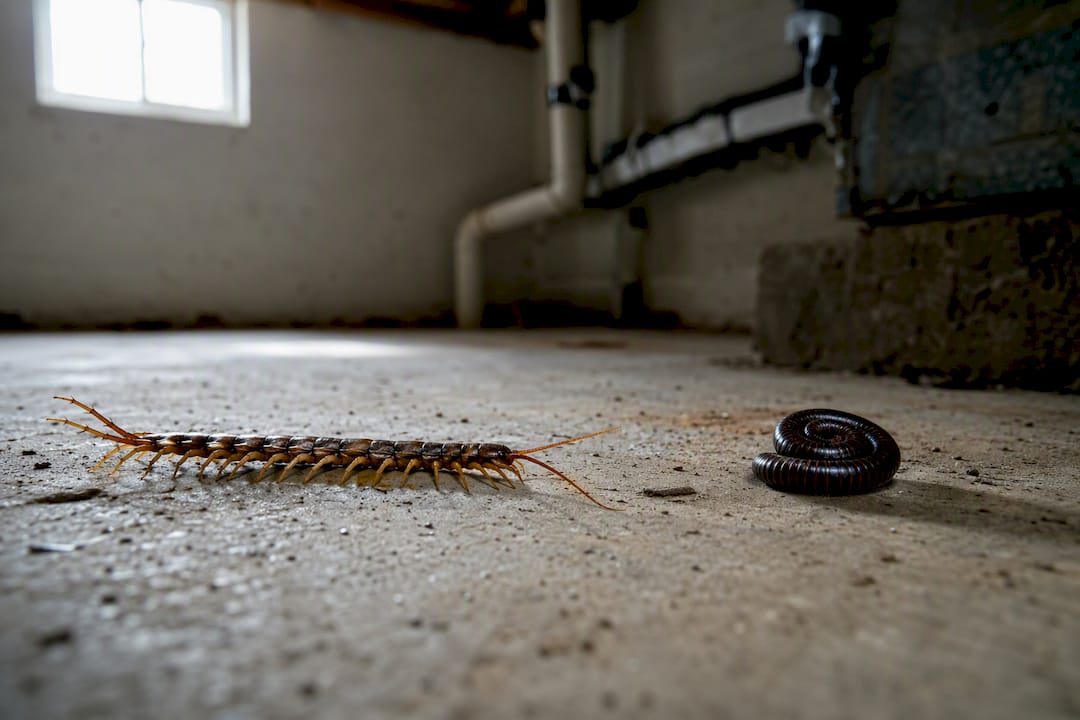
Centipedes move fast, have long legs running the length of a flattened body, and usually appear in damp basements or bathrooms. Millipedes are slower, rounder in cross section, and curl into a tight coil when disturbed; they show up after heavy rain has driven them from waterlogged soil.
Earwigs are easy to identify from the pincer-like cerci at the tail end. They favour mulch beds and damp windowsills, and tend to appear in late summer. Field crickets and the paler, humpbacked camel crickets turn up in cellars and garages, often in autumn as outdoor temperatures drop.
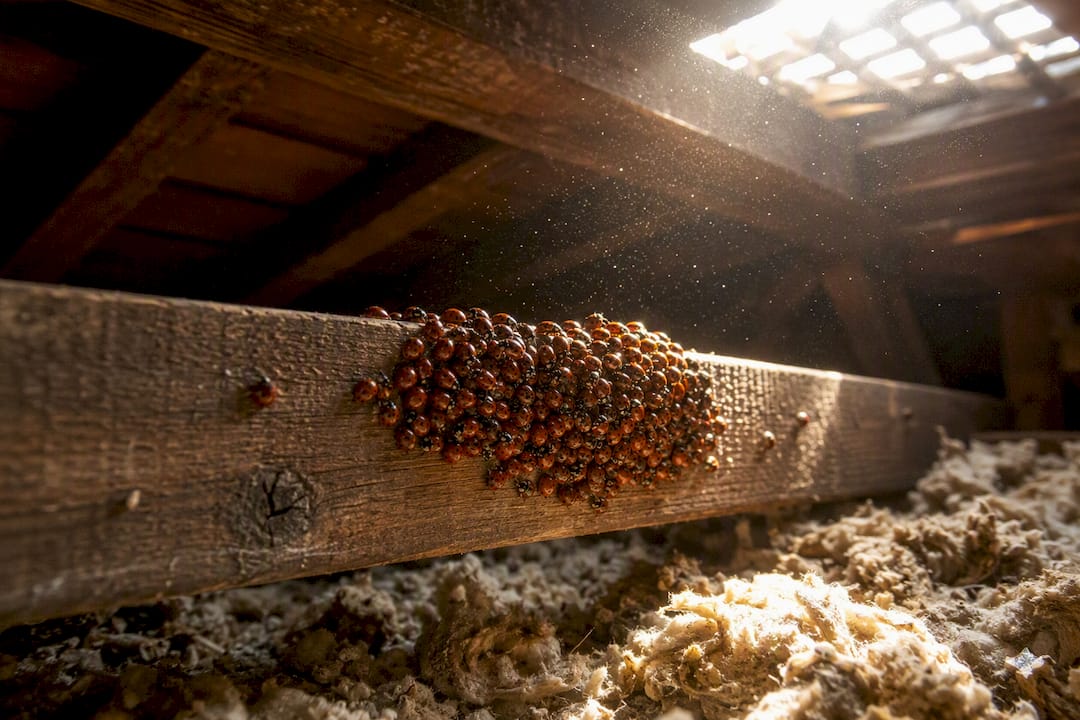
Boxelder bugs, stink bugs, and cluster flies are the classic overwintering trio. All three gather on sun-warmed exterior walls in autumn, squeeze through the smallest gaps, and reappear on interior windowsills during winter warm spells. Ladybirds follow the same overwintering pattern in huge clustering swarms, often in attics or wall voids.
Pillbugs and sowbugs (often lumped together as “woodlice”) stay near damp mulch, leaf litter, and door thresholds; find one indoors and it’s almost always died within hours, unable to survive the dry air. Silverfish, by contrast, are genuinely built for indoor life. Their silvery, carrot-shaped bodies and fast, wriggling movement are usually spotted in bathrooms, basements, and among stored papers or books, and unlike most on this list, they can complete their life cycle indoors.
Springtails appear in huge numbers around damp potted plants or bathroom tile grout. Slugs and snails slide in through gaps under doors after wet weather and leave a telltale slime trail across the floor. Ground beetles, dark and fast-moving, usually enter as transient migrants and rarely stay put. Firewood brought in from an outdoor stack can carry any of several of these species, plus the odd spider or beetle, straight into your living room.
Damage potential varies sharply. Silverfish will graze on paper, wallpaper paste, and book bindings over time, and slugs will strip a seedling bed overnight. Boxelder bugs and ladybirds, meanwhile, mostly stain fabric and paintwork with their body fluids, a nuisance rather than a structural threat, according to state fact sheets from the Illinois Department of Public Health.
Pro Tip: One sighting a week after a cold snap is a transient migrant. Sightings every week, all year, especially if you spot small juveniles rather than only adults, point to an indoor breeding population and a different problem entirely.
Why do occasional invaders come indoors in the first place?
Most of these species are surprisingly poor at handling temperature extremes and drying out, which is exactly why they head for your walls. Research into occasional urban invaders confirms that many species are highly susceptible to desiccation and temperature swings, so a building interior offers stable humidity and warmth they simply cannot find outside.
Seasonal triggers include:
- Overwintering ahead of the first hard frost
- Heavy rain or localised flooding pushing ground dwellers upward
- Drought driving moisture seekers toward damp indoor spaces
- Breeding cycles peaking near foundations in late summer
Environmental triggers include:
- Mulch, leaf litter, or firewood stacked against exterior walls
- Exterior lighting drawing in light-attracted species after dark
- Unsealed vents, soffits, and utility penetrations
- Gaps around doors, windows, and cable or pipe entry points
Priority fixes: move firewood stacks well away from the house, switch off unnecessary exterior lighting, and repair rooflines and soffit gaps before autumn sets in.
What harm do occasional invaders actually cause?
Most occasional invaders are a nuisance rather than a genuine hazard, though a handful of specific problems are worth flagging. Boxelder bugs and ladybirds can stain fabric and paintwork. Silverfish steadily damage books, wallpaper, and stored paper. Shed skins and dead bodies can trigger allergic reactions in sensitive people and attract secondary scavengers such as carpet beetles.
If you find dead bodies indoors, vacuum and dispose of them promptly. Left in place, they become a food source that draws in carpet beetles, turning a one-off nuisance into a second pest problem entirely.
Persistent, year-round sightings, especially of silverfish or crickets, suggest more than a passing seasonal visit and usually warrant a closer look.
Prevention: an IPM-first checklist for your home
Exclusion, not insecticide, is the professional starting point for every occasional invader problem. The IPM research behind species like the garden millipede shows that habitat modification alone controls most populations without any broadcast spraying at all.
- Seal the entry points. Caulk exterior cracks, fit weatherstripping to doors, and cover vents with fine mesh hardware cloth, ideally under one eighth of an inch, to keep even small insects out. Our guide to common ant entry points covers the same gaps that let in most occasional invaders too.
- Control moisture. Fix leaking taps and guttering, improve drainage away from the foundation, and run a dehumidifier in persistently damp basements. Where flooding is a genuine risk, a properly maintained sump pump is worth the investment.
- Manage landscaping and storage. Keep mulch and compost at least a foot from exterior walls, trim vegetation back from the house, and store firewood off the ground and away from the building, bringing in only what you’ll burn that day.
- Adjust lighting and ventilation. Switch to downward-shielded exterior fittings and dim interior lights near open windows at dusk, when light-attracted species are most active.
- Follow the seasonal calendar. Prioritise exclusion work in autumn ahead of overwintering influxes; focus on moisture and landscaping through spring and summer instead. Our autumn pest-proofing checklist and this guide to winterising exterior doors both cover the detail well.
Pro Tip: Reach for habitat modification before insecticide, always. A targeted spot treatment only earns its place once exclusion and moisture control are already done and sightings are still ongoing.
When should you call a pest professional?
Some situations move past a DIY fix. Call a professional if you’re seeing:
- A large-scale influx (hundreds of insects at once)
- Repeated sightings across every season, not just autumn or spring
- Evidence of breeding indoors, such as juveniles rather than adults
- A species with genuine health or structural risk
- Any sighting inside a commercial kitchen or hospitality setting, where standards are stricter
Before the visit, photograph what you’ve found, note where and when you’ve seen it, and mention any recent flooding or firewood deliveries. Choosing a BPCA-qualified company gives you a straightforward way to confirm a technician meets recognised UK industry standards.
How professionals diagnose and treat an occasional invader problem
A proper survey starts with habitat inspection: checking for damp harbourage, mapping exterior lighting against entry points, and examining firewood stacks and landscaping close to the walls. Species that use structural voids to overwinter fall into their own recognised category, distinct from transient migrants, a distinction that shapes the whole treatment plan, as PCT’s entomological overview explains.

Exclusion work comes first every time. Targeted, low-residual baits or spot treatments are reserved for cases where habitat changes alone haven’t solved it. A typical job: an influx after flooding leads to exterior exclusion, landscape regrading, and a targeted interior vacuum, no broadcast spraying involved.
Pro Tip: Ask any technician for photos, species identification, and a list of entry points found. A thorough report is one of the clearest signs of a properly conducted survey.
A technician’s-eye view of a typical autumn call
Every autumn brings the same call: a spare room suddenly full of ladybirds or boxelder bugs clustered on a sunny wall. The first two jobs on site are always the same, confirm the species, then find and seal the entry gap before touching anything else. Dan and the Pestcontrol24london team, BPCA qualified and working across London since 2015, see this pattern every year without fail.
Get a professional survey before the next seasonal influx
A BPCA-qualified survey does what sealing gaps alone often can’t: it identifies exactly where a building is vulnerable, from soffit gaps to firewood stacks, and matches the fix to the actual species involved rather than a generic spray-and-hope approach.

Pestcontrol24london offers free surveys and 24/7 emergency callouts across London, for homeowners dealing with an autumn ladybird cluster and property managers responsible for a hospitality kitchen alike. If sealing and cleaning haven’t stopped repeat sightings, get a free quote from Pestcontrol24london and let a BPCA-qualified technician map your exclusion points properly.
Frequently asked questions
What exactly counts as an occasional invader pest?
It’s any outdoor species, insects, arachnids, or molluscs, that wanders indoors sporadically without establishing a breeding population, distinct from pests like cockroaches that live in your home permanently.
Are occasional invader pests dangerous?
Most are harmless nuisances that stain surfaces or trigger mild allergies from shed skins. A small number, notably silverfish, can cause ongoing material damage if left unaddressed.
How do I stop occasional invaders from coming back every autumn?
Seal exterior gaps, vents, and utility penetrations before the first frost, move firewood away from the house, and switch to downward-shielded exterior lighting.
Should I vacuum up dead insects or just leave them?
Vacuum them up promptly. Leftover bodies attract secondary pests such as carpet beetles, turning a minor nuisance into a fresh problem.
When is it worth calling a professional rather than handling it myself?
Call one if you’re seeing hundreds of insects at once, sightings all year round, evidence of indoor breeding, or any occasional invader inside a commercial kitchen or hospitality setting.
Sources
- PestWorld
- IPM of occasional urban invader pest species (DOI)
- Occasional Pest Invaders (Illinois Department of Public Health)
- What’s in a name? – Pest Control Technology (PCT)