

Fruit in UK gardens is most commonly attacked by insects, molluscs, birds, and small mammals. The types of fruit-attracting pests you are most likely to encounter fall into six broad groups: chewing insects (caterpillars and beetles), sap-suckers (aphids, scale insects, and whitefly), borers (peachtree borers and branch borers), fruit flies and maggots (spotted wing drosophila and apple maggot), molluscs (slugs and snails), and vertebrates (birds, squirrels, and rodents). The RHS and BPCA-qualified professionals such as Pestcontrol24london both recommend the same first step: inspect your fruit carefully for entry holes, frass, honeydew, or webbing, and use those signs to tag the likely pest group before choosing a response.
Quick signs to look for at first inspection:
- Entry holes or tunnels in fruit flesh: likely codling moth or apple maggot
- Frass (sawdust-like excrement) at the trunk base or on bark: probable borer activity
- Sticky honeydew and black sooty mould on leaves: sap-sucking insects such as aphids or scale
- Crescent-shaped cuts on fruit skin: egg-laying by weevil-type insects
- Slime trails and ragged surface feeding: slugs or snails
- Pecked or torn fruit, feathers nearby: birds
- Gnawed fruit or bark, droppings: squirrels or rodents
Key takeaways
Fruit pests in UK gardens fall into six functional groups, and identifying the correct group from physical signs is the essential first step before any control measure is chosen.
| Point | Details |
|---|---|
| Six pest groups to know | Chewers, sap-suckers, borers, fruit flies/maggots, molluscs, and vertebrates each leave distinct physical signs. |
| IPM is the priority order | Work through monitoring, then cultural and mechanical controls, then biological options, before considering any chemical treatment. |
| Seasonal watch months | Aphids and caterpillars peak in April to June; SWD and apple maggot are active June to August; borers and vertebrates cause damage through autumn and winter. |
| Sanitation is the foundation | Removing fallen fruit, mummified fruit, and infested prunings eliminates overwintering sites for the majority of common fruit pests. |
| Call a professional when needed | Trunk borers, repeated crop loss despite IPM, or vertebrate structural damage are clear signals to contact a BPCA-qualified contractor such as Pestcontrol24london. |
Table of Contents
- What are the main types of fruit-attracting pests in the UK?
- How do you tell pest damage from disease or stress?
- How to manage fruit pests using an IPM approach
- Seasonal prevention tasks that reduce pest pressure
- Which natural predators help keep fruit pests in check?
- Using pesticides safely: what UK gardeners need to know
- When should you call a professional pest controller?
- A professional’s perspective on fruit pest management
- Persistent fruit pest problems? Pestcontrol24london can help
- Sources
What are the main types of fruit-attracting pests in the UK?
Grouping pests by what they do to fruit makes identification faster and treatment choices clearer. Below are the main functional groups, each with a short ID note, the damage signature to look for, and when they are typically active in the UK.
Chewing insects: caterpillars and beetles
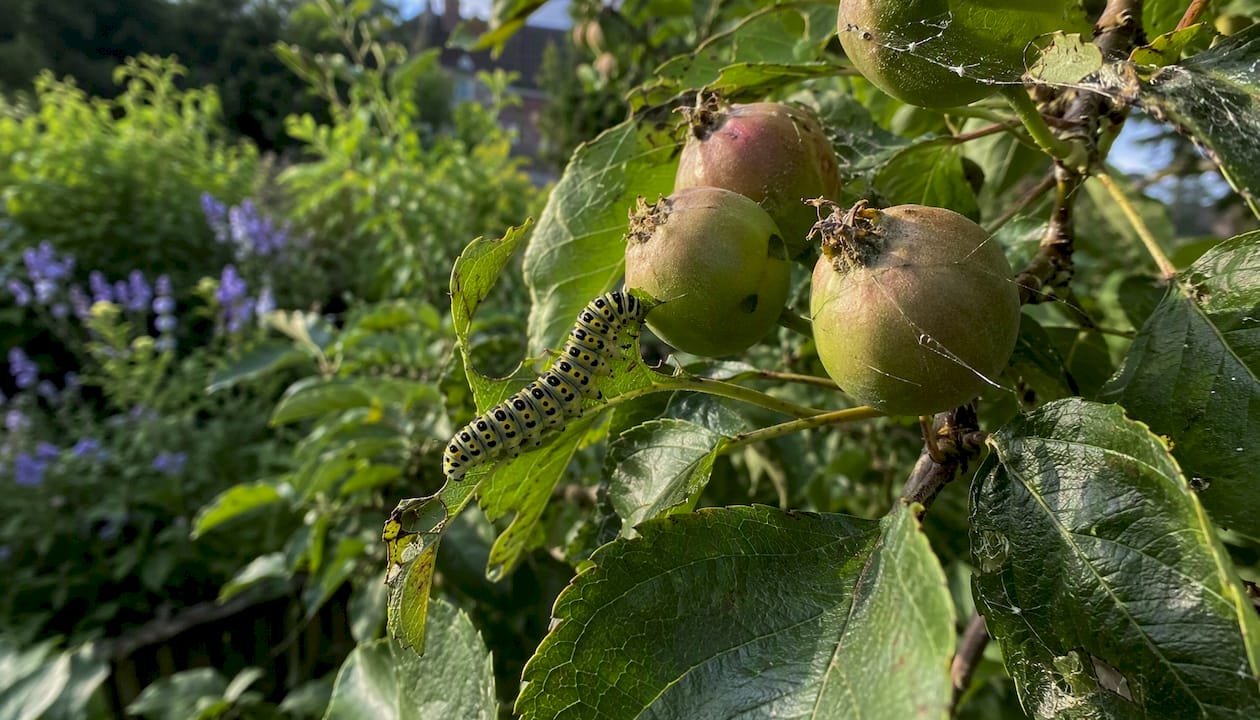
Winter moth and tortrix moth caterpillars feed on buds, blossom, and young fruitlets from March through to June. You will find small holes in developing fruit and webbed leaves nearby. Codling moth is the most damaging chewer of apples and pears: larvae tunnel into the core, leaving a characteristic entry hole surrounded by brown frass, and are active from June through to August. Vine weevil grubs feed on roots rather than fruit directly, but the adults notch leaf margins and can weaken trees enough to affect cropping.
Sap-sucking insects: aphids, scale, and whitefly
Aphids and scale insects suck sap from shoots and leaves, producing sticky honeydew that quickly develops into black sooty mould. Woolly aphid forms white, cotton-like colonies on apple bark. Rosy apple aphid causes severe leaf curl and stunted fruitlets in April and May. San Jose scale and mussel scale attach to bark and weaken branches over time. Whitefly is more common on soft fruit under cover but can appear on outdoor crops in warm summers.
Borers: peachtree borers and branch borers
Borers are among the most destructive fruit garden pests because damage is internal and often advanced before it is noticed. The greater peachtree borer attacks the trunk and crown of plums, cherries, and peaches, producing frass and oozing gum (gummosis) at the base. Borers such as this produce frass and sawdust at entry points, and can kill young or stressed trees outright. Adult moths are active in mid to late summer, but larval damage continues through autumn and winter.
Fruit flies and maggots: spotted wing drosophila and apple maggot
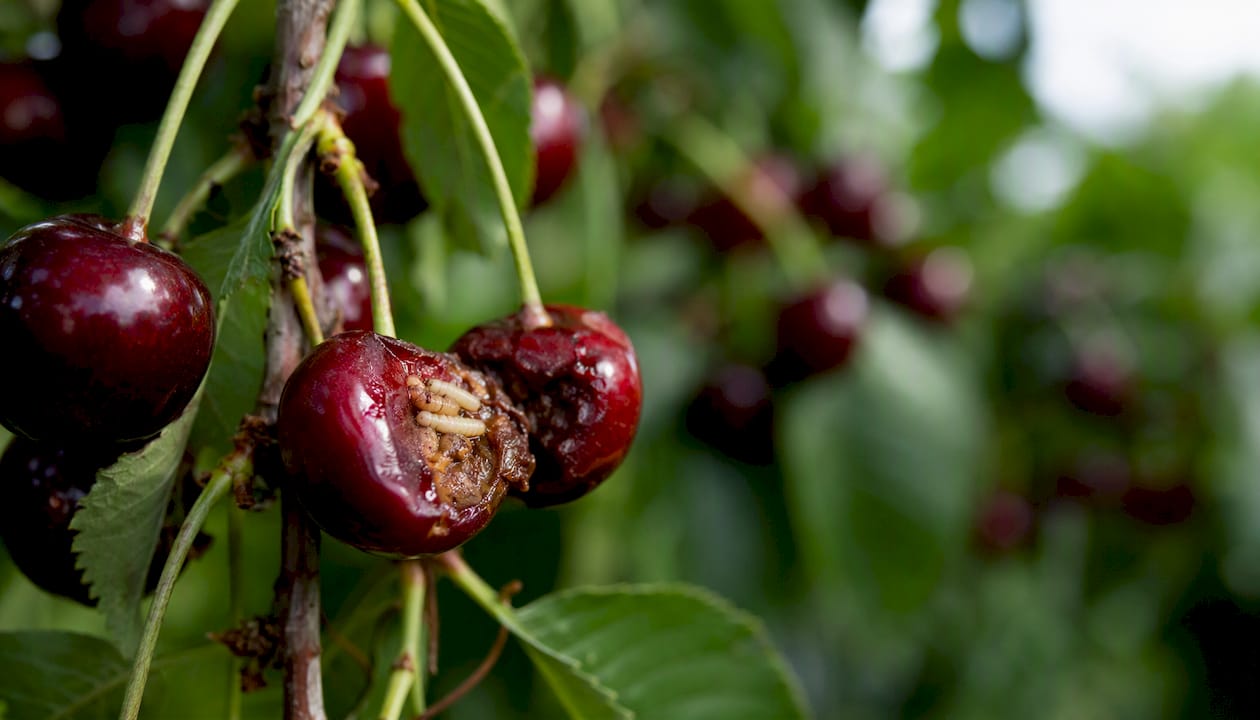
Spotted wing drosophila (SWD) is a particular concern for cherries, raspberries, and strawberries. Unlike most fruit flies, SWD lays eggs inside intact, ripening fruit; larvae develop rapidly and cause soft, sunken spots that collapse the fruit. Apple maggot (Rhagoletis pomonella) punctures apple skin to lay eggs, and the resulting larvae produce brown tunnels through the flesh. Apple maggot is active through summer months, with adults emerging from late June onwards.
Molluscs: slugs and snails
Slugs and snails cause surface feeding damage on low-hanging or fallen fruit, leaving ragged edges and characteristic slime trails. They are most active from March through to October, with peaks in mild, wet weather. Strawberries and low-growing soft fruit are most vulnerable, though snails will climb apple trees to reach windfalls.
Vertebrates: birds, squirrels, and rodents
Blackbirds and starlings peck ripening cherries, currants, and strawberries from June onwards. Wood pigeons strip brassica and soft fruit leaves. Grey squirrels gnaw unripe apples and pears, often taking one bite and dropping the fruit. Voles and mice gnaw bark at the trunk base, particularly in winter when other food is scarce, and can ring-bark young trees fatally.
Seasonal timing at a glance
| Season | Pest | Peak activity |
|---|---|---|
| Early spring (March–April) | Rosy apple aphid, winter moth caterpillar | Bud burst to petal fall |
| Late spring (May–June) | Codling moth egg laying, woolly aphid | After blossom |
| Summer (June–August) | Spotted wing drosophila, apple maggot, San Jose scale | Fruit ripening |
| Late summer–autumn (August–October) | Peachtree borer adults, slugs/snails, birds | Harvest period |
| Winter (November–February) | Voles, mice (bark gnawing), overwintering scale | Dormant season |
Regional pest advisories note that action windows for pests such as codling moth and woolly apple aphid can shift by several weeks depending on the season, so checking local alerts each year is worthwhile.
For photographic identification, the RHS pest library and the UK Centre for Ecology and Hydrology both offer image galleries. If you cannot identify a specimen from photos alone, preserve a sample in a sealed bag and seek a professional diagnosis.
How do you tell pest damage from disease or stress?
Misidentifying the cause of fruit damage leads to wasted treatments and continued crop loss. A few focused questions at the tree will usually separate insect damage from fungal disease or physiological stress.
Ask yourself where the damage is:
- Inside the fruit, with a clear entry hole and frass: almost certainly a boring caterpillar such as codling moth or apple maggot larvae
- Surface pitting or crescent cuts on fruit skin: egg-laying damage from weevil-type insects
- Soft, sunken spots with tiny puncture marks: spotted wing drosophila larvae inside ripening soft fruit
- Sticky, shiny leaves with black coating: honeydew from aphids or scale, not a primary disease
- Gummosis (weeping sap) on stone fruit trunk: could be borer activity, but also a stress response to drought, frost, or disease; look specifically for frass and entry holes to confirm borers rather than assuming the cause
- Brown rot on stone fruit or shot hole lesions on leaves: these are fungal diseases, not insect damage, though stone fruits are vulnerable to both boring insects and brown rot simultaneously, so check for both
When to seek a professional or laboratory diagnosis:
- Signs are ambiguous and crop loss is significant
- You suspect internal borers but cannot locate an entry hole
- Gummosis is present on multiple trees without a clear insect cause
- Damage is spreading rapidly and you have already tried standard controls
How to manage fruit pests using an IPM approach
Integrated Pest Management (IPM) groups controls into four tiers: monitoring, cultural and mechanical controls, biological controls, and targeted chemical use only when necessary. Working through the tiers in order keeps your garden healthier and reduces the risk of pesticide resistance.
Step 1: Monitor and set thresholds
- Hang pheromone traps for codling moth and SWD from late April; check weekly and record catch numbers.
- Inspect fruit, leaves, and bark every two weeks from bud burst through to harvest.
- Set a personal action threshold: for example, act on codling moth when trap catches rise sharply over two consecutive weeks, not at the first moth caught.
- Photograph unusual damage and keep a simple log with dates; this builds a picture of your garden’s pest calendar year on year.
Pro Tip: Timing treatments to the pest’s vulnerable life stage dramatically improves efficacy. Codling moth larvae are most exposed just after egg hatch, before they enter the fruit. Spraying at petal fall targets this window precisely.
Step 2: Cultural and mechanical controls
- Remove and dispose of fallen fruit promptly; do not compost it if larvae are present.
- Prune out dead or infested wood in winter, cutting back to clean tissue and sealing large wounds.
- Fit fine-mesh netting (1.5 mm or finer) over cherries and soft fruit before ripening; this is the single most reliable way to deter fruit pests including birds and SWD.
- Use grease bands on apple and pear trunks from October to February to trap wingless female winter moths climbing to lay eggs.
- Place physical barriers (copper tape, grit) around strawberry beds to deter slugs.
Step 3: Biological controls
Biological options work best when applied early and when conditions suit the organism. For a fuller comparison of biological versus chemical approaches, the biological vs chemical pest control guide covers the key trade-offs.
- Bacillus thuringiensis (Bt) is a naturally occurring bacterium that controls caterpillars when applied to foliage at egg hatch; it is harmless to bees and other beneficial insects.
- Parasitic nematodes (Steinernema species) applied to moist soil in late summer target vine weevil grubs and some slug populations.
- Encourage parasitic wasps by planting umbellifers such as fennel and dill nearby; these wasps parasitise codling moth larvae and other caterpillar pests.
Step 4: Chemical controls as a last resort
When cultural and biological measures have not held pest numbers below your threshold, a targeted pesticide may be appropriate. Always choose a product approved for the specific pest and crop under UK regulations, follow the label precisely, and apply at the life stage most vulnerable to treatment. Monitoring and identifying life stages is what makes chemical control effective rather than wasteful. Never spray during blossom when pollinators are active, and observe pre-harvest intervals stated on the label.
IPM monitoring checklist:
- Pheromone traps set and checked weekly from April
- Fortnightly fruit and bark inspections logged
- Fallen fruit collected within 48 hours
- Netting fitted before fruit colours
- Biological controls ordered and applied at the right soil temperature
- Chemical treatment only after threshold is exceeded and alternatives exhausted
Seasonal prevention tasks that reduce pest pressure
Consistent year-round garden hygiene removes the overwintering sites and food sources that allow pest populations to build. A localised sowing and planting schedule can also help you time preventive measures to coincide with key pest emergence windows.
Spring (March–May):
- Inspect trunks and branches for scale insects and overwintering egg masses; remove by hand or with a stiff brush.
- Apply grease band checks and replace if saturated.
- Thin fruitlets in June to improve air circulation and reduce codling moth egg-laying sites.
Summer (June–August):
- Net cherries and soft fruit before they colour; SWD adults are active from June.
- Collect fallen fruit every two to three days.
- Water trees at the root zone rather than overhead to reduce fungal disease risk alongside pest pressure.
Autumn (September–November):
- Clear all fallen leaves and mummified fruit from beneath trees; these harbour overwintering codling moth pupae, brown rot spores, and scale insects.
- Remove and dispose of any infested prunings; do not leave them on site.
- Fit trunk guards on young stone fruit trees to protect against vole and rabbit gnawing through winter.
Winter (December–February):
- Carry out dormant pruning to remove dead, diseased, or crossing wood; this improves air flow and removes borer entry points.
- Apply a winter wash (plant oil-based products approved for amateur use) to apple and pear bark to reduce scale insect and aphid egg populations.
- Check tree ties and guards; voles are most active under snow cover.
Garden design tips that reduce pest hotspots:
- Space trees to allow good air circulation; crowded canopies trap humidity and favour aphid colonies.
- Avoid excessive nitrogen fertiliser, which produces soft, sappy growth that aphids prefer.
- Incorporate companion planting ideas such as nasturtiums as aphid trap crops and marigolds to deter soil pests near fruit beds.
Which natural predators help keep fruit pests in check?
A garden that supports beneficial insects and wildlife can significantly reduce the need for intervention. The key is providing habitat and avoiding broad-spectrum pesticides that kill predators alongside pests.
Beneficial insects and their targets:
- Ladybirds and lacewings: both adults and larvae consume large numbers of aphids; a single lacewing larva can eat several hundred aphids during its development
- Parasitic wasps (Ichneumonidae and Braconidae families): lay eggs in or on caterpillar larvae, including codling moth; the larvae consume the host from within
- Predatory ground beetles (Carabidae): active at night, feeding on slug eggs, vine weevil grubs, and small caterpillars in the soil
- Hoverflies: adults pollinate blossom; larvae of many species are voracious aphid predators
- Spiders: trap a broad range of flying and crawling insects in webs and by hunting
Vertebrate predators worth encouraging:
- Blue tits and great tits hunt caterpillars and aphids on fruit tree branches, particularly in spring when feeding chicks
- Hedgehogs are effective slug and snail predators; leave a gap in fencing for access
- Bats take adult moths on the wing at dusk, including codling moth adults
Practical habitat measures:
- Install an insect hotel with hollow stems and drilled wood blocks to provide overwintering sites for lacewings and solitary wasps.
- Plant a pollen and nectar strip along the orchard edge with phacelia, borage, and umbellifers to attract and sustain parasitic wasps and hoverflies.
- Provide a shallow dish of water for insects and birds, refreshed daily.
- Avoid mowing the orchard floor too short; tussocky grass provides cover for ground beetles and hedgehogs.
Pro Tip: Staggered flowering across your garden, from early-flowering hellebores in February through to late-season sedums in October, keeps beneficial insect populations fed and present throughout the entire pest season rather than just at peak blossom.
For more on supporting beneficial organisms as part of a natural pest control approach, there are practical steps suited to London gardens specifically.
Using pesticides safely: what UK gardeners need to know
Pesticides are a last resort in any IPM programme, and UK regulations require that amateur gardeners use only products approved for home garden use and follow the label exactly. The Health and Safety Executive (HSE) maintains the register of approved products; if a product is not on that register for your specific crop and pest, it is not legal to use it for that purpose.
Practical safety steps before and during application:
- Wear appropriate PPE: gloves, eye protection, and long sleeves as a minimum; follow label requirements for respiratory protection.
- Never spray in windy conditions; drift onto neighbouring plants, water courses, or bee forage is both a safety risk and a legal concern.
- Spray in the evening after bees have returned to their hives, or when the crop is not in flower, to protect pollinators.
- Observe the pre-harvest interval stated on the label; this is the minimum number of days between application and safe harvest.
- Store products in their original containers, locked away from children and pets.
When homeowner application is appropriate versus when to call a professional:
- Small infestations on accessible trees with approved amateur products: homeowner application is reasonable.
- Products requiring professional-grade equipment, high-pressure application, or restricted-use formulations: a qualified contractor is needed.
- Any situation where bees, protected species, or neighbouring properties could be affected: seek professional advice before proceeding.
- If you are uncertain about the product, the pest, or the application method, the safest course is to contact a qualified pest control professional rather than risk a misdirected treatment.
When should you call a professional pest controller?
Most fruit pest problems respond to the IPM steps above, but some situations genuinely require professional expertise, equipment, or legal authority to resolve safely.
Clear signals that professional help is warranted:
- Frass and sawdust at the trunk base of stone fruit trees, suggesting active borer infestation inside the wood
- Repeated significant crop loss across two or more seasons despite consistent IPM measures
- Vertebrate pests (squirrels, rats, or pigeons) causing structural damage to outbuildings, sheds, or roof spaces adjacent to the garden
- Suspected protected species involvement (bats roosting in a garden structure, for example) where disturbance requires a licence
- Gummosis on multiple stone fruit trees with no clear insect cause, warranting a professional diagnostic visit
What to expect from a professional visit:
A qualified technician will carry out a thorough inspection of affected trees, soil, and surrounding structures, identify the pest or combination of pests, and propose a treatment plan. For borer infestations, this typically involves a follow-up visit to confirm larval kill. Proofing work such as netting installation or trunk guard fitting may be recommended as part of the same programme.
A BPCA-qualified technician brings more than a product to your garden. They bring the diagnostic experience to distinguish a borer from a disease, the knowledge to time a treatment to the pest’s life stage, and the professional accountability to follow up until the problem is resolved. For persistent or complex infestations, that expertise is what separates a lasting solution from a repeated cycle of crop loss.
Cost factors for professional pest control in the UK:
Costs vary with infestation size, pest type, access difficulty, and whether proofing or installation work is required. A general overview of pest control cost factors in the UK can help you understand what drives pricing before you request a quote. BPCA qualification is a reliable trust signal: it confirms the technician has passed formal training and is bound by a code of conduct. You can verify BPCA membership directly on the BPCA website.
A professional’s perspective on fruit pest management
Most gardeners come to us after a season of unexplained crop loss. By the time they call, the problem has usually been present for at least a year. The pattern is consistent: a pest is misidentified, the wrong treatment is applied, and the underlying infestation continues unchecked. The single most common mistake is treating the symptom rather than the cause. Gummosis gets treated as a disease when it is a borer. Sooty mould gets wiped off when the aphid colony feeding above it is never addressed.
The IPM framework exists precisely to break that cycle. Monitor first, identify accurately, and then choose the least disruptive effective control. Chemical intervention is not a failure; applying it without a confirmed identification is. For most UK home gardeners, the combination of good sanitation, timely netting, and a few well-chosen biological controls will handle the majority of fruit pests without ever reaching for a spray. When that is not enough, a BPCA-qualified professional should be your next call, not your last resort.
Persistent fruit pest problems? Pestcontrol24london can help
When IPM measures have not been enough and crop loss is continuing, Pestcontrol24london offers domestic pest control for London homeowners dealing with severe or persistent infestations. The team is BPCA fully qualified and has been resolving pest problems across London since 2015.

Services relevant to fruit garden pest problems include targeted pest removal and treatment, proofing installations such as netting and trunk guards, post-treatment disinfestation and sanitisation, and 24/7 emergency callouts for urgent situations. Before a survey visit, it helps to have photos of the damage, a note of when it first appeared, and details of any treatments already tried. That information allows the technician to move straight to diagnosis rather than starting from scratch.
To arrange an inspection or get a free quote, contact Pestcontrol24london directly. A professional assessment is the fastest way to confirm what you are dealing with and agree a plan that actually works.
Sources
The following resources provide reliable identification images, lifecycle data, and IPM guidance for UK and comparable temperate climates.
- Fruit pests and diseases
- How to Control Common Fruit-Tree Pests | IFA’s Helping to Grow Blog
- Fruit Tree Monitoring for Pests | Pests in the Urban Landscape
- Pests | Fruit Trees for Home Gardens | Illinois Extension | Illinois
- Integrated Pest Management (IPM) Strategies for Insect Pests of Fruit Trees in New Mexico | New Mexico State University
- Mid-Summer Fruit Pests – IPM Pest Advisories