

Pest control is a fundamental public health service that prevents disease, protects food safety, and reduces allergen exposure by actively managing pest populations and the environments they depend on. The industry term for this discipline is integrated pest management (IPM), which goes far beyond extermination to include monitoring, exclusion, and sanitation. Understanding the role of pest control in health matters because pests are not merely a nuisance. Mosquitoes transmit West Nile virus, rodents carry Hantavirus, and cockroaches trigger asthma in children. Every property, whether a London restaurant or a family home, faces these risks without consistent pest management in place.
How does pest control prevent disease and protect health?
Pest control reduces disease transmission through three primary mechanisms: vector control, pathogen interruption, and allergen reduction. Each mechanism addresses a distinct route by which pests harm human health, and all three require active management rather than a single reactive treatment.
Pests transmit diseases including West Nile virus via mosquitoes, Lyme disease via ticks, and Salmonella via rodents and cockroaches. This means a single unmanaged infestation can expose an entire household or workforce to serious illness. Rodents in particular contaminate surfaces with urine and droppings, spreading Leptospira bacteria without any direct contact with the animal itself.
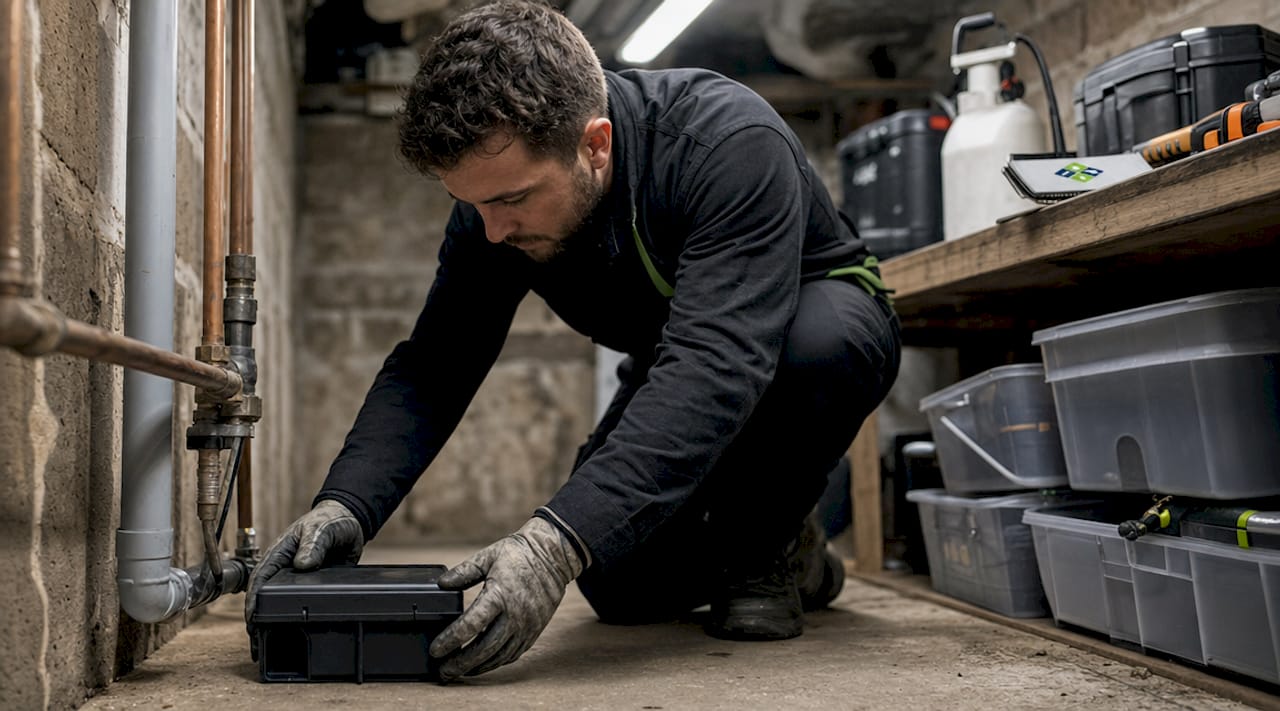
Cockroach allergens found in saliva, droppings, and shed body parts are a major risk factor for childhood asthma, particularly in urban environments. This is a health consequence that many property owners do not associate with pest activity at all. Dust mites, similarly, thrive in environments where pest activity goes unchecked and organic debris accumulates.
The public health benefits of controlling these vectors are measurable. Community-driven vector control programmes improve health literacy and pest control adoption nearly fivefold, with a 95% confidence interval of 1.70 to 14.5. This demonstrates that pest management, when applied at scale, produces outcomes well beyond individual property protection.
Key disease risks associated with common pests include:
- Mosquitoes: West Nile virus, dengue, and malaria in affected regions
- Rodents: Hantavirus, Salmonella, and Leptospirosis
- Cockroaches: Salmonella, E. coli, and asthma-triggering allergens
- Ticks: Lyme disease and tick-borne encephalitis
Pest control is fundamentally a public health service, not merely extermination. It requires managing risks within strict legal and ethical environmental frameworks.
What is the role of sanitation in effective pest control?
Sanitation in pest control is defined as the removal of food, water, and shelter that pests require to survive and breed. This is distinct from sterilisation or disinfection. Sanitation interrupts the breeding and feeding resources that pests depend on, blocking disease transmission mechanically rather than through chemical treatment alone.
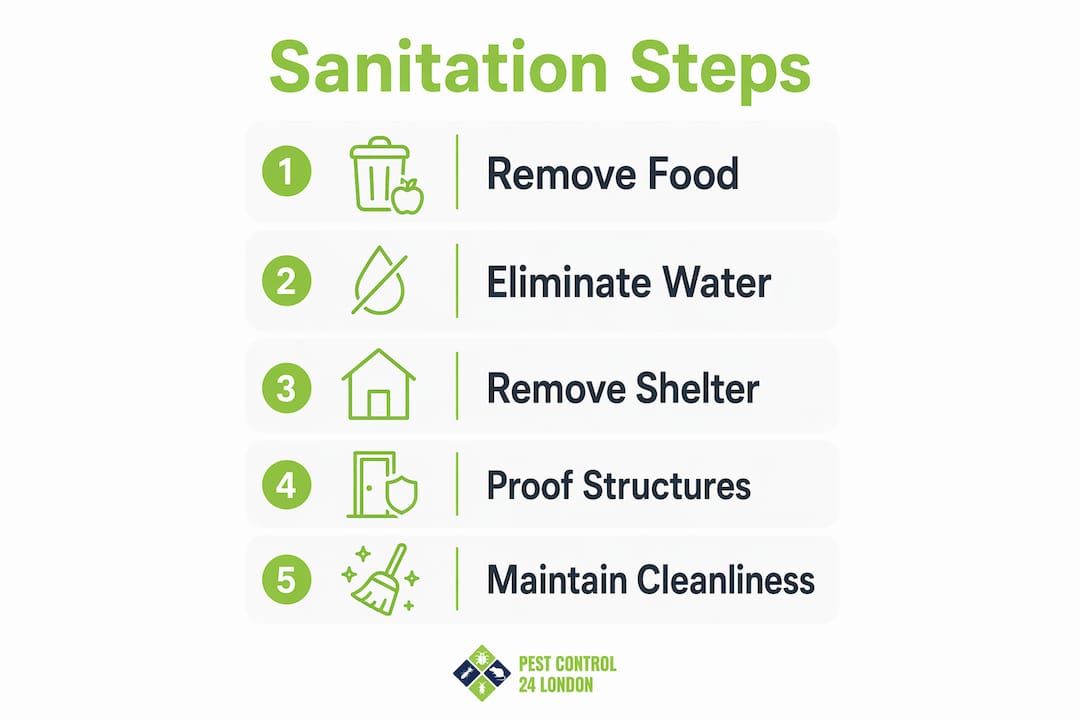
This distinction matters practically. Applying pesticide to a kitchen that still contains open food waste and standing water will produce only temporary results. The pests return because the conditions that attracted them remain unchanged. Sanitation is the most effective method to block mechanical transmission of pathogens, and it is also the most frequently neglected step in residential pest control.
Common sanitation measures that directly reduce health risks include:
- Sealing all food in airtight containers and removing waste daily
- Eliminating standing water in sinks, drip trays, and outdoor containers
- Proofing gaps around pipework, doors, and utility entries to remove shelter
- Cleaning grease accumulation behind appliances, where cockroaches breed
- Removing clutter from storage areas that provides harbourage for rodents and insects
Pro Tip: The most overlooked sanitation failure in London homes is the gap behind kitchen appliances. Cockroaches and mice use this warm, greasy space as a primary breeding site. Pulling appliances out and cleaning behind them quarterly removes a resource that no pesticide treatment can substitute for.
The role of sanitation in pest control extends to the structural environment as well. Proofing is a sanitation measure in the broader sense because it removes the shelter resource. A property that combines proofing, waste management, and moisture control will sustain far fewer pest pressures than one relying on chemical treatment alone.
How does pest control contribute to food safety and hygiene?
The role of pest control in food safety is regulatory as well as practical. Pests contaminate food and food-contact surfaces through droppings, hair, urine, and the bacteria they carry on their bodies. A single rodent moving through a food preparation area can deposit Salmonella across multiple surfaces in one night.
The consequences of failure are severe. An FDA recall in late December 2025 involved nearly 2,000 contaminated products linked to inadequate pest prevention. This scale of recall demonstrates that pest control in food environments is not a background compliance task. It is a direct line of defence for consumer safety.
Regulatory frameworks reflect this. The FDA FSMA rule under 21 CFR Part 117 requires food facilities to maintain pest management records for at least two years, available for inspection at any time. Failing to keep these records results in audit failures even when no active infestation is present. Pest control documentation including logs, site maps, and corrective action records is as important as the physical control measures themselves.
| Setting | Pest control priority | Key measures |
|---|---|---|
| Food manufacturing | Regulatory compliance and contamination prevention | FSMA records, IPM programme, structural exclusion |
| Restaurant or takeaway | Food safety and hygiene ratings | Daily sanitation, waste management, proofing |
| Domestic kitchen | Health protection for household members | Sealing food, removing moisture, quarterly inspections |
| Retail food storage | Stock protection and supply chain integrity | Monitoring traps, staff training, supplier audits |
The importance of pest control in hygiene across all food environments cannot be separated from the documentation requirement. A pest-free premises without records is still a compliance risk under current UK food safety law.
What are the best modern approaches to pest control for health protection?
Integrated pest management is the most effective long-term pest control strategy, combining monitoring, staff training, and structural exclusion rather than relying solely on reactive chemical treatment. IPM produces better health and environmental outcomes than conventional extermination because it addresses root causes rather than symptoms.
Proactive pest management is also significantly more cost-effective than reactive treatment. Treating an established rodent infestation in a commercial kitchen costs far more in downtime, remediation, and reputational damage than a structured prevention programme. Proactive exclusion and sanitation is safer and more cost-effective than responding to outbreaks after they occur.
Modern IPM tools available to London properties include:
- Smart traps and sensors that detect activity in real time without requiring daily manual checks
- Digital reporting platforms that generate audit-ready logs automatically
- Pheromone monitoring stations that identify pest species before populations establish
- Thermal imaging used by BPCA-qualified technicians to locate harbourage sites within wall cavities
The legal and ethical framework governing pest control in the UK requires that treatments are proportionate, targeted, and documented. This framework pushes the industry toward IPM by design, since blanket chemical application no longer satisfies audit requirements in commercial settings. For residential properties, the same principles apply through preventative pest control programmes that reduce risk before an infestation takes hold.
Key takeaways
Effective pest control protects public health by combining vector control, sanitation, food safety compliance, and integrated management into a continuous, documented programme.
| Point | Details |
|---|---|
| Pest control prevents disease | Mosquitoes, rodents, and cockroaches transmit serious pathogens that active pest management directly interrupts. |
| Sanitation is the foundation | Removing food, water, and shelter is more effective than chemical treatment alone and prevents reinfestation. |
| Food safety requires records | FDA and UK food law require pest management documentation for at least two years to pass audits. |
| IPM outperforms reactive treatment | Monitoring, exclusion, and staff training produce better long-term health outcomes than extermination alone. |
| Community programmes multiply impact | Vector control at community scale improves health literacy and adoption nearly fivefold compared to individual action. |
Why pest control deserves a place in your health strategy
Most people think of pest control as something you call when you already have a problem. After more than a decade working across London properties, from hotel chains to residential flats, I have seen the health consequences of that reactive mindset far too often.
The properties that suffer the most are not the ones with the worst infestations. They are the ones that waited. A cockroach problem in a kitchen that has been present for three months has already deposited allergens across surfaces, contaminated food contact areas, and potentially triggered respiratory symptoms in vulnerable occupants. By the time the call comes in, the health impact has already occurred.
What I find genuinely underestimated is the connection between sanitation and health outcomes. Clients often expect a spray treatment to solve everything. The honest answer is that chemical treatment without sanitation reform is a temporary fix. The properties that stay pest-free long term are the ones that treat pest control as part of their hygiene routine, not as an emergency service.
Digital tools are changing this for the better. Smart monitoring and automated reporting make it far easier for both businesses and homeowners to maintain the kind of continuous oversight that IPM requires. I expect community-driven programmes and digital pest monitoring to become standard practice in London within the next few years, particularly as food safety audits tighten further.
My view is straightforward: pest control is a health investment, not a reactive cost. Treat it accordingly.
— Dan
Protect your health with Pestcontrol24london
Pestcontrol24london has delivered professional pest management across London since 2015, working with hotels, restaurants, takeaways, and residential properties to protect health and meet compliance requirements. The team is BPCA fully qualified and applies integrated pest management principles to every job, combining sanitation advice, structural proofing, and targeted treatment.

Whether you need emergency pest control for an active infestation or a structured prevention programme for your business, Pestcontrol24london provides free quotes and 24/7 availability across London. For food businesses requiring audit-ready documentation and commercial pest management that meets FSMA and UK food safety standards, the team has the experience and records to support your compliance needs. Contact Pestcontrol24london today to arrange an inspection.
FAQ
What is the role of pest control in public health?
Pest control reduces disease transmission by managing vectors such as mosquitoes, rodents, and cockroaches that carry pathogens including Salmonella, Hantavirus, and Lyme disease. It is classified as a public health service by the Royal Society for Public Health, operating within legal and environmental frameworks.
How does pest control affect food safety?
Pests contaminate food and food-contact surfaces through droppings, hair, and bacteria, and a single rodent can spread Salmonella across a kitchen in one night. The FDA FSMA rule requires food facilities to maintain pest management records for at least two years to protect against contamination and pass inspections.
What is the role of sanitation in pest control?
Sanitation in pest control means removing the food, water, and shelter that pests need to survive, which mechanically blocks disease transmission without relying solely on chemical treatment. It is the most effective long-term method for preventing reinfestation.
Are cockroaches a health risk beyond contamination?
Cockroach allergens found in droppings, saliva, and shed body parts are a significant trigger for asthma in children, particularly in urban environments. This allergen risk persists even after an infestation is treated if surfaces are not thoroughly cleaned.
What is integrated pest management and why does it matter for health?
Integrated pest management combines ongoing monitoring, structural exclusion, staff training, and targeted treatment to reduce pest populations and health risks over the long term. It produces better health and environmental outcomes than reactive extermination and is increasingly required by UK food safety auditors.