

Safe wasp nest removal, known formally as wasp nest treatment, is a process homeowners can carry out themselves when the nest is small, exposed, and accessible. DIY removal suits nests under 2 inches in diameter, typically early-season paper wasp nests on eaves, fences, or garden structures. Larger nests, hidden colonies, or aggressive species require a qualified professional. This guide covers every step by step wasp removal stage, from protective gear to post-treatment cleaning, so you can act with confidence and stay safe.
What tools and timing do you need for safe DIY wasp removal?
Preparation is the single biggest factor in a successful outcome. Arriving at a nest without the right gear or at the wrong time of day turns a manageable task into a dangerous one.
Protective clothing and equipment
Wear long sleeves, long trousers, thick gloves, and eye protection before approaching any nest. Tuck trouser legs into socks and seal sleeve cuffs. Wasps target exposed skin first, so leaving any gap is a real risk.
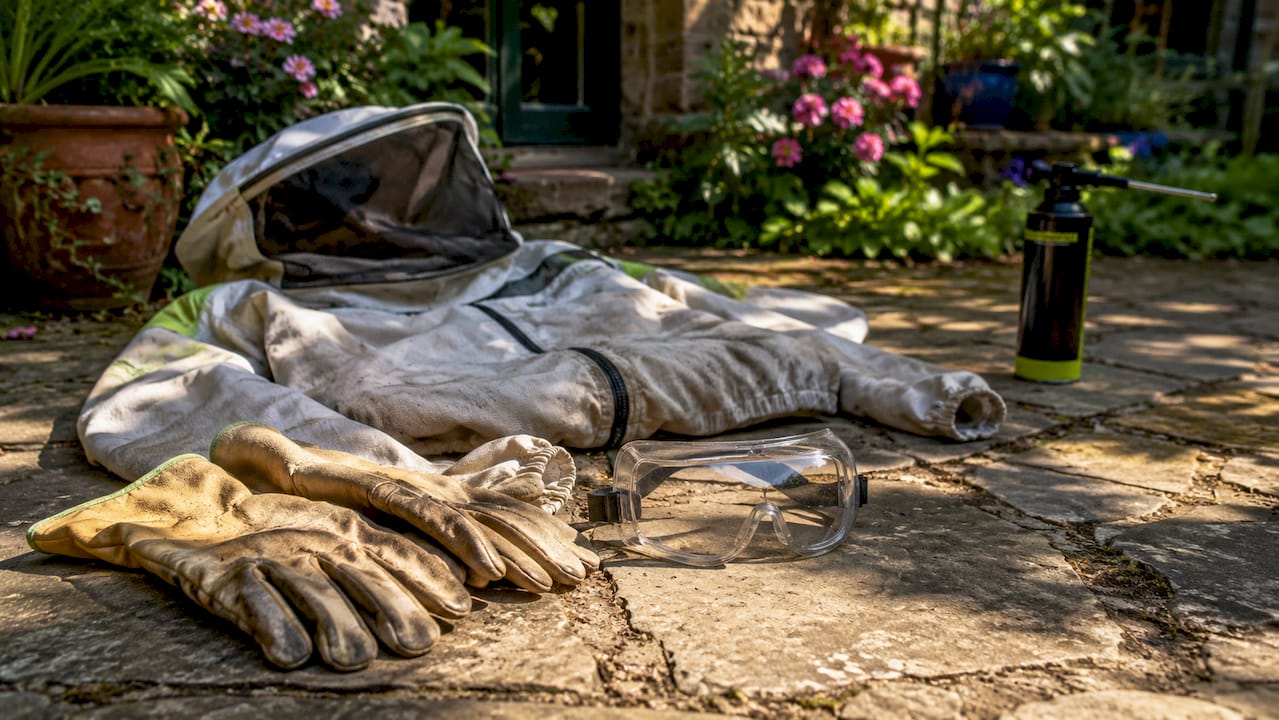
For the treatment itself, use a commercial long-range wasp spray that projects 15–20 feet. These products contain pyrethrins or pyrethroids, which kill wasps on contact or by paralysis. They are widely available and cost between £6 and £12 in the UK.
| Item | Purpose | Approximate cost |
|---|---|---|
| Long-range wasp spray | Kills wasps on contact from a safe distance | £6–£12 |
| Thick gloves | Protects hands from stings | £3–£8 |
| Eye protection (goggles) | Shields eyes from spray and wasps | £4–£10 |
| Full-length clothing | Reduces exposed skin | Already owned |
| Red-lens flashlight | Illuminates nest at night without agitating wasps | £5–£10 |
| Bin bag (sealed) | Safely disposes of the removed nest | Under £1 |
Timing your treatment correctly
Treat the nest at dusk or dawn, when wasps are least active and inside the nest. Midday treatment risks encountering the full foraging colony outside, which multiplies your exposure significantly.
Pro Tip: Use a red-lens flashlight for night-time work. Red light agitates wasps far less than white light, reducing the chance of a defensive response while you work.
How do you remove a small paper wasp nest step by step?
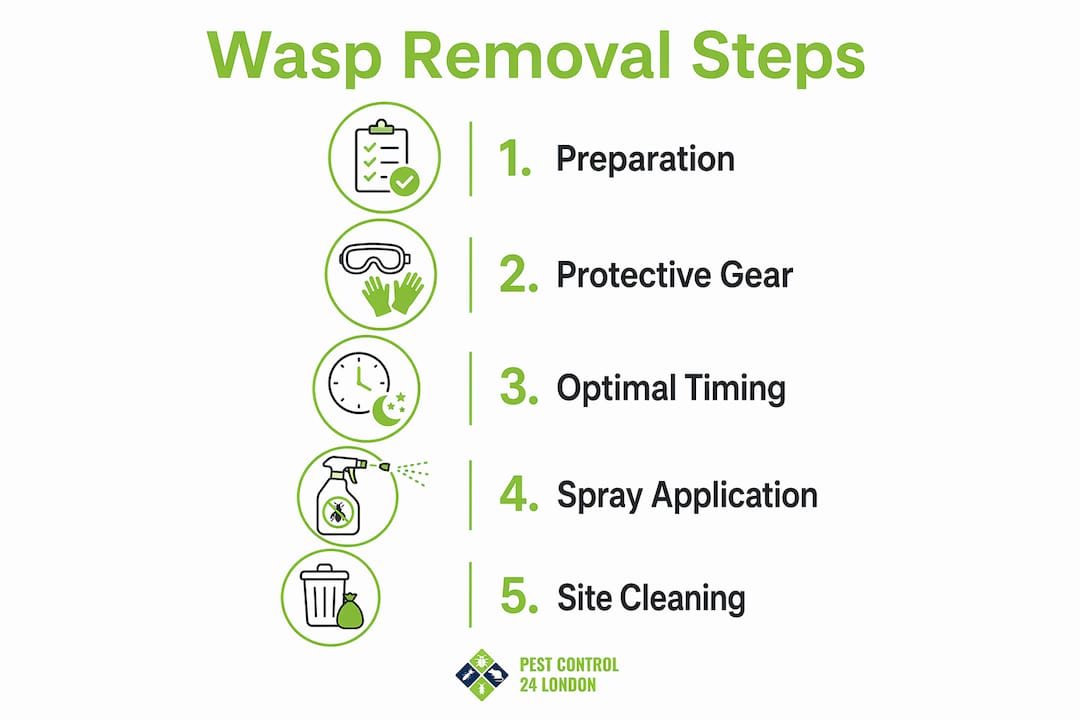
This six-step process applies to small, visible paper wasp nests no larger than a tennis ball, located in accessible outdoor spots. Follow each step in order and do not skip the waiting period.
Confirm suitability. Check the nest is under 2 inches, fully visible, and not inside a wall cavity or underground. If it fails any of these checks, call a professional rather than proceeding.
Dress fully in protective gear. Put on all clothing, gloves, and eye protection before you step outside. Prepare your spray and plan your retreat route before approaching the nest.
Apply the spray from 15–20 feet. Target the nest’s stalk or entrance directly. Spraying the stalk drives insecticide into the internal comb, reaching the queen and larvae. A single thorough application is more effective than multiple short bursts.
Retreat calmly along your planned route. Calm walking retreat reduces chase behaviour; running triggers wasps’ pursuit instincts and leads to multiple stings. Move steadily away and go indoors.
Wait 24–48 hours. Return only when no wasp activity is visible around the nest. This waiting period confirms the colony is inactive before you handle the nest physically.
Remove and disinfect. Place the nest in a sealed bin bag and dispose of it in an outdoor bin. Scrub the attachment point thoroughly with soapy water to remove pheromone scent markers. Skipping this step is the main reason wasps rebuild at the same location.
Pro Tip: Never use fire, water jets, or DIY traps to remove a wasp nest. These methods provoke the colony without eliminating it, dramatically increasing your sting risk.
How do you identify nests that need professional removal?
Not every wasp nest is suitable for DIY treatment. Species identification and nest location are the two factors that determine whether you should proceed yourself or call a specialist.
The three species homeowners encounter most often in the UK are paper wasps, yellowjackets, and bald-faced hornets. Paper wasps build small, open-comb nests in sheltered spots and are the least aggressive of the three. Yellowjackets nest underground or inside wall voids and defend their colonies aggressively when disturbed. Bald-faced hornets build large, enclosed aerial nests and will pursue threats over a considerable distance.
Call a professional when any of the following apply:
- The nest is larger than a tennis ball.
- The nest is inside a wall void, loft, or underground burrow.
- You or anyone in your household has a known allergy to wasp stings.
- The colony shows aggressive behaviour before you have even approached it.
- You cannot identify the species with confidence.
Professionals treat hidden nests with dust treatments and seal entry points to prevent re-establishment. These are techniques a homeowner cannot replicate safely with off-the-shelf products. For hornets specifically, the risk level rises further. Pestcontrol24london’s hornet removal service covers these higher-risk cases across London.
What mistakes should you avoid, and how do you prevent future nests?
The most common DIY errors are poor timing, inadequate clothing, insufficient spray application, and failing to clean the site afterwards. Each one either increases your sting risk or guarantees the wasps return.
Non-insecticidal methods such as vinegar or water lack the rapid knockdown power needed for established colonies. Worse, they agitate wasps without incapacitating them, turning a manageable nest into an active threat. Stick to a pyrethrins or pyrethroids-based spray for any established colony.
Prevention is more reliable than repeated removal. Use these steps to reduce the chance of a new colony forming:
- Seal gaps around windows, doors, and vents in early spring, before queen wasps begin scouting for nest sites.
- Remove food sources from outdoor areas, including fallen fruit, uncovered bins, and pet food left outside.
- Check roof soffits, garden sheds, and fence posts monthly from april through september.
- Treat any new nest immediately when it is still small, before the colony grows beyond DIY scope.
Pro Tip: After removing a nest, wipe the site with a strong detergent solution and leave it to dry fully. Pheromone scent markers are invisible but persistent. Removing them is the most effective single step for preventing wasp infestations from recurring at the same spot.
Key takeaways
Safe wasp nest removal requires correct species identification, appropriate protective gear, insecticidal spray applied at dusk or dawn, and thorough site cleaning to prevent the colony from returning.
| Point | Details |
|---|---|
| DIY scope is limited | Only treat small, exposed nests under 2 inches; call a professional for anything larger or hidden. |
| Timing is critical | Treat at dusk or dawn when wasps are inside the nest and least active. |
| Target the stalk | Spraying the nest stalk drives insecticide into the comb, reaching the queen and larvae. |
| Clean the site thoroughly | Scrub away pheromone markers after removal to stop wasps rebuilding at the same spot. |
| Prevention beats removal | Seal entry points in early spring to stop queen wasps establishing new colonies. |
Why preparation matters more than bravery
I have seen homeowners approach wasp nests with nothing but a can of spray and good intentions, and it rarely ends well. The ones who get stung are almost never the ones who were careless about the nest itself. They are the ones who skipped the retreat plan, wore sandals, or treated at midday when the colony was at full strength.
What I have found over years of working in pest control is that the step-by-step process only works when you respect every single stage. Skipping the 24–48 hour wait because the nest looks quiet is the most common shortcut I see. Wasps can remain dormant inside a treated nest for hours before dying. Opening that nest bag prematurely has caused more than a few nasty surprises.
My honest view is this: DIY removal is genuinely appropriate for small, early-season paper wasp nests. It saves money and it works when done correctly. But the moment a nest is inside a structure, underground, or larger than a tennis ball, the risk calculation changes entirely. No amount of protective clothing compensates for not being able to see what you are dealing with. For those situations, a qualified professional is not a luxury. It is the only sensible option.
— Dan
Pestcontrol24london’s wasp removal service
Dealing with a nest that is too large, too hidden, or too aggressive for DIY treatment? Pestcontrol24london has provided professional wasp nest removal across London since 2015, with BPCA-qualified technicians available 24/7 for emergency callouts.

Every treatment includes safe insecticide application, post-treatment site inspection, and practical advice on preventing re-infestation. For nests inside wall voids, loft spaces, or underground burrows, the team uses specialist dust treatments that reach areas no consumer spray can access. Pestcontrol24london also offers post-treatment cleaning services to remove pheromone residues and reduce the risk of a new colony establishing at the same site. Contact Pestcontrol24london at pestcontrol24london.co.uk for a free quote.
FAQ
What is the safest time to treat a wasp nest?
Treat at dusk or dawn when wasps are least active and the majority of the colony is inside the nest. Midday treatment risks encountering the full foraging population.
How far away should I stand when spraying a wasp nest?
Use a long-range wasp spray from 15–20 feet away. This distance keeps you outside the wasps’ immediate defensive zone while still delivering an effective dose.
Can I remove a wasp nest without insecticide?
Non-insecticidal methods such as water or vinegar lack the rapid knockdown power needed for established colonies and can agitate wasps without eliminating them. An insecticidal spray is the safest and most effective option.
How do I stop wasps returning to the same spot?
Scrub the nest attachment point with soapy water after removal to eliminate pheromone scent markers. Wasps use these markers to locate previous nest sites, so thorough cleaning is the most reliable prevention step.
When should I call a professional instead of treating a nest myself?
Call a professional when the nest is larger than a tennis ball, located inside a wall or underground, or when anyone in your household has a wasp sting allergy. Pestcontrol24london offers 24/7 emergency wasp removal across London for exactly these situations.