

Household pests are more than an annoyance. Mice gnaw through wiring, cockroaches contaminate food surfaces, and bed bugs disrupt sleep night after night. Many homeowners attempt reactive fixes, buying a single product and hoping for the best, only to find the problem returns weeks later. A structured, step by step pest control approach changes that outcome entirely. By working through inspection, preparation, treatment, and follow-up in the right order, you address the root cause rather than just the visible symptoms.
Table of Contents
- Key takeaways
- Step by step pest control: gather your tools first
- Conducting a thorough home pest check
- Pest-proofing your home before treatment
- Applying treatments safely and effectively
- Monitoring and maintaining a pest-free home
- My honest take on stepwise pest control
- When to call Pestcontrol24london
- FAQ
Key takeaways
| Point | Details |
|---|---|
| Inspect before treating | Identify the pest species and infestation extent before purchasing any treatment products. |
| Seal entry points first | Block gaps and holes with appropriate materials before applying treatments to prevent reinfestation. |
| Match treatment to pest | Use traps, baits, or insecticides suited specifically to the pest type and infestation severity. |
| Follow up consistently | Monitor traps and signs after treatment; a single application is rarely sufficient for complete control. |
| Prevention underpins success | Sanitation and exclusion measures remove the resources pests need to survive and breed. |
Step by step pest control: gather your tools first
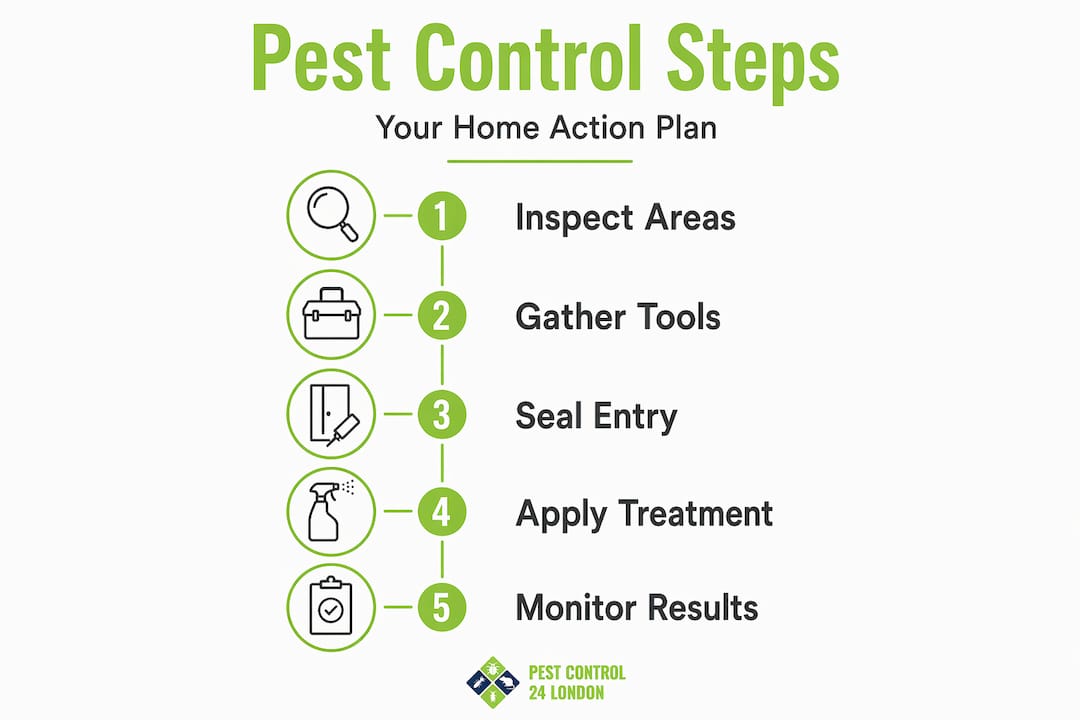
Before you treat a single room, you need the right materials assembled and your safety sorted. Attempting pest control without preparation wastes time and increases the risk of ineffective treatment.
Here is what to gather before you begin:
- Protective equipment: disposable gloves, safety glasses, and an FFP2 or FFP3 dust mask for work involving chemicals or rodent droppings
- Inspection tools: a good torch, a mirror on a stick for tight spaces, and a camera or smartphone for documentation
- Sealing materials: 16-gauge wire mesh, expanding foam, caulk, and metal wool for exclusion work
- Treatment products: appropriate traps (snap traps, glue boards, pheromone traps), approved baits, and insecticide sprays or dusts where needed
- Cleaning supplies: disposable cloths, disinfectant spray, sealed bin bags, and a vacuum with a HEPA filter
| Treatment type | Best used for | Safety level |
|---|---|---|
| Snap traps | Mice and rats | Low risk, mechanical |
| Glue boards | Insects, small rodents | Low risk, non-toxic |
| Insecticide sprays | Crawling and flying insects | Moderate, follow label |
| Rodenticide bait | Mice and rats | High, tamper-proof boxes required |
| Insecticide dust | Crevices, wall voids | Moderate, wear mask |
Organise everything into a single kit before you start so you are not hunting for items mid-job. Following label instructions exactly for insecticides and baits is not optional. Overuse creates resistance and poses genuine safety risks to children and pets.
Pro Tip: Label each product with the date you opened it and note the target pest. This keeps your kit organised and helps you track what has been applied where.
Conducting a thorough home pest check
A step by step home pest check is what separates effective treatment from guesswork. Many homeowners underestimate the full extent of an infestation and misidentify the pest species, which leads to entirely the wrong treatment being applied.
Work through your property methodically using this sequence:
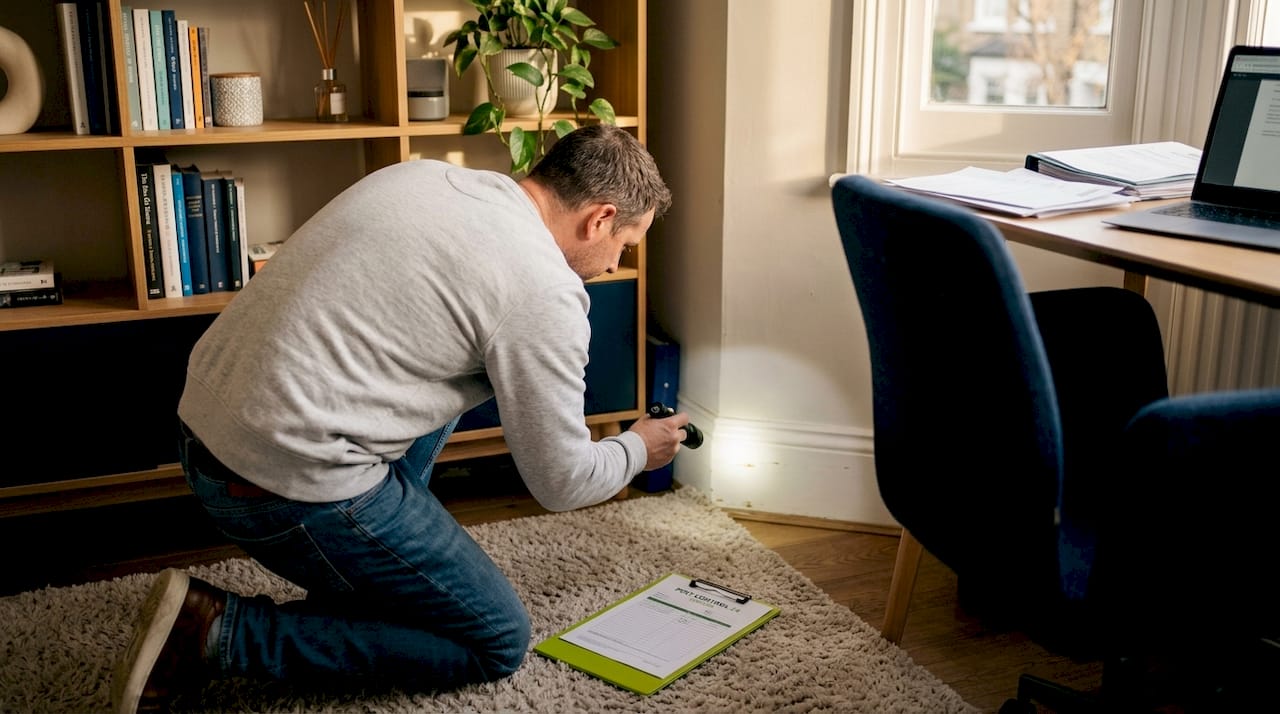
- Start outside. Check the perimeter of the building for burrow holes, gnaw marks on timbers, and gaps around pipework or cables entering the structure.
- Move to the roof and loft. Look for droppings, insulation disturbance, grease marks along beams, and any evidence of nesting material.
- Inspect the kitchen. Pull out appliances from walls, check under the sink, and examine cupboard interiors including hinges and shelf-peg holes for droppings or larvae.
- Check bedrooms carefully. Inspect mattress seams, bed frames, skirting boards, and curtain rails for bed bug casings, blood spots, or live insects.
- Examine storage areas. Garages, cellars, and utility rooms are common harbourage zones. Look along wall-floor junctions and behind stored boxes.
- Document everything. Photograph droppings, damage, and nesting sites. Note room, location, and approximate quantity.
Accurate identification matters because a cockroach infestation requires completely different treatment to a moth problem. If you cannot confirm the species, take clear photographs to cross-reference with a pest control guide before purchasing any product.
Pro Tip: Inspect at night with a torch for nocturnal pests such as cockroaches and mice. You are far more likely to see live activity after dark.
Pest-proofing your home before treatment
Applying treatments without first addressing how pests are entering your property means you are fighting an ongoing battle. The steps to pest-proof your home are not complicated, but they require attention to detail.
Mice can enter through holes as small as a dime. That means any gap around a pipe, cable, or vent is a potential entry point. Use 16-gauge wire mesh with 1cm x 1cm gaps combined with metal wool and sealant for a lasting repair. Expanding foam alone is insufficient because rodents chew through it readily.
Key sanitation and exclusion steps include:
- Remove food sources: store all dry goods in hard-sided, airtight containers
- Clear clutter from floor-level areas, particularly in storage rooms and under beds
- Fix leaking pipes and address areas of standing moisture, since many pests are drawn to damp conditions
- Seal adjustable shelf peg holes in kitchen cupboards, as larvae migrate through these small gaps during pantry infestations
- Fit draught excluders to external doors and seal gaps around window frames
For pantry infestations specifically, empty everything out and freeze dry goods at minus 18°C for 72 hours to destroy any eggs before restocking. After cleaning, wait two to three weeks before restocking fully to catch any pupae that hatch in the interim. This is one of the most overlooked steps in managing food moth and grain beetle problems.
Pro Tip: Carry out a pest-proofing review every autumn before cold weather drives rodents indoors. Pair it with seasonal pest-proofing advice to stay ahead of the seasonal surge.
Applying treatments safely and effectively
With your inspection complete and exclusion work done, you can move to treatment. Integrated Pest Management prioritises mechanical controls and sanitation before chemical use, and that sequence matters.
Follow this stepwise pest elimination process for treatment:
- Place traps first. Position snap traps or glue boards along wall-floor junctions, behind appliances, and in confirmed activity zones. Pests travel along edges, not across open floors.
- Apply baits in tamper-proof stations. For rodents, place bait boxes in secure locations inaccessible to children and pets. Check and replenish every two to three days initially.
- Use insecticide sprays or dusts for insects. Apply to cracks, crevices, and harbourage areas rather than open surfaces. Dusts are particularly effective in wall voids and roof spaces where moisture is low.
- Consider heat treatment for bed bugs. Exposure to 120°F (49°C) kills all life stages of bed bugs within one hour. This method reaches areas sprays cannot penetrate. For a detailed approach, the bed bug prevention checklist from Pestcontrol24london covers London-specific considerations.
- Never mix chemical products unless the label explicitly states this is safe. Combining products does not increase efficacy and can produce harmful reactions.
Never vacuum or sweep dry rodent droppings. Always saturate them with disinfectant spray first and use disposable cloths to avoid airborne pathogens from rodent waste.
Pro Tip: Resist applying more product than the label specifies. Higher doses do not kill pests faster and can drive them away from treated areas into untreated rooms, spreading the infestation.
Monitoring and maintaining a pest-free home
Treatment is not the end of the process. Routine monitoring with traps and regular inspections is what prevents a resolved infestation from returning.
After treatment, check traps and bait stations every two to three days for the first fortnight. Record what you find, including quantity, location, and date. A sudden spike in trap catches after a quiet period may indicate a new entry point or an untreated harbourage.
| Monitoring task | Frequency |
|---|---|
| Check traps and bait stations | Every 2 to 3 days (first 2 weeks) |
| Full property inspection | Monthly for 3 months post-treatment |
| Sealant and mesh checks | Every 6 months |
| Deep kitchen and pantry clean | Every 3 months |
| Review of moisture and drainage | Every 6 months |
Recognise when DIY methods are no longer sufficient. If you are still seeing live pest activity after two weeks of consistent treatment, or if the infestation involves a species such as bed bugs or German cockroaches, professional intervention is the practical next step.
Pro Tip: Keep a simple log on your phone or a notepad near your kit. Recording dates, trap catches, and any new signs takes two minutes and gives you a clear picture of whether the situation is improving.
My honest take on stepwise pest control
I have seen homeowners spend weeks and significant money on products that were never going to work, simply because they skipped the inspection stage and guessed at the pest species. In my experience, the inspection and exclusion steps are where the real work happens. Treatment is almost secondary if you have removed what pests need to survive.
What I have also learned is that people underestimate how patient you need to be. A bed bug problem treated once, correctly, may still show signs for two to three weeks as surviving eggs hatch. That does not mean the treatment failed. It means the biology is slower than we want.
The biggest mistake I see consistently is reactive, ad-hoc pest control. One trap here, one spray there, no documentation, no follow-up. Pest control success depends far more on managing the conditions pests need than it does on the strength of the product you apply. Get the environment right first, and treatments become far more effective.
— Dan
When to call Pestcontrol24london

Sometimes a structured DIY approach is the right starting point. Other times, the infestation is too established, the pest species too resilient, or the property too complex for effective self-treatment. Pestcontrol24london has been serving London homes and businesses since 2015 as a BPCA-qualified team with genuine field experience across every common household pest.
Whether you need professional pest removal for an active infestation or thorough post-treatment sanitisation after clearing pests, the team is available 24/7, including emergency call-outs. Free quotes are available, and the service covers all London boroughs. Get in touch at pestcontrol24london.co.uk to speak with a qualified technician.
FAQ
What is the first step in pest control at home?
The first step is always inspection. Identify the pest species and locate all activity zones before purchasing any treatment product, as the wrong product applied to the wrong pest wastes time and money.
How do I pest-proof my home against mice?
Seal all gaps larger than a centimetre using 16-gauge wire mesh combined with metal wool and sealant. Pay particular attention to gaps around pipework, cables, vents, and the base of exterior doors.
How long does step by step pest control take to work?
It depends on the pest. Rodent infestations often show a significant reduction within one to two weeks of consistent trapping and exclusion. Bed bugs may take two to three weeks because heat or chemical treatments do not destroy all eggs simultaneously.
When should I call a professional pest controller?
Call a professional if you still see live pest activity after two weeks of consistent DIY treatment, if you are dealing with bed bugs or German cockroaches, or if the infestation is spread across multiple rooms. Professional pest control typically involves multiple visits for complete elimination.
Is it safe to do step by step disinfection after pests myself?
Basic disinfection is manageable at home with the right products, but always wet rodent droppings with disinfectant before removal to prevent airborne pathogens. For extensive infestations, professional sanitisation is advisable to cover hidden contamination in wall voids and under flooring.