

If you hear scratching or scurrying overhead during the day, treat it as a likely squirrel infestation rather than rats or mice, and arrange a professional survey that includes a bat check before anyone touches proofing work. Do not seal any holes yourself, and never attempt to trap and release a grey squirrel elsewhere, as this is illegal under UK law. The right first move is a proper inspection that confirms the species, checks for bats, and sets out a lawful removal plan.
- Confirm the pattern: daytime activity points to squirrels, not rats.
- Leave entry points open until a survey confirms the loft is empty.
- Book a survey that includes a bat assessment before any proofing.
- Contact Pest Control 24 London for a lawful survey and removal plan.
Key Takeaways
Squirrels in a UK loft require a legal, sequenced response: confirm the species, check for bats, then trap or exclude before proofing, never the other way round.
| Point | Details |
|---|---|
| Daytime noise is the key sign | Scratching and scurrying during daylight hours usually means squirrels, not rats. |
| Release is illegal | Grey squirrels cannot be trapped and released elsewhere under the Wildlife and Countryside Act 1981. |
| Bats must be checked first | A bat assessment is legally required before any proofing work begins. |
| Damage compounds quickly | Chewed wiring, insulation loss, and pipe damage get more expensive the longer they’re left. |
| Book a proper survey | Pestcontrol24london offers accredited loft surveys, lawful removal, and a written discharge report for London homeowners. |
Table of Contents
- Signs of squirrels in a loft you shouldn’t ignore
- What squirrels damage in a loft and why it matters
- Is it legal to trap and release squirrels in the UK?
- How does professional squirrel removal actually work?
- What can homeowners safely do themselves?
- How much does squirrel removal cost and how long does it take?
- How do you stop squirrels getting back in?
- Why choose an accredited squirrel control service in London?
- A note on humane, lawful wildlife control
- Book a lawful squirrel survey with Pestcontrol24london
- Frequently asked questions
- Sources
Signs of squirrels in a loft you shouldn’t ignore
Squirrels are diurnal, so scratching, rolling and scurrying noises during daylight hours are the clearest giveaway. Rats and mice tend to be quieter and more active at night, so timing alone tells you a lot before you even go up there.
- Daytime noise: scratching, thumping, and running along joists, usually loudest around dawn and dusk when squirrels are most active.
- Droppings: oval, roughly the size of a large raisin, often clustered near nesting areas or entry points.
- Nesting materials: shredded loft insulation, leaves, and twigs pulled into a rough ball shape.
- Gnaw marks: fresh, pale wood chips around joists, boarding, or cable runs.
- External clues: chewed fascia boards, worn “run lines” along branches or guttering, and torn roofline felt.
What squirrels damage in a loft and why it matters
A squirrel’s teeth grow continuously, so it gnaws to keep them worn down, and your loft’s wiring, timber, and pipework all become targets. BPCA guidance identifies electrical, insulation and structural damage as the most common consequences of an unchecked infestation.
- Electrical cables: exposed wiring is a genuine fire risk. Have an electrician check the loft once the animals are gone.
- Insulation: squirrels shred and displace it for nesting, cutting your loft’s thermal performance and adding replacement costs.
- Water pipes: gnawed pipework can leak or contaminate tanks feeding your home’s water supply.
- Structural timber: joists and rafters can be weakened, often needing a carpenter or loft conversion specialist to assess and repair.
- Health risks: droppings, urine, and hitchhiking ticks or fleas can create secondary hygiene problems.
Pro Tip: Squirrel damage rarely stays static. What starts as a chewed cable in September can mean replaced insulation and a rewiring bill by Christmas, so treat early scratching noises as a repair-cost warning, not just an inconvenience.
Is it legal to trap and release squirrels in the UK?
No. Grey squirrels are classed as an invasive non-native species, and releasing a trapped grey squirrel back into the wild is illegal under the Wildlife and Countryside Act 1981. Government policy reinforces this, framing grey squirrel control as managing their impact rather than relocating them.
- Grey squirrels: cannot legally be released; humane dispatch is required where trapping is used.
- Red squirrels: fully protected, so species must be confirmed before any action is taken.
- Bats: all UK species and their roosts are legally protected, and a bat assessment is mandatory before any proofing work.
- Poison: rodenticides are not an approved control method for squirrels and should never be used in a loft.
- PPE and hygiene: wear gloves, avoid dry sweeping droppings, and follow NHS guidance on handling wild animal contamination.
How does professional squirrel removal actually work?
A proper job follows a fixed sequence, and any contractor worth hiring should be able to explain each stage before they quote you a price.
- Survey: entry points are mapped, the species is confirmed, and evidence is photographed and logged into a written report.
- Bat assessment: carried out before any exclusion work; if bats are present, a licensed bat surveyor takes over that part of the job.
- Trapping or one-way exclusion: traps are checked daily under legal welfare obligations, while one-way doors let squirrels leave but not return, often the preferred route where the law’s release restrictions make trapping alone impractical.
- Proofing: gaps are sealed with heavy-gauge stainless or galvanised mesh and metal flashing, fixed securely enough to resist further gnawing.
- Verification and discharge report: the loft is checked as empty, then a written discharge report confirms the work and its findings, followed by post-treatment sanitisation where contamination is present.
Pro Tip: Always ask for the written discharge report before paying the final invoice. It’s your proof the loft was confirmed empty before sealing, and it matters if you ever need to make an insurance claim for damage.
What can homeowners safely do themselves?
Some groundwork is fine to do yourself, and doing it properly makes the professional job quicker and cheaper.
- Observation: note when noises happen and roughly where, to help a surveyor pinpoint entry routes.
- Tree trimming: cut back branches that overhang or touch the roofline.
- Basic hygiene: wear gloves and a mask if you’re inspecting the loft, and avoid disturbing droppings directly.
- What not to do: never trap and release a grey squirrel yourself, and never seal an entry point before confirming the loft is empty, since a trapped animal can cause far worse damage trying to get out.
- Call a professional immediately if: you see exposed mains wiring, hear multiple animals or high-pitched young, or find nesting material near cabling.
How much does squirrel removal cost and how long does it take?
Prices vary with property size, roof access, how many trap-check visits are needed, and how much proofing the loft requires once the animals are gone.
- Price drivers: number of entry points, extent of mesh and flashing needed, and whether insulation or wiring repairs are required afterwards.
- One-way exclusion: typically resolves within about one to two weeks once installed correctly.
- Trapping programmes: usually run several weeks, since traps need daily checking and animals don’t always enter on the first attempt.
- Additional costs to budget for: an electrician’s check, insulation replacement, or structural timber repairs.
- What to ask for: a written guarantee on proofing work, since early intervention tends to be far cheaper than delayed treatment once damage has spread.
How do you stop squirrels getting back in?
Proofing only holds if it’s paired with ongoing maintenance, and skipping either half is why so many households see repeat visits.
- Manage nearby trees: keep a gap of roughly 2 to 2.5 metres between branches and the roofline to remove easy access routes.
- Use proper materials: heavy-gauge mesh and metal flashing hold up where thin chicken wire or timber patches simply get gnawed through again.
- Inspect the roofline regularly: clear gutters and check fascias and soffits each season for new gaps or wear.
- Sanitise old entry points: squirrels leave scent trails that can attract new animals, so cleaning routes and entry points after clearance reduces the chance of a repeat infestation.
Why choose an accredited squirrel control service in London?
Pestcontrol24london has operated across London since 2015, working to BPCA standards built up over more than a decade of loft and roof call-outs. That background shapes how every survey is run, not just how the invoice looks.
- A loft survey includes photographic evidence, bat-check notes, and a proofing specification before any work begins.
- Every completed job ends with a written discharge report confirming the loft is empty and proofed.
- Services cover licensed loft and roof squirrel control, loft insulation removal, and post-treatment sanitisation.
- Emergency response is available for London homeowners dealing with active, worsening infestations.
A note on humane, lawful wildlife control
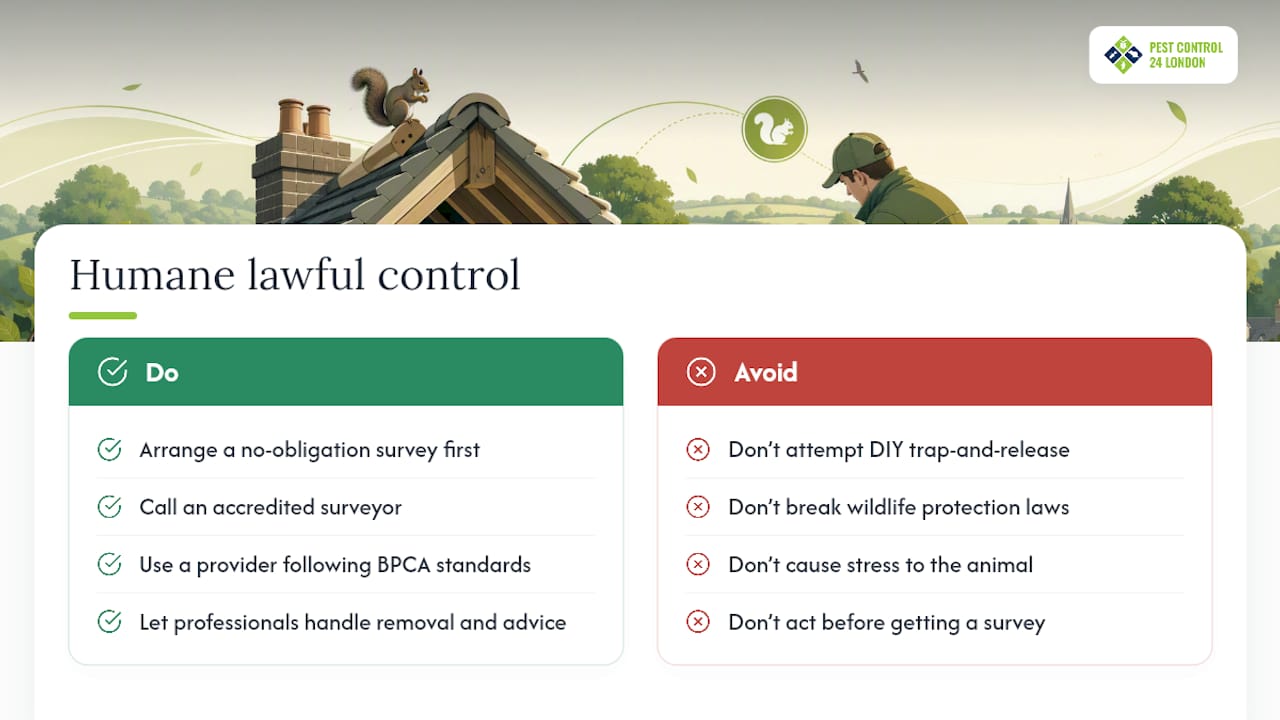
Squirrels aren’t malicious tenants, they’re wild animals doing what wild animals do, and the law is strict for good reason. I’d always rather see a homeowner call in an accredited surveyor than try a DIY trap-and-release that’s both illegal and stressful for the animal. Pestcontrol24london’s approach, built on BPCA standards and years of London call-outs, is why a no-obligation survey is worth arranging before you do anything else.
Book a lawful squirrel survey with Pestcontrol24london
Pestcontrol24london gives you what a DIY trap-and-hope approach can’t: a lawful sequence, a bat check before any sealing, and a written discharge report proving the loft was empty when it was closed up. That paperwork matters if you ever need to show an insurer, letting agent, or buyer’s surveyor that the job was done properly.
A typical booking includes the initial survey, trap or exclusion work where needed, proofing with heavy-gauge mesh and flashing, and sanitisation of affected insulation or entry routes. Pestcontrol24london operates a 24/7 emergency line for London homeowners and landlords who need a same-week response, and every proofing job comes with a written guarantee. If you’re dealing with daytime noise in the loft right now, book a survey or request a free quote and get a bat check and removal plan arranged before the damage spreads further.
Frequently asked questions
How do I know if it’s squirrels in the loft and not rats?
Daytime noise is the strongest clue. Squirrels are active during daylight, while rats and mice are mostly nocturnal, so scratching around dawn or dusk usually points to squirrels.
Can I trap a squirrel and release it in a nearby park?
No. Releasing a trapped grey squirrel anywhere in the UK is illegal, since they’re classed as an invasive species under UK law. Removal must end in humane dispatch or lawful exclusion, not release.
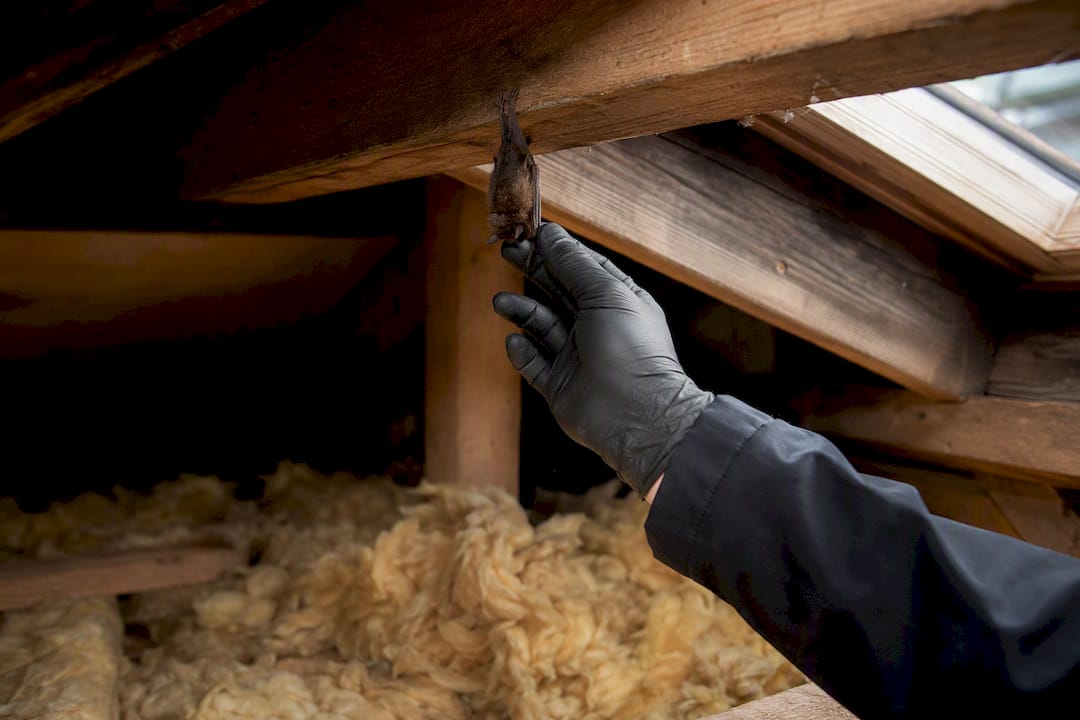
Why do professionals check for bats before sealing my loft?
All UK bat species and their roosts are protected by law, so disturbing them without a licence is a criminal offence. A bat check confirms it’s safe to proof the loft without breaking that protection.
Is it safe to seal the entry hole myself once the noise stops?
No. If a squirrel is still inside when you seal the hole, it can cause far worse damage trying to escape and may die inside, creating a serious odour and contamination problem. Always confirm the loft is empty first.
How long does professional squirrel removal usually take?
One-way exclusion typically clears within 7 to 14 days, while trapping programmes often run 2 to 4 weeks because traps need daily checking under welfare rules.
Sources
- Wildlife and Countryside Act 1981
- Grey squirrel policy statement: managing the impact of grey squirrels
- Squirrel control: how to get rid of squirrels (BPCA)