

A professional smoke test will usually reveal the exact pipe breach, uncapped lateral, or failed seal that rats are using to enter a property through the drainage system. It works by mapping air-leak pathways that cameras alone cannot always catch.
You should consider one when:
- Rats keep returning despite trapping and baiting
- A CCTV drain survey has come back “clear” but the problem persists
- There’s a persistent sewage-like odour with no obvious cause
Get in touch with a BPCA-qualified technician for a smoke test and a follow-up repair plan. Smoke testing typically involves pumping non-toxic smoke into isolated drainage sections to expose the visible plumes at cracks, gaps and open joints that rodents exploit.
Key Takeaways
A smoke test locates the physical breaches rats use to enter through drains, and it works best as the first step in a sequenced survey alongside CCTV and, where needed, dye testing.
| Point | Details |
|---|---|
| Smoke reveals air-leak paths | It exposes cracked laterals, uncapped dead legs and failed wax rings that CCTV can miss. |
| Sequence matters | Run smoke first to map exits, then CCTV to inspect flagged sections in detail. |
| Preparation is non-negotiable | Fill P-traps, notify the fire service and occupants, and secure pets before testing begins. |
| Ground conditions affect results | Saturated soil or heavy rain can stop smoke escaping visibly, producing unreliable readings. |
| Use an accredited team | Pestcontrol24london delivers BPCA-qualified smoke tests with photographic reports for repairs and insurance. |
Table of Contents
- What a smoke test for rats actually involves
- How a professional smoke test is carried out
- Common entry points a smoke test exposes
- What smoke testing can’t tell you
- Preparing your property for testing
- Smoke, CCTV, and dye testing: how they fit together
- Why hire a BPCA-qualified team for this work
- What the industry doesn’t say loudly enough about smoke tests
- Book a smoke test, CCTV survey or rodent-proofing job
- Sources
What a smoke test for rats actually involves
A smoke test is a diagnostic technique borrowed from drainage engineering and repurposed for pest detection. Technicians seal off a section of the drainage or sewer network, then pump pressurised, non-toxic smoke through it. Wherever that smoke escapes, it exposes a physical gap, and physical gaps are exactly what rats use to move between sewers and buildings.
Three situations tend to push property owners towards this method rather than sticking with cameras alone:
- The infestation keeps recurring after treatment, suggesting a structural route rather than a one-off entry
- A recent CCTV drain survey showed intact pipework, yet rats are still getting in somewhere
- There’s an unexplained sewage odour that hints at a breach cameras haven’t picked up
The reason smoke succeeds where cameras sometimes fail comes down to what each tool actually measures. CCTV shows you the inside of a pipe in line of sight. Smoke shows you where air, and therefore a rat-sized gap, is escaping the system entirely, including joints, voids and connections a camera lens will never point at.
How a professional smoke test is carried out
The process follows a fairly consistent sequence, whether it’s a terraced house in Lambeth or a commercial kitchen in the City.
- Pre-test checks. Every P-trap in the property gets filled with water to stop false readings, and the system is isolated at cleanouts and vent points so smoke stays contained to the section being tested.
- Notifications. The local fire service and building occupants are told a test is happening, since visible smoke near a property can trigger unnecessary 999 calls.
- Injection. A high-output blower forces smoke through the isolated pipework. Modern kit tends to use water-vapour or liquid-based foggants rather than open-flame smoke candles, which is safer indoors and around soft furnishings.
- Mapping. Technicians walk the property, inside and out, watching for plumes at skirtings, roof vents, floor voids and toilet bases, photographing and logging each one.
A domestic smoke test typically requires a few hours with a small crew, while larger commercial buildings may take significantly longer depending on complexity.
Pro Tip: Ask for the plume photographs and a written breach map before repair work starts. It becomes the reference document your contractor and, if you’re claiming, your insurer will both want to see.
Common entry points a smoke test exposes
Certain defects come up again and again once the smoke starts moving. Recognising them helps you understand what a technician’s report is actually telling you.
- Failed wax rings at toilet bases. Smoke seeping visibly around the base of a toilet almost always points to a degraded wax seal, a classic rat entry route in older bathrooms.
- Uncapped dead legs. Pipework left over from a past renovation, never properly sealed, will often show smoke escaping from skirting boards or gaps in flooring nearby.
- Cracked lateral lines and damaged vent stacks. Smoke appearing at roof vents or inside wall cavities usually means a stack or lateral has cracked somewhere between floors.
- Loose cleanout caps and open gully traps. These sound minor but are among the easiest routes for a rat to exploit, and smoke will pool visibly around a poorly seated cap within seconds.
Each of these is a genuine structural failure, not just a housekeeping issue, which is why smoke testing tends to surface problems that pest baiting alone never solves.
What smoke testing can’t tell you
Smoke testing is a strong diagnostic, but it isn’t a complete one, and treating it as infallible causes real problems.
- It cannot detect groundwater infiltration or measure how much water is entering a system, since that’s a separate hydraulic issue rather than an air-leak one.
- It’s unreliable in saturated ground or straight after heavy rain, because waterlogged soil stops smoke escaping visibly even where a real breach exists.
- It requires advance notice to the local fire service and to occupants, because visible smoke near a building routinely triggers emergency callouts if nobody’s been warned.
- Anyone in the property with severe respiratory conditions should be moved elsewhere during testing, even with modern non-toxic agents.
None of this makes the method unreliable. It just means results depend heavily on ground conditions and proper notification, which is exactly why the job belongs with a qualified technician rather than a DIY attempt.
Preparing your property for testing
A test is only as good as the preparation behind it, and most of the responsibility here sits with you as the owner or manager.
- Fill every P-trap with water in the days before testing, since a dry trap can let smoke escape somewhere it shouldn’t and produce a false reading.
- Secure pets away from the work area and cover sensitive electrical equipment, particularly in commercial kitchens or server rooms.
- Grant access to roof vents, external cleanouts and any service voids the technician needs to reach.
- Tell tenants or neighbours testing is happening and leave a contact number for the crew on site.
Cost varies with property size and how many drainage sections need isolating, so it’s worth asking your technician for a scope-based quote rather than a flat figure. If the breach turns out to be shared infrastructure or a landlord repair obligation, check your lease or insurance policy before commissioning work, since responsibility for the fix doesn’t always sit with whoever pays for the test.
Smoke, CCTV, and dye testing: how they fit together
These three methods answer different questions, and the strongest diagnostic surveys use more than one.
- Smoke testing maps airflow and pinpoints where the system leaks, which is precisely why it locates rodent pathways that other methods miss.
- CCTV gets the camera inside the pipe to inspect the physical condition of a section once smoke has flagged it as suspect.
- Dye testing confirms water routes, which matters when you need to prove where a leak or discharge is actually travelling.
The typical sequence runs smoke first to identify exits, then CCTV to inspect the flagged sections in detail, with dye or sonar brought in afterwards if flow mapping is genuinely needed. For commercial premises or anywhere the infestation has proven stubborn, a plumbing inspection covering the full system alongside smoke and CCTV gives the most complete picture.
Why hire a BPCA-qualified team for this work
Smoke testing carries real risk if it’s done carelessly, from false fire alarms to smoke escaping into occupied rooms. That’s the argument for using an accredited technician rather than treating it as a job for a general handyman.
A rat smoke test only earns its cost when the findings are documented properly. Plume photographs, a marked-up breach map and a written report are what turn a one-off test into evidence your contractor can act on and your insurer can accept.
Pestcontrol24london has run drain and rodent diagnostics across London properties for over a decade, working to BPCA-backed standards and handing over full photographic and written documentation with every job, whether it’s a single flat or a commercial kitchen chain.
What the industry doesn’t say loudly enough about smoke tests
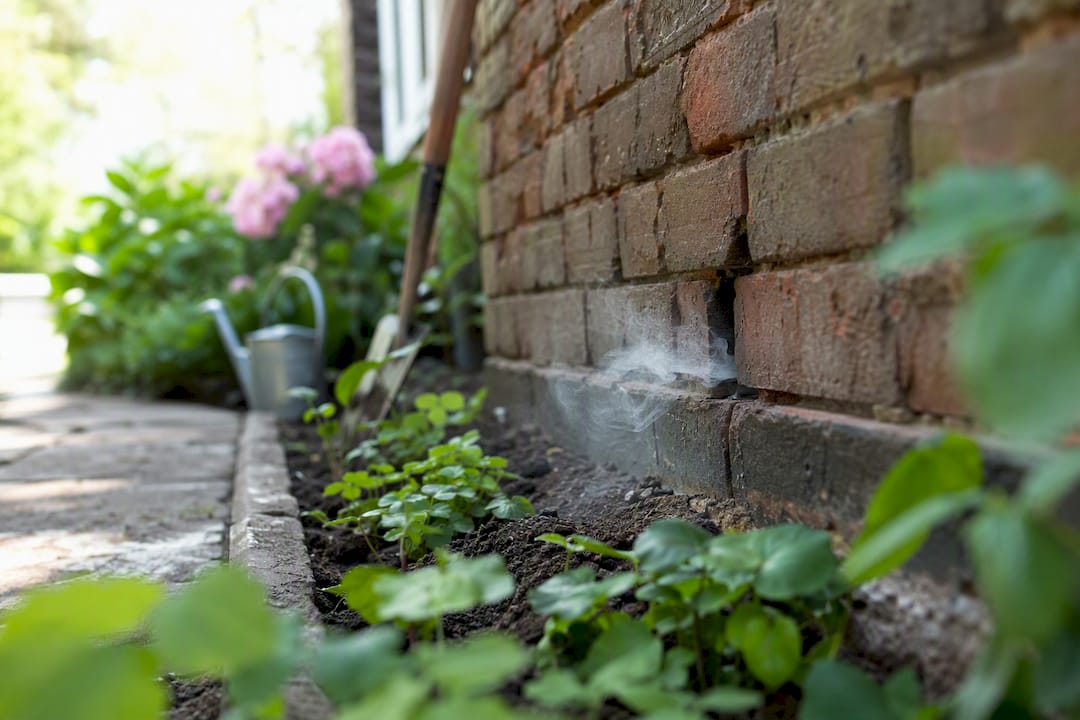
The conventional advice treats a smoke test as a one-off diagnostic: run it, get an answer, move on. That understates what it’s actually good for. Smoke testing is at its most valuable as a mapping exercise, not a single pass/fail check. Rats rarely use one entry point, and a test that stops at the first plume misses the second or third breach sitting further down the same lateral.
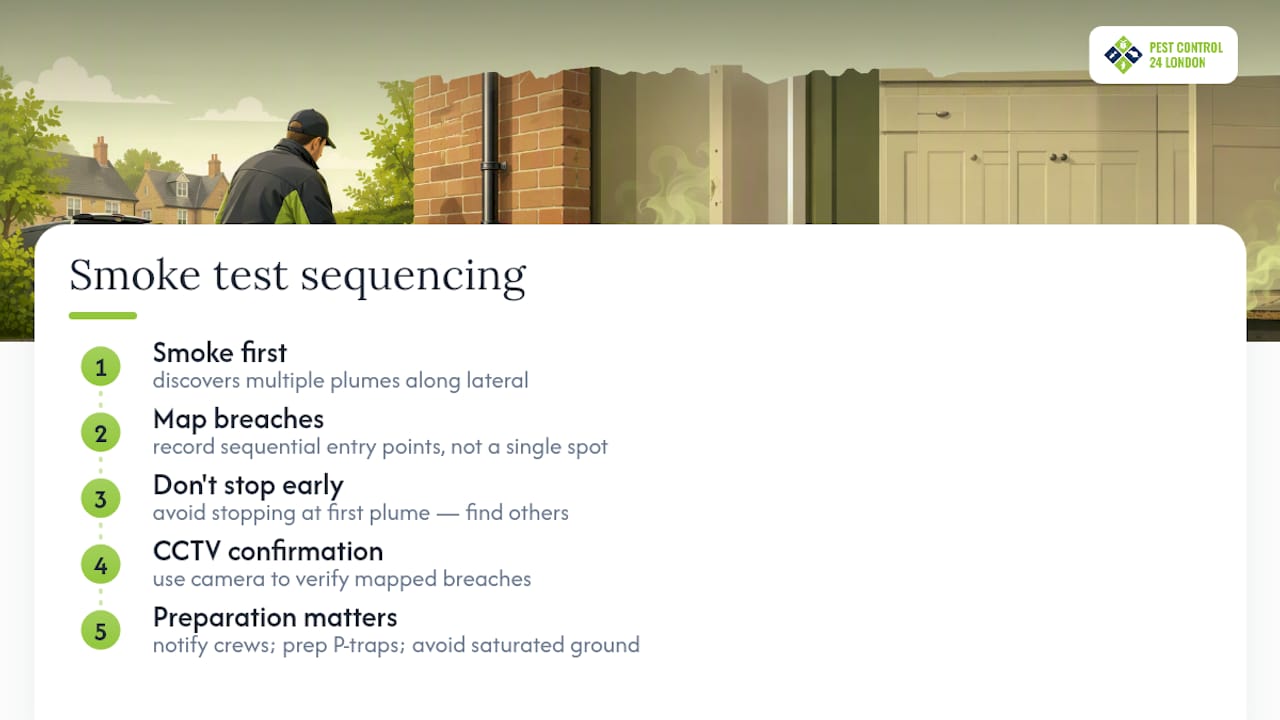
The other gap in most guidance is sequencing. Too many owners commission CCTV first because it feels more thorough, then wonder why the report comes back clean while rats keep appearing. Smoke should usually come first precisely because it finds the leaks that a camera, pointed only where it’s told to look, will never catch. CCTV is the confirmation step, not the discovery step.
What should property owners prioritise? Preparation over urgency. A rushed smoke test on saturated ground or without warning the fire service wastes money and produces unreliable results. The technicians who get this right treat notification and P-trap prep as seriously as the test itself, not as paperwork to skip.
— Dan
Book a smoke test, CCTV survey or rodent-proofing job
Pestcontrol24london runs the full diagnostic sequence in one visit wherever possible: an on-site smoke test to map breaches, a follow-up CCTV survey to inspect flagged sections, and a written report with plume photographs your insurer or landlord can act on. That’s the practical advantage over piecing the job together from separate contractors: one BPCA-qualified team, one report, one point of contact from diagnosis through to rodent-proofing repairs.

Pestcontrol24london has been diagnosing and closing rat entry points across London properties since 2015, from single-family homes to hotel kitchens and restaurant basements. Every job includes photographic documentation suited to insurance claims and landlord repair records. If rats keep coming back despite a clean-looking drain survey, book a free quote or call the 24/7 emergency line to arrange a smoke test and full rat removal survey.
Sources
- Smoke tests in London — Absolute Plumbing Ltd
- Smoke testing detects pest entry points — Sewer Assassin
- Rat control — BPCA A–Z of pest advice