

You likely have a pharaoh ant infestation if you can see tiny golden-yellow ants trailing along skirting boards, repeatedly appearing near warm appliances, or returning after you have cleaned the area. These are among the clearest early signs, and they warrant immediate, careful action.
The most telling signs to look for:
- Tiny ants, roughly 2 mm long, with a golden-yellow to reddish-brown body and a noticeably darker abdomen
- Persistent trails running along skirting boards, pipes, wiring, or kitchen worktops
- Activity concentrated near heat sources: boilers, ovens, dishwashers, and hot water pipes
- Ants appearing in multiple rooms, not just one area
- Workers carrying white larvae or pupae, which signals an established, active colony
- Sightings near food, soap, toothpaste, or pet food, not just sugary items
- Ants returning within days of cleaning or wiping down surfaces
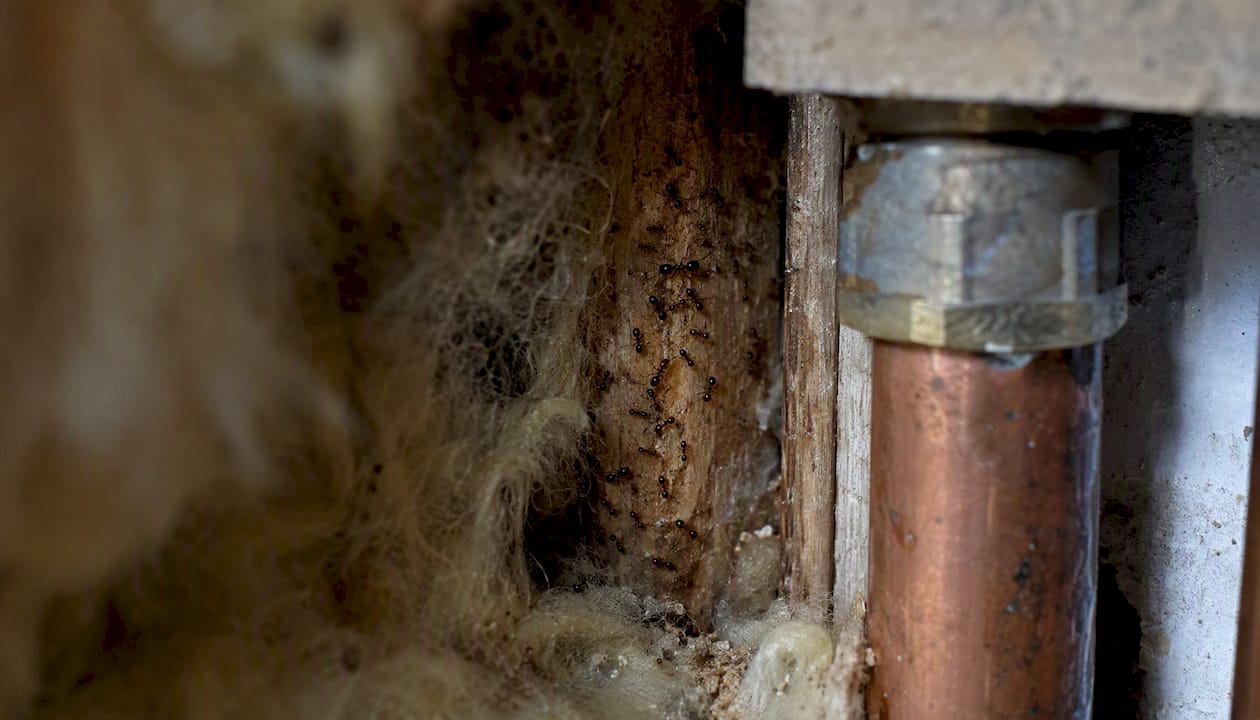
- Trails that seem to disappear into wall voids, electrical sockets, or behind appliances
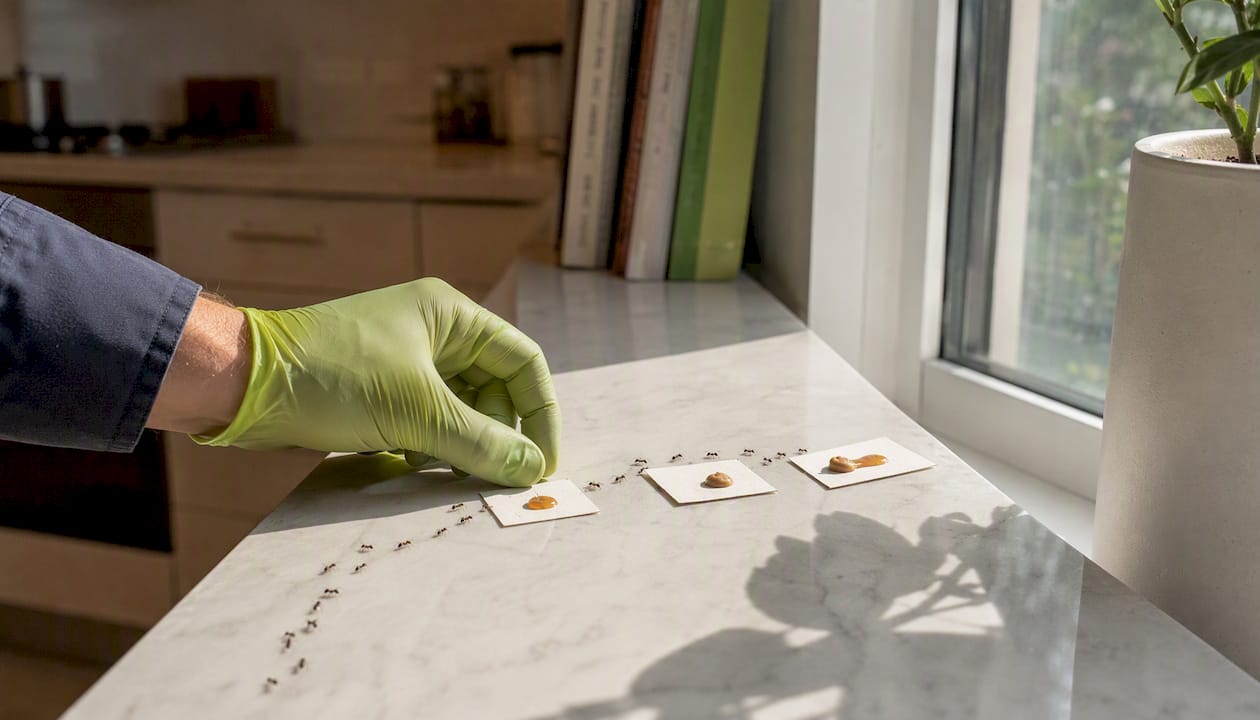
Pro Tip: If you are seeing ants in more than one room, or workers carrying brood, do not spray anything. Place a small amount of honey or peanut butter on a piece of card near the trail and observe where the ants take it. This maps activity without disturbing the colony.
If two or more of the above signs are present, begin non-disturbing monitoring with non-repellent bait immediately, or request a professional survey. Spraying at this stage often makes things significantly worse.
Key takeaways
Pharaoh ants are best controlled through non-repellent baiting programmes, because spraying triggers colony budding and turns one nest into many.
| Point | Details |
|---|---|
| Core identification features | Workers are approximately 2 mm, golden-yellow with a darker abdomen, and have 12-segmented antennae with a 3-segmented club. |
| Clearest infestation signs | Multiple trails, sightings across rooms, and workers carrying brood all indicate an established colony requiring action. |
| Never spray a pharaoh ant trail | Contact insecticides cause budding, fragmenting the colony and spreading the infestation to new areas. |
| DIY first response | Place slow-acting, non-repellent bait gel along active trails; monitor for two to three weeks before escalating. |
| Pestcontrol24london | BPCA-qualified surveys and baiting programmes across London for domestic and commercial properties, with follow-up monitoring visits. |
Table of Contents
- How do you recognise a pharaoh ant by sight?
- What behavioural signs point to pharaoh ants?
- Where do pharaoh ants typically nest in UK properties?
- How do you tell an early infestation from a severe one?
- How to carry out a safe inspection without spreading the colony
- What mistakes make a pharaoh ant problem worse?
- What safe DIY options are available for UK homeowners?
- When should you call a pest control professional?
- Why professionals use baiting, not sprays: the expert view
- A pest control operator’s perspective on finding nests fast
- Pestcontrol24london: BPCA-qualified pharaoh ant surveys in London
- Sources
How do you recognise a pharaoh ant by sight?
Pharaoh ants are one of the most frequently misidentified indoor ant species in the UK, largely because of their small size and pale colouring. Getting the identification right matters: the control approach for pharaoh ants is fundamentally different from that used for other common species, and using the wrong method can spread the infestation.
The key physical markers are:
- Size: Workers are approximately 2 mm (roughly 1/16 of an inch), making them noticeably smaller than black garden ants
- Colour: Golden-yellow to reddish-brown, with a distinctly darker, almost black abdomen
- Antennae: 12 segments, ending in a 3-segmented club, which is visible under a hand lens
- Petiole: Two nodes between the thorax and abdomen, a feature shared with some other species but useful when combined with the above
- Workers: All roughly uniform in size, unlike some species that produce larger soldier castes
The species most commonly confused with pharaoh ants are ghost ants (Tapinoma melanocephalum), which have a pale, almost translucent body and legs, and sugar ants, which tend to be slightly larger and darker. If you are uncertain, photograph the ant against a white background using your phone’s macro mode and send the image to a pest control professional for confirmation before taking any action. Misidentification is one of the most common reasons DIY treatments fail. For a broader look at how insect infestations present in UK homes, the insect infestation guide from Pestcontrol24london covers a range of species with practical visual cues.
What behavioural signs point to pharaoh ants?
Pharaoh ants leave chemical scent trails that workers follow between the nest and food sources, and these trails are one of the clearest behavioural indicators of an active colony. Unlike many ant species that forage seasonally or primarily outdoors, pharaoh ants operate year-round indoors, foraging day and night.
Common behavioural signs include:
- Persistent, narrow trails running along skirting boards, pipe runs, wiring, or the edges of kitchen units
- Workers foraging at all hours, not just in the morning or evening
- Activity near an unusually broad range of food sources: sweets, grease, proteins, pet food, and even non-food items such as soap or toothpaste
- Trails that converge toward a single entry point, such as a gap behind a socket or a crack in the skirting
- Workers appearing on upper floors or in rooms far from the kitchen, suggesting the colony is using pipe runs or wiring as travel corridors
The breadth of their diet is worth noting. Pharaoh ants will forage on almost anything organic, which is why they turn up in bathrooms as readily as in kitchens. A trail near a soap dish or a toothbrush holder is just as diagnostic as one near the sugar bowl.
Pro Tip: To map foraging without disturbing the colony, place small pre-bait cards, each carrying a pea-sized amount of honey on one end and peanut butter on the other, at several points along a visible trail. Check after 30 minutes. The end the ants prefer tells you whether the colony is currently seeking sugar or protein, which helps you choose the right bait formulation later.
Where do pharaoh ants typically nest in UK properties?
Pharaoh ants favour warm, humid, and undisturbed spaces, which in a UK home or commercial property means they are almost never nesting somewhere you can easily see. They prefer indoor sites near heat and moisture, and their nests are typically deep inside the building fabric.
The most likely nesting locations to inspect first:
- Wall voids and cavities, particularly those adjacent to heating pipes or boiler flues
- Behind and beneath skirting boards, especially where the board has lifted or cracked
- Inside electrical sockets and switch boxes, where warmth from wiring is constant
- Behind and beneath kitchen appliances: dishwashers, fridges, ovens, and microwaves
- Inside appliance insulation, particularly in washing machines and tumble dryers
- Near hot water cylinders, boilers, and underfloor heating systems
- Between stacked sheets of paper, cardboard, or fabric in storage areas
- Inside curtain rods, hollow furniture legs, or laundry piles
- Floor voids beneath suspended timber floors
Heating and plumbing routes act as highways. Workers use pipe runs and wiring to travel between nesting sites and food sources, which explains why an infestation in a ground-floor kitchen can produce sightings on the first floor within weeks. In multi-unit buildings such as flats or hotels, this mobility means a colony can spread across several units from a single nest site.
How do you tell an early infestation from a severe one?
The clearest separator is the number of distinct trails and the presence of brood. A single trail of workers near one food source, with no sightings elsewhere, suggests an early or exploratory incursion. Multiple trails, sightings across different rooms or floors, and workers visibly carrying larvae or pupae all point to an established colony that has already expanded.
Use this severity checklist to assess your situation:
- Early signs: One trail, occasional sightings in one room, no brood visible, activity limited to one food source
- Moderate signs: Two or more trails, sightings in different areas of the same room, activity at multiple food types
- Severe signs: Trails in multiple rooms or on multiple floors, workers carrying white larvae or pupae, visible nest activity near voids or sockets, contamination of food stores, sightings in bathrooms as well as kitchens
One factor that makes pharaoh ants particularly difficult to control is their colony structure. Colonies contain multiple queens and can fragment into satellite nests when threatened, a behaviour known as budding. This means a colony that appears localised can rapidly become a building-wide problem if disturbed incorrectly. The presence of winged reproductive forms (alates) is rare indoors but, if seen, indicates a mature colony that has been established for some time.
For a practical guide to managing ant activity across a UK property, the ant infestation control guide from Pestcontrol24london covers monitoring and escalation steps in detail.
How to carry out a safe inspection without spreading the colony
Begin by observing, not intervening. The single most important rule during a pharaoh ant inspection is to avoid spraying anything until you have a clear picture of where the trails lead and where the nest is likely to be.
Step-by-step inspection routine:
- Observe and note — Spend 10–15 minutes watching the trail without touching it. Note the direction workers are travelling and whether they are carrying food or brood.
- Map entry and exit points — Follow the trail in both directions to identify where it enters the wall, floor, or appliance. Mark these points on a rough sketch of the room.
- Place pre-bait cards — Set small cards with honey and peanut butter at several points along the trail and at suspected entry points. Check after 30 minutes to confirm activity hotspots.
- Check behind appliances — Carefully pull out the fridge, dishwasher, or oven and inspect the floor and wall behind them. Look for clustering workers or small white eggs.
- Inspect voids and sockets — Remove socket covers carefully (isolate the circuit first) and look for workers or nest material inside. Check gaps behind skirting boards with a torch.
- Check storage areas — Look inside cardboard boxes, paper stacks, and fabric piles in cupboards or utility rooms.
- Document everything — Photograph trails, entry points, and any visible nest activity. Note the time of day and which rooms are affected.
Safety during inspection:
- Do not use aerosol sprays, surface sprays, or any contact insecticide at this stage
- Wear disposable gloves when checking waste bins, drains, or damp areas
- Do not move infested items between rooms; workers can carry brood with them and establish a new satellite nest
Non-toxic pre-baiting is the recommended diagnostic step before any chemical treatment, as it maps activity without stressing the colony. If your inspection reveals trails in more than two rooms, or you find evidence of nesting in wall voids, stop and call a professional.
What mistakes make a pharaoh ant problem worse?
Using a contact insecticide spray on a pharaoh ant trail is the single most counterproductive action you can take. Rather than killing the colony, spraying triggers budding: the colony fragments, queens and workers scatter to new locations, and what was one nest becomes several. This is not a theoretical risk. BPCA guidance is explicit that contact sprays and repellent products are the primary cause of treatment failure with this species.
Other common mistakes to avoid:
- Using repellent ant baits or products labelled for garden ants, which pharaoh ants often reject or avoid
- Moving infested items, such as cardboard boxes or laundry, to another room, which relocates workers and brood
- Leaving food, crumbs, or grease accessible while trying to bait, which gives the colony an alternative food source and reduces bait uptake
- Placing baits in the wrong locations, such as in the open rather than along active trails or near entry points
- Attempting to flood or physically destroy a suspected nest site, which disperses workers and brood
Pro Tip: If you have already sprayed and the infestation appears to have spread, do not spray again. Switch to non-repellent bait placed along every visible trail and call a professional to assess whether the colony has fractured. Acting quickly at this point limits further spread.
The temptation to reach for a can of ant spray is understandable, but with pharaoh ants it consistently produces a worse outcome than doing nothing while you arrange proper baiting.
What safe DIY options are available for UK homeowners?
The recommended first-response approach for pharaoh ants is careful monitoring combined with non-repellent baiting, not sprays. This preserves the colony’s foraging behaviour, which is what allows bait to be carried back to the queens.
Practical DIY options that are appropriate for UK properties:
- Pre-bait cards: Small pieces of card with honey and peanut butter placed along trails to confirm activity and food preference before committing to a bait product
- Non-repellent ant gel baits: Look for slow-acting gel formulations containing active ingredients such as borax or boric acid, placed in small amounts directly along active trails and near suspected entry points. Slow-acting is critical; fast-acting baits kill workers before they return to the nest
- Sticky monitoring traps: Place these along trails and near appliances to track activity levels and confirm whether numbers are increasing or declining
- Sealing entry points: Once trails are mapped, seal obvious gaps around pipes, sockets, and skirting with silicone sealant, but only after baiting is underway, not before
- Reducing moisture: Fix dripping taps, improve ventilation in bathrooms and utility rooms, and address any condensation issues that make the environment attractive
Keep all baits away from children and pets, and follow label instructions precisely. If activity has not reduced noticeably within two to three weeks of consistent baiting, or if new trails appear in rooms that were previously clear, pause DIY efforts and contact a professional. Persistent activity after thorough baiting almost always indicates an established colony that requires a coordinated, building-wide programme. For guidance on what to do after treatment, the post-treatment cleaning guide from Pestcontrol24london covers safe sanitisation steps.
When should you call a pest control professional?
Call a professional immediately if any of the following apply:
- Trails are visible in more than two rooms or on more than one floor
- Workers are carrying white larvae or pupae
- You have already sprayed and the infestation appears to have spread
- The property is a food service premises, hospital, care home, or any setting where hygiene standards are regulated. Pharaoh ants in food service or healthcare settings present a direct hygiene risk and require urgent professional intervention
- DIY baiting has produced no reduction in activity after three weeks
- You can see or hear activity inside wall voids or behind sockets
For commercial kitchens and hospitality businesses, the commercial pest control service from Pestcontrol24london is specifically structured for regulated environments.
What a professional survey typically involves:
- Full building inspection, including wall voids, pipe runs, and appliance spaces
- Trail mapping across all affected rooms and floors
- Identification of likely nest sites and entry corridors
- A coordinated bait placement plan using non-repellent, slow-acting products
- Repeat monitoring visits to assess bait uptake and colony decline
- Written reporting and a timeline estimate for resolution
Estimated treatment timelines:
| Stage | Typical timeframe |
|---|---|
| Noticeable reduction in trail activity | 2–4 weeks from bait placement |
| Significant decline in worker numbers | 4 weeks |
| Colony elimination (single nest site) | 6–12 weeks |
| Resolution in multi-unit or complex properties | 3–6 months |
These timelines assume consistent bait availability and no use of repellent products during treatment. Multiple colonies or a large building footprint extend the process.
Why professionals use baiting, not sprays: the expert view
Non-repellent, slow-acting bait is the professional standard for pharaoh ant control because it works with the colony’s own behaviour rather than against it. Workers pick up the bait, carry it back to the nest, and share it with other workers and queens through trophallaxis (food sharing). The colony declines from the inside out, including the reproductive queens, which is the only way to achieve lasting elimination.
Contact sprays kill foragers on contact but leave the nest intact. Worse, they trigger the budding response: the colony detects a threat, queens and workers relocate to new sites, and the infestation multiplies. This is precisely why BPCA guidance consistently directs professionals away from repellent products for this species.
In practice, a professional programme for a London domestic property typically involves an initial inspection visit, bait placement across all identified trail routes and suspected nest areas, and two to three follow-up visits over six to twelve weeks to refresh bait, assess uptake, and adjust placement. Properties with multiple units, such as purpose-built flats or commercial premises, require a coordinated approach across the whole building, because treating one unit while adjacent units remain untreated simply relocates the colony.
Pestcontrol24london has been BPCA-qualified since the business was established in 2015, and the team carries out pharaoh ant surveys and baiting programmes across London for both domestic and commercial clients. A professional survey is the most reliable way to confirm the extent of an infestation and put a realistic treatment plan in place.
A pest control operator’s perspective on finding nests fast
The most common mistake I see in London properties is homeowners discovering a trail in the kitchen, spraying it, and then calling us two weeks later when ants have appeared in the bathroom, the bedroom, and the hallway. By that point, what was probably one nest has become three or four, and the treatment timeline doubles.
The fastest way to locate a nest is to resist the urge to act and instead watch. In London kitchens, the trail almost always leads to the boiler cupboard, the space behind the dishwasher, or a void beneath the kitchen units where a pipe enters the wall. In commercial kitchens, the hot spots are consistently the area around the dishwasher drain, the underside of the cooking line, and any wall cavity adjacent to the extraction system. Boiler rooms in older London properties, particularly Victorian terraces and Edwardian conversions, are among the most reliable nest sites we encounter.
The pre-bait card technique is genuinely useful here. Place cards at three or four points along a trail, leave them for 30 minutes, and the concentration of workers around one card almost always points you toward the nest direction. It takes patience, but it saves time overall.
Pestcontrol24london: BPCA-qualified pharaoh ant surveys in London
Pharaoh ants require a precise, coordinated response, and Pestcontrol24london delivers exactly that. As a BPCA-qualified provider operating across London since 2015, the team offers thorough pharaoh ant surveys and non-repellent baiting programmes for both domestic and commercial properties.

A booked survey with Pestcontrol24london includes a full building inspection, trail mapping across all affected areas, identification of likely nest sites, a tailored bait placement plan, and scheduled follow-up visits to monitor colony decline. For food premises, care homes, and hotels, the service meets the hygiene and documentation standards those environments require.
Whether you are a homeowner seeing the first signs of a pharaoh ant infestation or a business manager dealing with an established problem across multiple rooms, the right next step is a professional assessment. Book your survey or request a quote directly at Pestcontrol24london, or visit the ant removal service page for full details on what the treatment programme covers.
Sources
The following sources are reliable starting points for anyone who wants to go deeper on pharaoh ant identification, biology, or control:
- Pharaoh antSchool IPM – USU
- EENY290/IN533: Pharaoh Ant, Monomorium pharaonis (Linnaeus) (Insecta: Hymenoptera: Formicidae)
- Pharaoh ant
- PestWatch: Pharaoh ants