

If small, fuzzy, moth-like flies are resting on your walls near the sink or shower, and you notice slow drainage or a musty smell rising from the plughole, you very likely have a drain fly infestation. The most reliable signs are adult flies congregating around drains rather than food or fruit, a fine dark film or slime coating the inside of the pipe, and a foul odour that gets stronger when you run water. Eggs hatch in under 48 hours, so a small problem can multiply into a swarm within a fortnight if you leave it alone.
Check these first:
- Adult flies resting on bathroom or kitchen walls, particularly near drains, overnight
- A slimy, dark residue lining the inside of the pipe or overflow when you run a finger round it
- A musty or sewage-like smell that intensifies near a specific fixture
- Small, worm-like larvae visible in standing water inside a drain or trap
- Slow-draining water in a sink, shower, or floor drain that hasn’t been used often
Your first move should be a quick source check, not a chemical pour. Tape a piece of clear sticky tape sticky-side down over the drain opening overnight; if you find flies stuck to it by morning, you’ve confirmed the breeding site.
Key Takeaways
Removing the breeding material inside the drain, not killing adult flies, is the only reliable way to end a drain fly infestation for good.
| Point | Details |
|---|---|
| Confirm the source first | Run a tape or oil-cup test overnight before cleaning to identify the exact drain that’s breeding flies. |
| Clean mechanically, not chemically | Scrub biofilm with a brush and enzyme cleaner; bleach and vinegar rarely reach embedded larvae. |
| Monitor for two to three weeks | Repeat cleaning across the larval development period since one treatment rarely breaks the cycle. |
| Escalate hidden or repeat cases | Call a professional if flies persist after repeated cleaning or multiple drains are affected. |
| Choose BPCA-qualified support | Pestcontrol24london’s BPCA-qualified technicians offer drain surveys and jetting when DIY cleaning has failed. |
Table of Contents
- What causes a drain fly infestation and how quickly do they breed?
- What do drain flies look like, and how do you tell them from fruit flies?
- Where do drain flies breed, and what causes an infestation?
- How do you confirm which drain is causing the problem?
- How do you get rid of drain flies for good?
- How do you stop drain flies coming back?
- Are drain flies actually harmful to health?
- When should you call a professional pest controller?
- What a technician sees that homeowners often miss
- Get help from a BPCA-qualified drain fly specialist
- Sources
What causes a drain fly infestation and how quickly do they breed?
Drain flies, sometimes called moth flies, belong to the family Psychodidae and breed almost exclusively in the organic sludge that builds up inside drains, traps, and other damp, undisturbed spaces. They lay eggs directly on the biofilm coating pipe walls, and those eggs are viable within days.
The life cycle runs through four stages: egg, larva, pupa, and adult. Eggs hatch in under 48 hours, and the larval stage lasts anywhere from 8 to 24 days depending on temperature and food supply, feeding on the fungi and bacteria in the slime. Adults live only a week or two, but because eggs and larvae are continuously present in the same sludge layer, a colony can appear self-sustaining even after you’ve swatted every visible fly.
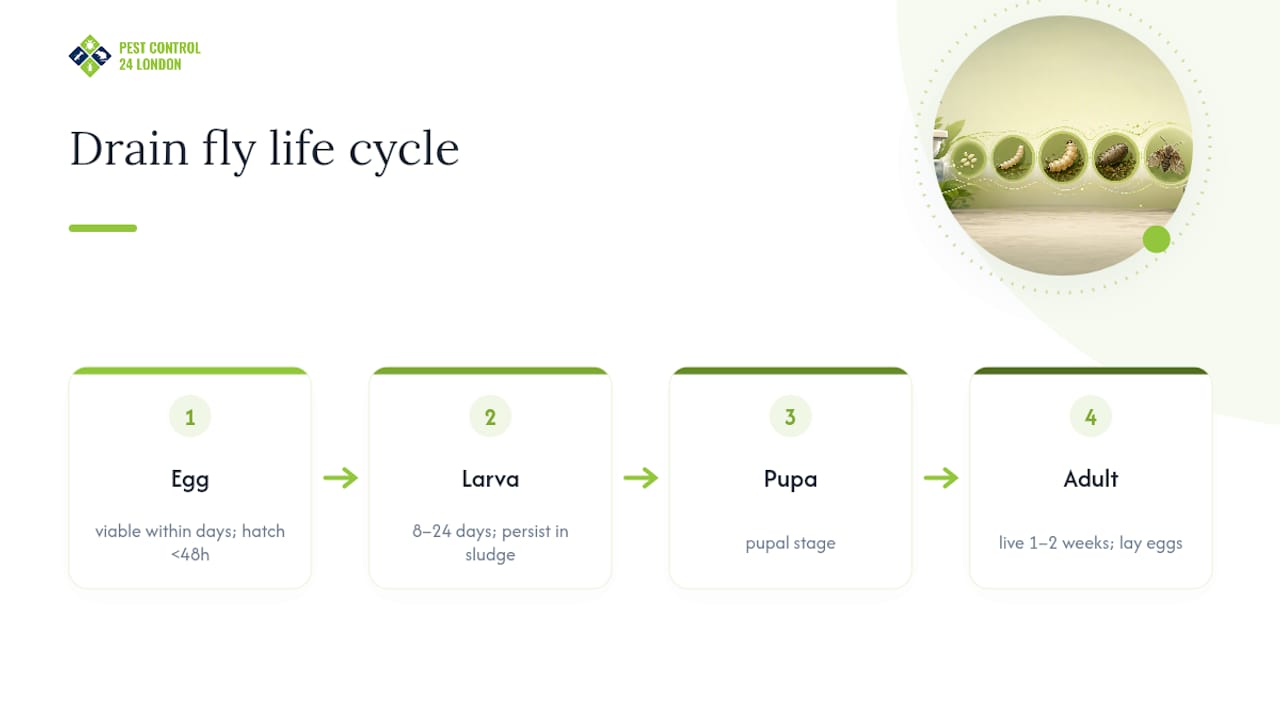
Two things follow from this timing. First, killing adults with a spray or fly swatter does nothing to the eggs and larvae feeding inside the pipe, so flies reappear within days. Second, because a full generation can complete in a few weeks, any cleaning plan needs to run for at least that long to break the cycle rather than just interrupt it.
Around 8 to 24 days is how long drain fly larvae typically spend developing inside pipe biofilm before emerging as adults, which is why a single clean rarely finishes the job.
What do drain flies look like, and how do you tell them from fruit flies?
Adult drain flies are tiny, roughly 2 to 3mm long, with a fuzzy, moth-like body and wings covered in fine hairs. At rest, they hold their wings in a distinctive tent or roof shape over the body, which is one of the clearest visual giveaways. Their flight is weak and erratic, more of a short hop than a purposeful buzz, and they tend to cluster on vertical surfaces such as tiles and walls rather than hovering over food.
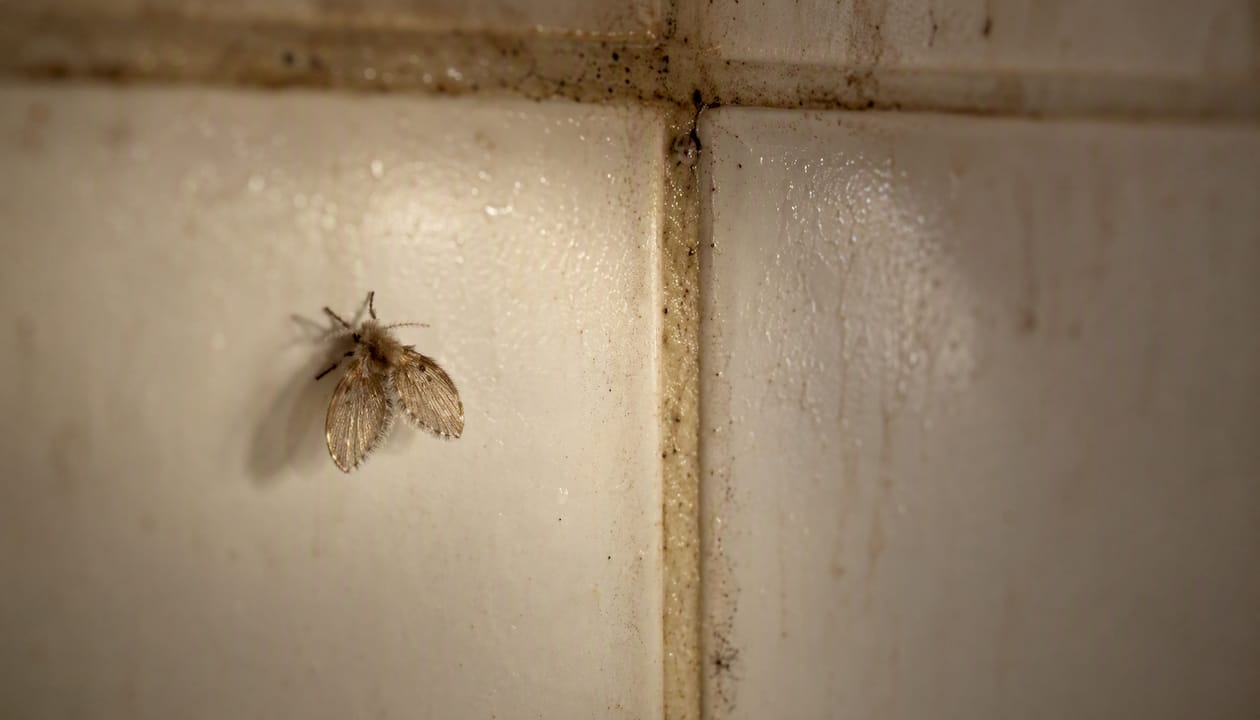
Larvae look nothing like the adults. They’re small, pale worm-like creatures with darker bands at either end, and you’ll find them wriggling in the slime layer of a drain or trap rather than crawling around your kitchen.
Homeowners frequently confuse drain flies with fruit flies and fungus gnats, but the differences are easy to spot once you know what to look for.
| Feature | Drain fly | Fruit fly | Fungus gnat |
|---|---|---|---|
| Body shape | Fuzzy, moth-like | Smooth, oval | Slender, mosquito-like |
| Wing position at rest | Roof-shaped over body | Flat | Flat |
| Where found | Near drains, damp tile | Near fruit, bins, wine | Near houseplants, damp soil |
| Flight pattern | Short, weak hops | Steady hovering | Weak, jerky flight |
Pro Tip: If you’re not sure which pest you’re dealing with, catch one on a piece of tape and photograph it close up. Compare the wing shape and resting posture against a reference image before you decide on a treatment. Guessing wrong wastes both time and product.
Beyond appearance, watch for behavioural patterns: flies resting motionless on bathroom walls for hours, small swarms appearing at dusk near a specific fixture, and any slime or larvae visible when you shine a torch into an open drain. If you’d like to see how other insect infestations present visually around the home, our guide to common infestation signs has comparable photos worth checking against.
Where do drain flies breed, and what causes an infestation?
Indoors, the usual breeding grounds are sink and shower drains, the U-bend traps beneath them, overflow cavities in baths and basins, toilet rims, and the condensate pans under fridges and washing machines. Outdoors, septic tanks, stagnant garden pools, compost heaps, and clogged gutters all provide the same damp, organic conditions drain flies need to thrive.
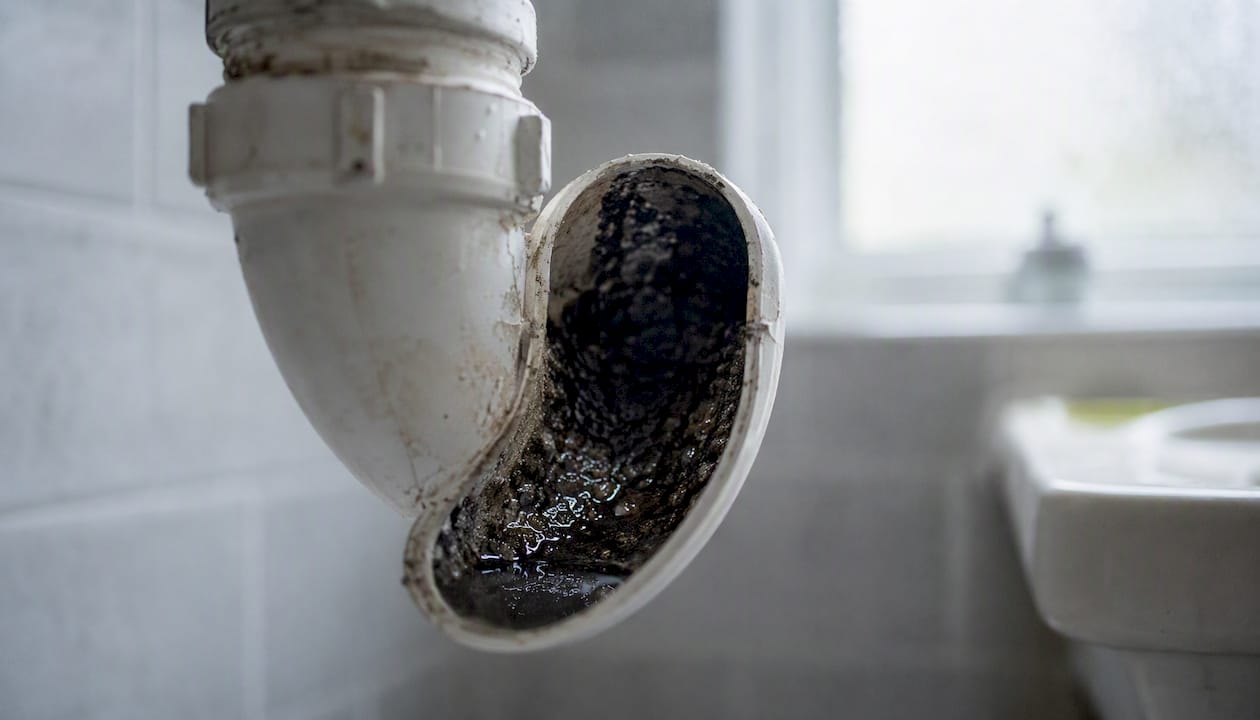
The root cause is almost always organic build-up combined with stagnant water. Hair, soap scum, grease, and skin cells accumulate in a drain and, left undisturbed, form a slimy biofilm that larvae feed on directly. Slow or partially clogged drains make this worse because water sits longer, giving the sludge more time to thicken. Leaking pipe joints and infrequently used fixtures, such as a guest bathroom or a floor drain in a utility room, are particularly common breeding spots simply because nobody’s flushing them through regularly.
Pro Tip: The breeding site people miss most often isn’t the drain itself but the space around it, under loose floor tiles, inside wall voids near old pipework, or along an external sewage field line. If you’ve cleaned every visible drain and flies keep appearing, the source is probably somewhere you can’t see without opening up the fixture. This pattern of inaccessible breeding sites is exactly why persistent infestations sometimes need a proper inspection rather than another round of scrubbing.
How do you confirm which drain is causing the problem?
Before reaching for any cleaner, spend a day confirming the actual source. Guessing wrong means you clean the wrong fixture and the flies simply carry on.
- Run the tape test. Tape a strip of clear sticky tape sticky-side down loosely over each suspect drain opening overnight, then check each strip in the morning for trapped flies.
- Try the inverted cup method. Coat the inside rim of a drinking glass with cooking oil and place it upside down over the drain overnight; flies attempting to emerge get stuck to the oil.
- Set sticky traps nearby. Position monitoring cards close to each drain for several nights and note which ones catch flies.
- Inspect the trap physically. Remove the U-bend or drain cover, shine a torch inside, and use a stiff brush to check for slime or larvae clinging to the walls.
- Note timing and location. Record which room and which drain produced the most catches over 3 to 4 nights before deciding where to focus cleaning.
Under 48 hours is roughly how long it takes freshly laid eggs to hatch, which is why an overnight tape or trap test is usually enough to catch active breeding rather than a stray wandering fly.
A brief safety note: if you’re removing a trap to inspect it, do this over a bucket rather than directly over an open drain, and avoid touching any residue with bare hands. Wash tools thoroughly afterwards so you’re not transferring bacteria from the slime to other surfaces in the home.
How do you get rid of drain flies for good?
Removing the breeding material is the only approach that actually works. Traps and sprays kill adult flies but leave the eggs and larvae untouched in the biofilm, so the infestation returns within days unless you strip the sludge out physically.
- Remove the trap and scrape it clean. Take off the U-bend or drain cover and physically scrub away the visible slime with a stiff bottle brush.
- Flush with boiling water. Pour a kettle of near-boiling water down the drain to loosen any remaining residue clinging to the pipe walls.
- Apply a foaming or enzyme drain cleaner. These products break down organic matter that mechanical scrubbing can’t reach, working over several hours rather than instantly.
- Repeat every few days for two to three weeks. Because eggs and larvae hatch on a rolling basis, one clean rarely finishes the job; consistent repetition is what actually breaks the cycle.
- Use a drain snake or high-pressure jet for deeper build-up. If flies persist after repeated surface cleaning, the sludge has likely settled further down the pipe than a brush can reach.
What not to do: bleach and vinegar are largely ineffective against embedded biofilm because they don’t penetrate the slime layer deeply enough to kill larvae, and pouring pesticides down a drain rarely reaches the source either. Never mix bleach with ammonia-based cleaners, since this produces toxic fumes in a confined pipe space.
A few weeks is the realistic window for seeing adult numbers drop to zero, matching the larval development period, so judge progress against that timeline rather than expecting results after a single treatment.
How do you stop drain flies coming back?
Prevention comes down to routine disruption of the sludge layer before it has a chance to thicken. Drains that get used daily rarely become breeding sites; the ones that sit stagnant for a week or more are the risk.
- Run hot water through infrequently used drains at least once a week to keep sludge from settling.
- Scour visible drain openings monthly with a brush to remove hair, soap scum, and grease before it accumulates.
- Check dishwasher and fridge condensate trays periodically, since these collect the same organic residue as drains.
- Fix dripping taps and slow leaks promptly; standing water anywhere in the property is an open invitation.
- Include external drains, gutters, and any septic or soakaway areas in seasonal property maintenance rounds.
| Task | Frequency |
|---|---|
| Hot water flush of low-use drains | Weekly |
| Mechanical scrub of visible drain openings | Monthly |
| Inspection of appliance condensate pans | Monthly |
| Full property drain and leak inspection | Quarterly |
Older plumbing systems are particularly prone to slow drainage that lets sludge build up unnoticed, and renovation work sometimes makes things worse rather than better if pipework is disturbed without proper flushing. This guide to plumbing renovation pitfalls is worth a read if you’re planning bathroom or kitchen work, since a badly sloped pipe or an incorrectly sized trap can create exactly the stagnant conditions drain flies need.
Are drain flies actually harmful to health?
Drain flies don’t bite and aren’t classed as a serious health threat, but they’re not entirely harmless either. Because larvae develop in organic sludge, adults can transfer microbes from that breeding material onto nearby surfaces, and their presence can trigger allergic responses in people who are sensitive to insect debris or mould spores.
The nuisance factor is usually the bigger issue for most households: swarms near a bathroom mirror or kitchen sink are unpleasant even without a genuine health risk attached.
- In food preparation areas, treat any drain fly sighting as a priority rather than a cosmetic annoyance.
- In healthcare or care settings, the same microbial transfer risk applies with less margin for error.
- Anyone with respiratory sensitivities or asthma should address a persistent infestation faster than a low-risk household would.
Pro Tip: If drain flies are appearing in a commercial kitchen, a hospital ward, or anywhere handling food or vulnerable people, don’t wait out the usual two to three week DIY timeline. A professional sanitisation visit clears both the flies and the underlying microbial residue in one pass.
When should you call a professional pest controller?
DIY cleaning solves the majority of drain fly problems, but certain signs mean it’s time to bring in someone qualified rather than repeating the same steps indefinitely.
- Flies keep appearing after two or three full rounds of mechanical cleaning and enzyme treatment.
- Multiple drains across different rooms are affected simultaneously.
- You suspect the source is hidden, under floor tiles, inside a wall void, or along an external sewage line.
- The infestation is in a commercial kitchen, hotel, or care setting where downtime and reputational risk matter.
Professional technicians work through problems systematically rather than by trial and error. A CCTV drain survey can locate a hidden leak or crack that’s been feeding a breeding colony for months without ever showing up on the surface, something no amount of surface scrubbing will fix. High-pressure jetting clears biofilm from sections of pipe a bottle brush simply can’t reach, and a technician can pinpoint exactly which fixture is the culprit when several drains in a property are affected at once.
One recurring pattern in persistent cases: the flies keep returning not because the visible drain wasn’t cleaned properly, but because a slab leak or a cracked section of external sewage pipe has been quietly feeding the infestation the whole time. Cleaning the drain you can see does nothing if the breeding site is a metre of pipe buried under the floor.
Look for BPCA-qualified technicians specifically. The British Pest Control Association sets the industry standard for training and competence, and a BPCA qualification is a meaningful signal that the technician you’re hiring has been assessed against a recognised benchmark rather than just picking up a spray canister.
| Approach | Reaches embedded biofilm? | Finds hidden leaks? | Realistic timeframe |
|---|---|---|---|
| Mechanical scrubbing (DIY) | Partially | No | 2 to 3 weeks |
| Enzyme cleaner (DIY) | Yes, surface layers | No | 1 to 2 weeks |
| Professional drain survey and jetting | Yes, full pipe length | Yes | Single visit in most cases |
What a technician sees that homeowners often miss
Most drain fly call-outs I’ve reviewed follow the same pattern: the homeowner has already cleaned the obvious drain, sometimes several times, and can’t understand why the flies keep coming back. The answer is almost always somewhere they haven’t looked. A cracked seal under a shower tray, a slow leak behind a washing machine, a section of external drain that’s slightly out of alignment, any of these can sustain a breeding colony indefinitely while the visible plumbing stays spotless.
The mistake I see most often isn’t laziness, it’s treating the adult flies as the problem rather than the symptom. People buy a fly spray, clear the room for a day, and feel like they’ve solved it. Then the swarm reappears a week later because nothing touched the larvae in the sludge. The second mistake is giving up too early: a genuinely thorough clean does take two to three weeks of repeated effort to fully break the life cycle, and plenty of people abandon the process after one attempt and assume it doesn’t work.
If there’s one thing worth remembering, it’s that the smell often tells you more than the sight of the flies does. A musty, faintly sewage-like odour from a specific fixture, even one that looks perfectly clean, is usually the clearest sign that biofilm has built up somewhere in that pipe run. Trust your nose before you trust your eyes.
Get help from a BPCA-qualified drain fly specialist
Persistent drain fly problems, especially ones tied to hidden leaks or commercial premises, often need equipment and expertise that go beyond what a bottle brush and enzyme cleaner can offer. Pestcontrol24london gives you the exact tools a determined DIY clean can’t, CCTV drain surveys to find breeding sites you’d never spot yourself, and high-pressure jetting that clears biofilm along the full length of a pipe rather than just the first foot you can reach with a brush.

Our BPCA-qualified technicians handle everything from a single stubborn bathroom drain to multi-site commercial premises, with 24/7 emergency callouts when a swarm needs sorting fast. If you’ve already tried cleaning and the flies keep returning, or you manage a hotel, restaurant, or office where downtime isn’t an option, book a drain survey or get a free quote through our main booking page and we’ll take it from there.
Sources
- Drain Flies in the Home: Identification & Management – Alabama Cooperative Extension System
- Drain Flies (Moth Flies or Filter Flies)
- Drain Flies – What are they? How do I get rid of them?
- Moth or drain flies | UC Statewide IPM Program