

Pest infestations are stressful at the best of times, but when treatment costs start climbing, the pressure on London homeowners and property managers becomes genuinely difficult to manage. Prices for emergency pest call-outs, repeat treatments, and poorly chosen products can add up quickly, leaving many people unsure where to begin. This article cuts through the noise and gives you a clear, practical framework for reducing pest control costs without sacrificing results, covering everything from everyday prevention habits to smart decisions about when professional help is genuinely worth the investment.
Table of Contents
- What makes a pest control solution cost-saving?
- Preventative measures: The best investment for your budget
- Affordable at-home pest solutions that really work
- Comparing professional and DIY pest control: What’s really more cost-effective?
- When to call the professionals: Situations where savings mean expert help
- Why cheap fixes may cost more in the long run: Our expert view
- Get guaranteed pest control savings with trusted London specialists
- Frequently asked questions
Key Takeaways
| Point | Details |
|---|---|
| Prevent before pests arrive | Simple, regular prevention measures reduce the likelihood of infestation and big bills. |
| DIY can be effective | At-home remedies work well for minor pest issues and are gentle on your budget. |
| Know legal limits | Compliance with UK wildlife laws is essential—using the wrong method can be costly. |
| Experts for complex cases | Severe or regulated infestations require professionals for compliance and effective elimination. |
| Quality is true value | Spending slightly more for trusted providers avoids repeated problems and extra costs long-term. |
What makes a pest control solution cost-saving?
Before we dive into specific solutions, let’s clarify what truly counts as “cost-saving.” Not every cheap product or quick fix will save you money over time. In fact, some low-cost options create bigger problems down the line.
A genuinely cost-effective approach shares a few defining qualities:
- Long-term prevention over reactive treatment. Spending a modest amount to stop pests entering your property nearly always costs less than paying for emergency treatments after an infestation has taken hold.
- Eco-friendly and non-chemical methods where possible. These approaches often reduce the need for repeat interventions because they address root causes rather than symptoms.
- Regulatory compliance. This is particularly important in London, where older properties and green spaces mean protected wildlife is never far away. As BPCA guidance confirms, methods near protected wildlife such as bats require specific approaches, and improper choices can result in costly rework.
- Reliability of provider and method. A solution that works consistently is more economical than one that requires repeating every few months.
Our guide to domestic pest control explores these principles in more depth for homeowners. It is also worth noting that the relationship between landscaping and pest management is often underestimated: well-maintained outdoor spaces remove the conditions pests need to thrive.
Pro Tip: Before spending anything on treatment products, walk around your property and note every crack, gap, or moisture problem you can find. Addressing these first can make any subsequent pest control significantly more effective and cheaper.
Preventative measures: The best investment for your budget
With clear criteria in mind, start by focusing on actions that prevent infestations and save money in the long run. Prevention is not just good advice; it is the single most cost-effective strategy available to any homeowner or property manager.
Here are the most impactful steps to take:
- Seal entry points thoroughly. Use silicone sealant around pipework, fill gaps in skirting boards, and install door brushes to block the routes mice and insects use to get inside.
- Keep food storage and preparation areas clean. Crumbs, spills, and open packaging are primary attractants for cockroaches, ants, and rodents. Clean behind appliances regularly.
- Secure all bins. Outdoor bins with loose lids attract rats and foxes. Indoor food waste bins should be emptied daily and cleaned weekly.
- Remove garden debris and fix leaks. Leaf piles, stacked timber, and damp soil beneath leaking pipes create ideal nesting habitats. Removing these reduces infestation risk significantly.
- Carry out regular monitoring. Walk through storage areas, loft spaces, and basements at least monthly. Early detection means a minor problem can be resolved before it escalates into a costly infestation.
“Spraying chemicals should always be a last resort after prevention; relying on non-chemical methods is not only better for sensitive areas but also minimises costs.”
These pest-proofing tips are particularly valuable heading into autumn and winter, when rodents begin seeking warmth indoors. For a broader overview, our best practices for pest control article covers seasonal strategies in more detail.
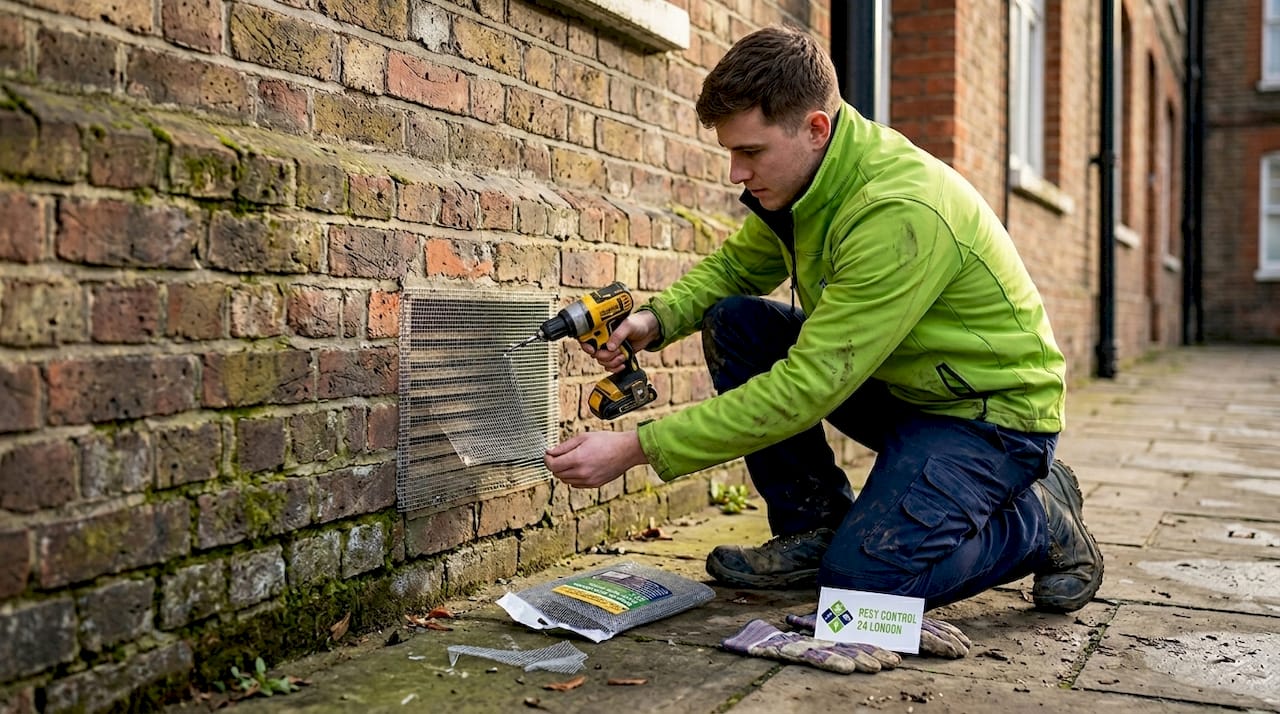
Pro Tip: Fit fine wire mesh over air bricks and external vent openings. This single, inexpensive measure prevents mice from entering through these commonly overlooked access points.
Affordable at-home pest solutions that really work
If prevention is key, affordable home-based remedies form the next line of defence. These solutions are suitable for early-stage problems and can be used confidently by most homeowners without specialist knowledge.
- Physical barriers. Door sweeps fitted to external doors cost just a few pounds and block the gap mice exploit. Fine mesh installed over ventilation openings is equally effective and long-lasting.
- Natural repellents. Peppermint oil applied to cotton wool and placed near suspected mouse entry points acts as a deterrent. Diatomaceous earth (a fine powder derived from fossilised algae) can be sprinkled around areas where insects are active; it damages their exoskeletons and reduces populations without the use of toxic chemicals.
- Simple traps. Humane mouse traps are inexpensive and effective for isolated mouse sightings. Sticky insect boards help you monitor and control crawling insect populations in kitchens and utility rooms.
- Good housekeeping products. Sealed food containers, drain covers, and mesh bin liners are modest investments that eliminate common attractants.
As BPCA guidance recommends, non-chemical barriers and repellents are both cost-effective and the recommended first step before turning to professional services or chemical treatment. For more options, our eco-friendly pest control page outlines natural solutions suited to London properties, and our top pest control tips article covers both residential and commercial settings.
It is also useful to consider outdoor pest prevention tips, particularly if you manage external leisure spaces or shared garden areas within a property.
When to move beyond DIY: If you have tried these methods for two to three weeks and the problem persists or worsens, this is a clear signal to escalate to professional treatment before costs increase further.
Comparing professional and DIY pest control: What’s really more cost-effective?
Now that you know the options, it is time to compare costs and results side by side.
| Factor | DIY pest control | Professional pest control |
|---|---|---|
| Upfront cost | Low (£5 to £50 typically) | Higher (£80 to £300+ depending on pest) |
| Effectiveness | Variable; works well for minor problems | Consistently high, especially for severe or recurring infestations |
| Compliance risk | High in regulated areas | Low; professionals understand legal requirements |
| Time investment | Significant; requires ongoing monitoring | Minimal; provider manages the process |
| Long-term cost | Can increase if treatment is ineffective | Often lower due to guaranteed outcomes |
| Suitability | Best for early-stage, common pests | Essential for complex, recurring, or regulated situations |
The cost difference between DIY and professional treatment narrows considerably when you factor in repeat purchases of ineffective products, time spent managing the problem, and the risk of fines for non-compliance. As BPCA guidance highlights, choosing the right provider and method matters greatly for legality and preventing expensive rework, particularly in regulated or sensitive areas.
For those managing multiple properties or commercial premises, a pest control contract often delivers the best value by spreading costs and ensuring consistent monitoring throughout the year.
When to call the professionals: Situations where savings mean expert help
While many situations are well-suited to DIY, sometimes expert intervention is the smarter way to save. Knowing when to make that call prevents a manageable problem from becoming an expensive crisis.
Call a professional pest controller when:
- DIY methods have not resolved the problem within a few weeks. Persistent activity after reasonable DIY effort indicates the infestation is beyond surface level.
- You are dealing with rodents, wasps, or cockroaches. These pests carry health risks and require targeted treatment methods that over-the-counter products rarely match.
- Your property is near protected wildlife. In such cases, the law may require professional assessment and non-chemical methods as a priority to avoid harming protected species such as bats.
- The infestation is inside walls, under flooring, or in structural spaces. These locations require specialist access and equipment.
- You manage a commercial premises. Regulatory obligations around food hygiene and public health make professional treatment a legal necessity in many cases.
When choosing a provider, look for transparent pricing, local knowledge, and BPCA qualification. Our commercial pest treatment guide outlines what London businesses should expect from a professional service. It is also worth considering deep cleaning alongside pest treatment, as a thorough clean removes the residual attractants that allow re-infestation to occur.
Why cheap fixes may cost more in the long run: Our expert view
After more than ten years treating pest infestations across London, from five-star hotels to terraced houses in Zone 4, we have seen the same pattern repeat itself. A homeowner or property manager chooses the cheapest available option. It provides short-term relief but does not resolve the underlying problem. Six months later, the infestation is back, often worse, and the total spend far exceeds what a well-planned professional treatment would have cost initially.
The instinct to minimise spending is completely understandable, and we are not suggesting you abandon DIY or prevention measures. What we are saying is that “cheap” and “cost-effective” are not the same thing. A £10 can of spray applied without identifying the source of a mouse problem will not deliver lasting results. A properly surveyed treatment that identifies entry points, nesting areas, and contributing conditions will.
Local expertise also matters more than many people realise. London’s mix of Victorian terraces, basement flats, commercial kitchens, and green corridors creates pest challenges that differ significantly from other parts of the country. A provider who understands the city’s specific conditions will identify risks that a generic approach misses entirely. Our expert-proven pest strategies reflect that accumulated local knowledge.
Invest wisely in prevention, act quickly at the first signs of activity, and choose professionals whose qualifications and experience you can verify. That combination delivers the lowest lifetime cost and the least disruption to your property and peace of mind.
Get guaranteed pest control savings with trusted London specialists
Ready to take action on your pest problem and save money? We have been helping London homeowners and businesses manage pest problems cost-effectively since 2015, with thousands of satisfied clients across residential and commercial properties throughout the city.
Our team is BPCA fully qualified and experienced across every common London pest, from mice and rats to wasps, cockroaches, and bed bugs. Whether you need domestic pest control for your home or business pest management for your premises, we provide transparent pricing, reliable outcomes, and treatments that comply with all current regulations. Visit our London pest control services to request a free quote and speak directly with a qualified specialist who understands your local area.
Frequently asked questions
What is the most affordable way to prevent a pest infestation in London homes?
Routine cleaning, sealing entry points, and using natural repellents like peppermint oil are the most budget-friendly preventative steps available to homeowners.
When does pest control near bats or protected wildlife require special handling?
Regulations require non-chemical methods first and careful timing to avoid harming wildlife; as BPCA guidance confirms, spraying is a last resort near bats and other protected species.
Are DIY pest solutions as effective as hiring a professional?
DIY options work well for minor, early-stage problems, but professionals ensure compliance and long-term results, particularly in complex or regulated situations, as choosing the right method prevents costly legal and practical mistakes.
How can I compare the cost of professional versus DIY pest treatment?
Professionals typically cost more upfront but prevent costly re-infestations and repeat purchases; DIY saves money in the short term but may require repeating if the root cause is not addressed properly.