

Discovering a wasp nest near your home can be alarming. The constant buzzing, the aggressive flight patterns near doorways or garden spaces, and the very real risk of stings make it one of the more pressing pest problems London homeowners face. But reacting hastily can make matters significantly worse. This guide offers clear, professional-backed advice on identifying wasp nests, preparing safely for removal, and ensuring lasting results, whether you are a homeowner in a terraced property or a property manager overseeing multiple residential units.
Table of Contents
- Understanding wasp nests and risks
- Preparation: Safety, timing, and required tools
- Safe nest removal: Step-by-step guide
- Aftercare, verification, and prevention
- The reality of DIY vs professional removal
- Ready for rapid, expert wasp nest removal in London?
- Frequently asked questions
Key Takeaways
| Point | Details |
|---|---|
| Safety first | Professional removal protects against stings and aggressive colonies, especially late in the season. |
| Identify before acting | Distinguish wasps, bees, and hornets to avoid harming beneficial species and ensure correct intervention. |
| Optimal removal timing | Treat nests at dawn or dusk when wasps are less active and in residence for faster, safer results. |
| Leave nests if safe | If out of harm’s way, nests can be left as they die off naturally and help local ecology. |
| Avoid DIY for large nests | Experts advise against DIY for anything but tiny nests due to increased risk and limited access to potent insecticides. |
Understanding wasp nests and risks
Before any action is taken, correctly identifying what you are dealing with is essential. Wasp nests are typically constructed from chewed wood pulp, giving them a distinctive papery, grey appearance. They are often found in roof spaces, wall cavities, garden sheds, and beneath eaves. Their texture resembles layered cardboard, and they can grow to the size of a football by late summer.
It is important to distinguish wasps from other stinging insects. Bees and hornets are commonly confused with wasps, but the differences matter.
| Species | Appearance | Nest material | Aggression level |
|---|---|---|---|
| Common wasp | Yellow and black, slim waist | Papery pulp | High in late summer |
| Honeybee | Stockier, more golden | Wax comb | Low unless provoked |
| Hornet | Larger, brown and yellow | Papery pulp | Moderate to high |
As the BPCA notes, hornets are similar to wasps but notably larger, and voids or cavities require specific treatment methods. If you spot something resembling a wasp but significantly bigger, consult our hornet identification page. Never attempt to treat bees; they are protected and require specialist bee removal advice.
Wasp aggression peaks in late summer when colonies are at maximum size and food sources decline. This is when the risk of multiple stings is highest, particularly for those with allergies. However, not every nest demands immediate removal. As the RHS advises, nests located away from people and high-traffic areas can often be left undisturbed, since wasps are valuable predators and pollinators and colonies die naturally without ever reusing a nest.
When removal is necessary: Nests directly above doorways, in children’s play areas, near allergy sufferers, or inside frequently used structures should always be treated promptly.
Our detailed wasp removal guide can help you assess your specific situation.
Preparation: Safety, timing, and required tools
Having assessed the nest and its risks, the next step is thorough preparation. Rushing into treatment without the right equipment or timing is one of the most common mistakes homeowners make.
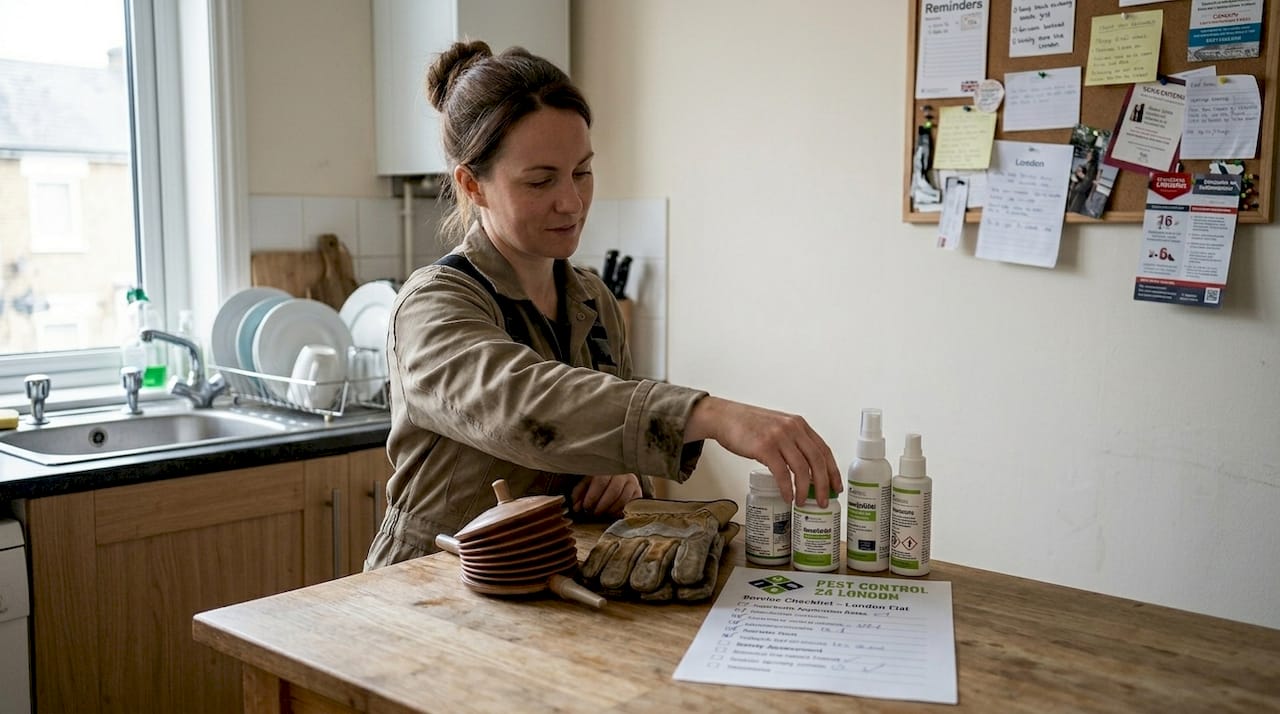
Timing matters considerably. Optimal treatment timing is early morning or dusk, when the majority of wasps have returned to the nest and are at their least active. Treating in full daylight when foraging wasps are out in force dramatically increases the risk of stings. Early spring also offers an advantage as nests are smaller and easier to eliminate before the colony grows.
Essential safety and equipment checklist:
- Full protective clothing covering all skin, including gloves and face protection
- Long-reach insecticidal duster for treating cavities without close contact
- Insecticidal dust or approved liquid formulation
- Torch for locating nest entrances in dim spaces
- An exit route planned before treatment begins
Professional treatment uses insecticidal dusts or liquids applied directly to the nest entrance by trained technicians in full PPE. Foraging wasps carry the insecticide inside, eliminating the entire colony within 24 to 72 hours, typically without any need for physical nest removal.
Pro Tip: Never seal a nest entrance before treatment. Trapping wasps inside forces them to chew through walls or ceilings in search of an alternative exit, which creates a far more serious problem.
DIY products available from shops are significantly less potent than professional-grade insecticides. For situations that cannot wait, our guide on emergency pest situations outlines when to call for emergency pest control immediately.
| Approach | Effectiveness | Risk level | Cost |
|---|---|---|---|
| DIY shop products | Low to moderate | High | Low |
| Professional treatment | High | Low | Moderate |
| Leaving nest undisturbed | N/A (seasonal) | Low if isolated | None |
Safe nest removal: Step-by-step guide
With preparation complete, here is how professional removal is carried out safely and effectively.
- Locate the nest entrance precisely. Watch wasp flight patterns at a safe distance during daylight. Mark the entrance point before dusk treatment begins.
- Put on full protective clothing. Ensure no skin is exposed. Tuck trouser legs into socks and secure sleeve cuffs.
- Apply insecticidal dust or liquid to the entrance. Use a long-reach duster for roof spaces or wall cavities. For exposed or ground-level nests, a direct spray application may be appropriate.
- Retreat immediately and calmly. Do not swat at wasps. Move steadily away and avoid the area for at least one hour.
- Monitor over 24 to 48 hours. Observe from a safe distance for reduced activity. A significant drop in wasp traffic is a strong indicator of successful treatment.
- Arrange physical nest removal if required. In most cases this is unnecessary, but nests in frequently accessed spaces may need to be cleared once activity has completely stopped.
As BPCA guidance confirms, all major authorities strongly advise against DIY treatment for anything beyond a very small nest, particularly with late-season colonies which are at peak aggression. Professionals carry potent insecticides that are simply not available to the public.
For voids and cavities, dust applicators are preferred. For ground nests, vacuum or dig-out methods are viable alternatives, alongside non-chemical options such as heat treatment or diatomaceous earth, though these work more slowly. The RHS safety advice echoes this caution, recommending professional help as the default.
Pro Tip: Check our pest control updates for seasonal advice specific to London’s wasp activity patterns each year.
Read more about our professional wasp removal service options.
Aftercare, verification, and prevention
Successful removal does not end with treatment. Verifying results and taking preventive action are equally important steps.
Signs that treatment has worked:
- No visible wasp activity around the nest entrance within 48 hours
- Absence of audible buzzing from within the structure
- No returning foragers gathering at the treated site
Professional pest controllers report resolution within 24 to 48 hours as standard, with very few callbacks when the insecticide has made direct contact with the nest rather than just the entrance.
Pro Tip: Leave the treated nest in place for at least a week before removing it physically. Disrupting it too early risks contact with residual wasps that are still dying off.
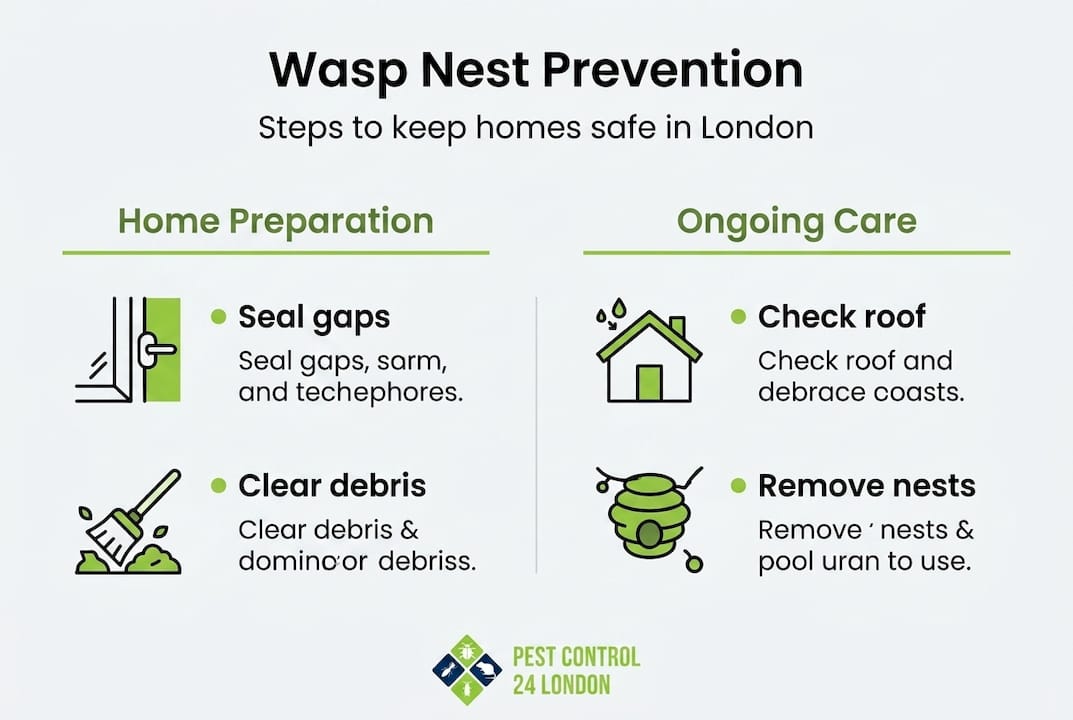
For prevention, sealing potential entry points is the most effective long-term strategy. Wasps do not reuse old nests, so a nest that has died naturally by late autumn poses no future risk from the same colony. However, the same site may attract a new queen the following spring.
| Prevention measure | Timing | Effectiveness |
|---|---|---|
| Seal roof and eave gaps | Autumn/winter | High |
| Remove old nest structures | After colony dies | Moderate |
| Regular property inspections | Spring | High |
For broader guidance on keeping your property protected, our pest-proofing tips and winter pest prevention articles offer practical seasonal advice.
The reality of DIY vs professional removal
We understand the temptation to handle a wasp nest yourself. A can of spray from the hardware shop feels like a quick, affordable fix. But in over ten years of pest control work across London, we have responded to a significant number of situations made dramatically worse by a failed DIY attempt.
All major pest control authorities strongly advise against DIY treatment for established nests. Late-season colonies are particularly dangerous. A disturbed nest housing tens of thousands of wasps will defend itself aggressively, and shop-bought products rarely deliver sufficient dosage. Beyond effectiveness, there are regulatory limitations on the insecticides available to the public. Our professional removal expertise ensures the right product is used safely and lawfully every time. The cost of getting it right first time is always less than the cost of getting it wrong.
Ready for rapid, expert wasp nest removal in London?
If you have identified a wasp nest on your property, acting promptly and safely is the priority. At Professional Pest Control Services, we have been protecting London homes and businesses since 2015, and we are BPCA fully qualified to handle wasp nests of any size or location.

Our team offers rapid response across London, using professional-grade treatments that resolve most nests within 24 to 48 hours. Whether you need domestic pest removal or fast emergency response, we are ready to help. Visit our London pest control services page to book your inspection today.
Frequently asked questions
When is the safest time to treat a wasp nest?
Early morning or dusk is safest, as most wasps are inside the nest and less active, reducing the risk of aggressive responses during treatment.
Do I need to remove the nest or just treat it?
In most cases, physical removal is not necessary. Professional treatment eliminates the colony and the nest can simply be left to deteriorate naturally over time.
Are wasps dangerous or worth keeping?
Wasps are valuable predators and pollinators. Nests die naturally by late autumn and are never reused, so an isolated nest away from activity can safely be left undisturbed.
How quickly does professional wasp nest treatment work?
Most colonies are eliminated within 24 to 48 hours of professional treatment, particularly when the insecticide makes direct contact with the nest.
Recommended
- Wasp Removal London | Emergency Wasp Nest Removal 24/7 – Pest Control 24 London
- Essential Pest-Proofing Tips for Your London Home This Autumn – Pest Control 24 London
- Hornet Removal London | European & Asian Hornet Nest Removal – Pest Control 24 London
- Blog – Pest Control 24 London
- How to clean heritage home exteriors: Expert guide