

Pest control in hotels is defined as the systematic prevention, monitoring, and management of pest activity across all areas of a property to protect guest health, operational continuity, and brand reputation. The role of pest control in hotels extends far beyond occasional treatment visits. The professional pest management sector contributes £1 billion annually to the UK economy and saves £1.9 billion by protecting infrastructure and businesses from disruption. The British Pest Control Association (BPCA) sets the professional standards that govern this work, and hotels operating without a structured programme face serious regulatory and reputational risk.
Why is pest control critical for hotel reputation and guest safety?
A single pest sighting can undo years of positive guest reviews. Pest-related online reviews can outweigh years of positive feedback, directly reducing booking rates and revenue. Hotel managers must treat pest management as a front-line guest experience issue, not a back-of-house operational afterthought.
The health risks are equally serious. Pests in hospitality environments carry bacteria, trigger allergic reactions, and contaminate food preparation areas. Rodents gnaw through electrical cabling, cockroaches spread pathogens across kitchen surfaces, bed bugs cause skin reactions and psychological distress for guests, and mosquitoes pose a public health risk in warmer months. Each of these pests represents a distinct liability for any hotel property.
A reactive approach to pest control in hotels is not a strategy. It is a gamble with your licence, your rating, and your guests’ wellbeing. The hospitality sector requires continuous, preventative monitoring to protect brand and revenue.
Legal consequences compound the reputational damage. Environmental health officers can issue improvement notices, enforce temporary closures, and impose fines following pest-related inspections. Revenue loss during a forced closure, combined with the cost of emergency remediation, far exceeds the annual cost of a professional pest contract. The impact of pests on hotels is measurable in both financial and operational terms.
The most common pest threats in UK hotels include:
- Rodents (rats and mice): enter through gaps as small as 10mm, contaminate food stores, and cause structural damage
- Cockroaches: thrive in warm, humid kitchen and laundry environments; carry Salmonella and E. coli
- Bed bugs: spread between rooms via luggage and linen; extremely difficult to eradicate without professional treatment
- Flies and stored product insects: indicate hygiene failures in food service and storage areas
What are the core strategies for effective hotel pest control?
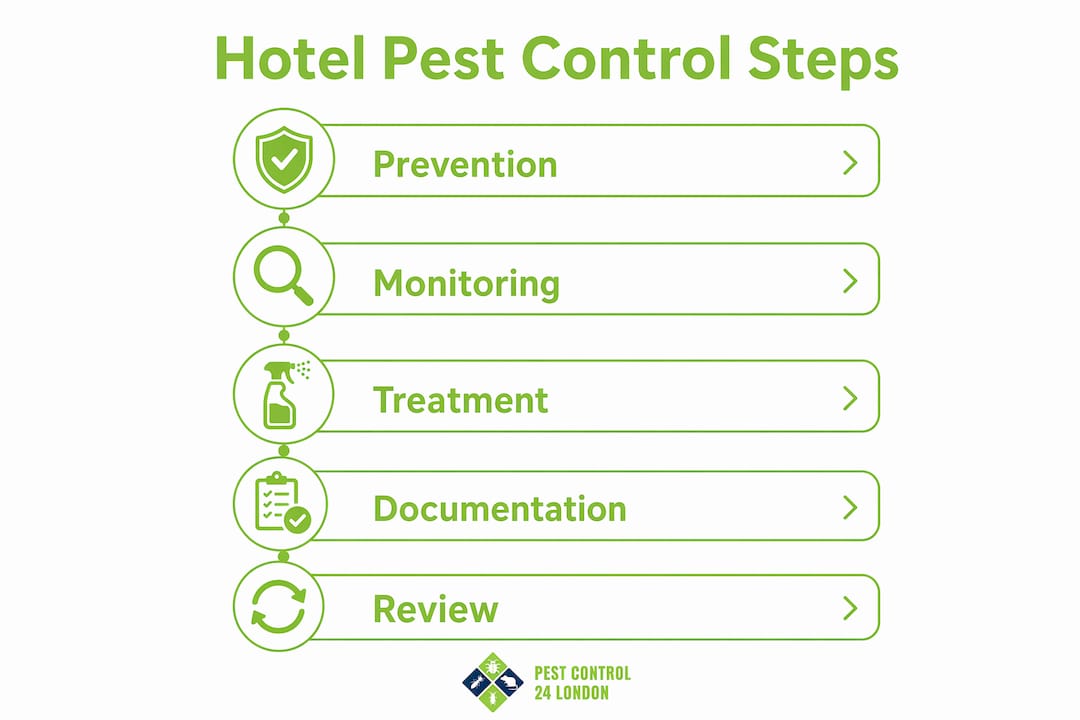
Integrated Pest Management (IPM) is the recognised industry framework for pest management in hospitality. IPM combines inspection, exclusion, targeted treatments, and reporting to minimise guest disruption while reducing reliance on chemical applications. It is a prevention-first approach, not a reactive one.
The four operational pillars of IPM in a hotel context are:
- Inspection: scheduled surveys of all areas including kitchens, plant rooms, loading bays, guest rooms, and waste storage
- Exclusion: sealing structural gaps, fitting door sweeps, and proofing utility entry points before pests reach guest areas
- Targeted treatment: applying the minimum effective intervention in the correct location, at the correct time, using approved products
- Documentation: recording every visit, finding, and treatment to support compliance and audit readiness
Exclusion is the most effective first line of defence. Sealing gaps around pipework, repairing damaged door seals, and installing fly screens on kitchen windows prevents infestations from establishing. Reactive chemical treatment after an infestation has taken hold costs significantly more and causes greater disruption.
Discreet service delivery matters in a hotel environment. Technicians should work during low-occupancy periods, use unmarked equipment where possible, and avoid guest-facing areas during peak hours. Staff training is equally critical. Housekeeping and maintenance teams are the first to observe early warning signs such as droppings, gnaw marks, grease trails, and larvae. A clear internal reporting protocol turns your team into an early detection network.
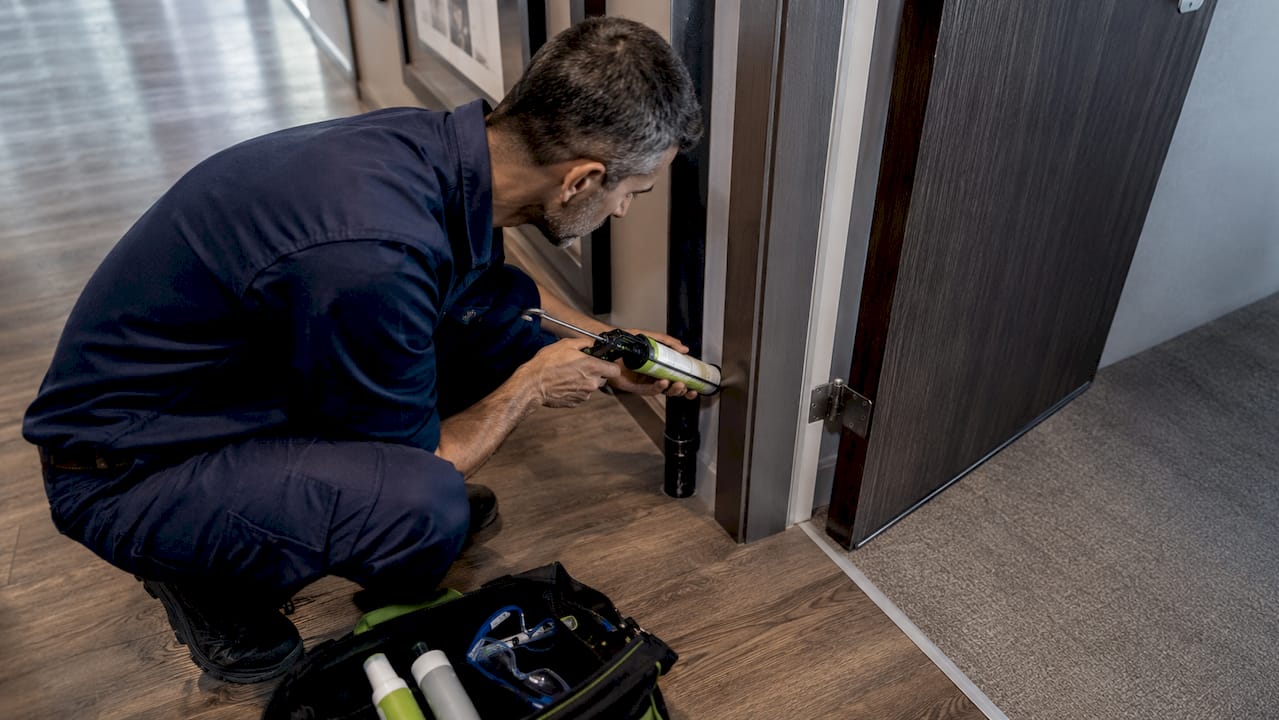
Pro Tip: Create a simple one-page pest sighting report form for housekeeping and maintenance staff. Early reporting of a single mouse dropping can prevent a full rodent infestation.
How do contracts and documentation support compliance?
A pest control contract is a legal and operational document, not simply a service agreement. Without clear treatment records, pest control visits carry no weight during regulatory inspections. Every contract should specify visit frequency, the types of interventions covered, emergency call-out protocols, and the qualifications of attending technicians.
Post-treatment documentation must record the date and time of each visit, the technician’s identity, areas inspected and treated, products applied, and any findings requiring follow-up action. This level of detail is legally required for compliance and supports health inspections, quality audits, and liability management.
Multi-site hotel groups face a particular challenge. Decentralised pest control contracts across multiple properties create inconsistent service standards and documentation gaps that become critical failures during group-level audits. Centralised digital tracking platforms resolve this by providing real-time status reporting and consolidated, audit-ready records across all sites.
Key elements every hotel pest control contract must include:
- Scheduled visit frequency and confirmed response times for emergency call-outs
- Clear scope of coverage across all property areas, including food service zones
- Annual certification and technician qualification records
- Documented escalation procedures for active infestations
- Access to digital inspection reports and treatment logs
Understanding pest control contract requirements in full before signing protects your property from compliance gaps and service shortfalls.
What does technology bring to pest management in hospitality?
IoT-based monitoring represents the most significant advance in hotel pest management in recent years. Modern hotels use IoT monitoring systems for 24/7 surveillance and real-time alerts on pest activity, enabling rapid intervention before a problem becomes visible to guests. Sensor networks placed in high-risk areas such as kitchens, plant rooms, and basement storage detect rodent movement and trigger immediate alerts to the pest control provider.
The operational benefits are clear. Faster response times reduce the window of guest exposure. Data analytics identify recurring hotspots and seasonal patterns, allowing preventative action before peak periods. Real-time dashboards give hotel managers visibility of pest activity across the entire property without waiting for a scheduled visit report.
| Approach | Detection speed | Guest disruption | Data output |
|---|---|---|---|
| Scheduled visits only | Days to weeks | Moderate | Periodic reports |
| IoT continuous monitoring | Minutes to hours | Minimal | Real-time dashboards |
A proactive, data-driven approach is necessary to protect revenue and reputation in high-risk hotel environments. Reactive treatment after a guest complaint is always more costly than early detection.
Pro Tip: Ask your pest control provider for a monthly data summary showing trap activity, alert frequency, and hotspot locations. Use this to adjust cleaning schedules and maintenance priorities.
How to integrate pest control into daily hotel operations
Pest management works best when it is embedded in daily operational routines rather than treated as a standalone service. Effective integration requires collaboration across housekeeping, maintenance, food service, and management. The role of housekeeping in pest management is particularly significant, as room attendants inspect more of the property more frequently than any other team.
Operational best practices for sustained pest control effectiveness include:
- Schedule professional treatments during low-occupancy periods, such as early mornings or mid-week, to minimise guest disruption
- Conduct monthly internal pest awareness briefings for housekeeping and food service staff
- Maintain open communication with your pest control provider so service can be adjusted for seasonal risks or renovation works
- Align pest control schedules with deep-cleaning cycles in kitchens, laundry rooms, and waste areas
- Review pest activity data quarterly with management to assess trends and adjust the programme
Hotels that maintain a pest-free environment consistently report stronger guest satisfaction scores and fewer negative online reviews related to hygiene. The connection between operational pest control discipline and commercial performance is direct. Indoor environment quality, including air quality management in commercial spaces, also contributes to the overall guest experience and should be considered alongside pest prevention in any property health programme.
Key takeaways
Effective pest management in hotels requires a prevention-first approach, documented compliance, and operational integration across every department.
| Point | Details |
|---|---|
| Prevention over reaction | IPM frameworks reduce infestations before they reach guests, cutting remediation costs. |
| Documentation is mandatory | Treatment records must include technician, products, areas, and findings to satisfy regulatory inspections. |
| Technology accelerates response | IoT monitoring detects pest activity in minutes, reducing guest exposure and disruption. |
| Contracts must be comprehensive | Emergency protocols, visit frequency, and certification records must all be specified in writing. |
| Staff are your first alert | Trained housekeeping and maintenance teams detect early warning signs faster than any scheduled visit. |
Why reactive pest control is a risk hotels can no longer afford
Having worked alongside hotel management teams for years, I have seen the same pattern repeat itself. A property runs without a formal pest contract, relies on ad hoc call-outs, and then faces a bed bug complaint in peak season. The cost of emergency treatment, room closures, and reputation management always dwarfs what a structured annual programme would have cost.
The shift toward IoT monitoring and data-driven pest management is not a luxury for large hotel groups. It is becoming the baseline expectation for any property that takes compliance and guest experience seriously. I have seen properties with excellent housekeeping standards still suffer infestations because structural proofing was neglected. Exclusion work, not just chemical treatment, is where the real protection lies.
My strongest advice to hotel managers is this: treat your pest control contract as a compliance asset, not a cost line. Documented, certified, and consistently delivered pest management protects your licence, your rating, and your guests. Properties that invest in sustained programmes consistently outperform those that do not, both in audit outcomes and in guest satisfaction scores.
— Dan
Pestcontrol24london: professional hotel pest control in London
Hotel managers across London trust Pestcontrol24london for structured, discreet, and fully documented pest management. Since 2015, Pestcontrol24london has delivered BPCA-certified services to big brand hotels, hostels, restaurants, and commercial properties throughout the city.

Pestcontrol24london’s commercial pest control services are built around IPM principles, with discreet scheduling, full treatment documentation, and emergency call-out availability. Whether you manage a single property or a multi-site portfolio, Pestcontrol24london provides tailored programmes that align with your operational schedule and compliance requirements. Contact Pestcontrol24london today for a free quote and protect your property’s reputation before a problem arises.
FAQ
What is the role of pest control in hotels?
Pest control in hotels prevents infestations that compromise guest health, hygiene, and the property’s reputation. A structured programme combines regular inspections, exclusion work, targeted treatments, and documented compliance records.
Why do hotels need a pest control contract?
A pest control contract guarantees scheduled visits, emergency call-out cover, and legally required treatment documentation. Without clear records, pest control visits carry no weight during regulatory inspections.
What pests are most common in UK hotels?
Rodents, cockroaches, bed bugs, and flies are the most frequently reported pests in UK hotel environments. Each poses distinct health risks and requires a different treatment approach. Bed bug control is particularly critical given how rapidly infestations spread between rooms.
How does IoT monitoring improve hotel pest management?
IoT sensors provide 24/7 surveillance and real-time alerts, detecting pest activity in minutes rather than waiting for a scheduled inspection. This reduces guest exposure and supports faster, more targeted intervention.
How often should hotels schedule pest control inspections?
Visit frequency depends on property size, pest risk level, and regulatory requirements, but most hotel environments require at minimum monthly inspections of high-risk areas such as kitchens, waste stores, and plant rooms.