

Pest control inspection is defined as a systematic, professional examination of a property to identify active pest activity, assess structural vulnerabilities, and document conditions that increase infestation risk. The role of inspection in pest control goes far beyond confirming whether pests are present. A thorough pest management assessment reveals why pests are there and what will bring them back if left unaddressed. Pestcontrol24london has carried out thousands of these assessments across London since 2015, and the findings consistently show that properties without regular inspections spend more on reactive treatments than those with a structured inspection programme in place.
What does a pest control inspection involve?
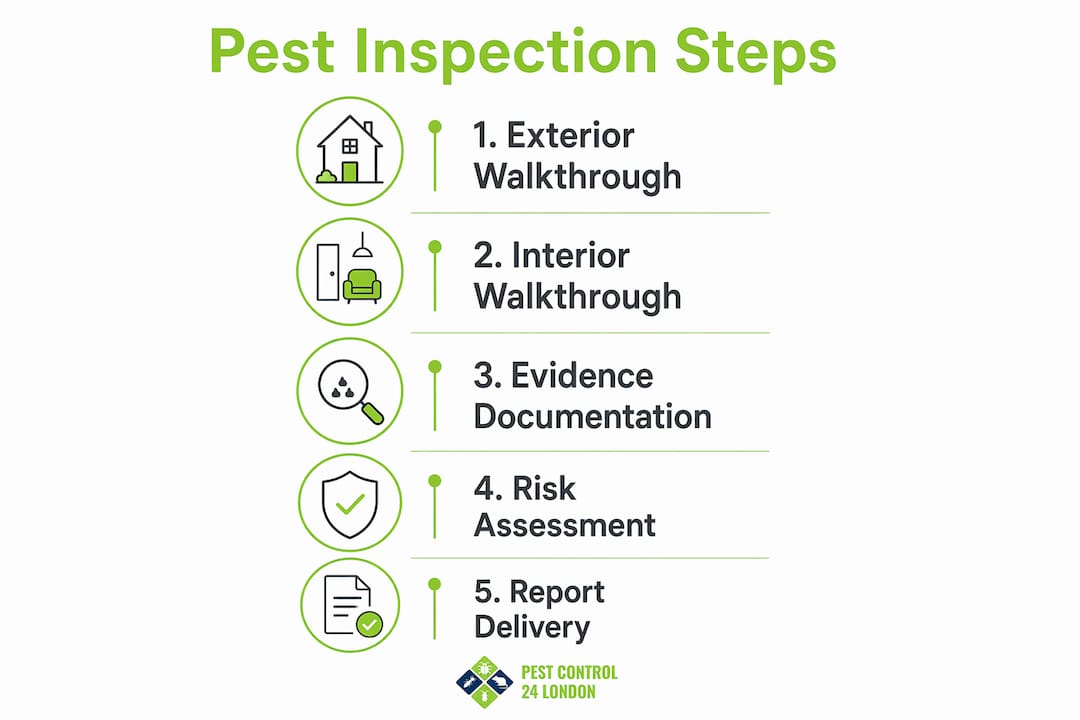
A professional pest control inspection covers both the interior and exterior of a property in a methodical walkthrough. The technician examines accessible areas including loft spaces, basements, wall cavities, drainage points, and external perimeters. Targeted inspection-driven pest control is more cost-effective than routine chemical applications because it directs treatment only where evidence exists.
During the inspection, the technician looks for the following:
- Live pest sightings such as rodents, cockroaches, bed bugs, or ants
- Indirect evidence including droppings, gnaw marks, grease trails, larvae, shed skins, and nesting material
- Entry points such as gaps around pipework, damaged air bricks, or poorly sealed doors
- Conducive conditions including moisture damage, food debris, clutter, and inadequate proofing
All findings are recorded in a written inspection report. This document details pest species identified, locations, risk ratings, and recommended actions. Verbal summaries are not sufficient. Regulated food and healthcare establishments must maintain structured inspection monitoring with documented reports to meet international BRCGS standards.
| Inspection element | What it reveals |
|---|---|
| Interior walkthrough | Active infestations, harbourage sites, and hygiene failures |
| Exterior survey | Entry points, structural damage, and outdoor pest pressure |
| Conducive conditions audit | Environmental factors driving pest activity |
| Written report | Risk ratings, evidence locations, and treatment recommendations |

Pro Tip: Ask your technician to photograph every piece of evidence during the inspection. Photographs make the written report far easier to act on and provide a clear baseline for future visits.
Why do inspections reveal more than just pest activity?
Inspections identify conducive conditions — environmental and structural factors that increase future pest risk — allowing corrective action before costly infestations develop. This is the part most property owners underestimate. A technician may find no live pests during a visit but still produce a report full of findings that matter.
Conducive conditions commonly identified during inspections include:
- Moisture ingress from leaking pipes, poor drainage, or damp walls that attract cockroaches and silverfish
- Unsealed entry points around utility cables, pipework, and roof joints that allow rodent access
- Clutter and stored materials that provide harbourage for insects and rodents
- Poor waste management including overflowing bins or food residue in drains
Addressing these conditions is the foundation of Integrated Pest Management, known as IPM. Property managers hold ultimate responsibility for IPM success, including oversight of sanitation and building maintenance. That responsibility begins with understanding what inspections uncover. Inspectors prioritise documenting environmental factors over live sightings because addressing root causes reduces recurrence more effectively than targeting pests alone.
Pro Tip: After receiving an inspection report, tackle conducive conditions before scheduling treatment. Sealing entry points and resolving moisture issues first makes any subsequent treatment significantly more effective.
How do inspection reports support compliance and accountability?
A written inspection report is not just a record of what was found. It serves as the baseline data for an ongoing pest management programme. Inspection reports guide management adjustments based on pest pressure and seasonality, making them a continuous feedback tool rather than a one-off document.
Regulatory compliance depends on documentation quality. The BRCGS food safety standard, which applies to food manufacturers, retailers, and hospitality businesses across the UK, requires written evidence of pest monitoring. Verbal summaries from a contractor do not satisfy an auditor.
“High-quality inspection reports must be precise enough to allow a different technician to verify original observations months later without clarification.” — PestPro inspection standards
The numbered steps below show how a well-documented report functions within a compliant pest management programme:
- Baseline establishment. The first inspection creates a reference point for all future visits, recording pest pressure levels and structural vulnerabilities.
- Treatment justification. The report provides written evidence for why a specific treatment was selected, protecting both the property owner and the contractor.
- Progress tracking. Subsequent reports measure whether pest pressure is increasing, stable, or declining in response to interventions.
- Independent audit. Third-party pest inspections provide forensic audits of contractor performance, ensuring service quality rather than routine visits.
- Regulatory defence. In the event of a complaint or enforcement action, documented reports demonstrate due diligence.
For property managers overseeing commercial pest management, the quality of inspection documentation is as important as the inspection itself.
How often should inspections take place?
Inspection frequency depends on property type, occupancy, and pest risk level. Commercial properties require a comprehensive pest risk assessment annually, with quarterly inspections for high-risk sites such as restaurants and warehouses. Residential properties generally benefit from an annual inspection as a minimum, with additional visits following any confirmed infestation.
Factors that increase the recommended frequency include:
- Food handling on site, which attracts a wider range of pest species
- High occupant turnover, common in HMOs, hotels, and student accommodation
- Previous infestation history, which indicates structural or behavioural vulnerabilities
- Proximity to green spaces or water, which raises rodent and insect pressure
- Older building stock, where gaps and voids are more numerous
A common misconception is that a single inspection solves the problem. Treating inspection as a one-off event is ineffective. Successful pest management uses inspection reports as a continuous monitoring feedback loop that adjusts tactics as pest pressure and seasons change. Property owners who schedule inspections only after seeing a pest are always reacting rather than preventing.
Key takeaways
A professional pest inspection is the single most effective tool for preventing infestations, because it identifies both active pests and the conditions that sustain them before treatment is needed.
| Point | Details |
|---|---|
| Inspection scope | Covers interior, exterior, entry points, and conducive conditions, not just live pest sightings. |
| Report quality matters | Written reports must be detailed enough for a different technician to verify findings months later. |
| Conducive conditions | Addressing moisture, clutter, and entry points reduces reinfestation more than treatment alone. |
| Inspection frequency | High-risk commercial sites need quarterly inspections; residential properties need at least annual checks. |
| Compliance requirement | BRCGS and similar standards require documented inspection records, not verbal contractor summaries. |
What I have learned from a decade of London inspections
After more than ten years carrying out inspections across London properties, the pattern I see most often is this: property owners call us after the problem is already serious. By that point, the conducive conditions have been present for months, sometimes years. A rodent infestation that could have been caught at the gnaw-mark stage has become a colony behind the kitchen units.
The inspections I find most valuable are the ones where we find nothing alive. That sounds counterintuitive. But a clean inspection that still identifies three unsealed pipe penetrations and a damp corner behind the boiler has prevented an infestation. That is the real purpose of the pest management assessment process.
I also see too many inspection reports that would not survive scrutiny. Vague notes like “rodent activity observed, kitchen area” tell the next technician almost nothing. A good report names the species, describes the evidence type, gives a precise location, and assigns a risk rating. That level of detail is what separates a professional service from a routine visit.
My advice to any homeowner or property manager is straightforward. Do not wait for visible signs. Schedule an inspection, read the report carefully, and act on the conducive conditions first. The benefits of BPCA-certified pest control come precisely from this disciplined, evidence-based approach.
— Dan
Professional pest inspections with Pestcontrol24london
Pestcontrol24london has been delivering professional pest inspections across London since 2015, working with homeowners, property managers, hotels, restaurants, and commercial premises. Every inspection follows a structured process covering interior and exterior areas, with a written report detailing findings, risk ratings, and clear recommendations.

Whether you need a routine annual assessment, a pre-tenancy check, or an urgent inspection following a suspected infestation, the team at Pestcontrol24london is BPCA fully qualified and available around the clock. For pest control across London, contact Pestcontrol24london today to arrange your inspection and get a free quote.
FAQ
What is the role of inspection in pest control?
Pest control inspection is a systematic examination of a property to identify active infestations, document evidence, and assess conducive conditions that increase pest risk. It forms the foundation of any effective pest management programme.
How often should a property be inspected for pests?
Commercial properties at standard risk require annual inspections, while high-risk sites such as restaurants need quarterly assessments. Residential properties benefit from at least one inspection per year.
What does a pest inspection report include?
A professional report documents pest species identified, evidence locations, risk ratings, conducive conditions, and recommended treatments. Vague notes are insufficient; reports must be detailed enough for another technician to verify findings later.
Why are conducive conditions more important than live pest sightings?
Conducive conditions such as moisture, entry points, and clutter are the root causes of infestation. Addressing them prevents recurrence more effectively than treating live pests alone.
Do I need a written inspection report for regulatory compliance?
Yes. Standards such as BRCGS require documented inspection records for food and healthcare premises. Verbal summaries from a contractor do not satisfy regulatory auditors.