

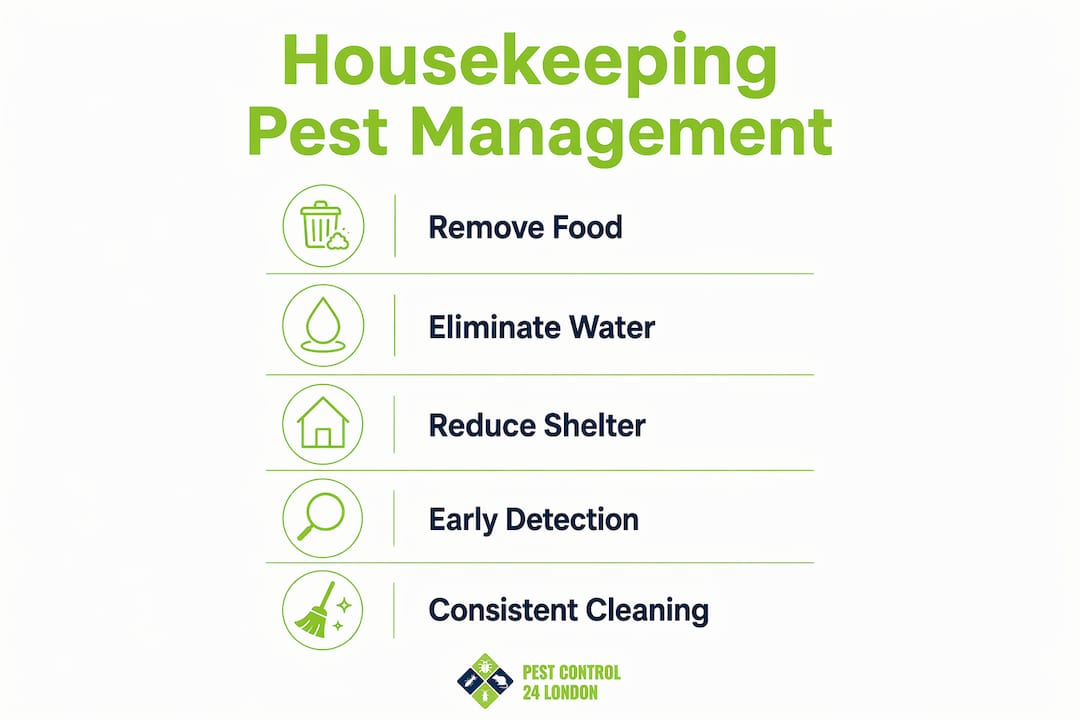
Housekeeping in pest management is defined as the systematic removal of food, water, and shelter that pests need to survive and reproduce. Pests seek these three attractants in every environment they enter, and eliminating them makes any property far less hospitable. This practice sits at the core of Integrated Pest Management (IPM), the approach recommended by the US EPA and adopted by professional pest controllers worldwide. Effective housekeeping does not just keep spaces clean. It actively disrupts pest life cycles, supports early detection, and reduces the need for chemical intervention. Whether you manage a London hotel or a family home, disciplined cleaning practices are your first and most cost-effective line of defence.
How does housekeeping directly prevent pest infestations?
Sanitation is a scientific method, not simply a cleaning task. It targets the biological needs of pests by removing the conditions that allow populations to establish and grow. When food residues, moisture, and harborage sites are eliminated consistently, pests cannot complete their life cycles.
The most common attractants that housekeeping must address include:
- Food sources: Crumbs under appliances, grease on cooking surfaces, unsealed food containers, and spilled liquids all provide nutrition for cockroaches, rodents, and ants.
- Water sources: Dripping taps, condensation under sinks, and standing water in trays attract a wide range of pests, including drain flies and silverfish.
- Harborage sites: Clutter, cardboard boxes stored against walls, and undisturbed corners give pests safe places to nest and breed.
Storing items away from baseboards and removing cardboard reduces cockroach harborage by over 50% without any pesticide use. That single change, applied consistently, can prevent an infestation from taking hold. Trash management is equally critical. The US EPA recommends removing waste at least weekly, with more frequent removal in high-traffic areas such as kitchens and communal spaces.
Pro Tip: Clean behind and beneath large appliances, inside cupboard hinges, and along skirting boards at least once a month. These hidden areas are where pest activity begins long before it becomes visible.
What is housekeeping’s role in early pest detection?
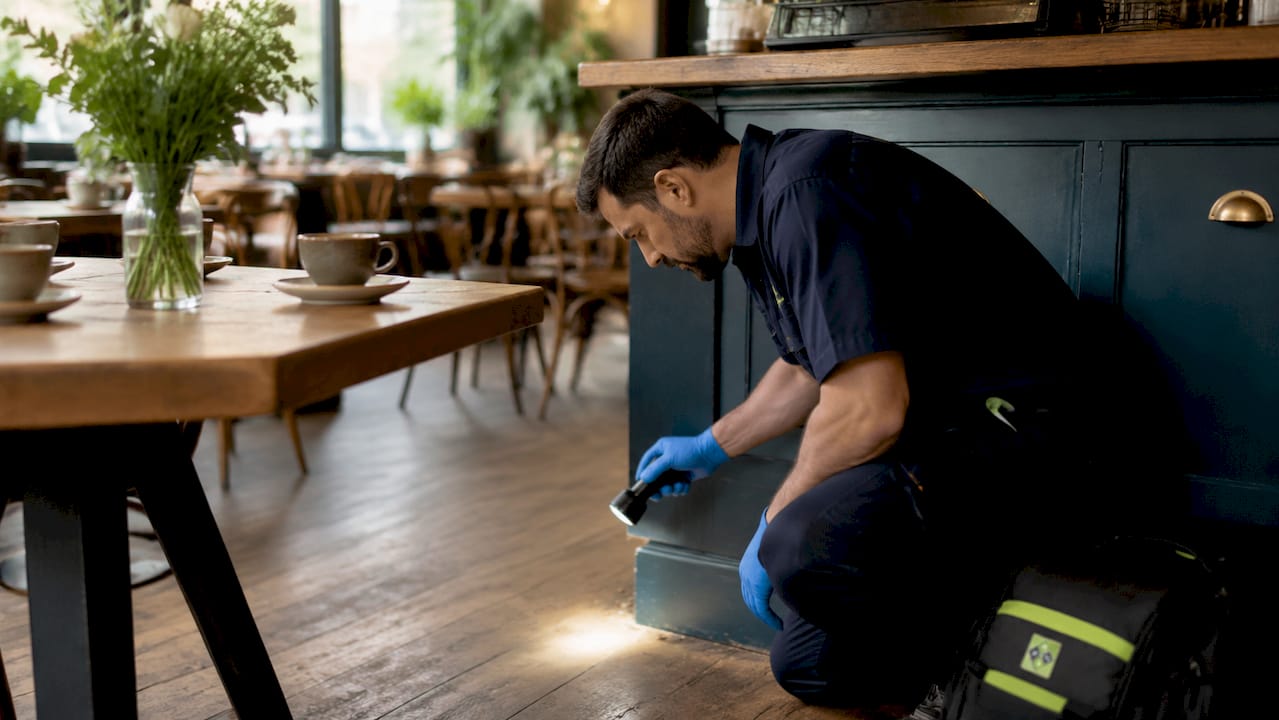
Housekeeping teams are the most frequent occupants of any building’s rooms and corridors. That position makes them the most reliable source of early pest sightings. Incorporating structured inspection into cleaning routines transforms routine work into a proactive pest monitoring system.
Hospitality housekeeping departments formalise this by scheduling monthly professional pest control treatments and embedding pest reporting directly into daily cleaning checklists. The same principle applies in residential blocks and commercial offices. A structured approach to detection follows these steps:
- Inspect during every clean. Check mattress seams, headboards, skirting boards, and behind furniture for droppings, shed skins, or live insects.
- Document all sightings. Record the date, location, pest type, and quantity. Written records help pest controllers identify patterns and target treatments accurately.
- Report within 24–48 hours. Rigorous reporting within this window prevents a minor sighting from becoming a full infestation.
- Coordinate with your pest control provider. Share documentation at every scheduled visit so treatments are based on real evidence, not assumptions.
For hotels, early detection protocols for bed bugs are particularly critical. A single missed inspection can allow a bed bug population to spread across multiple rooms within weeks. Pestcontrol24london works with hospitality clients across London to align housekeeping schedules with professional bed bug inspections for hotels, reducing the risk of reputation-damaging outbreaks.
Pro Tip: Create a simple one-page pest sighting log for cleaning staff. A clear reporting channel removes ambiguity and means issues reach the right person immediately.
Residential vs commercial housekeeping: how do the roles differ?
Housekeeping pest prevention looks different depending on the setting. Homeowners and commercial property managers face distinct challenges, and the protocols that work in one context require adaptation in the other.
| Area | Residential | Commercial / Hospitality |
|---|---|---|
| Cleaning frequency | Weekly deep cleans, daily tidying | Daily room cleans, multiple inspections per shift |
| Inspection protocols | Seasonal checks, owner-led | Formalised checklists, staff-led with documented records |
| Pest reporting | Informal, direct to pest controller | Structured reporting chain, management sign-off |
| Legal responsibility | Owner’s personal duty | Property manager’s operational and legal obligation |
| Specialist measures | Basic proofing, clutter control | Mattress encasements, luggage inspection areas, sealed waste storage |
In commercial and hospitality settings, property managers must enforce sanitation and waste storage provisions as part of lease and operational agreements. Failing to do so creates liability as well as pest risk. Homeowners carry a simpler but equally real responsibility. A mice prevention checklist for residential properties covers the core steps: sealing entry points, managing food storage, and maintaining clear floor space around walls.
The key difference is scale and documentation. Commercial properties need written procedures. Homes need consistent habits. Both need professional support when prevention alone is not enough.
What housekeeping mistakes make pest problems worse?
The most damaging mistake is assuming that a pest problem reflects poor cleanliness. Bed bugs are not attracted to dirt. They travel on luggage, clothing, and second-hand furniture, and they establish in the cleanest hotels in London. Equating infestation with poor hygiene leads managers to focus on the wrong response and delays effective action.
Other common mistakes that worsen infestations include:
- Moving items from an affected room without isolation. Relocating infested furniture or bedding spreads bed bugs and other pests to previously clean areas. Room isolation protocols must be in place before any items are moved.
- Neglecting entry points. Gaps around pipes, worn door seals, and unsealed vents are pest highways. Cleaning without proofing these areas leaves the door open.
- Treating clutter as low priority. Cardboard boxes, stacked newspapers, and unused equipment create harborage that no amount of surface cleaning can address.
- Skipping documentation. Without records, pest controllers cannot identify the source, track progress, or prove compliance in commercial settings.
Pro Tip: When a pest is found in a hotel room or residential unit, close the door, mark the room as out of service, and contact your pest controller before moving anything. This single step prevents the most common cause of infestation spread.
Key takeaways
Consistent housekeeping is the most effective and lowest-cost pest prevention tool available to both homeowners and commercial property managers.
| Point | Details |
|---|---|
| Remove the three attractants | Eliminate food residues, standing water, and clutter to make any property inhospitable to pests. |
| Report sightings within 48 hours | Early, documented reporting stops minor sightings from becoming full infestations. |
| Clutter reduction cuts harborage | Storing items away from walls reduces cockroach harborage by over 50% without pesticides. |
| Bed bugs are not a cleanliness issue | Proactive inspection protocols, not cleaning standards alone, prevent bed bug outbreaks. |
| Commercial settings need written procedures | Formalised checklists and reporting chains are a legal and operational requirement for property managers. |
Why I believe housekeeping is the most underrated pest control tool
After more than a decade working in pest control across London, the pattern I see most often is this: properties that invest in disciplined housekeeping call us far less frequently. That is not a coincidence. Sanitation removes the conditions pests need before they ever arrive. When I visit a commercial kitchen or a residential block where the cleaning regime is thorough and documented, the pest pressure is measurably lower.
What surprises most property managers is how much impact clutter and waste management have compared to chemical treatments alone. Pesticides address an existing population. Good housekeeping prevents one from forming. The two work together, but housekeeping is the foundation. I have seen hotels with immaculate lobbies and neglected back-of-house areas develop serious cockroach problems. The pests do not care about the front of house. They care about the kitchen drains and the cardboard stacked in the goods-in area.
My honest advice is to treat your pest population management programme as a year-round commitment, not a reactive response. Build inspection into every cleaning schedule. Document everything. And when you do need professional help, your records will make every treatment faster and more targeted.
— Dan
Professional pest control that works alongside your housekeeping
Good housekeeping reduces pest pressure significantly, but it does not replace professional treatment when an infestation is already established. Pestcontrol24london has been supporting London homeowners, hotels, restaurants, and commercial properties since 2015, providing BPCA-qualified treatments that complement your existing cleaning routines.

Post-treatment sanitisation is a critical step that many properties overlook. Pestcontrol24london’s post-treatment cleaning services remove pest debris, chemical residues, and harborage material after treatment, reducing the risk of recurrence. For commercial properties requiring scheduled visits, the commercial pest management programme aligns professional treatments with your housekeeping calendar. Contact Pestcontrol24london for a free quote and find out how professional support can strengthen the pest prevention work you are already doing.
FAQ
What is the role of housekeeping in pest management?
Housekeeping removes the food, water, and shelter that pests need to survive, making it the primary preventive layer in any pest management programme. It also enables early detection through routine inspection and structured reporting.
How often should pest-related cleaning tasks be carried out?
Trash removal should occur at least weekly, with daily attention in kitchens and food preparation areas. Hidden areas such as behind appliances and along skirting boards require thorough cleaning at least monthly.
Do bed bugs mean a property has poor housekeeping standards?
No. Bed bugs are not attracted to dirt and can infest the cleanest properties. Early detection through formalised inspection protocols is the only reliable defence against bed bug outbreaks.
What should I do if I find a pest in a hotel room?
Close the room immediately, mark it out of service, and contact your pest control provider before moving any items. Relocating furniture or bedding from an affected room spreads the infestation to clean areas.
How does housekeeping support integrated pest management (IPM)?
Housekeeping provides the sanitation and monitoring components of IPM by eliminating attractants, reducing harborage, and generating the documented sighting records that pest controllers use to plan targeted treatments.