

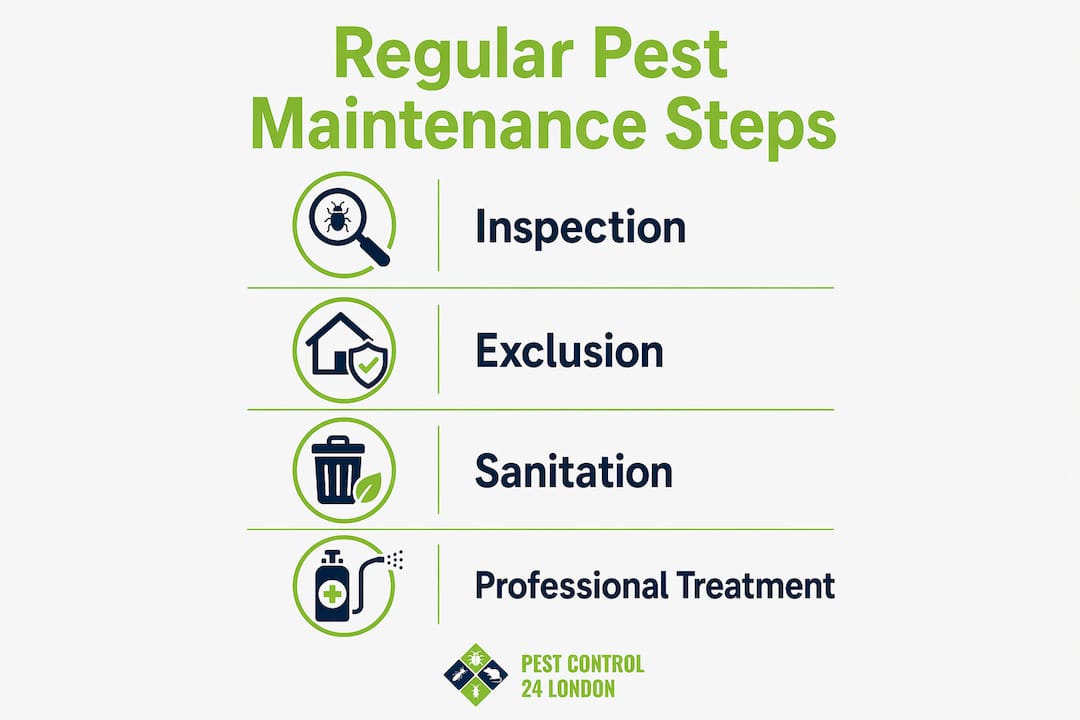
Regular pest maintenance steps are a proactive set of recurring actions combining inspections, exclusion, sanitation, and professional treatments to prevent infestations before they take hold. In the pest control industry, this approach is formally known as Integrated Pest Management, or IPM. Whether you manage a single London flat or a portfolio of rental properties, a consistent pest control routine is the most cost-effective defence against rodents, cockroaches, ants, and other common urban pests. This guide covers every practical stage, from the tools you need to how often you should call a professional.
What tools do you need for regular pest maintenance?
Effective home pest management starts with having the right materials to hand before you begin any inspection or sealing work. You do not need specialist equipment. A basic kit covers the majority of entry points and monitoring needs.
Core tools and materials:
- Torch with a strong beam for inspecting dark corners, wall cavities, and under appliances
- Sticky traps placed along skirting boards and behind appliances to monitor pest activity
- Silicone caulk (tubes cost £5–8 each) for sealing gaps around pipes, skirting boards, and window frames
- Copper mesh (rolls cost £8–12) for blocking larger gaps around vents, pipes, and external entry points
- Door sweeps to close the gap beneath exterior doors
- Notepad or a simple app to log inspection findings and track changes over time
| Material | Best Use | Approximate Cost |
|---|---|---|
| Silicone caulk | Small cracks, pipe gaps, window frames | £5–8 per tube |
| Copper mesh | Vents, larger structural gaps, pipe surrounds | £8–12 per roll |
| Steel wool | Temporary gap filling (less durable) | £3–5 per pack |
| Door sweeps | Base of exterior and internal doors | £10–20 each |
| Sticky traps | Monitoring and early detection | £5–10 per pack |
Before any inspection, declutter storage areas, clear vegetation away from your property’s foundations, and wipe down surfaces where grease or food debris may have accumulated. These preparation steps remove the conditions that attract pests in the first place.
Pro Tip: Keep all your pest maintenance materials in a single labelled box. When inspection day arrives, you will not waste time searching for equipment, and you are far more likely to follow through consistently.
How to perform monthly and biannual inspections
A structured inspection routine is the backbone of any effective pest prevention programme. Monthly inspections involve a 15-minute check of the most vulnerable areas in your home. Twice-yearly deep inspections go further, examining structural integrity and seasonal risk factors.
Monthly 15-minute inspection routine:
- Check the kitchen: inspect behind the cooker, under the sink, and inside cupboards for droppings, gnaw marks, or grease trails.
- Examine the pantry: look for damaged packaging, larvae, or webbing that indicates stored product pests.
- Inspect entry points: check door frames, window seals, and utility pipe entry points for new gaps or damage.
- Review sticky traps: note the type and number of insects caught, and replace traps every four to six weeks.
- Check the basement or under-floor areas: look for moisture, droppings, or evidence of gnawing on cables and joists.
- Record your findings: note the date, areas checked, and anything unusual in your logbook or app.
For your twice-yearly deep inspection, focus on structural gaps that may have opened through seasonal movement, screen damage on windows and vents, and vegetation encroachment. Vegetation should sit 12–18 inches from your siding, and mulch should be kept at least 6 inches from the foundation. These distances matter because plant material touching a building creates a direct pathway for ants, slugs, and rodents.
Sticky traps serve as diagnostic tools by revealing both pest type and entry location. A cluster of cockroach nymphs on a trap behind the fridge tells you far more than a general sense that “something is in the kitchen.” That specificity allows you to target your sealing and treatment work precisely.

Pro Tip: Photograph any damage or pest evidence during inspections. A dated photo record is invaluable when assessing whether a problem is worsening, and it gives a professional technician immediate context if you need to call for help.
What are the best exclusion and sanitation practices?
Exclusion and sanitation are the two pillars of effective pest prevention. Structural exclusion under £100 using copper mesh, silicone caulk, and door sweeps can block over 80% of common entry points for indoor pests. That figure makes exclusion the single highest-return activity a homeowner can perform.
Copper mesh outperforms steel wool for blocking entry points in damp conditions. Steel wool rusts within months when exposed to moisture around pipes or external walls, leaving gaps open again. Copper resists corrosion and maintains a reliable seal for years.
Sanitation practices that remove pest attractants:
- Store all dry food in sealed containers made from glass or hard plastic
- Empty kitchen bins daily and use bins with tight-fitting lids
- Fix dripping taps and leaking pipes promptly, as moisture sustains infestations even when chemical treatments are in place
- Remove clutter from loft spaces, garages, and under-stair storage where rodents nest
- Clean behind large appliances monthly to remove grease deposits that attract cockroaches
The EPA’s Integrated Pest Management guidance is clear: eliminating food, water, and shelter sources reduces the need for chemical treatments more reliably than routine spraying alone. This prevention-first approach is both safer for your household and more cost-effective over time. You can read more about applying these principles in a residential context through Pestcontrol24london’s IPM overview for property owners.
How often should you schedule professional pest treatments?
Professional treatments are a necessary complement to DIY maintenance, not a replacement for it. Preventive pest control for residential properties without active infestations is optimally scheduled quarterly, equating to four visits per year. Monthly professional visits are reserved for properties with confirmed active infestations.
Quarterly scheduling aligns professional chemical barrier applications with seasonal pest cycles. Spring treatments address overwintering rodents and emerging ant colonies. Summer visits target wasps and flies. Autumn treatments focus on rodent proofing before cold weather drives them indoors. Winter checks confirm that exclusion work has held and that no new entry points have opened.
Consistent scheduled maintenance maintains protective barriers far more effectively than one-off reactive treatments. Reactive treatments are also significantly more expensive because infestations require more intensive intervention once established.
“Prevention-first pest management, combining physical exclusion, sanitation, and scheduled professional visits, is safer and more cost-effective than reactionary pesticide use.” — EPA Integrated Pest Management Guidance
When you book a professional visit, share your inspection logbook findings with the technician. Details about where sticky traps have caught activity, which gaps you have already sealed, and any moisture issues you have identified will allow the technician to focus their work precisely. This communication shortens treatment time and improves outcomes. For a full breakdown of what to do before a professional visit, see Pestcontrol24london’s preparation guide for pest treatment.
One important note on chemical products: fast-acting sprays can worsen colony pests like ants and cockroaches by dispersing nests rather than eliminating them. Slow-acting bait systems are more effective because worker insects carry the insecticide back to the colony, achieving full elimination. Always discuss treatment method selection with your pest control provider before any application.
Key takeaways
Consistent pest maintenance combining monthly inspections, physical exclusion, sanitation, and quarterly professional treatments is the most reliable way to keep a property pest-free year-round.
| Point | Details |
|---|---|
| Start with exclusion | Copper mesh and silicone caulk under £100 block over 80% of common entry points. |
| Inspect monthly | A 15-minute monthly check of kitchens, entry points, and traps catches problems early. |
| Prioritise sanitation | Sealed food, dry conditions, and cleared clutter remove the resources pests depend on. |
| Schedule quarterly visits | Four professional visits per year maintain chemical barriers aligned with seasonal pest cycles. |
| Use slow-acting baits | Bait systems eliminate ant and cockroach colonies; fast-acting sprays can disperse and worsen them. |
What i have learned after years of pest maintenance work
Over the years working with Pestcontrol24london, the pattern I see most often is not a dramatic infestation. It is a slow accumulation of small oversights. A dripping pipe under the sink that nobody fixed. A gap behind the washing machine that was never sealed. A sticky trap that was placed once and never checked again.
The homeowners and property managers who stay genuinely pest-free are not the ones who spend the most on treatments. They are the ones who inspect consistently and document what they find. A simple notebook entry once a month takes five minutes and gives you a record that is worth far more than any single treatment.
I would also push back on the idea that chemicals are the primary solution. The EPA’s IPM framework has been saying this for years, and the evidence supports it. Physical exclusion and sanitation do the heavy lifting. Professional treatments maintain the barriers that DIY work cannot always achieve alone. The two approaches work together, and neither is sufficient without the other.
For busy property managers overseeing multiple sites, I recommend building pest checks into your standard property inspection schedule rather than treating them as a separate task. Combining them saves time and means pest issues are caught at the same point as other maintenance concerns, before they become expensive problems.
— Dan
How Pestcontrol24london can support your pest maintenance programme
Pestcontrol24london has been serving London homeowners and property managers since 2015, completing thousands of treatments across residential properties, hotels, restaurants, and commercial sites. The team is BPCA fully qualified and offers tailored maintenance programmes designed around your property’s specific risk profile and seasonal pest pressures.

Whether you need a one-off inspection, a quarterly maintenance contract, or an emergency response, Pestcontrol24london provides professional domestic pest control with 24/7 availability across London. Every service is carried out with safety-conscious methods appropriate for family homes and managed properties alike. Contact Pestcontrol24london today through pestcontrol24london.co.uk for a free quote and to discuss a maintenance schedule that fits your property.
FAQ
What are the most important regular pest maintenance steps?
The core steps are monthly inspections, sealing entry points with copper mesh and silicone caulk, removing food and moisture sources, and scheduling quarterly professional treatments. Together, these actions address the conditions that allow infestations to develop.
How often should pest control be done in a home?
Quarterly professional visits are recommended for preventive maintenance in homes without active infestations. Monthly visits are appropriate when an active infestation has been confirmed.
Does copper mesh work better than steel wool for sealing gaps?
Yes. Copper mesh resists rust in damp conditions, making it a more durable long-term seal around pipes and vents. Steel wool corrodes within months when exposed to moisture, leaving gaps open again.
Can i maintain pest control myself without a professional?
DIY exclusion and sanitation significantly reduce pest pressure, but professional treatments are needed to maintain chemical barriers and address seasonal pest cycles. The most effective approach combines both.
Why should i avoid fast-acting sprays for ants and cockroaches?
Fast-acting sprays disperse colonies rather than eliminating them, spreading the problem further. Slow-acting bait systems allow worker insects to carry insecticide back to the nest, achieving full colony elimination.