

Rats are not just unsettling to find in your home. They contaminate food, damage wiring, gnaw through structural materials, and carry diseases including Weil’s disease and salmonella. If you have heard scratching behind the skirting boards or noticed an unfamiliar smell in a cupboard, you are not alone. Rat infestations are a growing concern for London homeowners, and knowing the right rat control methods at home can mean the difference between a swift resolution and a worsening problem that costs significantly more to fix.
Table of Contents
- Understanding rat infestations in your London home
- Preparing your home for rat control: sanitation and proofing essentials
- Executing effective rat removal methods at home
- Verifying results and maintaining a rat-free home
- When to call professional rat control services in London
- Rethinking home rat control: practical lessons from experience
- Professional rat control services for London homes
- Frequently asked questions
Key Takeaways
| Point | Details |
|---|---|
| Early detection | Recognise signs like droppings and chew marks promptly to tackle rat problems early. |
| Seal entry points | Close all potential rat access holes using steel wool and caulk to block reinfestation. |
| Sanitation matters | Remove food and water sources to discourage rats and support control methods. |
| Use traps wisely | Snap traps are effective when placed correctly and combined with proofing and cleaning. |
| Professional help | Seek expert services for large infestations or difficult-to-access rat habitats for lasting results. |
Understanding rat infestations in your London home
Rats rarely announce themselves directly. By the time most homeowners notice them, the animals have already established routes, nesting sites, and feeding patterns within the property. Rats are nocturnal and leave signs such as scratching noises, droppings, and chew marks long before you actually see one.
Common signs of a rat infestation include:
- Dark droppings roughly 10 to 20mm long, often found along walls or in cupboards
- Grease marks on skirting boards and walls, left by the rats’ fur as they travel the same routes repeatedly
- Gnaw marks on food packaging, cables, wood, and pipework
- Scratching or scurrying noises, particularly at night in walls, lofts, or under floors
- Nesting material such as shredded insulation, paper, or fabric in hidden corners
- A stale, ammonia-like odour in enclosed spaces where rats are active
London’s dense urban environment gives rats plenty of opportunity. Overflowing bins, Victorian-era drainage, neighbouring construction, and the warmth of older housing stock all make the city especially attractive to rats seeking shelter. Understanding why rodents invade London homes in the first place is an important part of addressing the problem, not just treating the symptoms.
Early detection matters enormously. A single pair of rats can produce up to 40 offspring in a year under favourable conditions. Catching the problem at the first sign of activity, rather than waiting for a full infestation, makes every subsequent control method far more effective.
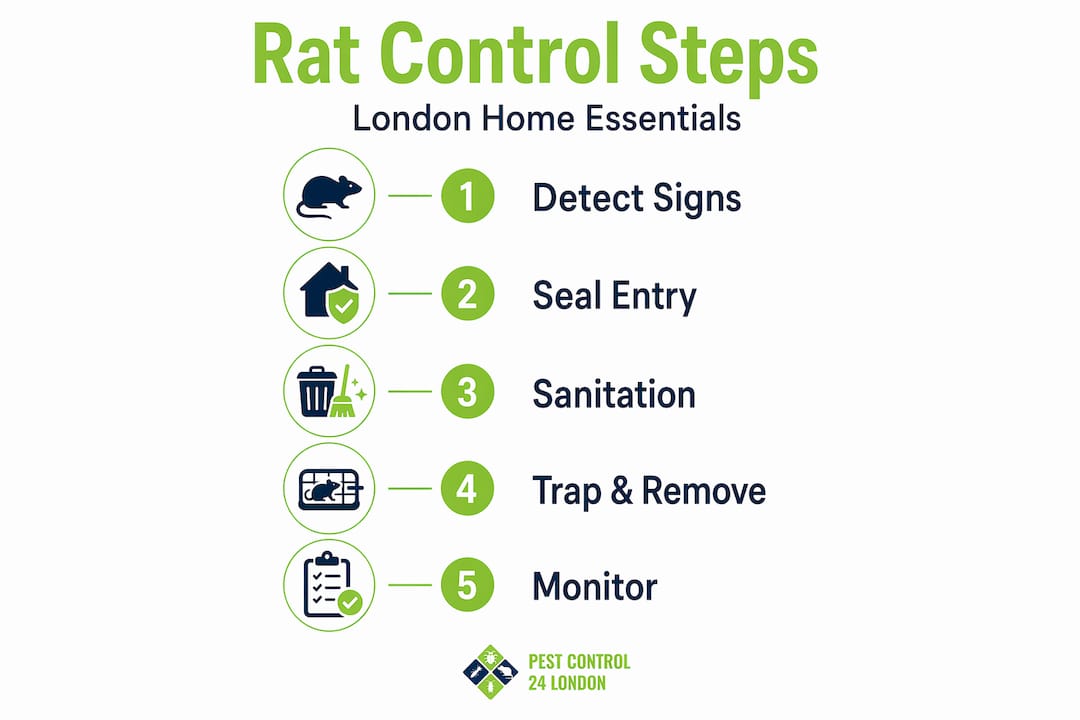
Having outlined why rats invade homes, the next step is to prepare your property for effective control.
Preparing your home for rat control: sanitation and proofing essentials
Before placing a single trap, you need to reduce the conditions that attract and sustain rats. Skipping this stage is one of the most common reasons DIY efforts fail. Trapping and baiting without addressing what drew the rats in simply creates space for new arrivals.
Sanitation measures to remove attractants:
- Store all food, including pet food, in sealed, hard-sided containers
- Remove clutter from sheds, garages, and lofts where rats can nest undisturbed
- Keep compost bins sealed and positioned away from the house
- Empty bins regularly and use bins with secure, fitted lids
- Clear dense ground cover, wood piles, and debris from garden areas within two metres of the property
Proofing your home against entry:
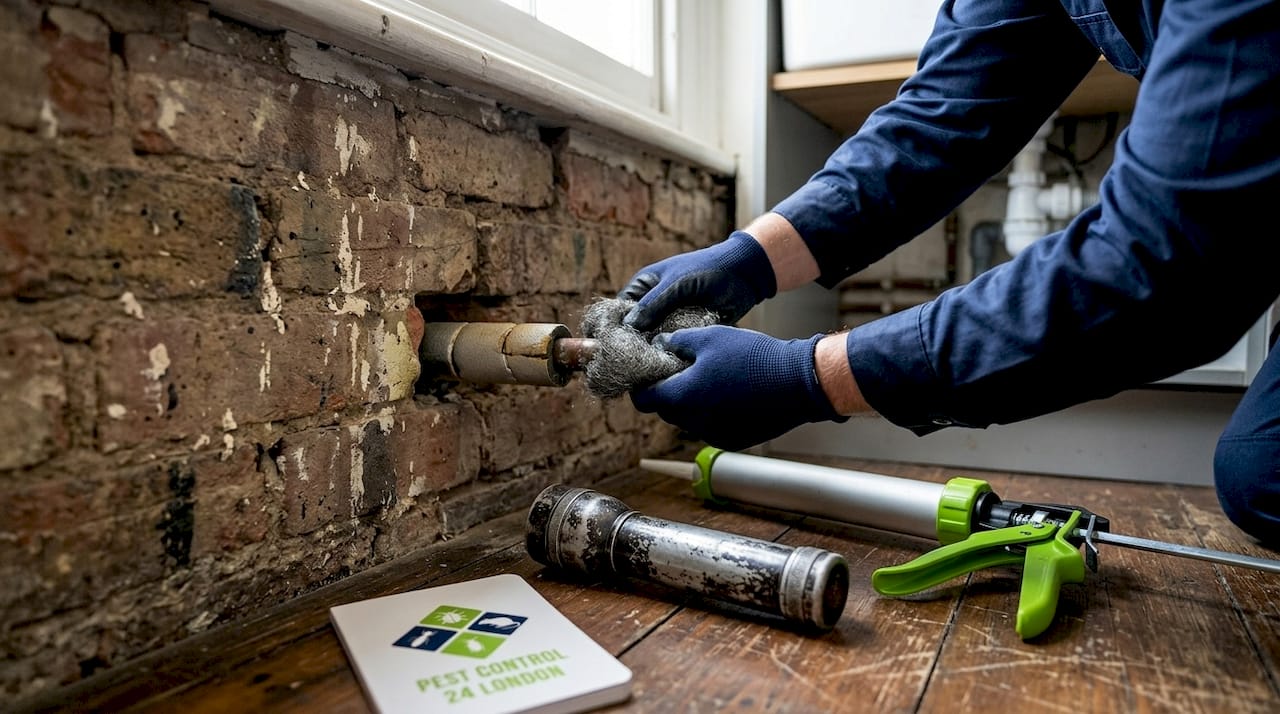
Closing entry holes is one of the most effective ways to prevent recurring rodent problems. Rats can squeeze through a gap as small as 15mm, roughly the size of a ten-pence coin. That is a sobering fact when you consider how many gaps typically exist around pipework, vents, and ageing door frames in older London properties. Understanding rodent proofing in detail will help you identify what materials and methods suit your specific property.
| Entry point | Recommended sealing material |
|---|---|
| Gaps around pipes | Steel wool packed tightly, then sealed with caulk |
| Airbricks and vents | Wire mesh or proprietary vent covers |
| Gaps under doors | Draft excluders with metal reinforcement |
| Cracks in walls | Mortar or expanding foam with steel mesh insert |
| Roof eaves and soffits | Metal flashing or hardboard sealed to the structure |
Pro Tip: Do not rely on expanding foam alone. Rats will simply chew through it. Always back foam with steel wool or metal mesh for a durable, gnaw-resistant seal.
With a well-prepared home, you can now apply targeted control tactics to reduce and remove existing rat populations.
Executing effective rat removal methods at home
Once your home is sanitised and proofed, removal can begin. There are several methods available, and the most effective approach typically combines more than one. These are the core rat control methods at home that produce measurable results.
How to set snap traps correctly:
- Use heavy-duty snap traps rated for rats, not mouse-sized traps
- Position traps along walls and in travel routes where you have seen grease marks or droppings
- Bait with peanut butter, chocolate, or nesting material rather than cheese
- Set multiple traps in clusters at active areas rather than spacing them far apart
- Check traps daily and remove dead rats wearing gloves to avoid disease exposure
- Reposition traps after three days with no catches, as rats will avoid them if they sense danger
Trapping is the safest removal method for households with children or pets. Trapping alone can work for immediate reduction, but ongoing prevention through resource and access control is crucial. For those managing a rodent outbreak, more detailed guidance on handling rodent outbreaks is worth reviewing before escalating to rodenticides.
A comparison of common removal methods:
| Method | Effectiveness | Safety considerations | Best suited for |
|---|---|---|---|
| Snap traps | High | Safe if placed carefully | Most household scenarios |
| Glue traps | Moderate | Considered inhumane by many | Not recommended |
| Rodenticide | High | Significant risk if misused | Professional management preferred |
| Ultrasonic repellents | Very low | No chemical risk | Not recommended as standalone |
| Natural deterrents (e.g. peppermint oil) | Very low | Safe | Not effective in active infestations |
Using rodenticide safely:
Rodenticide should only be used in tamper-resistant bait stations and is not recommended for households with children or pets unless professionally managed. If you do use bait, place stations only inside or against the building, never in open areas where wildlife, birds, or neighbourhood pets could access them.
Pro Tip: Natural rat repellent methods such as peppermint oil or ammonia-soaked cotton wool are widely recommended online but have very limited evidence supporting their use against established infestations. Do not count on them as a primary strategy.
After implementing removal techniques, it is important to verify success and maintain measures to prevent reinfestation.
Verifying results and maintaining a rat-free home
Knowing whether your efforts have worked requires active monitoring, not just hoping for the best. These are the signs that indicate successful control:
- No new droppings appearing in areas previously active
- Traps remain undisturbed and unbaited food remains untouched after several days
- Scratching noises have ceased completely
- No fresh gnaw marks on previously affected areas
Common mistakes that lead to reinfestation include removing traps too soon, failing to seal all entry points, and reverting to poor sanitation habits. New rodents will find you if entry routes and resources are not continually managed.
Build a simple inspection routine: check your loft, underfloor areas, and garden perimeter monthly for early signs of activity. Maintain all sealed entry points and repair any damage to proofing materials promptly. Ongoing rodent control is a long-term commitment, not a one-off task.
Pro Tip: Place a small amount of fresh bait or flour near previously active areas every few weeks. Footprints or disturbed bait will reveal new activity far earlier than visible signs.
Understanding how to maintain control leads naturally to considering when professional help is the best course of action.
When to call professional rat control services in London
Some situations are simply beyond what home rat prevention tips and DIY tools can address. Knowing when to escalate is as important as knowing how to start.
Signs you need professional intervention:
- Large infestations with multiple active zones throughout the property
- Rats in wall cavities or under concrete, where traps cannot be placed effectively
- Recurring infestations despite your own proofing and trapping efforts
- Drains or sewer entry as the suspected access route, which requires specialist equipment to diagnose and resolve
- Properties with young children, elderly residents, or pets, where rodenticide use requires professional oversight
Professional rat removal focuses on inspection, trapping, exclusion, and prevention to deliver long-term results. A qualified pest controller will carry out a thorough survey, identify all entry points including those you may have missed, and implement a treatment plan that accounts for the full scope of the problem. After the initial treatment, follow-up visits confirm the infestation has been fully resolved.
For London homeowners, working with a professional rat removal service means access to BPCA-qualified technicians who understand the specific challenges of urban infestations in this city.
Rethinking home rat control: practical lessons from experience
After more than a decade of handling rat infestations across London, one pattern stands out: homeowners almost always underinvest in monitoring and overestimate the value of repellents.
Homeowners often over-invest in repellents while under-investing in monitoring and proper baiting, which is key to safety and effectiveness. We see this regularly. Someone spends weeks spraying peppermint oil, scattering chilli flakes, and plugging in ultrasonic devices, while the rats continue to thrive in the wall cavity two metres away. By the time they call us, the infestation is twice the size it needed to be.
The honest truth is that there is no shortcut. Effective rodent control is built on rodent proofing insights, consistent monitoring, and methodical trapping, not a single product or clever trick. Rodenticide has its place, but misused it creates secondary poisoning risks for birds and other wildlife, and it will not stop new rats entering if the property remains accessible.
The most durable outcomes come from treating rat control as an ongoing property maintenance task, like checking gutters or servicing a boiler, rather than a crisis response. That shift in thinking is what separates homeowners who resolve problems permanently from those who call us back every six months.
Professional rat control services for London homes
If rats are already active in your home, or if you want to protect your property before a problem develops, our team is ready to help.

We have been providing domestic pest control across London since 2015, working with homeowners, landlords, hotels, restaurants, and businesses of all sizes. Our BPCA-qualified technicians carry out thorough inspections, targeted trapping and baiting, full exclusion work, and follow-up visits to confirm lasting results. We offer 24/7 availability for urgent situations and tailor every treatment plan to the specific needs of your property. Contact Pest Control London 24/7 today for a free quote and take the first step towards a permanently rat-free home.
Frequently asked questions
What are the safest ways to use rat poison at home?
Use rodenticides only in tamper-resistant bait stations placed where children and pets cannot access them, and check them regularly. If you cannot check bait stations regularly, do not start baiting, and never use loose or open bait at home.
How can I seal my home to prevent rats from entering?
Identify and close all cracks, holes, and gaps around pipes, doors, and vents using steel wool, hardware cloth, caulk, or metal flashing. Closing entry holes is one of the most effective ways to prevent recurring rodent problems.
Are ultrasonic rat repellents effective?
No. Ultrasound devices are almost completely useless in fighting rodent pests and should not replace proven methods like proofing and trapping.
When should I hire a professional for rat control?
Hire professional pest control when infestations are large, rats are in inaccessible areas, or when you cannot identify entry points or manage sanitation effectively yourself. Professional removal focuses on inspection, exclusion, and follow-up for comprehensive, lasting control.