

Most people assume pest control means wiping out every insect, rodent, or bird that crosses their threshold. That assumption leads to over-spending, over-treating, and problems that come back worse than before. A proper pest population management overview tells a different story. Effective management is about reducing pest populations to acceptable, non-damaging levels rather than achieving total eradication, which is rarely realistic or even desirable. For property owners and facility managers, understanding this distinction is the foundation of every good pest control decision you will ever make.
Table of Contents
- Key takeaways
- The core principles of integrated pest management
- Monitoring and action thresholds
- Population management strategies: the full toolkit
- Putting it all into practice
- My take on balanced pest management
- Professional pest management in London
- FAQ
Key takeaways
| Point | Details |
|---|---|
| Management over eradication | The goal is reducing pests below damaging thresholds, not eliminating every last one. |
| Monitoring drives decisions | Regular inspections and traps tell you when and whether to act, preventing unnecessary treatments. |
| Multiple methods work together | Combining preventive, biological, physical, and chemical controls gives the most reliable results. |
| Thresholds vary by context | What counts as an unacceptable pest level depends on your property type, pest species, and business risk. |
| Professional support matters | For facilities with compliance obligations, expert pest management services provide documentation and accountability. |
The core principles of integrated pest management
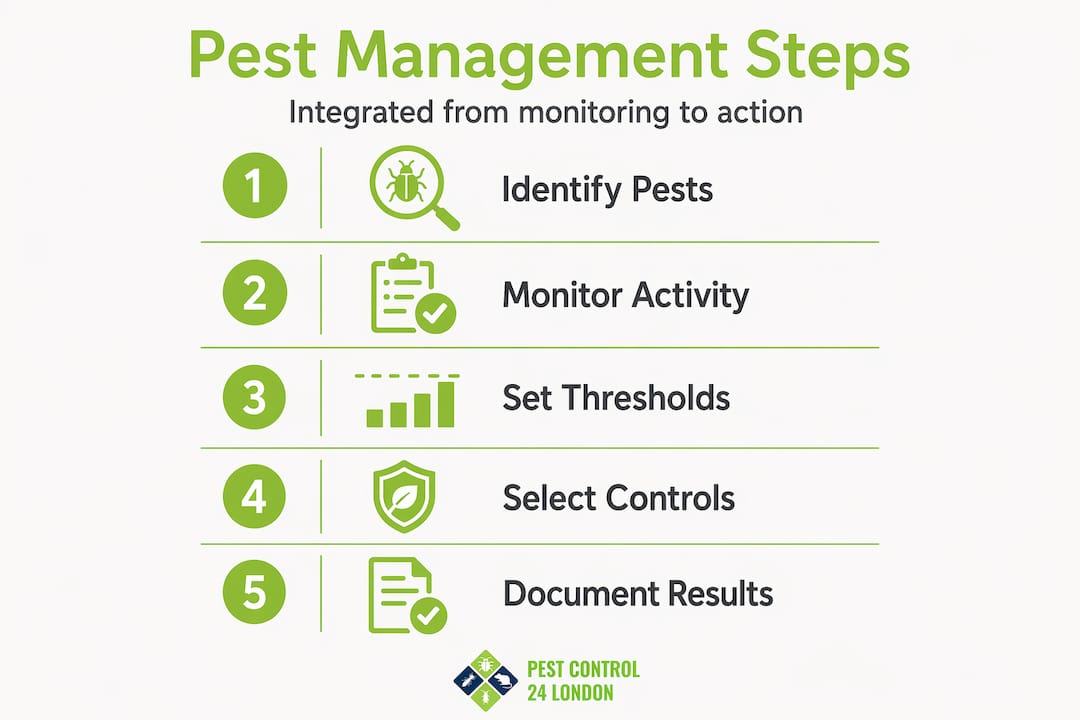
The most widely accepted framework for effective pest population management is integrated pest management, or IPM. Rather than defaulting to pesticides at the first sign of activity, IPM follows a structured sequence: identify the pest, prevent or minimise buildup, monitor and assess damage, set an action threshold, apply controls, and then evaluate whether those controls worked. Each step builds on the last.
The goal, critically, is not eradication. IPM reduces pests below economically or aesthetically damaging levels, protecting your property and reputation without triggering an arms race between pesticides and pest resistance. This is especially relevant for restaurants, hotels, and commercial facilities where a single rodent sighting can mean a failed inspection.
Key principles of IPM include:
- Identification before action. Treating the wrong pest with the wrong method wastes time and money. Positive identification of species and life cycle stage is non-negotiable.
- Prevention as the first line of defence. Sealing entry points, removing food sources, and correcting drainage issues reduce the conditions pests need to establish themselves.
- Chemical controls as a last resort. Pesticides complement other methods and are applied only after nonchemical options have failed or are clearly unsuitable.
- Ecological and economic balance. IPM coordinates pest biology, environment, and available technology to minimise risk in a way that makes sense financially and environmentally.
Pro Tip: When briefing a pest control contractor, ask them to confirm which IPM steps they follow and how they document their action thresholds. A contractor who cannot answer that question clearly is not practising genuine IPM.
Monitoring and action thresholds
Monitoring is not optional. It is the mechanism by which you know whether a pest problem exists, how serious it is, and whether your current management approach is actually working. Without it, you are guessing. Monitoring uses inspections, traps, and counts to gauge both pest populations and the presence of natural enemies that may be suppressing them.
Once you have monitoring data, you can set action thresholds. These are the decision points that tell you when intervention becomes necessary. Thresholds are not arbitrary. They reflect damage severity, control costs, beneficial organisms present, and user tolerance. A single mouse in a food preparation area crosses a threshold immediately. The same mouse in an outdoor storage yard might not warrant treatment at all.
Here is a practical monitoring sequence for property and facility managers:
- Set a schedule. Weekly or fortnightly inspections of high-risk areas such as kitchens, plant rooms, and waste storage zones form the backbone of any programme.
- Use multiple monitoring tools. Sticky traps, rodent bait stations, UV light traps for flying insects, and visual inspections each capture different data. Use them in combination.
- Track beneficial organisms. Natural enemies can suppress pest populations, meaning their presence changes the calculus on whether treatment is needed.
- Record everything. Dates, locations, pest species, numbers, and any conditions observed. This data feeds directly into your threshold decisions and compliance records.
- Link monitoring to action criteria. Monitoring must be tied to when-to-act criteria to avoid documentation that sits in a folder and does nothing.
Pro Tip: Many facilities over-monitor some areas and ignore others entirely. Map your property and identify where pest entry, harbourage, and food sources intersect. Those points deserve the most attention.
Population management strategies: the full toolkit
Understanding pest population dynamics means recognising that no single control method works reliably in isolation. Effective population management strategies draw from four broad categories, applied in order of preference.
| Control type | Examples | Best used when |
|---|---|---|
| Cultural and preventive | Sanitation, waste management, proofing, habitat modification | Always, as a baseline measure |
| Biological | Introducing natural predators, parasitic wasps, nematodes | Feasible in gardens, greenhouses, and some commercial settings |
| Physical and mechanical | Rodent traps, fly screens, bird netting, sticky boards | When targeted removal is needed without chemicals |
| Chemical | Targeted pesticide application, rodenticides, residual sprays | After all other options have been assessed and found insufficient |
Cultural and preventive measures should be running constantly in the background. Removing clutter that provides harbourage, sealing gaps around pipework, and keeping waste areas clean all reduce the pest pressure your property is under at any given time. These measures do not make headlines, but they prevent more infestations than any other intervention.
Biological controls are frequently underused in urban property settings. Introducing eco-friendly pest control solutions such as parasitic wasps for certain crawling insect species or nematodes for soil-dwelling larvae can deliver sustained suppression without chemical input.
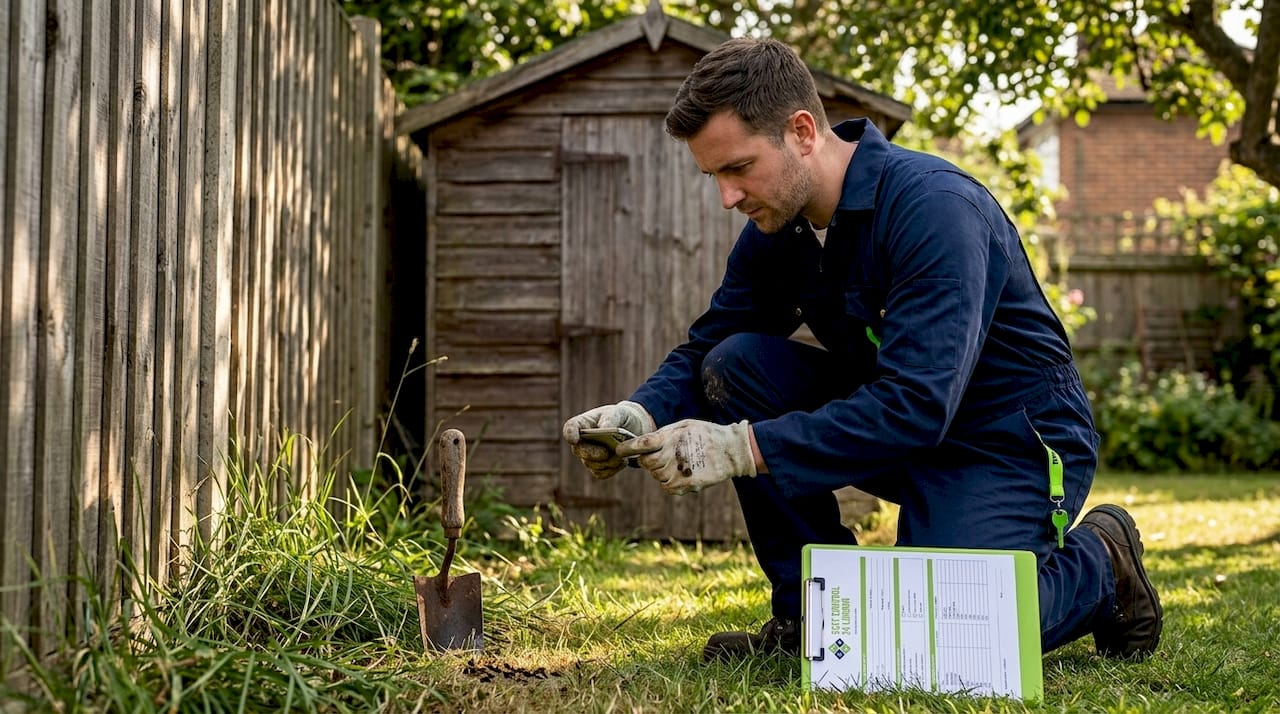
Physical controls give you targeted, immediate results. Rodent traps placed along confirmed travel routes, bird netting over ventilation points, and fly screens on kitchen windows all intercept pest activity at its source.
Chemical controls remain necessary in many real-world scenarios, but they work best when applied as part of an integrated plan rather than as the default first response.
Putting it all into practice
Knowing the principles of integrated pest management and actually running an effective programme on your property are two different things. Here is how to translate theory into consistent, auditable practice:
- Create a written management plan. Document which pests are relevant to your site, where monitoring points are located, what your action thresholds are for each pest type, and which control methods you will use at each threshold level.
- Tailor controls to pest biology. Effective IPM plans match controls to pest species and life cycle stages. Treating a cockroach infestation with methods designed for flying insects is not only ineffective, it delays the right response.
- Review and adjust regularly. Pest activity is not static. Seasonal changes, building alterations, and shifts in neighbouring properties all affect pest pressure. Quarterly reviews of your management plan keep it current.
- Understand your compliance obligations. For food businesses and licensed premises in London, pest control compliance standards form part of your legal duty of care. Documented monitoring records and treatment logs are frequently requested during environmental health inspections.
- Know when to call professionals. Some infestations, particularly established rodent colonies or large-scale insect infestations, require the equipment, expertise, and legal product access that only qualified pest controllers can provide.
My take on balanced pest management
I have worked with hundreds of properties across London over more than a decade, and the single most common mistake I see is the expectation of total eradication. Clients ring in a panic after seeing one rat, demand we “get rid of all of them,” and then feel let down when the problem reappears six weeks later because the building’s fabric still has ten active entry points.
The truth is, chasing zero pests is both impossible and counterproductive. When you aggressively eliminate one species, you often disrupt the ecological balance that was suppressing another. I have seen properties that over-relied on rodenticide programmes end up with serious cockroach problems because the rodents had been keeping certain food debris cycles in check.
What actually works is consistency. Regular monitoring, honest threshold setting, and a mix of controls applied thoughtfully over time. That approach rarely produces dramatic before-and-after moments, but it does produce properties that stay genuinely pest-free year after year. If you want documentation that holds up under an environmental health inspection, that steady approach is the only one worth trusting.
— Dan
Professional pest management in London

Understanding the theory of pest population management is genuinely useful, but applying it consistently across a busy commercial or residential property is a different challenge. Pestcontrol24london has been delivering BPCA-qualified pest management services across London since 2015, working with hotels, restaurants, retail premises, and residential properties to build programmes grounded in real IPM principles.
Whether you need a commercial pest management programme with full documentation for compliance purposes, or domestic pest control for your home, the team at Pestcontrol24london tailors every intervention to the specific pest, property, and threshold. Post-treatment, professional pest disinfection services restore hygiene and give you confidence the site is safe to use again. Get in touch for a free quote and a straightforward assessment of what your property actually needs.
FAQ
What is integrated pest management?
Integrated pest management is a structured approach that combines identification, monitoring, thresholds, and multiple control methods to reduce pest populations to acceptable levels. It prioritises nonchemical controls and uses pesticides only when other methods are insufficient.
How do action thresholds work in pest management?
An action threshold is the point at which pest activity is serious enough to justify intervention. Thresholds account for damage severity, control costs, and user tolerance, so they differ between a food business and a domestic garden.
Why is monitoring central to effective pest control?
Without monitoring, you cannot know when populations have crossed your action threshold or whether your controls are working. Monitoring informs both timing and necessity of every treatment decision.
Is eradication a realistic goal for pest control?
Rarely. The realistic and sustainable goal is reducing pests below damaging thresholds, not achieving zero presence. Total eradication is resource-intensive and often disrupts the natural systems that keep secondary pest species in check.
When should a facility manager call a professional pest controller?
Call a professional when pest activity has crossed your action threshold, when compliance documentation is required, or when the infestation involves species that require licensed products or specialist equipment. Pest control documentation for managers provides further guidance on record-keeping obligations.