

Pest control non-compliance can shut down your business overnight. Environmental health officers (EHOs) have the authority to issue improvement notices, close premises, and pursue prosecution, yet many London business owners and facility managers still treat pest control as an afterthought rather than a core operational duty. The reality is that your statutory obligations extend far beyond simply calling a pest controller when you spot a mouse. From documented inspection programmes to HACCP-aligned procedures, the standards are detailed, enforceable, and directly tied to your trading licence, food hygiene rating, and reputational standing.
Table of Contents
- Legal requirements: statutes and regulations
- Core standards: Integrated Pest Management (IPM) methodology
- Inspections and documentation: proving due diligence
- Expert nuances and recent updates: what 2026 changes mean for you
- What most compliance guides miss about pest control standards
- Get expert pest control help for your London business
- Frequently asked questions
Key Takeaways
| Point | Details |
|---|---|
| Legal compliance | All London business premises must keep areas free from rats and mice and fulfil statutory pest control duties. |
| IPM best practice | Integrated Pest Management offers a preventive, evidence-based framework for controlling pests sustainably. |
| Audit-ready documentation | Consistent inspections and detailed records are essential for demonstrating compliance during audits. |
| Outsourcing for certification | From 2026, businesses should outsource rodenticide use unless certified, to remain compliant. |
| Proactive approach | Embedding pest control into everyday operations protects your reputation and secures regulatory approval. |
Legal requirements: statutes and regulations
Understanding your legal baseline is the first step. Two pieces of legislation define the framework for most London businesses.
Businesses in London must comply with the Prevention of Damage by Pests Act 1949, which requires occupiers to keep premises free from rats and mice, with local authorities empowered to serve notices and enforce action against those who fail to act. This applies to all commercial premises, not just food businesses. A retail shop, a warehouse, or a hotel all fall within scope.
For food businesses specifically, the obligations go further. Food businesses must implement procedures based on HACCP (Hazard Analysis and Critical Control Points) principles per EC Regulation 852/2004, retained as UK law, with Annex II requiring adequate pest control procedures as a prerequisite programme to prevent contamination. In plain terms, pest control must be formally built into your food safety management system, not treated as a separate concern.
Key legal obligations for London businesses include:
- Keeping all premises free from rodent activity under the 1949 Act
- Implementing HACCP-compliant pest control procedures for food businesses
- Cooperating with local authority inspections and enforcement notices
- Maintaining evidence of action taken if a pest problem is identified
- Ensuring food storage, preparation, and handling areas are proofed against pest entry
The consequences of non-compliance are serious. EHOs can issue hygiene improvement notices, hygiene emergency prohibition notices (which close premises immediately), and refer cases for prosecution. A food hygiene rating of one or zero, published publicly, can devastate customer trust almost instantly.
For a broader overview of your obligations, our commercial pest control compliance guide covers the regulatory landscape in detail, and our essential pest control tips resource offers practical starting points.
Important: Local authorities across London, from Westminster to Southwark, conduct unannounced visits. The absence of pest control documentation is itself treated as evidence of non-compliance during audits.
With the legal landscape set, the next step is understanding what effective compliance actually looks like in practice.
Core standards: Integrated Pest Management (IPM) methodology
Reactive pest control, calling someone in only after an infestation is visible, is no longer considered adequate by auditors or enforcement bodies. The accepted standard today is Integrated Pest Management (IPM), which prioritises prevention through proofing and hygiene, monitoring via bait stations and regular inspections, targeted treatments, and thorough documentation over reactive chemical use.
IPM is not just a best practice recommendation. Accreditation bodies such as BRCGS (British Retail Consortium Global Standards) and SALSA (Safe and Local Supplier Approval) expect to see it embedded in your pest management programme during audits.
Implementing IPM in a commercial setting involves the following steps:
- Site survey and risk assessment: Identify entry points, harbourage areas, and conditions that attract pests. This includes gaps in brickwork, poorly sealed drainage, and food waste management failures.
- Proofing and structural improvements: Seal gaps around pipework, install door brushes, fit fly screens, and address any drainage issues. Physical prevention is the foundation of IPM.
- Monitoring programme: Install bait stations, insect light traps, and rodent monitors at strategic locations. Review these regularly to detect activity early, before a full infestation develops.
- Targeted treatments: When pest activity is detected, use the most targeted intervention available, whether that is trapping, baiting, or insecticide application, chosen to minimise risk to non-target species and people.
- Documentation and review: Record every inspection, every finding, and every action taken. Review the programme periodically and adjust based on seasonal trends or changes to the premises.
Pro Tip: When choosing a pest control provider, ask specifically whether they deliver their service within an IPM framework. A provider who only offers chemical treatments without proofing advice or monitoring is unlikely to meet the expectations of a food safety auditor.
The shift toward commercial pest management grounded in IPM methodology reflects a broader industry understanding that prevention is both more effective and more cost-efficient than repeated reactive treatments. Our guidance on best pest control practices offers further context for those looking to raise their standards.
Inspections and documentation: proving due diligence
Compliance is only as strong as your ability to prove it. During an EHO visit or third-party audit, verbal assurances count for nothing. You need a documented paper trail.
Recommended inspection frequency is monthly for high-risk food businesses and quarterly for lower-risk commercial premises, with contracts from BPCA (British Pest Control Association) or NPTA (National Pest Technicians Association) accredited providers providing the due diligence evidence auditors expect to see.
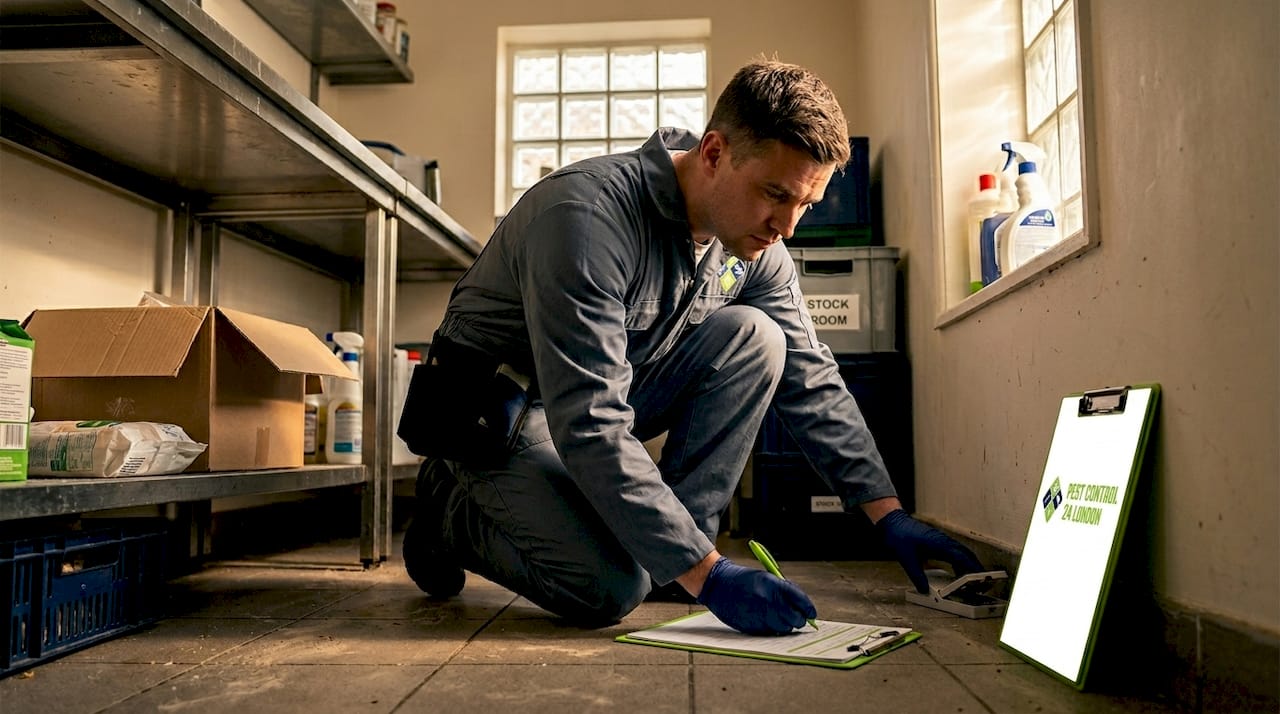
Documentation requirements include inspection reports, treatment records, risk assessments, COSHH (Control of Substances Hazardous to Health) data sheets, site plans showing bait station locations, and corrective action records for audits by EHOs, BRCGS, and SALSA.
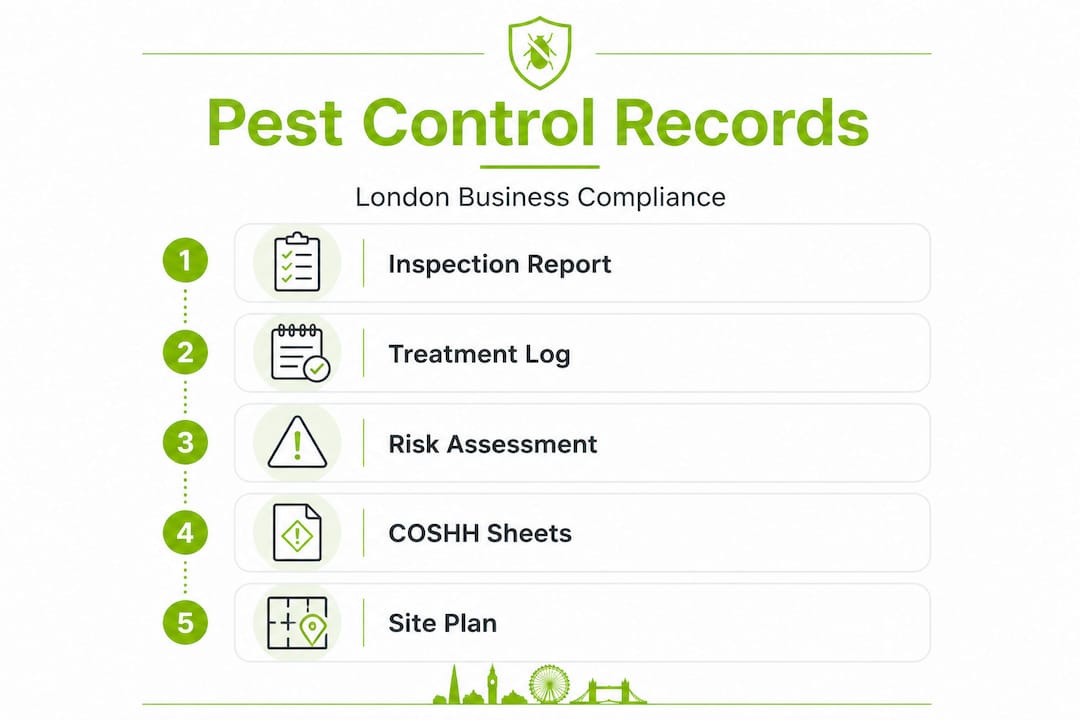
| Document type | Purpose | Required by |
|---|---|---|
| Inspection reports | Record findings at each visit | EHO, BRCGS, SALSA |
| Treatment records | Evidence of intervention and products used | EHO, COSHH compliance |
| Risk assessments | Demonstrate hazard identification | HACCP, EHO |
| COSHH data sheets | Safe use of pesticides | HSE regulations |
| Site plan with bait stations | Show monitoring coverage | BRCGS, SALSA |
| Corrective action records | Prove response to identified issues | EHO, auditors |
Beyond the documents themselves, consider how they are organised. Auditors expect files that are clearly labelled, up to date, and accessible. A folder stuffed with loose papers from three years ago will not impress an EHO. Review our steps to prepare for pest treatment for practical preparation advice, and stay informed via our pest control news page for regulatory updates.
Expert nuances and recent updates: what 2026 changes mean for you
One of the most significant regulatory shifts now affecting London businesses relates to rodenticide use. From 2026, in-house rodenticide use requires CRRU (Campaign for Responsible Rodenticide Use) approved Level 2 certification or relevant CPD (Continuing Professional Development). Businesses that cannot demonstrate this certification should outsource rodenticide applications to qualified providers.
This change has a direct implication for facility managers who have historically managed basic baiting programmes in-house. From a compliance and liability standpoint, outsourcing to a BPCA or NPTA accredited contractor is now the safer and more defensible position.
| Approach | Risk level in 2026 | Recommended for |
|---|---|---|
| In-house with Level 2 certification | Low, if certified staff available | Large facilities with dedicated teams |
| In-house without certification | High, non-compliant from 2026 | Not recommended |
| Outsourced to BPCA/NPTA provider | Low | Most London businesses |
Pro Tip: If you manage a restaurant or food production site, review our restaurant pest control strategies to understand the specific compliance pressures facing food service environments in 2026.
What most compliance guides miss about pest control standards
Having worked with hundreds of London businesses since 2015, from large hotel groups to independent takeaways, we have seen the same failure pattern repeat itself. Businesses invest in a pest control contract, file the first few inspection reports, and then treat the whole arrangement as a formality. The documentation stops being reviewed. Staff are not briefed on what to report or who to contact. The bait stations get moved during a refurbishment and never repositioned correctly.
This is where compliance breaks down. Pest control standards are not a box to tick once a year. They require active operational integration. Staff at all levels, from kitchen porters to warehouse supervisors, need basic awareness of what pest activity looks like and a clear reporting procedure. A single sighting reported promptly can prevent a full infestation.
Reputation is also at stake in ways that go beyond formal enforcement. A social media post showing a rodent in a restaurant, or a poor food hygiene rating published online, causes damage that takes years to repair. The businesses that understand this treat pest control as a brand issue, not just a regulatory one. Our practical guide for pest control reinforces the operational discipline that separates genuinely compliant businesses from those merely performing compliance.
Get expert pest control help for your London business
Maintaining full compliance across inspections, documentation, and treatment protocols is demanding, especially when your focus is running a business. That is where having a trusted, accredited partner makes all the difference.

Our team at Professional Pest Control Services has been supporting London businesses since 2015, delivering BPCA-qualified business pest management that meets the exact standards EHOs, BRCGS, and SALSA auditors expect. We provide full audit-ready documentation, structured inspection programmes, and targeted treatments aligned with IPM principles. Following any infestation, our pest disinfection services ensure your premises are sanitised and safe before reopening. Contact us today to discuss a compliance programme tailored to your premises.
Frequently asked questions
What is the minimum legal requirement for pest control in London businesses?
You must keep your premises free of rats and mice under the Prevention of Damage by Pests Act 1949, with local authorities empowered to serve enforcement notices on non-compliant businesses.
How often should pest inspections take place in a food business?
Monthly inspections are recommended for high-risk food premises by BPCA standards, while lower-risk commercial premises should have quarterly visits as a minimum.
What documentation is required for commercial pest control audits?
Essential documents include inspection reports, treatment records, risk assessments, COSHH data sheets, site plans with bait station locations, and corrective action records for EHO and third-party audits.
Do I need a certification to use rodenticides in-house in 2026?
Yes. From 2026, CRRU-approved Level 2 certification or relevant CPD is required for in-house rodenticide use, making outsourcing to qualified providers the practical choice for most businesses.
What is IPM and why does it matter for compliance?
IPM stands for Integrated Pest Management, a methodology emphasising prevention, monitoring, and targeted treatments that auditors from BRCGS, SALSA, and EHOs now expect as standard practice.
Recommended
- London commercial pest control compliance guide 2026
- Commercial Pest Control London | Business Pest Management 24/7 – Pest Control 24 London
- Best pest control practices for London homes: 10+ years of expertise
- Effective restaurant pest control strategies for London
- Invasive plant compliance guide for UK homeowners 2026
- Commercial cleaning standards: A property manager’s guide