

London homeowners face a persistent challenge. Pests return season after season, and the instinct to reach for a chemical spray is understandable. But conventional pesticides carry real risks: harm to garden wildlife, contamination of soil, and potential health concerns for children and pets. Over the past decade, we have seen a clear shift among London residents and property managers towards more responsible, sustainable approaches. This guide walks you through a proven, step-by-step method for managing pest infestations naturally, from preparing your property to deploying biological controls, companion planting, and physical barriers.
Table of Contents
- Preparing your home for natural pest control
- Biological controls: Using beneficial insects and nematodes
- Companion planting and botanical solutions
- Physical barriers and best practices for ongoing natural control
- An expert perspective: What most guides miss about sustainable pest control
- Connect with eco-friendly pest control solutions in London
- Frequently asked questions
Key Takeaways
| Point | Details |
|---|---|
| Target pests naturally | Biological controls and plant pairings focus on pests without harming wildlife. |
| Sustainable and humane approach | Remove attractants and use non-toxic methods to minimise suffering and environmental impact. |
| Effective alternatives exist | Natural methods achieve up to 90% effectiveness, rival traditional chemicals. |
| London-specific solutions | Adopt strategies proven in UK gardens for climate and pest types. |
| Integrated pest management | Combine barriers, botanicals, hygiene, and prompt action for lasting results. |
Preparing your home for natural pest control
With your motivation for natural pest control established, let’s ensure your home is primed to support these eco-friendly strategies. Before any method can work reliably, you need to remove the conditions that attract pests in the first place. Natural controls are far less effective when food sources, shelter, and easy access points remain available.
Start with a thorough inspection of your property, both inside and out. Look for the following common attractants and vulnerabilities:
- Exposed food waste: Unsecured bin lids and uncovered compost heaps are open invitations for rats, mice, and flies.
- Pet food left out overnight: This is one of the most frequently overlooked attractants in London homes.
- Cracks and gaps: Even small gaps around pipes, window frames, and door thresholds allow rodents and insects to enter.
- Clutter near walls and fences: Stacked wood, garden debris, and piles of leaves create ideal hiding spots for slugs, rats, and cockroaches.
- Standing water: Blocked gutters and waterlogged areas encourage mosquitoes and other moisture-seeking pests.
The RSPCA advises that humane deterrents should always come first, prioritising the removal of food and shelter rather than resorting to poisons or glue traps that cause suffering to non-target wildlife. This principle is central to eco-friendly pest management.
Sealing entry points is a priority. Use wire wool, caulk, or expanding foam to close gaps around pipework. Fit bristle strips to the base of exterior doors. Check where cables and utilities enter the building, as these are common rodent entry points. Good domestic pest control tips also recommend checking roof eaves and loft hatches for gaps that bats, pigeons, or squirrels might exploit.
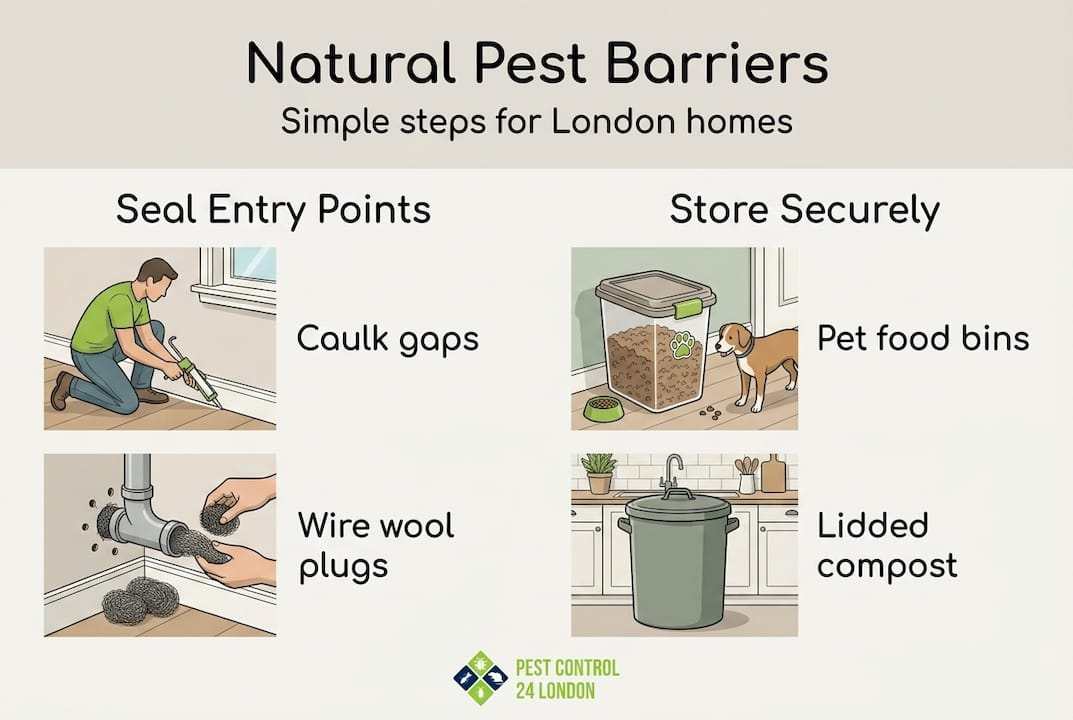
Pro Tip: Store pet food in sealed, hard-sided containers rather than the original bags. Rodents can easily chew through cardboard and plastic packaging within minutes.
Biological controls: Using beneficial insects and nematodes
Once your home is prepared, it’s time to explore targeted biological control methods that are safe and effective. Biological control means using living organisms to manage pest populations, and it is one of the most targeted and wildlife-friendly approaches available.
Nematodes are microscopic roundworms that occur naturally in soil. Different species target specific pests, which is what makes them so valuable. Nematodes enter their host pest and release bacteria that kill it from the inside, while leaving birds, hedgehogs, bees, and other beneficial creatures completely unharmed. Biological controls using nematodes and predatory insects are highly effective for specific garden pests in UK conditions, achieving targeted control without broad harm to wildlife.
| Pest targeted | Biological control | Best season | Soil temperature |
|---|---|---|---|
| Slugs | Phasmarhabditis nematodes | Spring/Autumn | Above 5°C |
| Vine weevil larvae | Steinernema nematodes | Late summer | Above 5°C |
| Aphids | Lacewings, ladybirds | Spring/Summer | Ambient |
| Whitefly | Encarsia formosa (parasitic wasp) | Summer | Above 18°C |
| Fungus gnats | Steinernema feltiae nematodes | Year-round | Above 10°C |
Temperature matters significantly. Nematodes become inactive below 5°C, so timing applications to late March through October in London is important. Water the soil before and after applying nematodes, as they need moisture to move through the soil and reach their targets.
Predatory insects such as lacewings and ladybirds naturally control aphid populations. You can encourage them by planting nectar-rich flowers and avoiding any pesticides that would disrupt their lifecycle. Some gardeners also purchase lacewing larvae for targeted release on heavily infested plants.
Pro Tip: Order nematodes online from a reputable UK supplier and apply them the same day they arrive. Nematodes are living organisms and lose effectiveness quickly if stored improperly or left in warm conditions.
For properties dealing with persistent pest issues, professional pest disinfection advice can complement biological controls by addressing any residual contamination before you introduce beneficial organisms. You can also find broader guidance in our essential pest tips for London homes and businesses.
Companion planting and botanical solutions
Alongside biological controls, strategic planting and natural botanicals offer powerful support for a pest-free environment. Companion planting is the practice of growing certain plants near crops or ornamentals to deter pests through natural chemical signals, physical barriers, or trap cropping.
Companion planting deters common pests like aphids, whitefly, and carrot fly through chemical exudates (substances released by plant roots and leaves) and trap cropping, where a sacrificial plant draws pests away from more valuable ones.
Effective companion plant combinations for London gardens include:
- Marigolds (Tagetes species) planted near tomatoes or beans repel whitefly and nematode-damaging root pests through root secretions.
- Nasturtiums act as a sacrificial trap crop, attracting aphids and blackfly away from vegetables.
- Alliums (garlic, chives, onions) planted near roses and carrots deter aphids and carrot fly with their strong sulphur compounds.
- Lavender and mint planted near brassicas help confuse cabbage white butterflies searching for host plants.
Neem oil is a botanical solution derived from the seeds of the neem tree. It works as an insect growth regulator, disrupting feeding, growth, and reproduction across a wide range of species. Neem-based botanicals achieve over 50% mortality on aphids and diamondback moth under controlled conditions, comparable to some commercial products. To use it, dilute neem oil with water and a few drops of liquid soap (as an emulsifier), then spray directly onto affected plants in the early morning or evening to avoid harming bees.
Neem oil breaks down quickly in sunlight and soil, leaving no persistent residue, which makes it a responsible choice for gardens near ponds or habitats where conventional pesticides would cause serious harm.
Pro Tip: Apply neem oil spray every seven to ten days during active pest seasons. Consistency is key; a single application rarely delivers lasting results.
Our best practices for homes offer further detail on combining these botanical methods with other natural strategies for maximum effectiveness.
Physical barriers and best practices for ongoing natural control
To complete your natural pest control toolkit, combine botanicals and strategic planting with lasting physical defences and reliable routines. Physical barriers are simple, chemical-free, and often the most reliable line of defence for specific pest problems.
Physical barriers like Enviromesh exclude flying pests effectively while allowing light and rain to reach your plants. Enviromesh, fleece, and fine insect mesh can be draped over brassicas to exclude cabbage white butterflies and carrot fly. Copper tape around pots deters slugs. Collars made from cardboard or plastic around seedling stems prevent cutworms from reaching the base of young plants.
Here is a practical routine for maintaining year-round natural pest control:
- Inspect weekly. Walk your garden and check undersides of leaves, soil surfaces near plants, and around compost bins for early signs of pest activity.
- Refresh barriers after rain. Mesh can be displaced by wind and heavy rain; check that it is still properly secured after each spell of bad weather.
- Replenish nematodes each season. Apply a fresh batch in spring and again in late summer to maintain population levels in the soil.
- Remove infested material promptly. Yellowing or pest-damaged leaves should be removed and disposed of in council waste, not composted, to avoid spreading larvae.
- Rotate your companion plants. Planting the same companions in the same spot each year reduces their effectiveness; rotate plant families annually.
“The UK National Action Plan 2025 promotes Integrated Pest Management uptake and targets a 10% environmental risk reduction by 2030, supporting biopesticides and precision technology for sustainable management.”
Natural methods do have limits. Severe infestations of rodents, cockroaches, or bed bugs in a London property genuinely require professional intervention. At that point, post-treatment cleaning becomes an important part of restoring a healthy, pest-free environment safely.
An expert perspective: What most guides miss about sustainable pest control
Now that we’ve covered the actionable steps, let’s take a closer look at what conventional advice often misses about truly sustainable pest control. Most online articles present natural methods as a shopping list: buy these nematodes, plant these marigolds, done. The reality is more nuanced, and after more than ten years managing pest problems across London, we have learned that the biggest gap in most guides is the failure to emphasise integration.
Integrated Pest Management (IPM) is not a single technique. It is a philosophy. It means combining prevention, biological control, physical barriers, and botanical solutions in a coordinated way, rather than deploying each in isolation. A homeowner who plants marigolds but leaves their rubbish bins uncovered will still have a rat problem. One who applies nematodes on soil that is too cold will see no results and wrongly conclude that natural methods do not work.
The RHS prioritises non-chemical methods such as hand removal, biological controls, and barriers above all other approaches, and specifically advises against untested home brews that may harm the environment. We echo this strongly. Many well-intentioned homeowners experiment with undiluted essential oils, washing-up liquid concentrations, or homemade garlic sprays. Some of these harm beneficial insects or alter soil chemistry in unpredictable ways. Stick to proven, research-backed methods.
Humane treatment of wildlife is also frequently overlooked. Glue traps, for example, are legal in the UK but cause significant suffering to non-target animals including birds and hedgehogs. Our expert pest control tips consistently recommend cage traps and exclusion methods as the first choice for rodent management. The UK NAP 2025 signals that this direction of travel is now backed by government policy, meaning the pest control industry is moving firmly towards IPM as the professional standard.
Connect with eco-friendly pest control solutions in London
If you want to build on these natural approaches or need professional support, London offers eco-friendly solutions that put sustainability first. Managing pests responsibly is far easier when you have expert guidance tailored to your specific property and pest pressures.

At Professional Pest Control Services, we have been helping London homeowners, hotels, restaurants, and businesses manage pest problems since 2015. We are BPCA fully qualified and experienced in delivering eco-conscious treatment plans that minimise chemical use while achieving reliable results. Whether you need support with commercial pest management or want advice on best pest control practices for your home, our team is ready to help you find the right sustainable solution.
Frequently asked questions
Are natural pest control methods as effective as chemical treatments?
Organic methods achieve 70 to 90% effectiveness against common pests, though they typically require more consistent application and an integrated approach combining multiple techniques for the best results.
Is neem oil safe for pets and wildlife?
Neem oil is generally safe for pets and wildlife when used as directed, as it breaks down rapidly in sunlight and soil. Unlike conventional pesticides, it disrupts insect feeding and reproduction in over 200 species without leaving persistent harmful residues.
Which pests are best controlled with nematodes in London?
Nematodes are most effective against slugs (soil temperature above 5°C) and vine weevil larvae, making them particularly well suited to UK garden conditions throughout spring, summer, and early autumn.
How can I maintain eco-friendly pest control year-round?
Combine regular inspections, seasonal nematode applications, companion planting rotations, and physical barrier checks. Companion planting deters aphids, whitefly, and carrot fly year-round when properly rotated and maintained alongside other natural methods.
Are home remedies reliable for pest control?
Many homemade solutions are untested and risk harming beneficial insects or soil health. The RHS recommends proven natural methods such as biological controls, barriers, and physical removal rather than improvised home brews.