

If you have found one or two droppings and no other signs, DIY trapping and a proofing check will usually solve it within a week. If you are hearing scratching in the walls at night, finding droppings in multiple rooms, or have young children or someone immunocompromised at home, skip the DIY phase and call a professional. Either way, secure food tonight, set traps along skirting boards where you have seen activity, and keep children and pets well away from any trap or bait.
TL;DR:
- Mice activity is confirmed by fresh droppings, gnaw marks, greasy smudges, and noises mainly during the night in areas like kitchens, lofts, and behind appliances.
- Proper trapping involves placing quick-kill snap traps or multi-catch traps along walls and skirting boards, baited with peanut butter or dried fruit, and checked daily.
- Sealing entry points as small as five millimeters with steel wool or metal mesh prevents reinvasion, and maintaining good hygiene removes their food sources to deter return.
- Professional control is recommended when traps fail after three weeks, activity persists inside wall cavities, or vulnerable household members are at risk.
- Most infestations originate from gaps around service penetrations, rooflines, or external doors, making regular perimeter inspections and proactive proofing crucial.
Table of Contents
- Signs of mice in your house: how to confirm and gauge the scale
- How to get rid of mice: safe removal methods for homeowners
- Mice-proofing your house: exclusion, sanitation, and garden measures
- Health risks and property damage from mice
- When to call a professional mouse control service
- Why mice keep coming back: behaviour and breeding cycle
- Where mice get in: common entry points around a typical home
- Occasional visitor or full infestation? Reading the signs correctly
- What makes a house attractive to mice in the first place
- A practitioner’s view: the mistake I see repeated most often
- How Pest Control 24 London can help with a mouse problem
- Sources
Signs of mice in your house: how to confirm and gauge the scale
Droppings are the giveaway most people spot first. Fresh mouse droppings are roughly 3 to 6mm long, dark, and shaped like grains of rice, usually clustered near food sources, along skirting boards, or inside cupboards. Gnaw marks on wood, plastic, or cardboard packaging follow close behind, along with greasy dark smudges on walls and skirting where mice repeatedly brush against the same surfaces on their way to food.
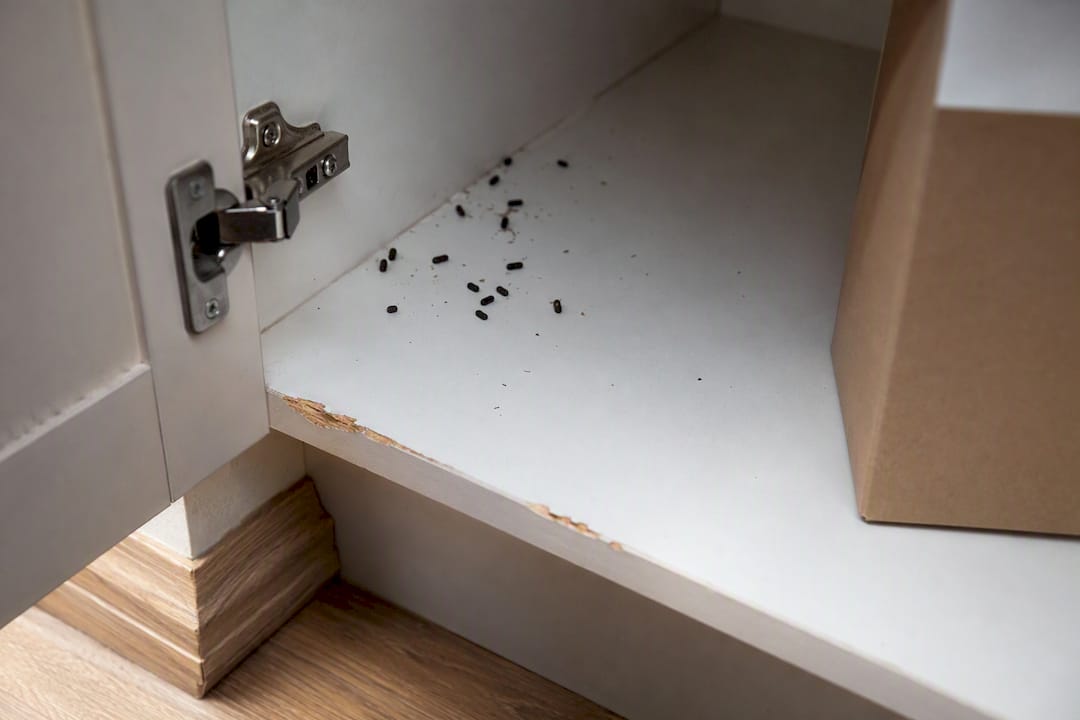
Scratching noises in the loft or wall cavities, particularly at night when the house is quiet, are another strong indicator. Mice are nocturnal and most active between dusk and dawn, so a sound you dismiss as “the house settling” is worth investigating properly.
A simple tracking check helps confirm activity without spending a penny. Sprinkle a thin, even layer of baby powder or talc across a suspected runway, such as behind the cooker or along a skirting board, and check it the next morning for footprints or tail-drag marks.
Search these areas first:
- Behind and underneath kitchen appliances, especially the cooker and fridge
- Loft insulation and roof void edges
- Airing cupboards and boiler rooms, where warmth draws them in
- Behind stored boxes in garages, sheds, and understairs cupboards
One sighting rarely means one mouse. Mice breed quickly and live in family groups, so a single mouse spotted crossing the kitchen floor at dusk is a reasonable signal that more are already nesting somewhere close by.
How to get rid of mice: safe removal methods for homeowners
Trapping is the safest and most controllable option for most households, and it is pesticide-free, which matters if you have pets or small children moving through the same rooms. Here is a practical sequence to follow:
- Choose the right trap. Snap traps kill quickly and are easy to check; multi-catch traps hold several mice at once and suit persistent runs where you keep seeing fresh droppings.
- Place traps correctly. Position them tight against walls and skirting boards, since mice travel along edges rather than open floor space, spacing them roughly 6 to 10 feet apart in areas showing activity.
- Bait sensibly. Peanut butter, chocolate, or dried fruit tend to outperform cheese, which mice often ignore in practice.
- Check daily, without exception. A trapped mouse left too long creates a welfare and hygiene issue, and daily checks tell you quickly whether the infestation is easing or growing.
- Dispose of carcasses safely. Wear gloves, place the carcass in a sealed bag, and disinfect the trap and surrounding surface afterwards.
Live humane traps are an option if you prefer not to kill the animal, though you then need a lawful, timely way to release it well away from the property, or arrange for someone else to do so.
Rodenticides sit lower down the list for a reason. Councils and public-health teams routinely warn that poisoned mice often die inside wall cavities or under floors, leaving an odour problem that can take weeks to resolve, and any poison used indoors needs to sit in a secured, tamper-resistant bait station away from children and pets. This is one of the main reasons many advisors steer homeowners away from indoor poisoning and towards trapping or professional application instead.
Glue traps are best avoided entirely. They cause prolonged suffering, catch mice inconsistently, and create a distressing scene to deal with the next morning.
Pro Tip: Ventilate the room for a few minutes before removing any trapped or deceased mouse, since disturbed nesting material can carry dust and bacteria you would rather not breathe in directly.
Mice-proofing your house: exclusion, sanitation, and garden measures
Removing the mice you can see solves half the problem. Sealing the routes they used to get in solves the rest, and skipping this step is the single most common reason infestations return within weeks of what looked like a successful clear-out.
Mice can squeeze through gaps as small as 5mm, roughly the width of a pencil, and will gnaw an opening wider if the gap looks promising. Check around pipework, air bricks, cable entry points, and the base of external doors. The British Pest Control Association recommends packing gaps with steel wool or metal mesh before sealing over the top with a flexible, durable sealant. Foam and soft caulk alone are a mistake: mice will simply gnaw straight through them within days.
Kitchen hygiene closes off the food supply that keeps mice coming back:
- Store dry goods, cereals, and pet food in airtight containers rather than the original packaging
- Keep kitchen bins tightly lidded and take food waste out regularly
- Wipe down worktops and floors each evening to remove crumbs and grease
Outside, keep vegetation, log piles, and stored wood at least a foot clear of external walls. That gap reduces shelter and increases exposure to predators, making your garden a less attractive stopover on the way indoors. Keep compost bins secured and bird feeders swept clean underneath, since spilled seed is a magnet.
Pro Tip: Do a loft and airbrick check every autumn, just before mice start actively seeking warm shelter for winter. It takes twenty minutes and often catches a small gap before it becomes a full infestation.
For a fuller walkthrough of sealing techniques, our guide to dealing with mice infestations and our prevention checklist cover room-by-room detail.
Health risks and property damage from mice
Mice contaminate far more than they eat. Droppings and urine can spread bacteria including Salmonella, and dried droppings disturbed during cleaning can trigger allergy or asthma symptoms in sensitive household members, so cleaning up after an infestation calls for gloves, a mask, and a disinfectant spray rather than a dry sweep.
Property damage tends to be the costlier surprise. Mice gnaw continuously to keep their teeth worn down, and wiring insulation, loft insulation, and skirting boards are common casualties. Gnawed electrical cabling is a genuine fire risk, not a cosmetic one.
Just how common is this? There are roughly 80,000 professional callouts for mice every year in the UK, which puts mice among the most frequently reported domestic pests nationwide.
When to call a professional mouse control service
Some situations move past the point where traps and sealant alone will fix things. Call a professional when:
- Activity persists after two to three weeks of consistent trapping
- You hear regular scratching or movement inside wall cavities or under floors
- The infestation keeps returning despite proofing work already done
- A household member is elderly, very young, or immunocompromised
A competent professional visit starts with a full survey to identify entry points and nesting areas, followed by targeted baiting in secured, tamper-resistant stations rather than loose bait scattered indoors. Exclusion work to seal identified gaps and a follow-up visit to confirm the infestation has cleared should both be part of the service.
A competent professional service with BPCA qualifications can offer experience handling domestic mouse infestations across London properties, which is worth knowing if DIY measures have not resolved the problem after a fair trial. Renters should also flag persistent activity to their landlord, since landlords may be responsible for proofing work where a repair issue such as a damaged airbrick or gap under a door created the entry point in the first place.
Why mice keep coming back: behaviour and breeding cycle
Mice are territorial creatures of habit, which is exactly why traps placed along the same runway night after night tend to work. A mouse will use the same route between its nest and a food source repeatedly, brushing the same wall each time, which is why grease marks build up in a fixed line rather than scattering randomly across a room.
Breeding speed is the real problem behind a “small” sighting. A female mouse can produce a litter every three weeks, with each litter containing five to six young that reach sexual maturity within roughly six weeks themselves. What looks like one mouse in the kitchen in January can realistically be a dozen or more by March if nothing is done.

Mice also favour quiet, undisturbed spaces for nesting, and loft insulation and the areas behind large appliances are two of their favourite spots precisely because nobody checks them regularly. A loft that has not been opened since last winter is exactly the sort of place a nest can establish and grow unnoticed for months.
Understanding this cycle changes how you should think about timing. Trapping for a few days and stopping once the droppings disappear is a common mistake, because it often just means the surviving mice have grown more cautious, not that they have left. Persisting with checks for a full two to three weeks gives a much clearer picture of whether the problem is genuinely resolved.
Where mice get in: common entry points around a typical home
Mice are opportunists, and a house rarely has just one weak spot. The most common entry points cluster around service penetrations, which is engineering language for the holes already cut into your walls for pipes, cables, and vents.
Air bricks and vents at ground level are frequent culprits, particularly older ones with damaged or missing mesh covers. Gaps around waste pipes under sinks, and around the point where a boiler flue or gas supply pipe passes through an external wall, are almost as common. Door thresholds matter too: a worn rubber sweep under a back or garage door leaves a gap that widens with every season of use.
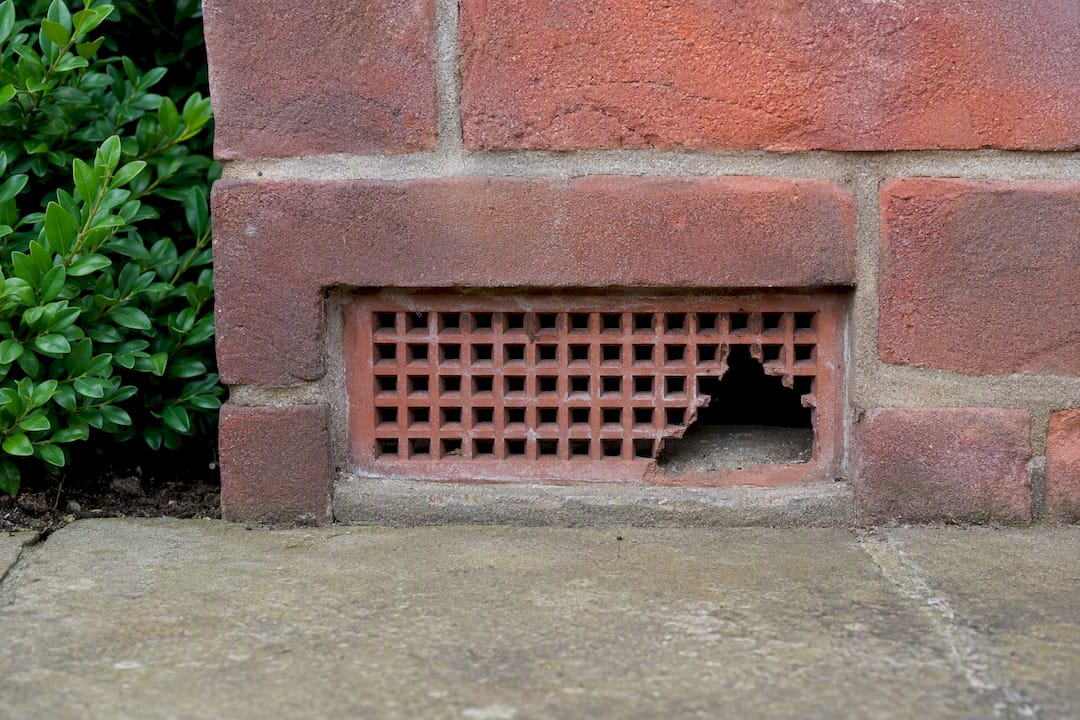
rooflines deserve particular attention. Damaged roof tiles, gaps where a soffit has come loose, and the eaves where a roof meets a wall all give mice a route into loft spaces, from where they can travel down through wall cavities into the rest of the house. Integral garages are another weak link, since the door seal between a garage and the house often gets far less attention than the front door.
Walking the full perimeter of your property with a torch, checking at both ground level and eye level, catches most of these before they become an active route. Anything you can fit a pencil through is a gap mice can widen and use.
Occasional visitor or full infestation? Reading the signs correctly
A single mouse seen once, with no droppings found afterwards despite a proper search, is often just a passing visitor that entered through an open door and moved on. That scenario calls for vigilance and a proofing check, not panic.
A genuine infestation looks different. Droppings appear in multiple rooms, not just one; you find them fresh on consecutive mornings rather than as an old, dusty scattering; and gnaw damage shows up on more than one item, suggesting several mice are active rather than one animal passing through.
Noise is a useful tiebreaker. Occasional visitors rarely make themselves heard, while an established infestation with a nest in the loft or wall cavity produces regular scratching or scampering, usually most noticeable in the evening. If you are catching mice in traps on three or more consecutive nights, treat that as confirmation of an established population rather than a lucky catch, and move straight to the proofing work covered earlier rather than waiting to see if activity tails off on its own.
What makes a house attractive to mice in the first place
Mice are drawn by three things: warmth, food, and shelter, and most homes offer all three without anyone intending to. Autumn and early winter see a genuine seasonal spike, as dropping outdoor temperatures push mice to seek warm indoor spaces rather than continue foraging outside.
Clutter plays a bigger role than most homeowners expect. Garages, sheds, and lofts stacked with boxes create exactly the undisturbed, dark conditions mice look for when choosing a nesting site, and a decluttered space is genuinely harder for them to settle into. Compost heaps, bird feeders, and pet food left outside overnight all extend an open invitation, since spilled seed and food scraps solve the food half of the equation for them.
Garden design matters more than it seems. Overgrown vegetation growing directly against external walls gives mice a hidden, sheltered approach route right up to the building, and removing that cover, along with keeping a clear gap at the base of the walls, makes a property noticeably less appealing before a single mouse has even tried to get in. Scent-based deterrents such as peppermint oil or cloves can make a specific spot briefly less appealing, but they do nothing about an existing nest or an open entry point, so treat them as a minor complement to proofing rather than a solution on their own.
A practitioner’s view: the mistake I see repeated most often
The pattern I come across again and again on repeat callouts isn’t a bad trap or the wrong bait. It’s homeowners stopping the moment the droppings stop appearing, without ever finding or sealing the gap the mice used. Fix the entry point first, then trap. Skip that order and you’re simply booking your next infestation.
— Dan
How Pest Control 24 London can help with a mouse problem
If the DIY route hasn’t worked, or the scale of activity in your loft or walls means you’d rather not handle it alone, professional pest control services can provide a faster, more certain route to a mouse-free house than continuing to guess with shop-bought traps. Experienced, qualified teams run a full survey, targeted treatment, and proofing work as one job, rather than leaving you to identify entry points yourself after the mice are gone.

Our domestic mouse removal service covers the inspection, treatment, and exclusion work in a single visit, with a follow-up check included to confirm the infestation has actually cleared rather than just quietened down. If cleaning up after an infestation feels like more than you want to tackle yourself, our post-treatment sanitisation service handles the disinfection safely. Request a free survey and quote through our main booking page and we’ll confirm a visit time that suits your household.
Sources
- Which
- Pest advice for controlling House Mice – BPCA
- How to Trap Up to Remove Rodents | Healthy Pets, Healthy People | CDC