

Small, itchy marks clustered on your arms, neck or legs that weren’t there when you went to bed are very likely bed bug bites, especially if they follow a line or a “breakfast, lunch and dinner” pattern. The first thing to check is the mattress seams and headboard for tiny black spots, shed skins or blood specks. If you find that evidence, treat the bites at home with basic first aid; if you find nothing but the bites persist, get a professional inspection before assuming it’s something else.
TL;DR:
- Confirm environmental evidence such as faecal spots, shed skins, and live bugs before assuming a bed bug infestation, not just based on bites alone.
- Bed bug bites are often in linear clusters or grouped in a pattern, mainly affecting exposed skin areas like the face, neck, arms, and legs.
- Inspection of the mattress seams, headboard, and surrounding furniture is more reliable than comparing bite images to guides for diagnosis.
- Personal reactions to bites vary; some people show no visible signs, and timing can range from immediate to two weeks after exposure.
- Professional pest control inspections should be scheduled as soon as physical evidence is found, rather than relying solely on self-treatment or bite comparison.
Table of Contents
- What do bed bug bites look like: appearance, pattern and distribution
- How can you tell bed bug bites from other bites and rashes?
- Why timing and reactions vary from person to person
- How to inspect the sleeping area for hard evidence
- How to treat and relieve bed bug bites at home
- When to see a GP and when to call pest control
- What professional technicians check first
- Why “just check the bites” is the wrong starting point
- If you suspect an infestation, book a professional inspection
- Sources
What do bed bug bites look like: appearance, pattern and distribution
A typical bite starts as a small, firm, raised papule with a red centre, often described as having a central punctum where the mouthpart pierced the skin. On paler skin this shows up as a pink or red bump; on darker skin tones the same lesion often looks darker or more purplish, and swelling can be more obvious than colour change. Some people develop small blisters or hives around the bite, particularly with repeated exposure over several nights.
The pattern matters more than any single mark. Bed bugs tend to feed several times in one session as they’re disturbed and reposition, which produces the classic linear or clustered grouping dermatologists nickname “breakfast, lunch and dinner.” A single isolated bite is far less diagnostic than three or four bites in a rough line an inch or two apart.
Location gives a strong clue too. Bites concentrate on skin left exposed overnight:
- Face and neck
- Arms and hands
- Shoulders
- Lower legs and ankles
The Merck Manual notes that lesions typically settle within about a week, though scratching can extend healing or trigger secondary infection.
How can you tell bed bug bites from other bites and rashes?
Visual identification only gets you so far, because plenty of insect bites and skin reactions overlap in appearance. Context usually does more work than the bite itself.
- Flea bites cluster around the ankles and lower legs, often in tight groups of three or four, and are common if you have pets or recently visited a home with them.
- Mosquito bites appear as isolated, puffy welts on any exposed area and itch almost immediately, unlike bed bug bites which can take hours or days to show.
- Mite bites and scabies cause intense itching that’s often worse at night, with a rash that spreads into finger webs, wrists and skin folds rather than staying on exposed areas alone.
- Contact dermatitis produces a red, sometimes scaly rash that follows the shape of whatever touched the skin, such as fabric or a plant, rather than the random or linear grouping typical of a bite.
Think about recent history alongside the marks themselves. Did you stay in a hotel, buy secondhand furniture, or notice itching that’s worse the moment you wake up? Those details point towards bed bugs more reliably than the bite shape alone. As the clinical review in StatPearls makes clear, bite appearance overlaps enough between species that a confident diagnosis needs supporting evidence from the sleeping environment, not skin marks in isolation.
Why timing and reactions vary from person to person
There’s no fixed schedule for when a bed bug bite becomes visible. Some people notice a mark within minutes; others don’t see anything for up to two weeks, and healing generally takes one to two further weeks once the lesion appears. Individual immune response explains most of the difference: StatPearls reports that a notable proportion of people bitten show no visible skin reaction at all, a variation linked to how strongly someone’s immune system responds to proteins in bed bug saliva.
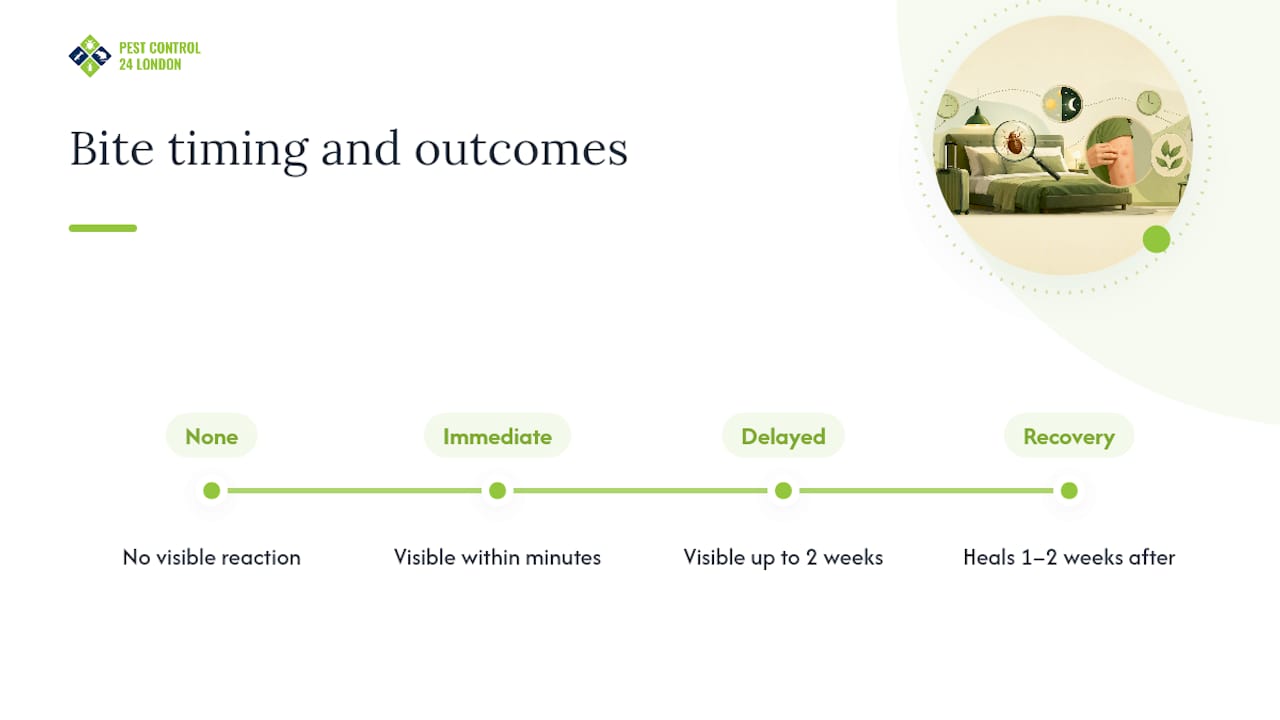
That matters practically. If you have marks but your partner doesn’t, it doesn’t mean you’re the only one being bitten, it may just mean their skin isn’t reacting the same way.
How to inspect the sleeping area for hard evidence
Marks on skin are a starting point, not proof. Environmental evidence is what actually confirms an infestation, and it’s something you can check yourself with a torch before calling anyone in.
- Strip the bedding and examine mattress seams, piping and tags for small rust coloured or black spots (faecal marks) and tiny pale shed skins.
- Check for live bugs, roughly the size and colour of an apple seed, along seams and in the folds of the mattress protector.
- Look for tiny blood specks on sheets, which often come from a bug being crushed during sleep.
- Pull back the headboard from the wall and check screw holes, joints and any fabric upholstery.
- Inspect nearby furniture, skirting board gaps, and any recently acquired secondhand furniture or luggage, since these are common ways infestations arrive in the first place.
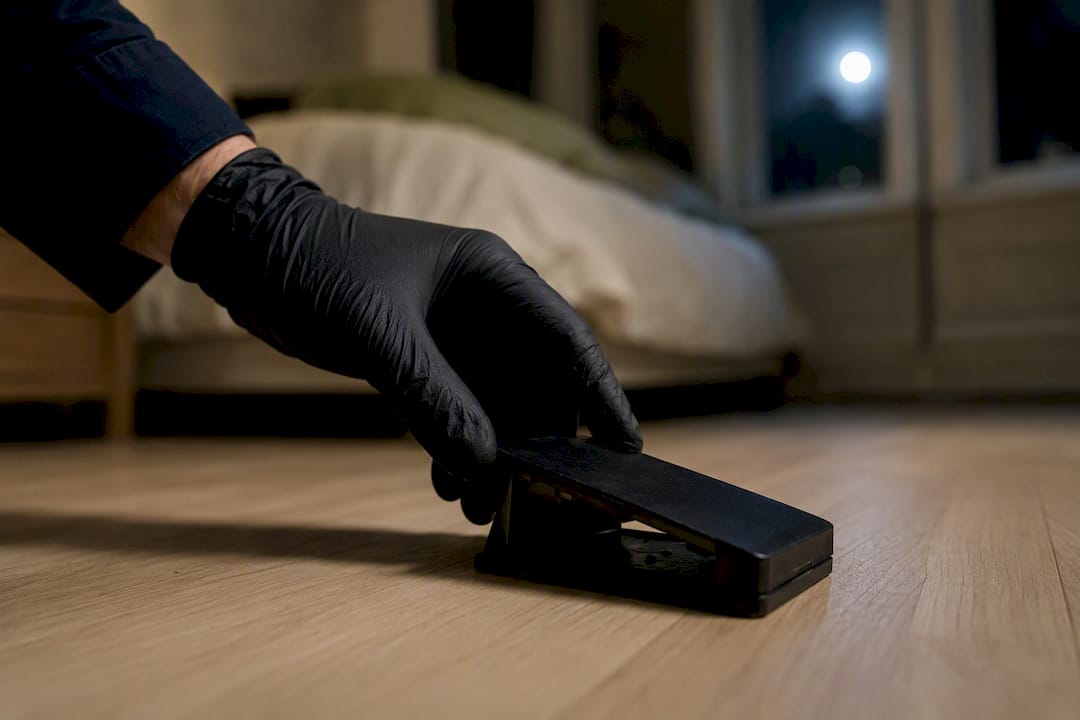
Passive interceptor traps placed under bed legs are a cheap, effective screening tool used widely in housing studies and worth trying before assuming the worst. Our checklist of common bed bug hiding spots walks through every likely location room by room.
Pro Tip: Check interceptor traps in the morning, not straight after placing them. Bed bugs are nocturnal, so evidence usually only appears after a full night’s activity.
Avoid reaching for shop bought pesticide sprays as a first response. Misapplied indoor insecticides rarely reach bugs hiding deep in seams and can create health risks without solving the problem.
How to treat and relieve bed bug bites at home
Most bites need nothing more than basic first aid. Wash the area with soap and water as soon as you notice it, and resist scratching, since broken skin is what usually leads to infection rather than the bite itself.
For itching and swelling:
- A mild over-the-counter topical corticosteroid cream can calm inflamed skin.
- Calamine lotion helps with milder itching without the need for a steroid.
- An oral antihistamine is useful if bites are numerous or itching is disrupting sleep.
Seek medical attention if a bite becomes increasingly red, warm, swollen or weepy, which points to secondary infection, or if you develop widespread hives, difficulty breathing or facial swelling, which suggests a more serious allergic reaction requiring urgent care.
When to see a GP and when to call pest control
Book a GP or dermatologist appointment if bites are extensive, blistering, showing signs of infection, or you’re having a stronger allergic reaction than usual. Skin concerns are a medical question first, no pest survey will answer them.
Call a pest control professional once you’ve found physical evidence such as faecal spots or shed skins, if bites keep appearing despite laundering and vacuuming, or if a DIY approach hasn’t worked. A proper visit typically starts with a room by room inspection using a torch and magnifier, sometimes interceptor traps, followed by a tailored treatment plan. Have photos of the bites and any bedding evidence ready before the technician arrives, and see our practical guide to getting rid of bed bugs for what treatment usually involves.
What professional technicians check first
Technicians head straight for mattress seams, headboard joints and skirting board gaps rather than the bites themselves, since that’s where proof lives. The most common homeowner mistake is treating visible bites as confirmation and skipping the inspection entirely, then being surprised when the problem returns. Pestcontrol24london has worked across London properties since 2015 and holds full BPCA qualification, and a written inspection report often doubles as evidence for landlords or insurers when a claim depends on proving when an infestation started.
Why “just check the bites” is the wrong starting point
The conventional advice to search “bed bug bites pictures” and match your skin against a photo gallery is where most people go wrong.
What actually settles the question is the sleeping area, not the skin. A five-minute check of the mattress seams for faecal spots or shed skins gives you more certain information than any side-by-side bite comparison ever will. That’s the order I’d prioritise: inspect the environment first, treat the bites second, and only escalate to a GP or technician once you know what you’re dealing with. Readers who skip straight to buying a steroid cream without checking the bed often end up treating symptoms for weeks while the actual source keeps feeding.
If there’s one habit worth changing, it’s this: stop diagnosing from the bite and start diagnosing from the bed.
— Dan
If you suspect an infestation, book a professional inspection
Pestcontrol24london gets you a same-day answer instead of weeks of guessing, with BPCA-qualified technicians who can confirm or rule out an infestation on the first visit rather than sending you home with a cream and a hope.

Since 2015, our technicians have inspected properties across London, from single flats to hotels and restaurants, and know exactly where bed bugs hide even when bites are the only symptom so far. A visit typically includes a full room inspection, identification of any evidence, and a free quote for treatment if it’s needed, with 24/7 emergency callouts available if bites are worsening or spreading. Before your visit, photograph the bites and avoid stripping or washing the bed, since preserving the evidence in place helps the technician confirm the source faster. If landlords or letting agents are involved, our bed bug removal service also provides a written report you can use as proof of treatment. Get in touch through Pestcontrol24london to arrange an inspection, and if you manage multiple properties, our pest management plan examples are worth a look for ongoing prevention.
Sources
For deeper clinical detail, the NHS bedbugs guidance covers symptoms and self-care, while StatPearls and the Merck Manual provide clinical detail on presentation and management. Landlords managing multiple tenancies might find this property management perspective useful for coordinating inspections.
This article is general information, not a substitute for advice from a qualified doctor. Consult a qualified healthcare professional about your own circumstances before acting on anything here.
- Bedbug Bites – StatPearls – NCBI Bookshelf
- Bedbugs – Merck Manual Professional Edition
- Bed bug bites: How to identify them, get relief, and prevent future bites – Harvard Health