

Safe pest removal is defined as effective pest control that minimises health risks, environmental harm, and chemical exposure throughout your home. The recognised industry standard for achieving this is Integrated Pest Management (IPM), a structured approach that combines inspection, prevention, monitoring, and targeted treatment. Knowing how to remove pests safely means reaching for caulk and door sweeps before you reach for a spray can. This guide covers practical IPM steps, non-toxic treatment options, and the mistakes that make infestations worse, not better.
What is integrated pest management and why is it the safest approach?
Integrated Pest Management is the safest and most effective pest removal method because it reduces chemical reliance by prioritising prevention and habitat modification. Rather than defaulting to broad sprays, IPM works through four clear pillars: inspection, prevention, monitoring, and control. Each step builds on the last, so chemical intervention only happens when other measures have been exhausted.
The four pillars work like this:
- Inspection: Identify where pests are entering, feeding, and sheltering.
- Prevention: Remove food sources, seal entry points, and reduce moisture.
- Monitoring: Use traps and visual checks to track pest activity over time.
- Control: Apply the least toxic treatment that will resolve the problem.
IPM delivers three measurable benefits for homeowners. It reduces health risks from chemical exposure, it protects beneficial insects and pets, and it produces longer-lasting results than one-off spray treatments. Targeted baits and traps not only reduce pest populations but also minimise impact on beneficial species and indoor air quality. That combination of safety and effectiveness is why IPM is the foundation of eco-friendly pest removal.
Pro Tip: Keep a simple log of where you spot pest activity, including dates and locations. This monitoring record makes it far easier to identify patterns and choose the right control method.

How do you identify common household pests correctly?
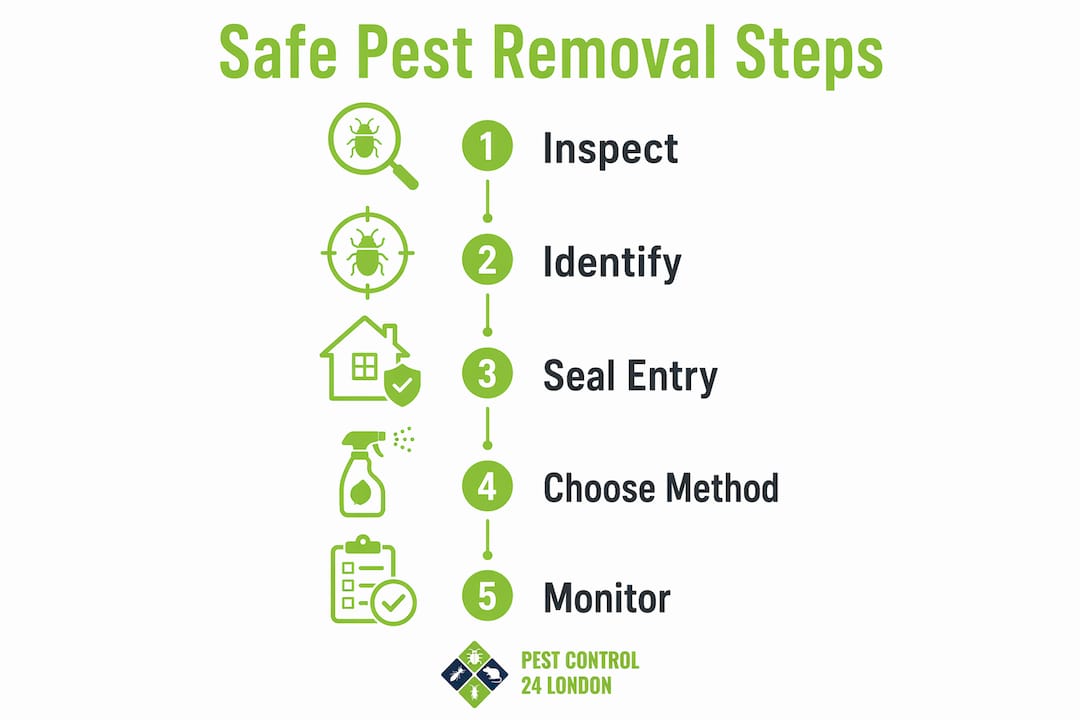
Misidentifying a pest leads directly to the wrong treatment, wasted money, and a worsening infestation. Pheromone traps and sticky cards are reliable monitoring tools that help confirm which species you are dealing with before you act. Correct identification is the single most important step in any safe pest control method.
Here are the most common household pests and their key identifying features:
- Ants: Visible trails along skirting boards and worktops; small entry holes near window frames or pipework.
- Rodents (mice and rats): Gnaw marks on food packaging, dark grease marks along walls, and small droppings near food storage areas.
- Bedbugs: Rust-coloured spots on mattress seams, a sweet musty odour, and bites in linear patterns on skin.
- Wasps: Papery grey nests in loft spaces, wall cavities, or under eaves; increased wasp activity near a single point.
Once you have confirmed the pest, your choice of control method becomes far more precise. A rodent problem calls for bait stations and exclusion work. A bedbug infestation requires heat treatment or steam cleaning. Treating ants with a spray designed for wasps achieves nothing. Accurate identification is not a preliminary step. It is the foundation of every effective, low-risk pest removal plan.
How to seal your home and remove pest attractants
Denying entry points is the first priority in pest control success, with chemicals reserved as a last resort to avoid health risks and resistance. A thorough inspection of your property takes less than an hour and can prevent months of infestation. Follow these steps in order:
- Run the pencil test. If a pencil fits in a crack, pests can enter. Check around pipework, window frames, door frames, and where walls meet floors.
- Seal gaps with the right material. Use silicone caulk for small cracks, steel wool and door sweeps for larger gaps and thresholds. Rodents cannot gnaw through steel wool.
- Secure food storage. Transfer dry goods into airtight containers. Do not leave pet food out overnight.
- Manage moisture. Fix dripping taps, clear blocked gutters, and use a dehumidifier in damp areas. Many pests, including silverfish and cockroaches, are drawn to moisture above all else.
- Reduce clutter. Cardboard boxes, piles of newspaper, and unused furniture give rodents and insects ideal nesting sites.
| Area | Common Entry Point | Recommended Seal Material |
|---|---|---|
| Kitchen pipework | Gaps around pipes under sink | Silicone caulk or expanding foam |
| External doors | Gap at base of door | Door sweep or draught excluder |
| Loft hatch | Poorly fitted frame | Foam tape and draught seal strip |
| Air bricks | Unprotected vents | Fine mesh insect screen |
Pro Tip: Inspect your property at dusk with a torch. Pests are more active in low light, and you are more likely to spot entry points and movement at that time.
Safe non-chemical and low-toxicity methods for active infestations
Once an infestation is confirmed, the goal is to resolve it with the least toxic approach that will actually work. Physical controls and targeted baits are the most effective starting point for most common household pests.
Bait stations are the preferred method for ants and rodents. Ant baits work because pests carry the poison back to the colony, delivering colony-wide control that sprays cannot achieve. Sprays often scatter foragers without reaching the source, which can make the problem appear worse in the short term.
Physical controls are highly effective for bedbugs and crawling insects:
- Steam cleaning at temperatures above 60°C kills bedbugs and larvae on contact without any chemical residue.
- Vacuuming along skirting boards, mattress seams, and behind furniture removes eggs and adults before they spread.
- Pheromone traps confirm pest activity and reduce populations without any toxicity risk to residents or pets.
Natural deterrents have a role, but they require realistic expectations. Essential oils such as peppermint and tea tree can deter ants and spiders from treated surfaces. Insecticidal soaps are effective against soft-bodied insects like aphids on indoor plants. However, natural does not always mean safe. Horticultural vinegar at 20–30% acetic acid, for example, requires gloves, goggles, and an N95 mask due to genuine health risks.
For wasps, timing is the critical safety variable. Apply insecticide sprays at dusk when the nest is least active, using a product with a 20-foot stream to maintain a safe distance. Effects take 24–48 hours to fully work. For guidance on wasp nest removal in a residential setting, professional treatment is often the safer choice.
| Method | Best For | Toxicity Level |
|---|---|---|
| Bait stations | Ants, rodents | Low |
| Steam cleaning | Bedbugs, larvae | None |
| Pheromone traps | Moths, flies, beetles | None |
| Insecticidal soap | Soft-bodied insects | Very low |
| Targeted insecticide spray | Wasps (timed application) | Moderate |
Common mistakes to avoid when using pesticides
The most common mistake homeowners make is reaching for a fogger or aerosol spray as a first response. Foggers and aerosols damage indoor air quality and provide limited long-term control. They linger in the air and can harm the respiratory health of residents, particularly children and anyone with asthma. They also do not reach the harbourage sites where pests actually live.
If you do use a pesticide product, follow these safety practices without exception:
- Read the full label before opening the container. EPA signal words (Caution, Warning, Danger) indicate the level of toxicity and required protective equipment.
- Wear gloves and wash hands thoroughly after any application.
- After treatment, shower rather than bathe. Residues remain in bathwater and can be reabsorbed through the skin.
- Store unused products in their original containers, in a locked cupboard away from children and pets.
For spills, the correct response is containment, not dilution.
Contain pesticide spills with absorbent materials such as kitty litter rather than hosing them down. Hosing spreads contamination across a wider area and increases environmental risk significantly.
Dispose of leftover pesticides through your local council’s hazardous waste collection. Never pour them down the drain or into general waste.
Key takeaways
Safe pest removal works best when prevention and identification come before any treatment, with chemicals used only as a last resort.
| Point | Details |
|---|---|
| IPM is the safest framework | Prioritise inspection, prevention, and monitoring before applying any treatment. |
| Correct identification matters | Misidentifying a pest leads to the wrong treatment and a worsening infestation. |
| Seal entry points first | Use the pencil test, steel wool, and door sweeps to deny pests access to your home. |
| Choose targeted over broad treatments | Bait stations and steam cleaning outperform foggers for safety and long-term control. |
| Handle pesticides with care | Shower after application, contain spills with absorbent material, and store products securely. |
What ten years of pest work has taught me about safe removal
Most homeowners I speak to have already tried a supermarket spray before calling us. The spray gave them a few days of relief, then the problem returned, often worse than before. That pattern is not bad luck. It is the predictable result of treating symptoms rather than causes.
The uncomfortable truth about safe pest removal is that it demands patience. Sealing a property properly, removing attractants, and waiting for bait stations to work takes longer than a single spray treatment. But the results last. I have seen properties that were treated with IPM methods stay pest-free for years, while properties that relied on repeated chemical applications kept calling us back every few months.
One thing that surprises people is how much moisture drives infestations. Fix a dripping pipe under the kitchen sink and you often solve a cockroach problem without a single chemical. That kind of ongoing pest protection through environmental management is genuinely underrated.
My honest advice: start with exclusion, follow with monitoring, and only escalate to treatment when you have confirmed the pest and exhausted physical controls. That sequence protects your health, your household, and your wallet.
— Dan
How Pestcontrol24london can help you remove pests safely
Pestcontrol24london has been delivering safe, effective pest control across London since 2015, working with residential properties, hotels, restaurants, and commercial premises. The team is BPCA fully qualified and uses IPM-aligned treatments that prioritise low-toxicity methods and targeted interventions over broad chemical applications.

If you have a persistent infestation or are unsure which approach is right for your property, Pestcontrol24london offers professional domestic pest removal with free quotes and 24/7 emergency availability. For London homeowners who want expert help without unnecessary chemical exposure, contact Pestcontrol24london today for a consultation tailored to your situation.
FAQ
What is the safest method to remove pests from a home?
Integrated Pest Management (IPM) is the safest method. It combines inspection, sealing entry points, and targeted low-toxicity treatments to control pests with minimal health and environmental risk.
Are natural pest control methods always safe for children and pets?
Not always. Natural products like horticultural vinegar at high concentrations require protective equipment and can cause harm if misused. Always check product instructions before use around children or pets.
How do bait stations work for ants and rodents?
Bait stations work by allowing pests to carry a slow-acting poison back to the colony or nest, delivering colony-wide control. This method is more effective than sprays and involves far lower chemical exposure indoors.
When should i call a professional pest controller?
Call a professional when an infestation persists after two to three weeks of DIY treatment, when the pest is a stinging insect like wasps, or when you cannot locate the source of the problem. Early professional intervention prevents infestations from becoming severe.
How do i stop pests from returning after treatment?
Seal all entry points identified during inspection, maintain clean and dry conditions, and store food in airtight containers. Regular monitoring using traps helps detect new activity before it becomes a full infestation.