

Mice infestations are far more common in London commercial properties than most business owners care to admit. A well-run restaurant, a tidy hotel corridor, a spotless retail unit — none of these are immune. The assumption that good housekeeping is enough to keep mice away is one of the most costly myths in property management. This guide draws on over a decade of professional pest control experience across London to give you a clear, practical understanding of how to identify, control, and prevent mouse problems before they threaten your business.
Table of Contents
- Understanding the risks of mice in your commercial premises
- Common entry points and why London businesses are targeted
- Signs of a mouse infestation and early detection steps
- Professional and DIY solutions: what works for London businesses?
- Prevention strategies tailored for commercial premises
- What most business owners miss about effective mouse control
- Protect your commercial property with proven pest control services
- Frequently asked questions
Key Takeaways
| Point | Details |
|---|---|
| Early detection is critical | Acting quickly at the first sign of mice can prevent costly escalations and business disruptions. |
| Know your property’s weak spots | Most infestations start through tiny, overlooked gaps around pipes and refuse areas. |
| Combine DIY and professional tactics | Using professional pest controllers alongside vigilant housekeeping gives the best, lasting results. |
| Prevention outperforms reaction | Consistent checks and preventive actions reduce risk more effectively than one-off treatments. |
| Integrated approach works best | Successful businesses use ongoing pest management, not just emergency callouts. |
Understanding the risks of mice in your commercial premises
Mice are not simply a nuisance. In a commercial setting, they represent a genuine threat to your business operations, your staff, and your customers. Mice spread diseases and cause costly damage to building infrastructure, including gnawed electrical wiring, contaminated stock, and compromised structural materials.
The health risks are serious. Mice carry pathogens responsible for salmonella, hantavirus, and leptospirosis. Their droppings and urine can contaminate food preparation surfaces, and their shed fur triggers allergic reactions and asthma in some individuals. For food businesses in particular, this is a critical concern.
Beyond health, the reputational damage can be swift and severe:
- A single failed food hygiene inspection can result in closure notices
- Online reviews mentioning pests cause lasting damage to customer trust
- Insurance claims linked to pest damage are frequently contested without documented control measures
“Businesses have a legal duty to keep premises free from pests. Failure to act can result in prosecution under the Prevention of Damage by Pests Act 1949.”
Understanding mice removal procedures from the outset allows property managers to respond quickly and decisively when signs appear.
Common entry points and why London businesses are targeted
London’s urban density makes commercial premises particularly vulnerable. Ageing Victorian infrastructure, shared drainage systems, and a high concentration of food businesses create near-ideal conditions for mice to thrive. Rodents squeeze through spaces as small as a 6mm gap, roughly the diameter of a pencil.
Typical entry routes into commercial buildings include:
- Gaps around water, gas, and electrical pipes where they pass through walls
- Poorly fitted or damaged door seals and thresholds
- Broken air vents or uncovered drainage access points
- Gaps around window frames, especially in older buildings
- Shared cavity walls with neighbouring premises
Understanding how mice get inside during seasonal periods, particularly autumn and winter, helps businesses plan ahead.
| Entry point | Risk level | Common in |
|---|---|---|
| Utility pipe gaps | High | Restaurants, offices |
| Damaged door seals | High | Retail, warehouses |
| Open drainage | Medium | Food premises |
| Roof vents | Medium | Hotels, care homes |
| Cavity walls | High | Victorian buildings |
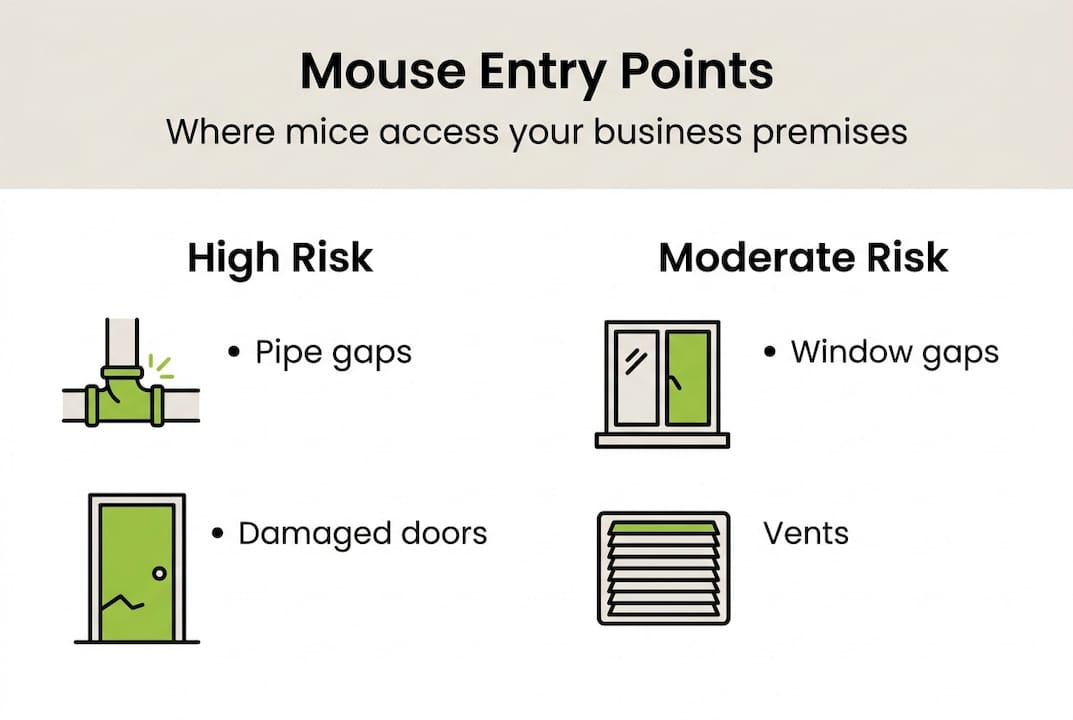
Pro Tip: The most overlooked entry point is around poorly sealed utility pipes beneath kitchen units and behind service panels. These are rarely inspected during routine cleaning and offer mice a sheltered, undisturbed pathway into your premises.
Signs of a mouse infestation and early detection steps
Spotting a problem early is your best defence. By the time mice are seen in daylight, the infestation is usually well established. A single pair can produce 50 to 60 offspring annually, meaning populations escalate quickly.
Look for these warning signs during routine inspections:
- Droppings — dark, pellet-shaped, typically 3 to 6mm in length, found along walls and in cupboards
- Gnaw marks — on food packaging, wiring, skirting boards, and soft furnishings
- Grease rub marks — greasy smears along walls and pipes where mice repeatedly travel
- Scratching noises — most noticeable at night, often inside walls or ceilings
- Musty odour — a distinctive ammonia-like smell that intensifies with the size of the population
- Nesting material — shredded paper, fabric, or insulation gathered in concealed spaces
Delayed action allows populations to grow and infestation to spread to adjacent premises. Once signs appear, restrict access to food sources immediately, inform your facilities team, and begin monitoring with snap traps or tracking boards. For rapid intervention, emergency mice control services can be deployed within hours across London.
Pro Tip: Sprinkle a thin layer of flour or talcum powder along suspected run pathways overnight. Fresh tracks the following morning confirm active mouse movement and help pinpoint the busiest routes.
“A small, hidden colony can grow into a significant infestation within eight to ten weeks if left unaddressed.”
Professional and DIY solutions: what works for London businesses?
Not all interventions are equal, and choosing the wrong approach wastes time while the problem worsens. Here is a practical comparison:
| Method | Effectiveness | Suitable for commercial use? |
|---|---|---|
| Snap traps | Moderate | Yes, as part of a wider plan |
| Glue boards | Moderate | Restricted in some sectors |
| Rodenticide baiting | High | Must comply with regulations |
| Proofing alone | Low (reactive) | Yes, combined with treatment |
| Professional programme | Very high | Strongly recommended |
Professional pest control offers ongoing monitoring and rapid eradication — a key advantage for businesses where downtime and regulatory risk are significant concerns.
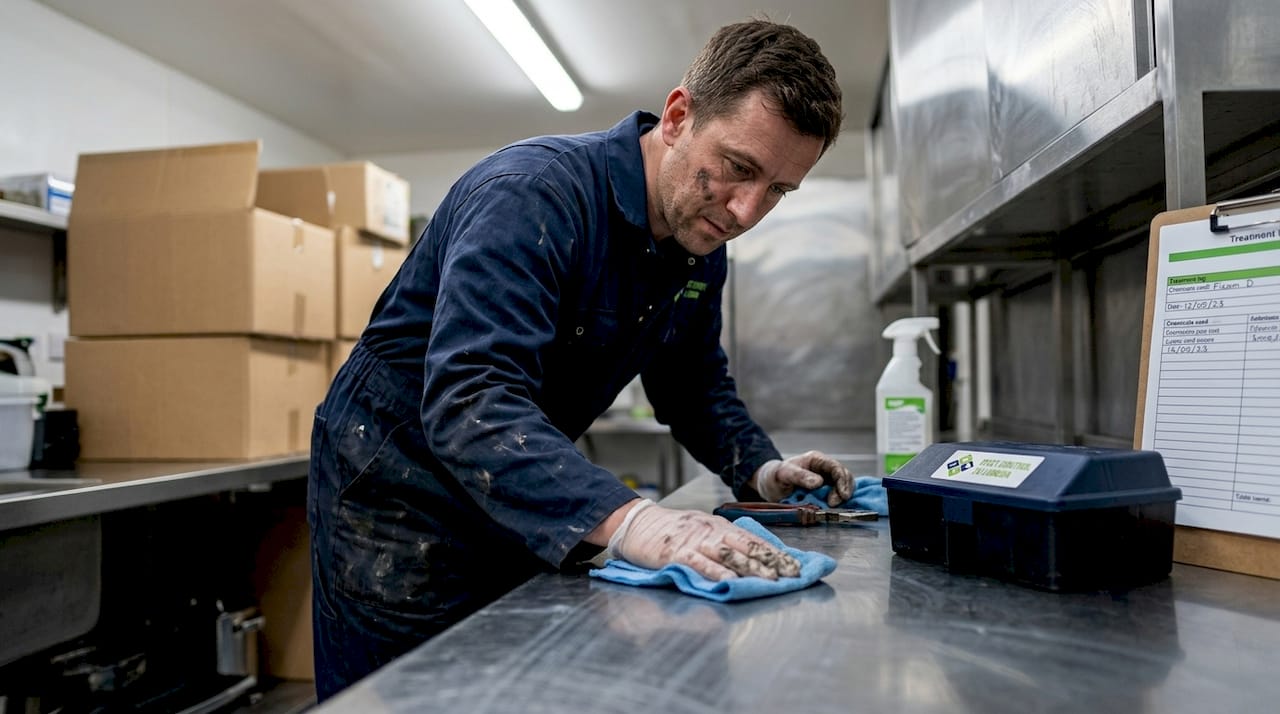
DIY measures can supplement professional treatment but rarely resolve a commercial infestation on their own. Rodenticide use in food premises is tightly regulated and must follow strict storage and placement guidelines. Misuse can cause secondary poisoning and compliance failures.
Key benefits of a professional monitoring contract include:
- Scheduled visits ensuring continuous protection between treatments
- Detailed documentation for regulatory audits and insurance purposes
- Rapid response when activity is detected between routine visits
- Advice on proofing and structural improvements
After any treatment, post-treatment cleaning removes contaminated material and reduces the risk of re-attraction. Explore tailored commercial pest control solutions suited to your premises type.
Pro Tip: Combining preventative sealing with quarterly professional inspections reduces recurrence significantly, particularly in food businesses and multi-occupancy buildings.
Prevention strategies tailored for commercial premises
Once control is achieved, the focus must shift to long-term prevention. Reactive management is costly; consistent prevention is not. Monitoring and hygiene are proven to deter rodents long-term when applied systematically.
Practical prevention measures for commercial properties include:
- Store all food in sealed, hard-sided containers and never leave waste overnight
- Fit bristle or rubber door sweeps to all external-facing doors
- Seal gaps around pipes with wire wool and cement, not expanding foam alone
- Cover external air vents with fine mesh covers rated for rodent exclusion
- Train all staff to report signs immediately and understand why it matters
- Maintain waste management schedules and ensure bin areas are clean and sealed
- Schedule post-infestation sanitisation after any treatment to remove attractants
Documenting all prevention measures also supports your position in the event of insurance claims or council inspections. Many insurers expect evidence of active pest management as part of commercial property policies, and having professional records strengthens that case considerably.
What most business owners miss about effective mouse control
After more than ten years working with commercial clients across London, from Michelin-starred restaurants to multi-site retail chains, one pattern stands out clearly. Most businesses only act once mice are visible. By that point, the hidden population is already large.
Reactive treatment addresses what you can see. It rarely eliminates the conditions that made infestation possible in the first place. The mindset shift that genuinely protects businesses is moving from reaction to routine. Integrated pest management treats the whole environment, not just the symptom.
Prevention is not glamorous, but it is far cheaper than emergency call-outs, failed inspections, and damaged reputations.
Protect your commercial property with proven pest control services
If your premises has shown signs of mouse activity, or if you simply want peace of mind through ongoing professional support, we are here to help. As London commercial pest experts with over a decade of experience and full BPCA qualification, we deliver tailored solutions for restaurants, hotels, offices, retail units, and more.

Whether you need an emergency pest control service or a long-term monitoring contract, our team responds quickly and works discreetly. Contact us today for a free assessment and find out how we protect London businesses every day.
Frequently asked questions
How quickly can mice infest a commercial property?
Mice can establish a large population within just a few months due to rapid breeding. A single pair produces 50 to 60 offspring annually, making early action essential.
Are businesses legally required to use professional pest control for mice?
Businesses must keep premises pest-free under UK law, and in high-risk sectors such as food and healthcare, professional services are effectively legally required to meet compliance standards.
What are the first signs of a mouse problem?
Common signs include droppings, gnaw marks, musty odours, and scratching noises. According to NHS mouse guidance, these signs often indicate an already-established infestation.
Can mice return after professional treatment?
Yes. Without continued monitoring and proofing, mice can reinvade treated premises. Consistent prevention and routine inspections are essential to reducing the risk of recurrence.
How can London businesses prevent future infestations?
Consistent hygiene, physical proofing, and scheduled professional inspections form the most effective long-term strategy. Monitoring and hygiene are proven deterrents when maintained as routine practice.
Recommended
- Mice Removal London | Professional Mouse Control & Proofing 24/7 – Pest Control 24 London
- Blog – Pest Control 24 London
- Why Rodents Invade London Homes in Winter and How to Stop Them – Pest Control 24 London
- Pest Control News – Pest Control 24 London
- Commercial Rodent Control Workflow for Facility Managers