

A rodent outbreak in a London property is more than an inconvenience. It puts your tenants, customers, and business reputation at serious risk, and it carries genuine legal weight. London borough guidance confirms that owners and occupiers have a legal duty to control rats and mice on their premises. Whether you manage a block of flats in Hackney, a restaurant in Soho, or a commercial unit in Croydon, the approach needs to be methodical, legally compliant, and thorough. This guide walks you through every step.
Table of Contents
- Understand the risks and legal duties
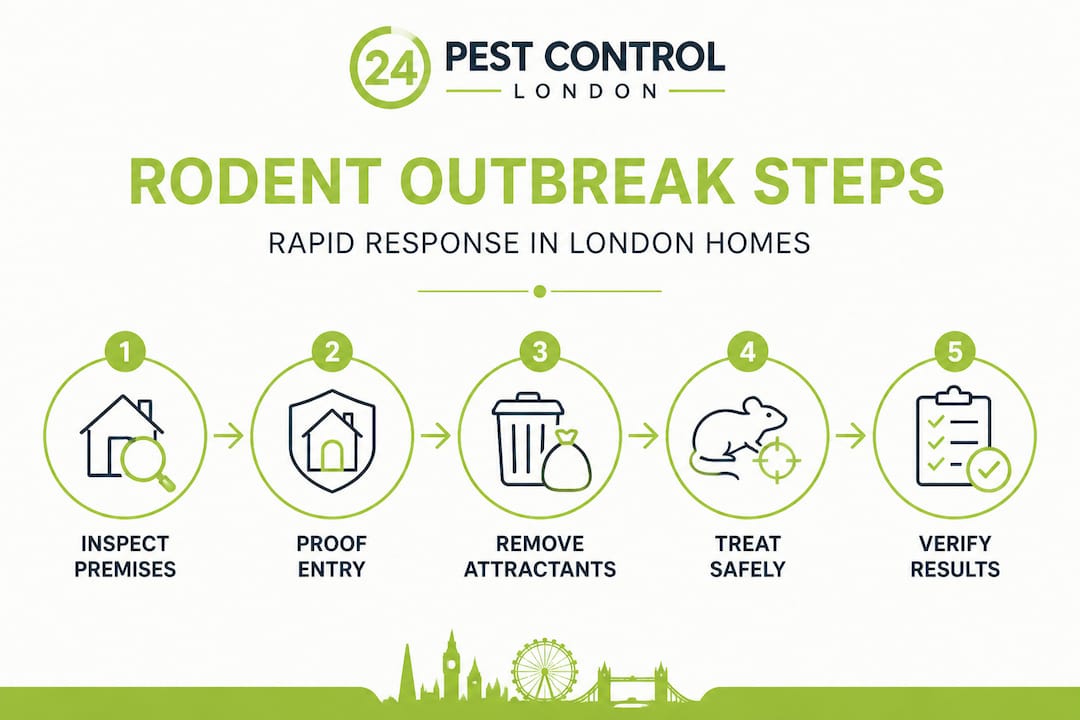
- Preparation: Inspect, proof, and address attractants
- Implement safe and effective rodent treatment
- Verify results and prevent reoccurrence
- A pragmatic view: what standard rodent advice gets wrong in London
- Need urgent or ongoing rodent control help?
- Frequently asked questions
Key Takeaways
| Point | Details |
|---|---|
| Act quickly and legally | Prompt rodent control protects health, avoids fines, and complies with London regulations. |
| Focus on proofing and cleanliness | Sealing entry points and removing food sources is crucial for long-term rodent prevention. |
| Use professionals safely | Qualified pest controllers ensure treatments are effective, safe, and environmentally responsible. |
| Monitor and coordinate | Ongoing checks and working with neighbours help stop reoccurring outbreaks in London properties. |
Understand the risks and legal duties
The starting point for any serious rodent response is understanding what is actually at stake. Many property owners underestimate this until enforcement action is already underway.
Under the Prevention of Damage by Pests Act 1949, local authorities have the power to serve notice on owners and occupiers who fail to control rodent infestations. Owners and occupiers are legally obliged to take action, and failure to do so can result in formal enforcement, fines, or the council carrying out works and recovering the cost from you directly.
From a health perspective, the risks are serious. Rats and mice spread diseases including leptospirosis and hantavirus through their droppings and urine. These are not rare edge cases; both diseases are documented in the UK and can cause severe illness. Rodents also chew through electrical wiring, insulation, and pipework, creating fire and flood hazards.
For businesses in hospitality or food retail, a visible rodent problem can result in a food hygiene rating suspension, reputational damage that spreads quickly online, and loss of customer trust that takes years to rebuild. You might also want to familiarise yourself with common winter pests that often compound rodent pressure during colder months.
Key risks at a glance:
- Legal enforcement under the 1949 Act, including council-directed remediation at your cost
- Disease transmission to staff, residents, or customers through contact with droppings or urine
- Structural damage through gnawing of cables, pipes, and building fabric
- Reputational harm and loss of trade, particularly in food service and hospitality
In multi-unit buildings or terraced properties, infestations rarely stay confined to one flat or unit. Rodents travel through shared service risers, cavity walls, and drainage systems. Notifying your local council is strongly advisable in these situations, both as a legal safeguard and to trigger coordinated borough action.
Preparation: Inspect, proof, and address attractants
Before any treatment begins, the groundwork matters. A thorough inspection is essential because treatment without proofing almost guarantees reinfestation.
Identifying harbourage and entry points is the foundational step. Walk the full perimeter of the affected premises. Look for gaps around pipework, broken air bricks, damaged pointing, and poorly sealed service entries. Inside, check under kitchen units, inside wall voids, and along skirting boards. Gnaw marks, grease trails, and droppings will tell you where rodents are active and which routes they are using.
Here is a quick comparison of the signs to look for:
| Sign | Rats | Mice |
|---|---|---|
| Droppings | Large, dark, tapered (10–20mm) | Small, rice-like (3–6mm) |
| Gnaw marks | Rough, large teeth marks | Fine, neat nibble marks |
| Grease marks | Heavy, dark smears along walls | Faint, lighter smear trails |
| Burrows | Outdoor holes near foundations | Rarely burrow; nest in cavities |
| Noise | Scratching, thumping | High-pitched squeaking, scratching |
Common attractants in London properties include overflowing or unsecured bin stores, food waste left accessible in communal areas, and overgrown external spaces that offer harbourage. Drains and drain covers in poor repair are a particularly significant route for rats in urban London, and shared walls in terraced properties can allow rodents to move freely between premises.
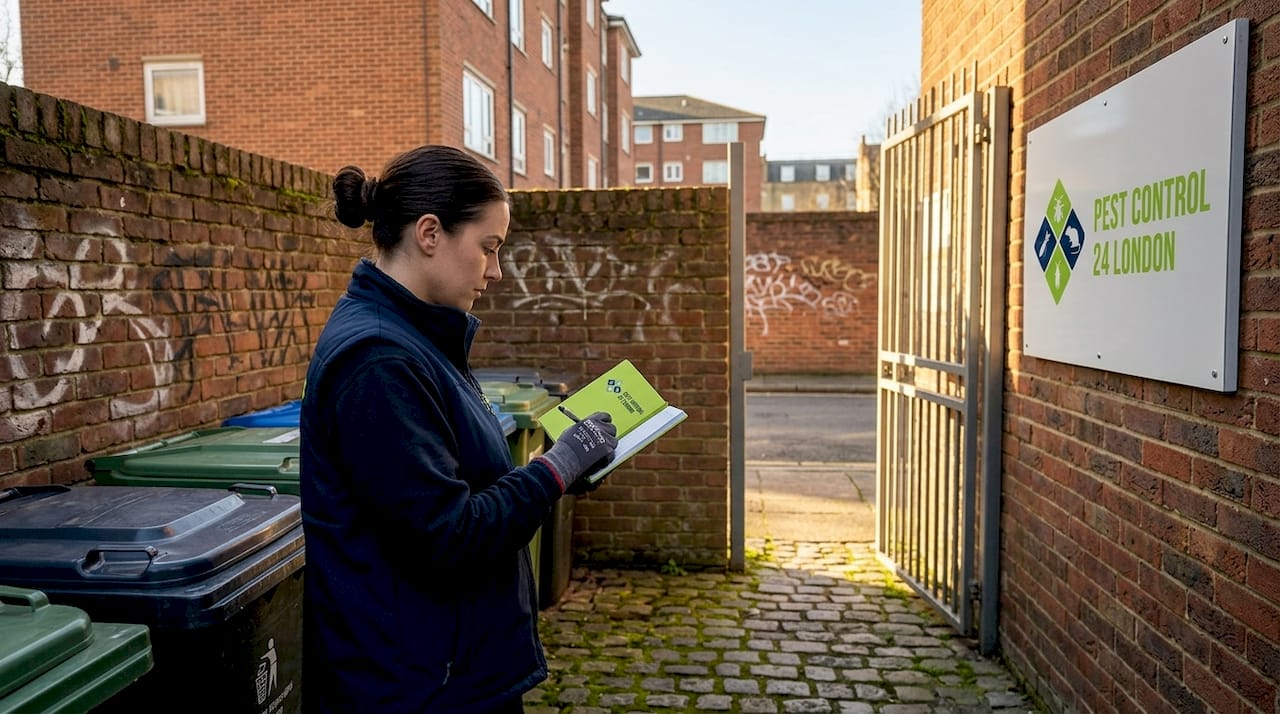
For rodent proofing in London, effective materials include steel mesh for air bricks, expanding foam behind pipework (used alongside mesh, not alone), and door seals for ground-floor entry points. It is also worth reviewing autumn pest-proofing tips ahead of the colder seasons, when rodent pressure peaks sharply.
Reinvasion via building and service routes is one of the most common reasons treatments fail. Proofing must accompany treatment, not follow it weeks later.
Pro Tip: Install tamper-resistant monitoring boxes near known activity points. Checking them monthly costs very little and catches new activity before it becomes a full infestation.
Also address:
- Bin management: ensure lids fit, collections are regular, and areas are kept clean
- Food storage: sealed containers in all food preparation or storage areas
- Clutter: remove stacked materials in basements, outbuildings, or storerooms that offer rodent nesting cover
Implement safe and effective rodent treatment
Once you have inspected and begun proofing, treatment can proceed. The critical question at this stage is whether you need professional intervention or whether limited DIY action is appropriate.
For most London properties, particularly multi-unit residential blocks, commercial premises, and anywhere food is handled, professional treatment is not optional; it is the safest and most legally defensible course of action. Use the following checklist to assess:
- Is the infestation confined to one area, or are signs visible in multiple locations?
- Have entry points been identified and sealed, or are they still accessible?
- Is there evidence of rodent activity in drains, risers, or shared building fabric?
- Are vulnerable people, food, or animals on the premises?
- Have previous DIY treatments failed to resolve the problem?
If you answer yes to more than one of these, engage a certified professional immediately.
| Treatment method | Best use case | Limitations |
|---|---|---|
| Snap traps | Low-level mouse activity, targeted areas | Needs daily checking, not suitable for large infestations |
| Live capture traps | Sensitive settings, animal welfare concerns | Rodents must be released legally, ongoing monitoring needed |
| Rodenticide baiting | Established rat infestations | Regulated use only, secondary poisoning risk |
| Proofing alone | Post-treatment prevention | Not a standalone treatment for active infestations |
| Integrated pest management (IPM) | All settings, long-term control | Requires professional coordination |
When engaging a professional, ask these questions before signing anything:
- Are they BPCA qualified or registered with a recognised industry body?
- Do they carry public liability insurance?
- Will they provide a written survey, treatment plan, and follow-up visits?
- How do they handle rodenticide use and what environmental risk assessment do they carry out?
- Do they offer a guarantee, and under what conditions?
London boroughs recommend checking qualifications, obtaining multiple quotes, and ensuring any rodenticide use is accompanied by a proper environmental assessment.
Safety warning: Rodenticide use is tightly regulated in the UK. Misuse can harm non-target wildlife, pets, and children. Professionals must evaluate non-toxic options first and operate under stewardship rules. Do not purchase or deploy rodenticides without proper training and authorisation.
Pro Tip: Always request a written environmental risk assessment before any rodenticide is placed on your premises. This protects you legally and ensures the treatment is appropriate for your specific setting.
For further reading, review London pest control best practices or explore dedicated rat removal services that cover both domestic and commercial premises. It is also worth understanding the treatment preparation steps your premises may need before a professional visit.
Verify results and prevent reoccurrence
Effective rodent control does not end with treatment. Verification and ongoing monitoring are what separate a resolved infestation from a recurring one.
Use this checklist to confirm the infestation has been eliminated:
- No fresh droppings in previously active areas after 48 to 72 hours
- Monitoring boxes or traps showing no new captures over two consecutive weeks
- No audible scratching, gnawing, or movement in walls or ceilings
- Professional follow-up visit confirms no new activity
- All identified entry points have been sealed and verified
Cleaning up after an infestation carries its own risks. Rodent droppings and urine are health hazards and must be handled carefully to avoid exposure to pathogens.
Health warning: Never vacuum or sweep rodent droppings dry. This releases pathogen-laden particles into the air. Always dampen with disinfectant spray first, then remove using disposable gloves and sealed bags. Wash hands thoroughly afterwards.
Safe cleanup guidelines:
- Wear nitrile gloves and an FFP2 mask throughout the process
- Spray droppings and contaminated surfaces with a diluted bleach solution before wiping
- Double-bag all contaminated waste and dispose of it in general waste
- Disinfect the entire affected area, including floor surfaces, shelving, and wall junctions
- Arrange a professional pest disinfection service for heavily contaminated areas
Reinfestation through neighbouring properties and service routes is a documented risk in London. Speak to neighbours and, in larger buildings, notify all occupants so that proofing and monitoring can be coordinated across the whole structure. If a neighbouring property is the clear source and the owner refuses to act, report the matter to your local council’s environmental health team, who have powers to compel action.
A pragmatic view: what standard rodent advice gets wrong in London
Most rodent control guidance focuses on individual units in isolation. In London, this approach misses the bigger picture almost entirely.
Rodent pressure in the capital is structural. Rats and mice do not recognise property boundaries. They move through shared drains, building risers, and the interconnected basements and yard areas that characterise London’s older housing and commercial stock. Treating one flat while the rest of the building remains unaddressed is, frankly, a waste of money. The rodents simply relocate temporarily and return once the bait is gone.
The second major flaw in standard advice is the overreliance on rodenticides as a primary tool. Poison alone, without proofing and monitoring, almost never produces lasting results. We have seen this repeatedly across London premises over more than a decade of professional work. The rodenticide reduces the population temporarily, but if the entry points remain open and the attractants persist, reinfestation follows within weeks.
The approach that consistently works is integrated pest management (IPM): proofing first, targeted treatment second, and sustained monitoring throughout. The practical guide for London homes sets this out clearly.
Overlooked routes deserve more attention too. Drain survey cameras now make it straightforward to identify rat ingress through broken or poorly maintained drain runs, yet this step is skipped in a surprising number of cases. If your property has persistent rat activity despite repeated treatment, a drain inspection should be a priority.
Pro Tip: Allocate as much budget to aftercare monitoring as you do to the initial treatment. The first visit solves the immediate problem. The follow-up visits are what stop it coming back.
Need urgent or ongoing rodent control help?
Dealing with a rodent outbreak is stressful, but you do not have to manage it alone. Pest Control 24 London has been serving property owners and managers across the capital since 2015, from large hotel chains and restaurants to residential landlords and private homeowners.

We are BPCA fully qualified, available around the clock, and offer free, no-obligation quotes. Whether you need a rapid emergency response or a structured commercial pest management programme with regular monitoring visits, we have the expertise to deliver lasting results. Our domestic pest removal services cover everything from initial survey and treatment through to proofing and aftercare, so you get a complete solution rather than a temporary fix. Call us today and let us take the pressure off.
Frequently asked questions
What steps should I take if rodents are coming from a neighbouring property?
Speak to your neighbour directly in the first instance and document the conversation. If no action is taken, report and escalate the matter to your local council’s environmental health team, who can compel the neighbour to act.
Can I use rodenticide myself in London properties?
It is strongly recommended that you use a professional for rodenticide application. Rodenticide use is regulated and must be treated as a risk-managed step requiring proper training, environmental assessment, and adherence to stewardship rules.
What are the health risks of ignoring a rodent outbreak?
Rats and mice spread zoonotic diseases and contaminate surfaces through droppings and urine. Left uncontrolled, an outbreak poses a genuine and escalating risk to the health of anyone on the premises.
Do all London boroughs offer rodent pest control services?
Not all do. Some London boroughs do not provide direct pest control services and instead advise residents and businesses to use qualified private contractors.
How do I safely clean up after an infestation?
Wear gloves and an FFP2 mask, dampen droppings with disinfectant before removal, and double-bag all contaminated waste. Droppings and urine are health hazards, so coordinate with your pest control professional for heavily affected areas.