

A mice infestation is defined as the presence of two or more mice actively living, feeding, or breeding within your home. Knowing how to deal with mice infestation quickly is the difference between a minor nuisance and a full-scale rodent problem. Mice breed rapidly from two months old, producing a new litter every 30 days. That pace means a handful of mice can become dozens within weeks. The good news is that a coordinated approach combining exclusion, trapping, and hygiene can resolve most infestations permanently.
How to spot a mice infestation in your home
Confirming an infestation early is the single most effective way to limit its scale. The signs are consistent and recognisable once you know what to look for.
Common signs of mice activity:
- Dark, rice-grain-sized droppings along skirting boards, inside cupboards, or near food storage
- Gnaw marks on food packaging, cables, or wooden furniture
- Scurrying or scratching sounds at night, particularly in walls, ceilings, or under floorboards
- A persistent musky odour in enclosed spaces such as under sinks or inside kitchen units
- Grease marks along walls and baseboards, left by the oils in mouse fur as they travel regular routes
- Shredded paper, fabric, or insulation material gathered into a nest
Because mice stay within 30 feet of their nests, spotting one mouse means the nest is very close by. Check the immediate area thoroughly rather than assuming the problem is widespread. Attic spaces, cavity walls, and the area beneath kitchen appliances are the most common nesting sites in London homes.
Pro Tip: Sprinkle a thin layer of plain flour or baby powder along a suspected travel route overnight. Mouse footprints will confirm both the presence of mice and the direction they are moving, helping you target traps accurately.
How to close entry points and mouse-proof your home
Sealing entry points is the most permanent mice infestation solution available. Without it, trapping becomes an endless cycle.
Mice enter through gaps as small as 0.25 inches, roughly the diameter of a pencil. That means any gap around a pipe, a poorly fitted door, or a cracked foundation is a potential entry point. The most common access sites include:
- Gaps where pipes enter walls under sinks and behind washing machines
- Poorly sealed air vents and extractor fan outlets
- Cracks in external brickwork or around window frames
- Gaps beneath external doors where the draught seal has worn away
- Roof eaves and soffit boards, particularly relevant for mice problems in attics
The material you use matters enormously. Spray foam alone is ineffective because mice chew through it and can nest inside it. Steel wool packed firmly into gaps, then secured with caulk or mortar, is the correct approach. Hardware cloth (a fine metal mesh) is the best choice for larger openings such as vents.
| Method | Best use | Durability |
|---|---|---|
| Steel wool with caulk | Pipe gaps, small cracks | High |
| Hardware cloth with mortar | Vents, larger openings | Very high |
| Spray foam alone | Not recommended for mice | Low |
| Door draught excluders | Gaps under external doors | Medium |
For a thorough walkthrough of materials and techniques, the mouse proofing guide from Pestcontrol24london covers both DIY and professional approaches in detail.
Pro Tip: Inspect your property at dusk when light is low. Shine a torch along the base of external walls and around pipe entry points. Gaps that admit light from outside are the ones mice are already using.
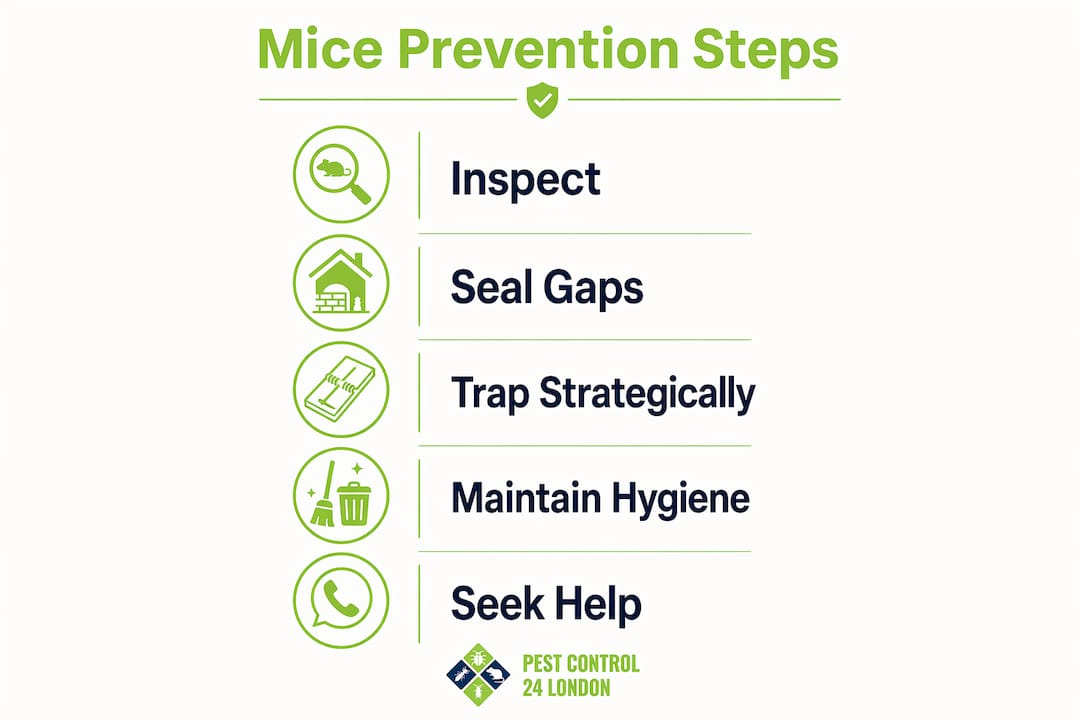
How to trap mice effectively: types, placement, and bait
Trapping is the most direct method to reduce an active mouse population. Choosing the right trap and placing it correctly determines whether it works.
The three main trap types:
- Snap traps are the most effective and widely recommended option. They kill quickly, are inexpensive, and are reusable. Victor and Rentokil both produce reliable snap trap models available in UK hardware stores.
- Live catch traps capture mice without killing them, but require you to release the mouse at least a mile from your home to prevent return. They need checking every few hours to avoid causing unnecessary suffering.
- Glue boards are the least humane option and are not recommended for domestic use. They cause prolonged distress and can trap non-target animals including birds and hedgehogs.
Placement is as important as trap selection. Mice travel no more than 5 to 10 feet from their food source or nesting area, so traps placed along baseboards and directly beside detected activity will outperform those placed in open areas. Position traps perpendicular to the wall with the trigger end facing the skirting board.
Peanut butter is the most effective bait. It has a strong scent, does not dry out quickly, and cannot be snatched without triggering the trap. Cheese is a persistent myth with little practical basis. Check and reset traps daily, and keep them out of reach of children and pets at all times.

Pro Tip: Wear disposable gloves when handling traps and bait. Mice are cautious of human scent and will avoid traps that smell strongly of handling. Gloves also protect you from contact with droppings and urine during the process.
Hygiene and environmental management to deter re-infestation
Traps fail when food sources and shelter remain available. Environmental management is not optional. It is the foundation that makes every other method work.
- Store all dry food, including cereals, pasta, and pet food, in hard-sided, airtight containers made from glass, metal, or thick plastic. Cardboard and thin plastic bags offer no resistance to gnawing.
- Remove pet food bowls after each meal. Leaving food out overnight is one of the most common reasons mice return after an initial treatment.
- Clear clutter from loft spaces, garages, and under-stair cupboards. Stacked cardboard boxes and old fabric are ideal nesting material.
- Fix dripping taps and leaking pipes. Mice need water daily, and even a small leak beneath a sink provides a reliable source.
- Outside, keep firewood stacked away from the house and trim back vegetation that touches external walls. Dense ground cover within a metre of your foundations gives mice concealed access routes.
These steps are covered in detail in the mice prevention checklist published by Pestcontrol24london, which is worth working through room by room.
When should you call a professional pest controller?
Some infestations require professional intervention. Recognising when DIY is insufficient protects your household and resolves the problem faster.
- The infestation has persisted for more than two weeks despite trapping and sealing
- You have found multiple nesting sites or evidence of mice in several rooms
- You are considering rodenticide use
Rodenticides carry serious secondary poisoning risks to pets, children, and garden wildlife. This is not a product category suited to unsupervised DIY use. A qualified pest controller will assess the correct product, dosage, and placement to minimise risk.
For renters specifically, landlords carry legal obligations to manage pest infestations in most tenancy agreements. Document every sighting with photographs and dates, report the issue in writing, and keep copies of all correspondence. If you need additional guidance on your rights as a tenant, ClearSpace provides landlord property services that include advice on pest-related obligations.
A BPCA-qualified pest controller brings specialist knowledge of rodent behaviour, access to professional-grade products, and the ability to proof entry points that a homeowner might miss entirely.
What I have learned from years of dealing with mouse infestations
The single biggest mistake I see homeowners make is treating a mouse problem as a one-step fix. They buy a couple of snap traps, catch one mouse, and assume the problem is resolved. Mice remain within a very small territory, so catching one means there are almost certainly more nearby.
The second mistake is underestimating how small a gap mice can use. I have inspected properties where the owner was convinced the building was sealed, only to find an unsealed pipe chase behind a kitchen unit that a mouse could walk through comfortably. The combined approach of sealing, trapping, and hygiene management is not overcautious. It is the only approach that actually works.
If you are renting, do not wait and hope the problem resolves itself. Document everything from day one. Photographs, dates, written reports to your landlord. You have legal protections, and using them promptly is far less stressful than dealing with a large infestation months later.
— Dan
Get professional help from Pestcontrol24london
Pestcontrol24london has been resolving mouse infestations across London since 2015, working with residential properties, hotels, restaurants, and commercial premises. The team is BPCA fully qualified and available 24 hours a day, seven days a week.

If trapping and sealing have not resolved your problem, or if you want a thorough professional inspection from the outset, request a free quote today. Pestcontrol24london also offers post-infestation cleaning and sanitisation services to remove droppings, urine traces, and nesting material safely after treatment. For ongoing residential protection, the domestic pest control service covers full exclusion, treatment, and follow-up visits.
FAQ
How do I know if I have a mice infestation?
The clearest signs are dark droppings along skirting boards, gnaw marks on food packaging or cables, and scratching sounds at night. A persistent musky odour in enclosed spaces is also a reliable indicator.
Can mice enter through very small gaps?
Yes. Mice squeeze through openings as small as 0.25 inches. Any gap around a pipe, vent, or door frame is a potential entry point and should be sealed with steel wool and caulk.
What is the best bait for mouse traps?
Peanut butter is the most effective bait for snap traps. It has a strong scent, adheres to the trigger, and cannot be removed without activating the trap. Cheese is far less effective in practice.
Is it safe to use rodenticide myself?
Rodenticide use carries serious risks to pets and wildlife through secondary poisoning. Professional pest controllers are trained to use these products safely, and DIY use is not recommended in most domestic situations.
How quickly can a mice infestation grow?
Very quickly. Mice begin breeding at two months old and can produce a litter every 30 days. A small number of mice left untreated can become a significant infestation within six to eight weeks.
Key takeaways
Dealing with a mice infestation requires sealing entry points with steel wool and caulk, placing snap traps along baseboards, removing food sources, and calling a professional if DIY methods fail within two weeks.
| Point | Details |
|---|---|
| Seal entry points correctly | Use steel wool with caulk or hardware cloth. Never rely on spray foam alone. |
| Place traps with precision | Position snap traps along baseboards within 5 to 10 feet of detected activity. |
| Remove food and shelter | Store food in hard-sided containers and clear clutter to eliminate nesting material. |
| Act without delay | Mice breed every 30 days, so a small problem becomes a large one within weeks. |
| Know when to call professionals | Persistent infestations or rodenticide use require a BPCA-qualified pest controller. |