

Cleaning after pest control is defined as the targeted removal of pest debris, chemical residues, and biological contaminants in a way that preserves the active treatment already applied to your home. Done correctly, it protects your family, maintains the residual barrier left by the technician, and removes the hazardous waste left behind by the infestation itself. Done incorrectly, it can undo hours of professional work in minutes. Pestcontrol24london, a BPCA-certified pest control provider operating across London since 2015, recommends a structured approach that separates general hygiene from disinfection and respects the critical timing windows that determine whether a treatment succeeds or fails.
When can you start cleaning after pest control treatments?
Residual spray treatments require 24–48 hours to fully bond to surfaces before any cleaning begins. Cleaning before this window risks physically removing the product, leaving gaps in the protective barrier. That single mistake is the most common reason homeowners call for a repeat treatment.
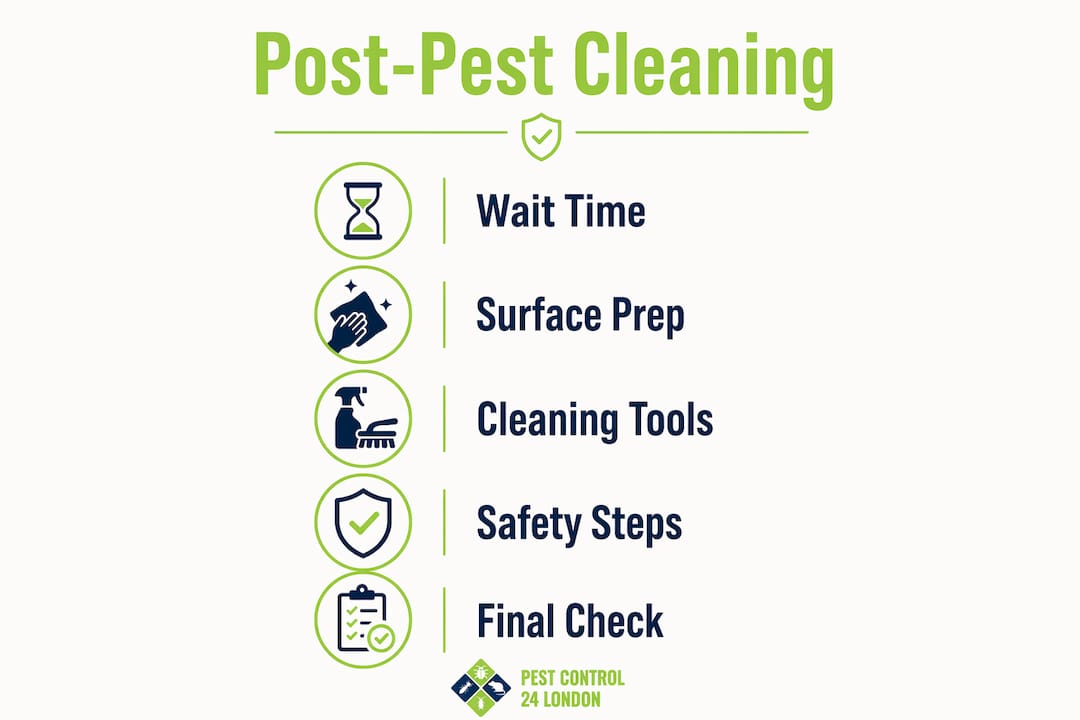
The waiting period varies by treatment type. Here is what the general guidelines advise:
- Residual liquid sprays: wait at least 24–48 hours before cleaning any treated surface.
- Bait stations and granular treatments: leave undisturbed for up to 1–2 weeks, as pests need time to carry bait back to the colony.
- Flea and bed bug treatments: wait 24 hours, then vacuum to stimulate hatching.
- Non-treated areas (worktops, sinks, untreated shelves): these can be wiped down sooner, provided you avoid treated zones.
- Baseboards and perimeter edges: apply the no-mop zone rule for at least 5–7 days. Water and detergent along these edges will neutralise the chemical barrier.
Pro Tip: Ask your technician exactly which products were used and request a written list of waiting times. Product-specific advice always overrides general guidance, and a good technician will provide this without hesitation.
How to clean different surfaces safely after treatment
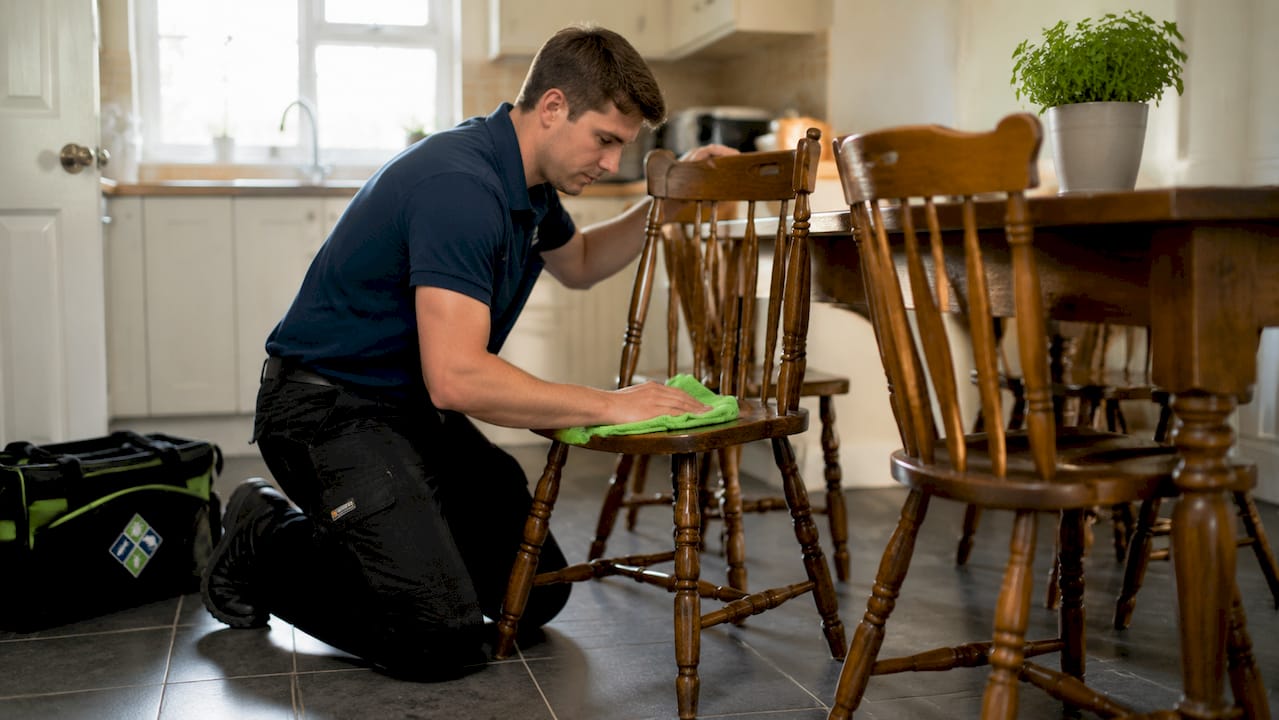
Safe post-treatment cleaning follows a surface-by-surface approach rather than a whole-house blitz. Food preparation surfaces should be wiped with warm soapy water after the recommended re-entry time has passed. Avoid harsh scrubbing or strong chemical sprays on any surface near treated zones, as these can degrade residual insecticides.
Follow this sequence for the safest results:
- Wipe food-contact surfaces (worktops, cutting boards, dining tables) with warm soapy water and a clean cloth once the re-entry period has passed.
- Vacuum carpets and upholstered furniture 24 hours after flea or bed bug treatments. Vacuum vibrations stimulate eggs and pupae to hatch, exposing them to the active insecticide over the following 7–10 days.
- Spot-clean floors with a barely damp cloth if a spill occurs during the 5–7 day waiting period. Do not mop the full floor.
- Leave cupboard interiors untouched for at least 48 hours if bait has been placed inside.
- Avoid scrubbing walls unless there is visible residue. Spot-clean only, using a mild solution.
Pro Tip: Use disposable cloths rather than reusable sponges when cleaning near treated areas. This prevents cross-contamination and avoids accidentally transferring insecticide residue to untreated surfaces.
Understanding the difference between cleaning and disinfection matters here. Cleaning removes visible dirt and debris. Disinfection targets pathogens. After a standard insect treatment, cleaning is usually sufficient. After a rodent infestation, disinfection is non-negotiable.
How to disinfect safely after a rodent infestation
Disinfection after a rodent infestation targets harmful pathogens rather than general dirt. This distinction matters because cleaning removes debris while disinfection neutralises pathogens. Skipping proper disinfectant dwell time leaves pathogens active on surfaces even when they look clean.
Never vacuum or sweep dry rodent droppings. Aerosolisation is the primary transmission mechanism of rodent-borne illnesses. Saturate droppings with disinfectant first, allow a dwell time of 5–10 minutes, then remove with disposable materials. This wet cleaning method is the standard recommended approach for safe rodent waste removal.
The correct bleach dilution for rodent contamination is 1 part bleach to 9 or 10 parts water, freshly mixed each time. Diluted bleach loses potency quickly when exposed to air, so mixing a fresh batch for each cleaning session is not optional.
Safe disinfection after a rodent infestation follows these steps:
- Wear disposable gloves and a face mask before entering the affected area.
- Spray droppings, nesting material, and urine trails with the freshly mixed bleach solution.
- Allow a dwell time of 5–10 minutes before touching anything.
- Remove saturated waste with disposable cloths or paper towels.
- Double-bag all contaminated materials and place them directly in an outdoor bin.
- Carpets and upholstery that have been contaminated require professional deep cleaning, as household methods cannot guarantee pathogen removal at depth.
Common mistakes that undermine pest control treatments
Cleaning baseboards within 5–7 days of treatment is the single most damaging mistake a homeowner can make. Water and detergent dissolve the residual chemical barrier precisely where pests travel most. The treatment becomes ineffective, and the infestation returns.
Avoid these errors after any pest treatment:
- Mopping floors too soon. Waiting 5–7 days before mopping after a liquid spray treatment preserves the chemical barrier. Spot-clean spills with a damp cloth instead.
- Vacuuming dry rodent droppings. This aerosolises viral particles and creates a serious health risk.
- Scrubbing treated entry points. Door frames, window sills, and skirting boards are primary application zones. Leave them alone.
- Using strong chemical cleaners near treated areas. Bleach, ammonia-based sprays, and multi-surface degreasers can degrade residual insecticides.
- Skipping ventilation. Open windows after the re-entry period to clear chemical odours and improve air quality.
Routine housekeeping that supports pest barriers includes wiping surfaces regularly, storing food in sealed containers, and removing standing water. These habits reduce the conditions that attract pests back, without disturbing the treatment already in place. A deep clean immediately after pest control can damage residual barriers. Patience in the first week is the most effective thing you can do.
Key takeaways
Effective post-treatment cleaning requires respecting timing windows, using surface-specific methods, and separating general cleaning from disinfection to protect both your family and the residual pest barrier.
| Point | Details |
|---|---|
| Wait before cleaning | Allow 24–48 hours minimum after residual sprays before cleaning any treated surface. |
| Protect the no-mop zone | Avoid water and detergent along baseboards and perimeter edges for at least 5–7 days. |
| Vacuum after flea treatments | Vacuuming 24 hours post-treatment stimulates eggs to hatch and improves treatment results. |
| Disinfect rodent areas correctly | Use a 1:9 bleach solution with 5–10 minutes dwell time; never vacuum dry droppings. |
| Double-bag contaminated waste | Seal all used cloths and debris in two bags before placing them in an outdoor bin. |
What I have learned from a decade of post-treatment call-backs
The most common reason homeowners call Pestcontrol24london back within two weeks of a treatment is not a treatment failure. It is premature cleaning. I have seen it repeatedly: a thorough spray application along skirting boards, followed by a well-intentioned mop the next morning, and the barrier is gone.
The other misunderstanding I encounter regularly is the assumption that cleaning and disinfecting are the same task. They are not. After a mouse infestation, wiping surfaces with a general household spray does not neutralise pathogens. It simply moves them around. The wet-cleaning protocol with a correctly diluted bleach solution is not overcautious. It is the minimum required standard.
My honest advice is this: communicate with your technician before they leave. Ask what was applied, where, and for how long it needs to remain undisturbed. That five-minute conversation will save you from a repeat infestation and a repeat call-out fee. Confidence in cleaning comes from knowing exactly what you are protecting.
— Dan
Professional post-treatment cleaning from Pestcontrol24london
Pestcontrol24london offers specialist post-treatment cleaning services designed to complement pest control treatments without disrupting residual barriers. Our BPCA-certified team knows exactly which areas to clean, which to leave untouched, and how to disinfect safely after rodent and insect infestations.

Whether you need a thorough disinfection after a rodent problem or a safe clean-down following an insect treatment, our team works to hygiene standards that protect your household and preserve the treatment already in place. For homeowners and tenants across London, domestic pest control and post-treatment cleaning are available 24/7. Contact Pestcontrol24london for a free quote and let a certified professional handle the process correctly from start to finish.
FAQ
How long after pest control can I clean my house?
Wait at least 24–48 hours after a residual spray treatment before cleaning any treated surface. For baseboards and perimeter floors, extend this to 5–7 days to preserve the chemical barrier.
Can I mop the floor after pest control?
Avoid mopping for at least 5–7 days after a liquid spray treatment. Mopping washes away the residual insecticide, particularly along skirting boards and floor edges where treatments are concentrated.
Should I vacuum after a flea treatment?
Vacuuming 24 hours after a flea treatment actively improves results. The vibration stimulates dormant eggs and pupae to hatch, exposing them to the active insecticide over the following 7–10 days.
Is it safe to clean after a rodent infestation myself?
You can clean safely if you follow the correct wet-cleaning protocol. Saturate droppings with a freshly mixed 1:9 bleach solution, allow 5–10 minutes dwell time, then remove with disposable materials. Never vacuum dry rodent droppings.
What cleaning products are safe to use after pest control?
Warm soapy water is safe for food-contact surfaces after the re-entry period. Avoid bleach, ammonia-based sprays, and strong degreasers near treated zones, as these degrade residual insecticides.