

Many property owners and facility managers in London assume fumigation is simply a stronger version of spraying chemicals around a building. That assumption is wrong, and it can lead to costly mistakes. Fumigation is more than just spraying; it uses a gaseous pesticide to penetrate deep into structures, voids, and stored goods where conventional treatments simply cannot reach. Understanding what fumigation actually involves helps you make better decisions when an infestation becomes serious, persistent, or hidden from view.
Table of Contents
- What is fumigation and how does it work?
- Types of fumigation: structural, commodity, and soil
- Why proper enclosure and containment matter
- Regulations and safety considerations in the UK
- When is fumigation the right solution?
- Our perspective: what most people get wrong about fumigation
- Professional fumigation and pest control in London
- Frequently asked questions
Key Takeaways
| Point | Details |
|---|---|
| Fumigation uses gas for deep control | Unlike surface sprays, fumigation introduces a fumigant to every corner of an enclosed space for comprehensive pest removal. |
| Proper enclosure is essential | A fully sealed environment ensures the fumigant penetrates all hiding spots, making the treatment more effective. |
| Strict UK regulations apply | Fumigation in the UK must comply with COSHH and HSE rules, requiring assessment and licensed professionals. |
| Best for hidden infestations | Fumigation excels when pests are inaccessible to traditional spray or trap-based methods. |
| Professional advice is critical | Successful and compliant fumigation starts with expert assessment and guidance. |
What is fumigation and how does it work?
Fumigation is a specialist pest control method that operates on a fundamentally different principle to surface spraying or gel baiting. While sprays target exposed pests on contact, fumigation fills an entire enclosed space with a gaseous pesticide. According to industry definitions, fumigation is a pest control method where a fumigant is released into a sealed area so it can eliminate pests throughout the entire space, including hidden colonies inside walls, under floors, and within structural timber.
The dictionary definition reinforces this distinction. Fumigation means using fumes to disinfect a place or rid it of pests, which immediately tells you this is about gas penetrating every accessible void, not coating a surface.
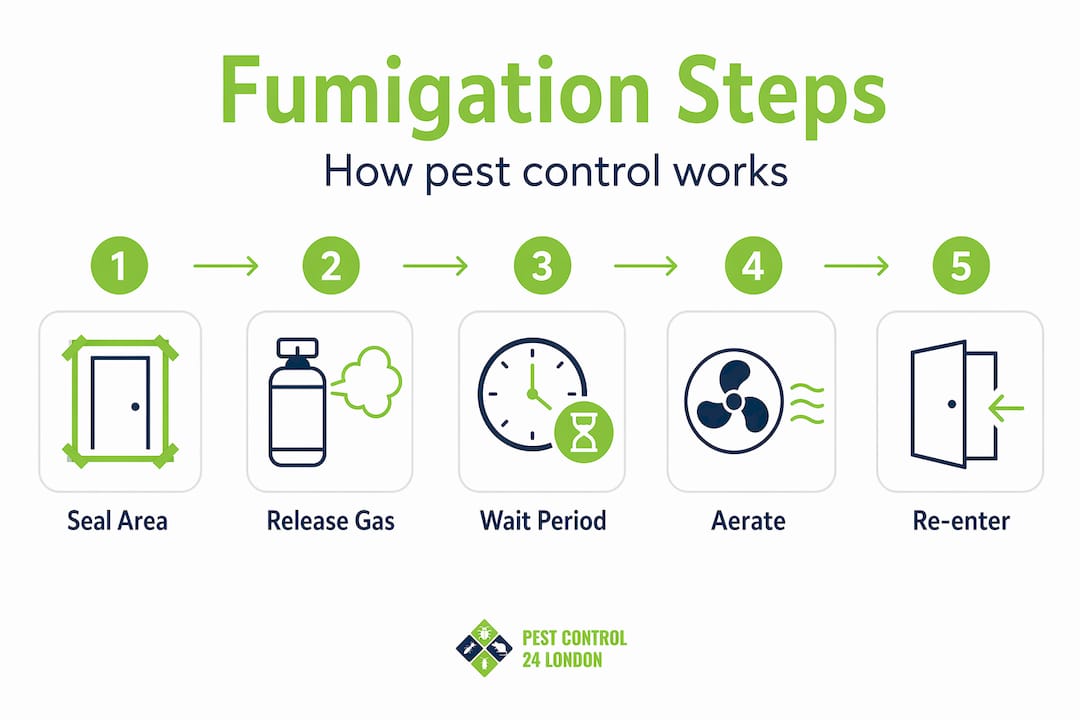
The process follows three clear stages. First, the space is sealed or enclosed to prevent gas from escaping prematurely. Second, the fumigant is introduced and left for a prescribed dwell time to ensure thorough penetration. Third, the space is aerated and cleared, with readings taken to confirm safe levels before re-entry is permitted. You can read more about essential pest control terms if any of this terminology is unfamiliar.
Common pests targeted by fumigation include:
- Stored product insects, such as grain weevils, flour beetles, and moth larvae in food warehouses
- Wood-boring beetles, including woodworm, which burrow deep into structural timber
- Bed bugs in heavily infested buildings where other treatments have failed
- Cockroaches concealed within wall voids, ducting, and service channels
- Rodents in certain enclosed agricultural or commercial settings
Fumigation reaches the pests that other treatments cannot. If an infestation is hidden, widespread, or inside inaccessible structural materials, fumigation is often the only method capable of achieving complete control.
Types of fumigation: structural, commodity, and soil
Fumigation is used across different settings, including structural environments, stored commodities, and agricultural soil, and each approach is matched to a specific challenge.
Structural fumigation involves sealing an entire building, or a section of it, and introducing fumigant gas throughout. This is most commonly used for serious infestations within building fabric, such as woodworm in period properties or widespread cockroach colonies in commercial kitchens. For London businesses, you can find further guidance through our commercial pest control information.
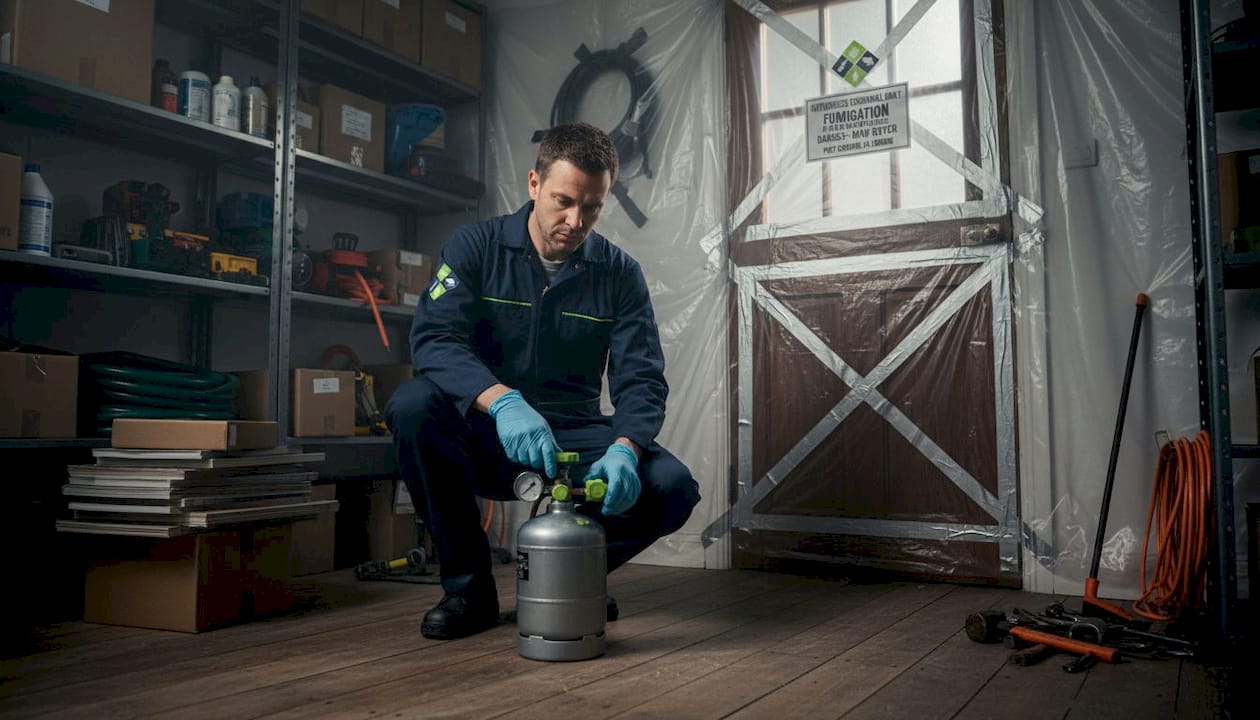
Commodity fumigation targets stored goods in warehouses, shipping containers, or food storage facilities. Grain, dried foods, timber products, and antique furniture are all vulnerable to stored product insects, and fumigating the commodity itself is sometimes the only way to eliminate the infestation without damaging the goods. Hotels, food manufacturers, and large hospitality businesses in London frequently encounter this challenge.
Soil fumigation is used primarily in agricultural and horticultural contexts, treating soil before planting to eliminate nematodes, fungal pathogens, and soil-dwelling insects. This is less common in urban London but relevant for larger estates, garden centres, and nurseries.
| Type | Main targets | Typical setting | London relevance |
|---|---|---|---|
| Structural | Woodworm, bed bugs, cockroaches | Buildings, hotels, restaurants | High, especially in older buildings |
| Commodity | Grain beetles, moth larvae, weevils | Warehouses, storage facilities | Moderate, food businesses and logistics |
| Soil | Nematodes, soil insects, fungi | Agricultural land, nurseries | Lower, mostly estates and horticulture |
If you manage a residential property, our guide to best pest control practices for homes covers when to escalate to professional treatment.
Why proper enclosure and containment matter
Knowing the types of fumigation leads directly to a critical success factor: containment. Without thorough sealing of the treatment area, fumigant gas escapes before it can penetrate deep into structural voids or commodity stacks, leaving pockets of infestation intact.
Effective fumigation requires that premises are enclosed long enough for the fumigant to reach hidden pests, followed by controlled aeration before re-entry is allowed. The dwell time and clearance interval vary depending on the fumigant used, the size of the space, the target pest, and the temperature.
| Phase | Typical duration | Key requirement |
|---|---|---|
| Sealing and preparation | 2 to 4 hours | All gaps, vents, and openings sealed |
| Fumigant dwell period | 6 to 72 hours | Monitored concentration maintained |
| Aeration and clearance | 2 to 8 hours | Gas readings confirm safe re-entry levels |
It is worth noting that temperature significantly affects fumigant efficacy. Colder conditions slow gas penetration, which means dwell times in a London winter may need to be extended compared to warmer months. This is precisely why professional monitoring throughout the process is not optional.
Pro Tip: One of the most common reasons fumigation fails is inadequate sealing. Even small gaps around pipework, electrical conduits, or air bricks can allow enough gas to escape that hidden pest populations survive. Always allow your pest control professional to assess and manage the sealing process fully. You can also review how to prepare for pest treatment to understand what is expected of you before treatment begins.
Regulations and safety considerations in the UK
The legal framework surrounding fumigation in the UK is strict, and rightly so. Fumigation in the UK is regulated under COSHH (Control of Substances Hazardous to Health), and the Health and Safety Executive requires proper risk assessments, fumigant information sheets, and controlled procedures before any treatment begins.
UK guidance emphasises that fumigation must be carried out by competent, regulated operators who understand the risk assessment and compliance framework. This is not a process for untrained individuals or unregistered contractors.
As a property manager or business owner, your legal responsibilities include:
- Ensuring only licensed and qualified fumigation operators are appointed
- Providing accurate information about the building’s layout and occupants
- Vacating all people, pets, and plants from the treatment area
- Notifying adjacent occupants if shared walls or spaces are involved
- Retaining documentation of the treatment for compliance records
- Following all re-entry guidance issued by the operator
DIY fumigation is not simply inadvisable — it is dangerous and in many cases unlawful. Fumigants such as phosphine and methyl bromide are highly toxic gases that require specialist handling equipment and training. Misuse can result in serious injury, criminal liability, and insurance invalidation.
Attempting fumigation without professional oversight does not just risk the treatment failing. It risks the health of anyone in or near the building, and it can expose property owners to significant legal liability.
Pro Tip: Always ask for documented evidence of BPCA (British Pest Control Association) qualification and current insurance before appointing any fumigation contractor. These credentials confirm that the operator has met industry training standards and carries appropriate liability cover. Learn more about the value of pest control contracts for ongoing compliance.
When is fumigation the right solution?
The regulatory framework is strict, but how do you actually decide whether fumigation is the right approach for your specific pest problem?
Fumigation is most effective where sprays or physical treatments cannot reach pests, which means it is best suited to hidden, deep, or widespread infestations rather than isolated surface activity.
Consider fumigation if you are dealing with any of the following:
- Woodworm or wood-boring beetles found deep within structural beams or flooring
- A persistent cockroach infestation in commercial kitchen ducting or wall cavities that has not responded to gel baiting or spray treatments
- Bed bugs across multiple rooms in a hotel or hostel, particularly where mattresses and furniture harbour established populations
- Stored product insects affecting a warehouse or food storage facility with large volumes of goods
- An infestation that has already been treated twice by conventional means without lasting success
Fumigation should not automatically be the first response. For smaller or surface-level infestations, targeted spray treatments, heat treatment, or physical removal may be faster and more practical. Heat treatment, for example, is highly effective for bed bugs and avoids the need for gas clearance periods. However, when an infestation is embedded within structure or stored goods, fumigation is often the most reliable route to complete eradication. For guidance on post-treatment recovery, our post-fumigation cleaning services can help restore your property after treatment.
Pro Tip: If you are unsure whether fumigation is necessary, request a professional survey first. A qualified assessor will identify the species, extent, and location of the infestation and advise on the most appropriate treatment method, potentially saving you time and cost.
Our perspective: what most people get wrong about fumigation
After more than ten years working with properties across London, from large hotel chains to independent restaurants and residential landlords, we have seen the same mistakes repeated consistently.
The most damaging error is waiting too long. Property managers often try multiple rounds of cheaper treatments before calling in fumigation, by which point the infestation has spread significantly further into the building fabric. Early professional assessment would have identified fumigation as the appropriate solution from the outset, saving both money and disruption.
The second mistake is underestimating containment. Clients sometimes attempt to reduce cost by partly sealing a space or shortening dwell times. The result is almost always re-infestation within weeks, because surviving pests in poorly treated voids repopulate rapidly.
The third error is overlooking legal compliance. Some property managers appoint low-cost contractors who cannot produce BPCA credentials or COSHH risk assessments. This is a liability risk that no commercial property owner should accept. We have assisted restaurant pest control strategies for some of London’s most established hospitality businesses, and the consistent lesson is that regulated, professional treatment always costs less in the long run than repeated cheap fixes.
Fumigation, when applied correctly and at the right time, is one of the most powerful tools in pest management. The key is matching it to the right situation and ensuring it is carried out to the full professional standard.
Professional fumigation and pest control in London
If you suspect your property needs fumigation, or if a persistent infestation has resisted previous treatments, taking the right next step matters enormously.

At Pest Control 24 London, we are BPCA fully qualified and have been serving London properties since 2015, working with hotels, restaurants, food businesses, and residential landlords to resolve infestations of all kinds. Our assessments identify the most appropriate treatment method, and we manage every stage of the fumigation process from sealing through to post-treatment clearance. Whether you need commercial pest management for a food business or home pest removal for a residential property, we provide fully compliant, professional services tailored to your situation. Contact us today for an assessment.
Frequently asked questions
Is fumigation safe for people and pets?
Fumigation is safe when carried out by qualified professionals adhering to COSHH health and safety controls; all occupants, including pets, must leave the premises for the full duration of treatment and clearance.
How long does a fumigation treatment take?
Containment and aeration stages are both required before re-entry, meaning total treatment time typically ranges from one to several days depending on the fumigant, property size, and pest species.
Do I need to remove food and valuables before fumigation?
Yes, food not stored in airtight sealed containers must be removed or properly protected, along with personal valuables, to prevent contamination during enclosure procedures.
Is fumigation effective against all pests?
Fumigation is highly effective for inaccessible or hidden pests where sprays cannot penetrate, but a professional assessment will confirm whether it is the most suitable method for your specific infestation.
Can I do fumigation myself?
DIY fumigation is strongly discouraged because UK compliance frameworks require regulated operators; the chemicals involved are hazardous, and improper use creates serious legal and safety risks.