

The most common examples of wood-boring pests found in UK homes are powderpost beetles (Lyctidae), false powderpost beetles (Bostrichidae), the common furniture beetle and deathwatch beetle (both Anobiidae), longhorn beetles including the old-house borer (Cerambycidae), plus termites, carpenter ants and carpenter bees. Larvae do almost all the structural damage in beetle infestations, tunnelling through timber for months or years before the adult ever appears. Exit holes and frass, the fine debris pushed out of galleries, are usually the fastest way to work out what you are dealing with.
This guide gives you a quick species reference before you decide what to do next. If you spot fresh holes, active tunnelling, or unexplained sawdust piles, it is worth getting a proper look. BPCA-qualified inspectors and technical resources such as the UC Statewide IPM Program both stress that correct identification comes first, because treatment approaches differ by species and by how established the infestation already is.
- Powderpost beetles (Lyctus spp.) — fine, flour-like frass, hardwood sapwood
- Furniture and deathwatch beetles (Anobiidae) — pelletised frass, softwood and old joinery
- False powderpost beetles (Bostrichidae) — coarse frass, larger exit holes
- Longhorn beetles including old-house borer (Cerambycidae) — softwood structural timber
- Termites, carpenter ants and carpenter bees — hollowed timber or clean-cut galleries rather than beetle-style frass
Key Takeaways
Correct species identification, based on exit hole size and frass texture, determines whether a wood-boring infestation needs urgent treatment or simple monitoring.
| Point | Details |
|---|---|
| Larvae cause the damage | Adult beetles only emerge once tunnelling is already complete, often years into an infestation. |
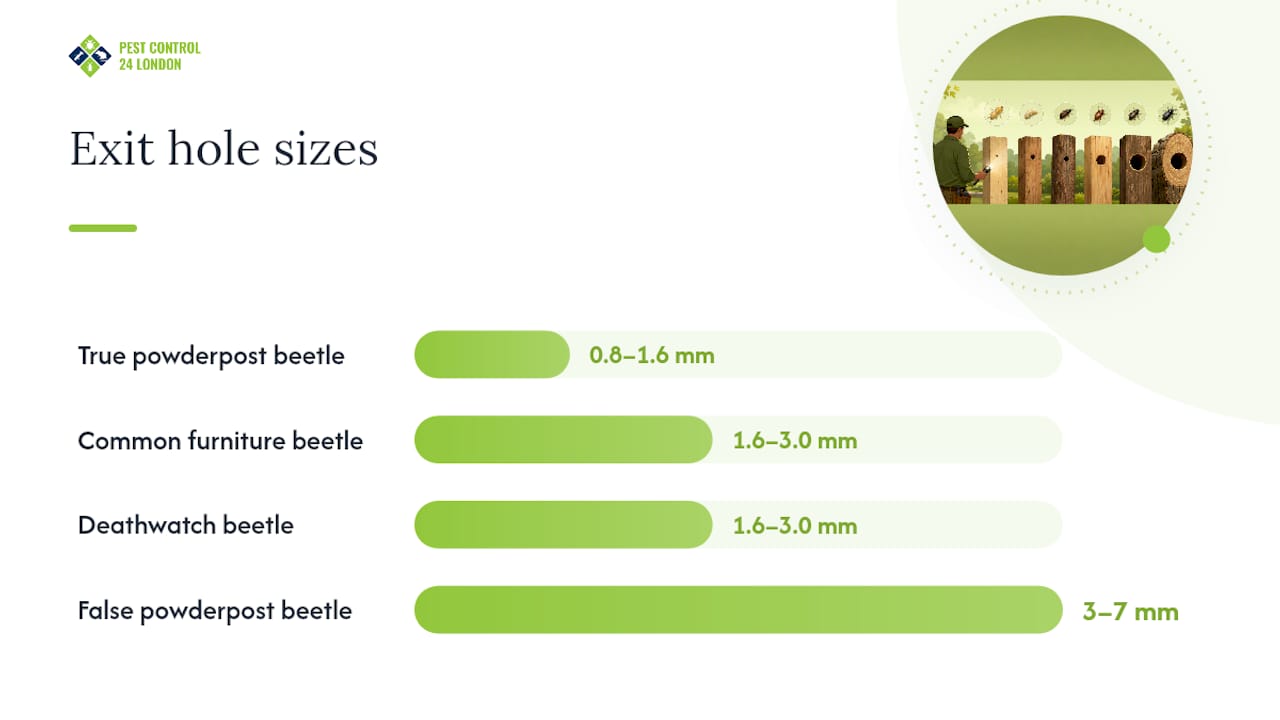
| Hole size narrows the species | Lyctus holes run 0.8–1.6mm, Anobiidae 1.6–3.0mm, and Bostrichidae 3–7mm. |
| Frass texture is a key clue | Fine powdery frass suggests powderpost beetles; pelletised or coarse frass points elsewhere. |
| Not all wood pests are beetles | Termites hollow timber silently, while ants and bees leave clean shavings instead of frass. |
| Get a documented inspection | Pestcontrol24london offers BPCA-qualified timber inspections and treatment plans for confirmed infestations. |
Table of Contents
- Examples of wood-boring pests by species: what to look for
- How to identify an active wood-boring infestation
- How serious is wood-borer damage, and when should you act?
- Treatment options and preventing wood pests from returning
- Why book a professional inspection instead of guessing
- Do wood pests vary by region?
- Reading exit holes and frass at a glance
- What to expect if you call Pestcontrol24london
- Frequently asked questions
- Sources
Examples of wood-boring pests by species: what to look for
Getting the family right matters more than most homeowners realise, because a false powderpost beetle infestation and a deathwatch beetle infestation call for genuinely different responses. Below is what separates them at a glance.
Common furniture beetle (Anobium punctatum)
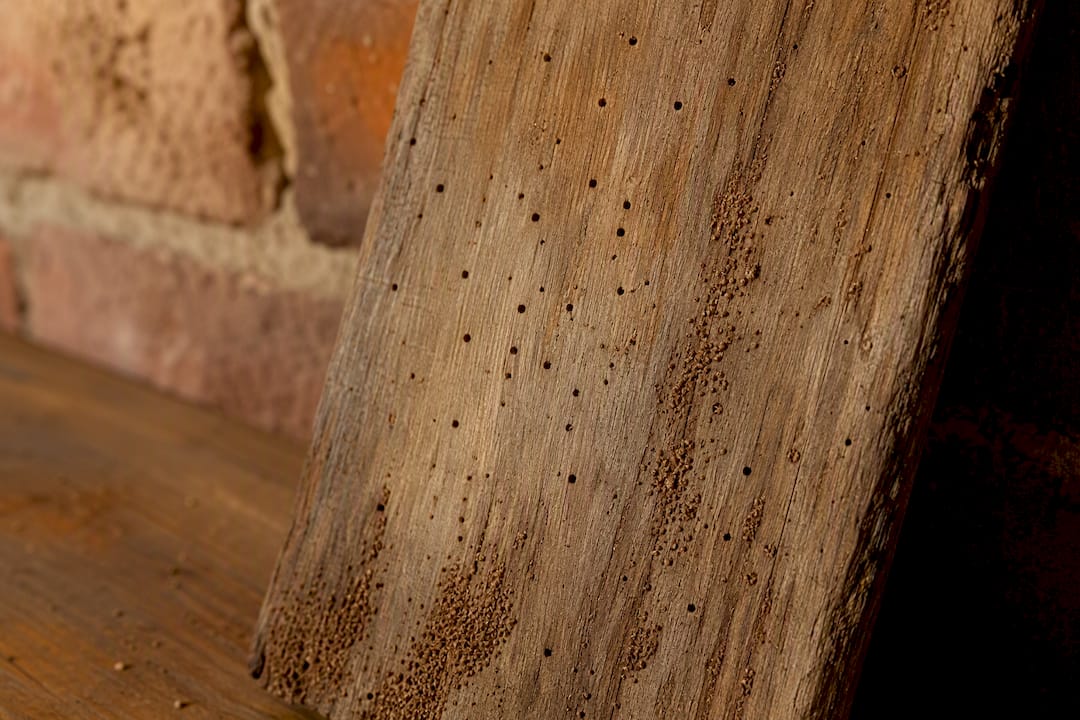
This is the beetle behind most cases people casually call “woodworm” in the UK. It targets both hardwood and softwood, particularly older, dry structural timber and furniture, and leaves round exit holes roughly 1.6 to 3.0mm across with pelletised frass, according to figures from MU Extension. The larval stage can run for several years inside the timber before the adult chews its way out, which is why an infestation often looks “sudden” in a house that has stood untouched for decades.
Deathwatch beetle (Xestobium rufovillosum)
Deathwatch beetle favours damp or partially decayed hardwood, particularly old oak in churches, barns and period properties with a history of water ingress. Its frass is finer and grittier than the common furniture beetle’s, and its exit holes are typically between one and three millimetres in diameter, UC IPM’s guidance notes. The tapping sound that gives it its name is a mating call, audible in quiet rooms during spring, and it is one of the few wood pests you can sometimes diagnose by ear before you ever see a hole.
True powderpost beetles (Lyctus spp.)
Lyctus beetles go almost exclusively for the sapwood of hardwoods, oak, ash and mahogany among them, and they produce a distinctive flour-fine frass unlike anything else on this list. Exit holes measure around 0.8 to 1.6mm, the smallest of any beetle covered here, based on MU Extension’s hole-size data. They tend to strike newer, unfinished hardwood, so parquet flooring and stair treads laid within the last few decades are a common target.
False powderpost / Bostrichid beetles (Bostrichidae)
Bostrichids leave the coarsest frass of the powderpost-type beetles and the largest holes in that group, typically 3 to 7mm, per the same MU Extension figures. They are less fussy about timber condition than Lyctus beetles and can attack both seasoned hardwood and imported timber products, sometimes emerging months after the wood has already been built into a structure.
Old-house borer and other longhorn beetles (Cerambycidae, Hylotrupes bajulus)
Longhorn beetles favour softwood roof timbers and structural framing, and the old-house borer in particular can cause genuine structural concern because larvae tunnel extensively before pupating. Life cycles here vary enormously. Some powderpost-type beetles finish a generation in months, while certain false powderpost and longhorn species take several years to develop, which explains why longhorn damage often surfaces in buildings that seem “too new” to have a beetle problem.
Ambrosia and bark beetles (Scolytinae, Xyleborus spp.)
These beetles bore into freshly felled or stressed timber, carrying fungal spores that stain the wood around their tunnels. They rarely attack seasoned structural timber inside a finished building, but they turn up regularly in stored logs, green sawn timber and firewood, which makes them a common false alarm when homeowners find holes in a woodpile.
Woodwasps and horntails (Siricidae)
Large, wasp-like insects with a long ovipositor, woodwasps lay eggs in stressed or dying softwood conifers. Adults can emerge from timber years after milling, occasionally chewing through plasterboard or even soft metal sheeting to reach daylight, a behaviour the Department of Entomology’s timber pest chapter specifically flags as a source of misidentification. Finding a large hole through a ceiling with no obvious frass trail is a classic horntail signature.
Termites, carpenter ants and carpenter bees
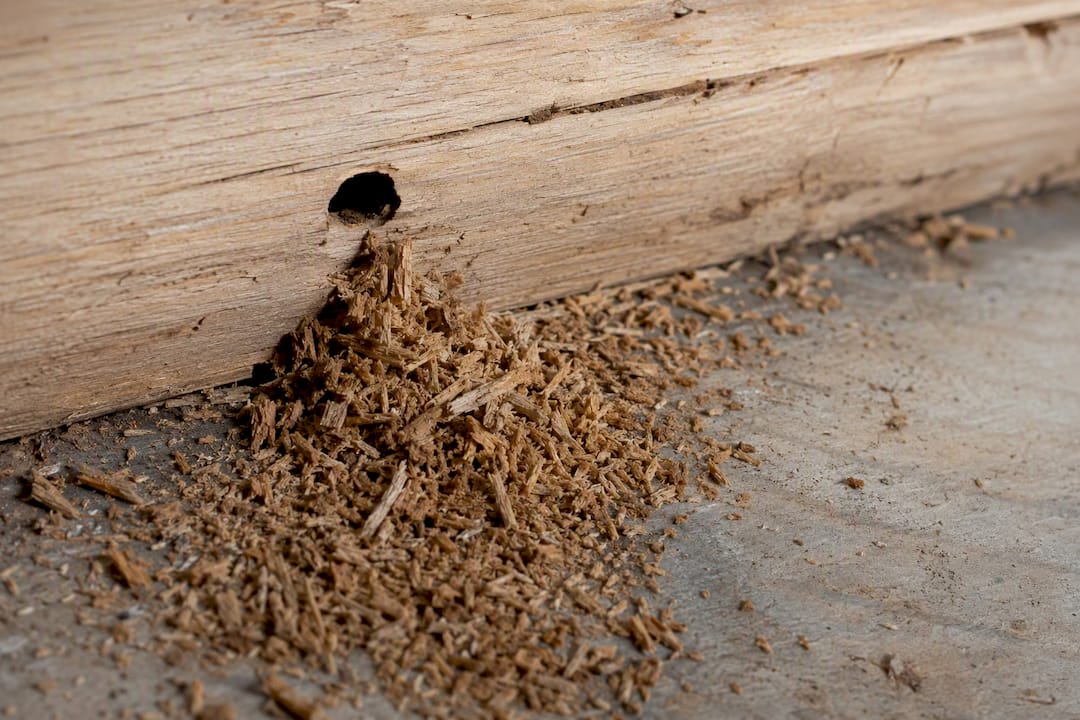
These three do not behave like beetles at all. Termites consume timber from the inside and can hollow a joist without ever producing visible sawdust, while carpenter ants and carpenter bees tunnel to build nests rather than to feed, pushing clean wood shavings out of their galleries instead of true frass. If you find smooth, clean-cut tunnels with coarse shavings rather than powder, ants or bees are the more likely culprit.
| Species/family | Scientific name | Exit hole size | Frass type | Timber preference |
|---|---|---|---|---|
| Common furniture beetle | Anobium punctatum | 1.6–3.0mm | Pelletised | Hardwood/softwood, seasoned |
| Deathwatch beetle | Xestobium rufovillosum | 1.6–3.0mm | Fine, gritty | Damp/decayed hardwood |
| True powderpost beetle | Lyctus spp. | 0.8–1.6mm | Fine, flour-like | Hardwood sapwood |
| False powderpost beetle | Bostrichidae | 3–7mm | Coarse | Hardwood and softwood |
| Longhorn/old-house borer | Cerambycidae/Hylotrupes bajulus | Variable, larger oval holes | Coarse, fibrous | Softwood structural timber |
| Ambrosia/bark beetle | Scolytinae/Xyleborus spp. | Small, pinhole | Stained, fine | Green or stressed timber |
| Woodwasp/horntail | Siricidae | Large, round | Minimal visible frass | Stressed softwood conifers |
How to identify an active wood-boring infestation
Fresh evidence looks different from old evidence, and that distinction decides whether you need to act this week or simply keep watching.
- Powdery or pelletised frass that is pale and loose, not compacted or discoloured with age
- Round exit holes with sharp, clean edges rather than worn or painted-over margins
- Small piles of sawdust on floors, windowsills or below furniture, sometimes with dead adult beetles nearby
- Hollow-sounding timber when tapped, or floorboards that have started to creak or flex unexpectedly
- Audible tapping from deathwatch beetle activity, typically heard in quiet rooms during spring mating season
- Adult beetles emerging or flying around in late spring and early summer, the peak swarming period for several species
Pro Tip: Hold a pen against a suspected exit hole. If the hole is noticeably narrower than the pen tip, you are likely looking at true powderpost or furniture beetle activity; if a matchstick fits loosely inside, think false powderpost or longhorn beetle instead. Don’t confuse this with cosmetic wood dust from modern machining, which tends to sit in a fine even layer rather than clustering beneath a specific hole.
How serious is wood-borer damage, and when should you act?
Not every hole means a crisis. Superficial attack on furniture, skirting, or non-loadbearing trim is unsightly but rarely urgent. Damage to beams, joists, or other load-bearing timber is a different matter entirely, especially where tunnelling has progressed far enough to leave timber sounding hollow or visibly weakened under load.
Use this rough checklist before deciding your next move:
- Monitor if holes look old, frass is minimal or dusty with age, and no fresh activity or adults appear over several weeks
- Arrange an inspection if you see fresh, pale frass, multiple new holes, or timber that has started to sound hollow when tapped
- Treat urgently if beams or joists show progressive tunnelling, if more than one species is active at once, or if there is any sign of termite activity
Because beetle life cycles range from a few months to several years depending on species, an infestation that looks static can still be quietly progressing behind plaster or under flooring.
Treatment options and preventing wood pests from returning
Professional treatment usually starts with an inspection to confirm species and map the extent of tunnelling, followed by targeted insecticidal treatment, either surface-applied or injected directly into galleries for deeper penetration. Where damage is structural, timber removal and repair may be necessary alongside chemical treatment, and drying out the area is often just as important as the insecticide itself.
- Improve ventilation and reduce timber moisture, ideally keeping it below 14% where practical
- Remove or store firewood and reclaimed timber away from the house rather than stacking it against exterior walls
- Inspect second-hand furniture for exit holes and fresh frass before bringing it indoors
- Seal and paint finished timber surfaces, since prevention through moisture control and avoiding infested wood remains one of the most effective long-term strategies
Pro Tip: During a treatment visit, inspectors typically check moisture readings across several points on a beam, not just the visibly affected section, because damp patches elsewhere often predict where the next infestation will start. Residual treatments keep working for weeks after application, protecting against new attack, while contact treatments only kill insects present at the time of spraying.
Why book a professional inspection instead of guessing
A proper inspection does more than confirm species. It gives you moisture readings across the affected timber, an honest assessment of structural risk, and a documented treatment plan you can actually act on rather than a guess based on internet photos.
- Accurate identification of species present, since treatment and urgency vary by family
- Moisture readings taken across multiple points, not a single spot check
- A structural risk assessment covering beams, joists and other load-bearing elements
- A written report with recommended remedial treatment, useful for insurance claims or house sales
A documented, BPCA-qualified inspection report carries real weight during a house sale or insurance query, because it proves the extent of damage was properly assessed rather than estimated.
Pestcontrol24london is BPCA qualified and offers timber protection and woodworm removal services built around this kind of documented approach, alongside pre-purchase pest inspections for buyers who need clarity before completion.
Do wood pests vary by region?
Species prevalence shifts with climate, building age and local timber stock, so what turns up most often in one part of the country will not necessarily match another. Older housing stock with untreated softwood roof timbers tends to see more longhorn beetle and common furniture beetle activity, particularly where loft spaces have poor ventilation.
Damp, older properties near rivers or with a history of leaks are more likely to host deathwatch beetle, since it specifically favours partially decayed hardwood. Newer builds using imported or unseasoned timber can see more false powderpost or ambrosia beetle activity, simply because the wood arrived on site already carrying eggs or larvae. Coastal and riverside properties generally report higher overall moisture-related pest pressure, which favours several species at once rather than a single dominant one.
None of this replaces a proper inspection, but it does help frame expectations. A period property with original oak beams and a damp cellar carries a genuinely different risk profile to a 1990s timber-frame extension, and a competent inspector will already be thinking in these terms before they even open their toolbox.
Reading exit holes and frass at a glance
Once you have narrowed things down by hole size and frass texture, cross-check against timber type and location for a faster, more reliable read.
Small, pinhole-sized holes (under 2mm) paired with fine, powdery frass point towards true powderpost beetle or common furniture beetle activity, particularly in hardwood flooring or older joinery. Slightly larger holes with gritty, compacted frass and evidence of past damp suggest deathwatch beetle, especially in oak beams or church-style structural timber. Larger, ragged holes (3mm and above) with coarse, fibrous frass usually mean false powderpost beetle or longhorn activity, more common in softwood structural elements and roof timbers.
Clean, smooth-walled tunnels with wood shavings rather than powder, and no obvious boring dust at all, point away from beetles entirely and towards carpenter ants or bees. Hollow-sounding timber with no visible holes or frass whatsoever is the pattern most associated with termite activity, since termites often work from the inside out. Keeping a mental (or photographed) reference of hole size against a coin or pen tip, alongside a note of frass colour and texture, turns a vague “there’s something in the wood” into a shortlist you can describe accurately over the phone to an inspector.
A practitioner’s note on London properties
On older London properties, Dan often finds more than one species active at once, particularly where damp timber sits close to stored firewood or an unventilated cellar. Damp draws beetles in; stacked timber gives them somewhere new to spread.
What to expect if you call Pestcontrol24london
Pestcontrol24london gives you a properly documented answer instead of a guess, which matters more with wood-boring pests than almost any other infestation type, because misidentifying a beetle family means treating the wrong problem entirely. A BPCA-qualified technician inspects the timber, identifies the species from hole size and frass, checks moisture levels, and gives you a written treatment plan rather than a vague recommendation.

Before you call, it helps to have a few photographs of the exit holes and frass, an idea of when you first noticed activity, and access details for the affected room or loft space. That preparation alone can cut a first visit down significantly. Pestcontrol24london’s timber protection and woodworm removal service covers everything from initial inspection through to treatment and follow-up checks, and the team also handles pre-purchase inspections for anyone buying a property with older timber. If you have spotted fresh holes or frass, book a free quote with Pestcontrol24london and get a qualified technician looking at the actual timber rather than a photo on a forum.
Frequently asked questions
What are the most common examples of wood-boring pests in the UK?
The common furniture beetle, deathwatch beetle, true and false powderpost beetles, longhorn beetles, and occasionally termites, carpenter ants or carpenter bees.
How can I tell which wood pest I have?
Compare exit hole diameter and frass texture against timber type. Fine flour-like frass with tiny holes usually means powderpost beetle; pelletised frass suggests furniture or deathwatch beetle.
Is all wood dust a sign of an infestation?
No. Modern machining dust sits in an even layer, while active infestation frass clusters directly beneath a specific exit hole.
When should I call a professional instead of monitoring?
Call a professional if beams or joists show hollowing, if multiple species appear active, or if you find any evidence of termites.
Can wood-boring beetles come back after treatment?
Yes, particularly if moisture levels are not addressed. Reducing timber moisture and improving ventilation are essential to prevent reinfestation.
Sources
- Wood‑Boring Beetles in Homes / Home and Landscape / UC Statewide IPM Program (UC IPM)
- Chapter 5 part 1 – Wood‑Destroying Insects and Fungi | Department of Entomology
- Wood‑Boring Beetles | MU Extension
- PEST NOTES