

Wasps, ants, mosquitoes, midges, house flies, ticks, fleas, aphids, slugs, snails, and rodents all surge reliably in UK summers. The single most effective thing you can do today is remove any standing water from your garden and secure your bins. Pest activity follows a clear seasonal arc: ants and aphids build from May, wasps and mosquitoes peak through July, and rodents press indoors as August temperatures drop at night.
Three signs to check right now:
- Ant trails along skirting boards, kitchen worktops, or following plumbing lines into bathrooms
- Wasp activity around roofline soffits, eaves, or garden sheds, particularly repeated flight paths suggesting a nest nearby
- Increased biting insects around standing water, compost heaps, or overgrown hedgerows
For a broader look at seasonal pest management, the pattern remains consistent year on year: warm weather compresses breeding cycles, and a mild winter beforehand makes every surge worse.
Table of Contents
- Common UK summer pests: profiles, timing, and first steps
- Why pest activity rises so sharply in summer
- Where to look and what signs to watch for
- Practical prevention and DIY control for home and garden
- When to call a BPCA-qualified technician
- Key takeaways
- Why early action matters more than most homeowners realise
- Pestcontrol24london: fast, qualified response across London
- Useful sources for further reading
Common UK summer pests: profiles, timing, and first steps
Wasps
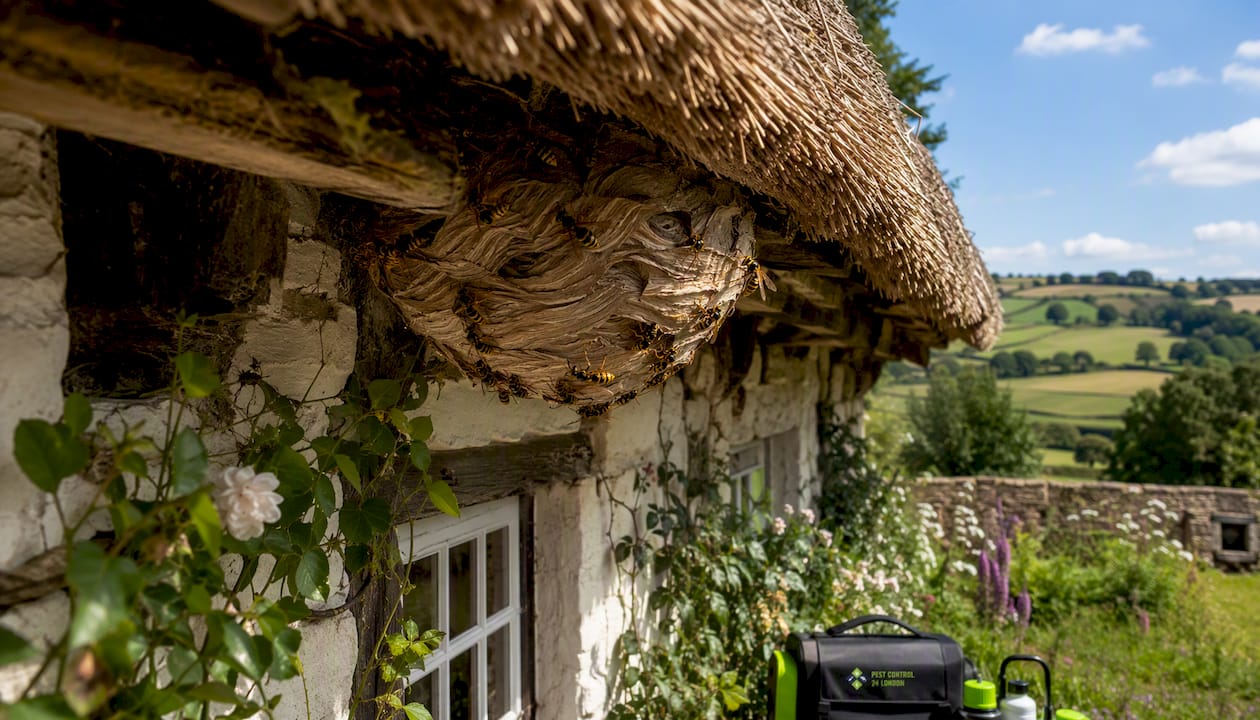
Wasp colonies begin in April when a queen emerges from hibernation and builds a small paper nest. By July, colony sizes peak and workers become noticeably more aggressive as they defend a much larger population. Nests are most often found in roof voids, wall cavities, garden sheds, and under decking. A single colony can contain thousands of workers by late summer. Do not attempt to remove an established nest yourself; a disturbed colony in July is a genuine medical risk.
Ants
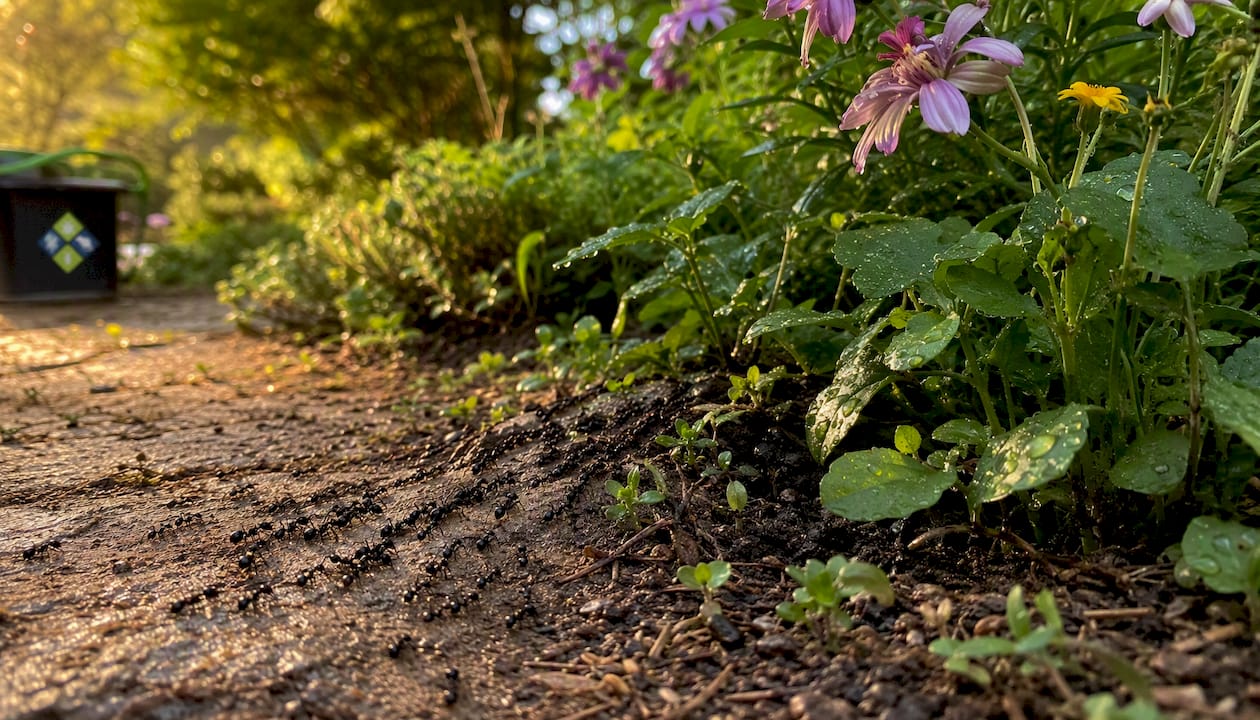
Garden ants and black ants typically swarm in late July or August during warm, humid spells. After heavy rain, colonies search for dry routes indoors, following plumbing lines and foundation gaps into kitchens and bathrooms. Flying ant day, the annual mass nuptial flight, usually falls between late July and mid-August and can produce dense swarms lasting a few hours. Ant gel baits placed along active trails are effective for small incursions; a persistent indoor colony warrants professional treatment.
Mosquitoes and midges
Mosquitoes breed in standing water and become active from June onwards, peaking in July and August during warm, humid nights. Scottish Highland midges (Culicoides impunctatus) are a separate but equally disruptive species, peaking from late June through August in upland and coastal areas. Larvae develop in as little as a week in warm conditions, so even a blocked gutter or garden saucer can sustain a local population. Drain or refresh any standing water at least once a week.
House flies and fruit flies
House flies breed in organic waste and peak from June to September. A single female can lay up to 500 eggs in her lifetime, and warm temperatures accelerate larval development to under a week. Fruit flies appear wherever ripe or fermenting produce is left out, typically from July onwards. Both species are vectors for bacteria, making bin hygiene and food storage the primary controls.
Ticks
Ticks are most active from March through October, with a clear peak in May–July in England and Wales. They inhabit long grass, bracken, and woodland edges. The deer tick (Ixodes ricinus) is the species most associated with Lyme disease in the UK. After any time in long grass or woodland, check clothing and skin carefully, paying particular attention to the scalp, armpits, and behind the knees. Remove any attached tick promptly using fine-tipped tweezers or a tick removal tool; never squeeze the body.
Fleas
Flea populations build through summer as warmth accelerates egg hatching and larval development. Cat fleas (Ctenocephalides felis) are the most common species in UK homes, and infestations often go unnoticed until a property is left empty for a few weeks and returning residents are met with a mass of hungry adults. Treat both the pet and the home environment simultaneously; treating only the animal leaves larvae in carpets and soft furnishings to re-infest.
Aphids and other garden-sapping insects
Aphids colonise new plant growth from April and reach damaging densities on roses, beans, and brassicas through June and July. Warm, sheltered conditions accelerate their reproduction, and a single aphid can produce dozens of offspring without mating. Companion planting with nasturtiums or marigolds can draw aphids away from food crops. Whitefly and vine weevils follow a similar warm-season pattern and are particularly problematic in greenhouses and polytunnels.
Slugs and snails
Slugs and snails thrive after wet spells and are most destructive to seedlings and low-growing vegetables from May through September. They are primarily nocturnal, so damage often appears overnight with no obvious culprit. Copper tape barriers, grit mulches, and beer traps are practical deterrents for raised beds. After prolonged wet periods, populations can increase sharply, particularly in clay-heavy soils that retain moisture.
Rodents
Mice and rats do not disappear in summer; they simply have more outdoor food sources available and are less visible indoors. Activity tends to increase again from August as juveniles from spring litters begin ranging and as nights cool. Compost heaps, bird feeders, and poorly sealed bins are the primary attractants. For a practical mice-proofing checklist, sealing gaps around pipes and cables at the point they enter the building is the single most effective structural measure.
Regional variation: Southern England and London’s urban heat island sustain wasp and ant activity noticeably longer than the Midlands or Scotland, where cooler temperatures curtail colony growth earlier in the season. Urban gardens with hard landscaping and poor drainage tend to produce worse mosquito and fly problems than suburban plots with managed ponds and open soil. Scotland’s west coast and upland areas see the most intense midge pressure, while tick risk is highest in the south-east, the New Forest, and the Scottish Highlands.
Pro Tip: Keep a simple log of where you first notice pest activity each summer. Patterns repeat year on year, and knowing your property’s hotspots lets you intervene in May rather than August.
Why pest activity rises so sharply in summer
Temperature is the primary driver. Warm weather accelerates insect metabolism and shortens development times, meaning species that would take weeks to complete a life cycle in spring can do so in days during a July heatwave. More generations per season means exponentially larger populations by mid-summer.
Humidity compounds the effect. Mosquitoes, flies, and ants all depend on moisture for breeding and survival. A wet spring followed by a warm summer is particularly productive for pest populations because it combines abundant larval habitat with the temperatures needed for rapid development. Pest surges are typically multi-factorial: a mild winter, an early warm spring, and a humid summer together produce much larger peaks than any single factor alone.
Milder winters have extended this problem. When winter temperatures stay above the threshold at which insect eggs and overwintering adults die off, more individuals survive to breed the following spring. The NPMA’s monitoring consistently links milder winters to larger subsequent summer populations across multiple pest species.
Heavy rainfall events add another layer. Pooling water creates instant mosquito breeding habitat, and ants driven out of waterlogged soil move indoors in large numbers. Pest control service calls have been reported to increase significantly during intense rain periods as insects seek shelter and new breeding sites.
The same principle applies in the UK whenever a prolonged wet spell follows a warm period: blocked gutters, garden ponds, and low-lying lawns become productive breeding sites almost overnight.
Where to look and what signs to watch for
A quick inspection of the following areas will identify the majority of summer pest problems before they become established:
Roofline and eaves: Look for wasp nest papery material, often grey-brown and layered, tucked into soffits or behind fascia boards. Repeated wasp flight paths converging on one point are a reliable indicator.
Gutters and downpipes: Blocked gutters hold standing water for mosquito breeding and provide harbourage for flies. Check for larvae in any pooled water.
Compost bins and waste areas: Flies breed prolifically in poorly managed compost. Rodents are attracted to open compost heaps containing cooked food. Check for gnaw marks, burrow entrances, and droppings around the base.
Ponds and water features: Mosquito larvae are visible as small wriggling comma-shapes just below the water surface. A healthy pond with fish or regular movement is far less productive for breeding than a stagnant one.
Under sheds and decking: Rats and mice use the dark, sheltered space beneath garden structures as nesting sites. Look for droppings, gnaw marks on timber, and worn runs in the soil.
Kitchen sinks and basins: Ant trails following plumbing lines are a common early sign of an indoor incursion. Check under the sink unit and around pipe entry points in the wall.
Vegetable plots and ornamentals: Inspect the undersides of leaves for aphid colonies and check soil around brassicas for slug damage overnight.
Long grass and hedgerows: Tick presence is indicated by the habitat itself rather than visible signs. Any long, unmown grass adjacent to woodland or scrub is potential tick habitat from May onwards.
Pro Tip: Nests build through spring and grow through July. Catching a wasp nest when it is golf-ball sized in May costs a fraction of treating a football-sized colony in August. Early detection genuinely saves money, and professional monitoring early in the season is consistently more cost-effective than treating an established colony.
Practical prevention and DIY control for home and garden
The three highest-impact priorities are water management, proofing and sealing, and good waste and garden housekeeping. Address these first and you reduce the conditions that allow most summer pest surges to take hold.
Water management:
- Empty plant saucers, paddling pools, and any containers that collect rainwater at least weekly
- Clear gutters before June to prevent standing water
- Refresh birdbaths and water features every few days
- Introduce pond plants or small fish to disrupt mosquito breeding cycles
Proofing and sealing:
- Seal gaps around pipes, cables, and airbricks with wire wool and appropriate filler
- Fit fine-mesh screens to opening windows and doors in rooms prone to fly entry
- Install door sweeps on external doors with visible gaps at the base
- Check roof soffits and fascia boards for gaps that wasps or birds could exploit
Waste and garden housekeeping:
- Use bins with tight-fitting lids and clean them regularly
- Keep compost heaps turned and avoid adding cooked food
- Trim hedges and vegetation back from the building perimeter
- Mow grass regularly, particularly near fences and sheds where rodents run
For the garden specifically, companion planting works well against aphids: nasturtiums act as a sacrificial crop, drawing colonies away from beans and brassicas. Copper tape and grit barriers around raised beds deter slugs without chemicals. Beer traps are effective but need emptying every day or two to remain so.
Safety notes: UK homeowners should use only products approved under the UK Biocidal Products Regulation. Never attempt to remove a wasp nest without appropriate PPE; a professional-grade bee suit and sealed footwear are the minimum. If you suspect tick-borne illness following a bite, contact your GP promptly rather than attempting self-treatment. When using any bait or trap around children and pets, place it inside a tamper-resistant bait station rather than in open areas.
Pro Tip: The advantages of a pest-free home extend well beyond comfort. Structural damage from rodent gnawing and moisture from blocked gutters can cost significantly more to repair than a professional treatment.
When to call a BPCA-qualified technician
Call a professional when you have evidence of an established colony, when DIY has failed after two attempts, when there is a health or safety risk (wasp nest near a doorway, suspected Lyme disease exposure, rodent activity in a food preparation area), or when the infestation is recurring season after season.
What to expect from a professional visit:
- A thorough inspection of the property, including roof voids, subfloor areas, and garden structures
- Accurate identification of the pest species and assessment of colony size or infestation extent
- A written treatment recommendation with safety information
- Targeted treatment using professional-grade products not available to the public
- Proofing recommendations or physical proofing work to prevent re-entry
- A follow-up visit to confirm treatment success and address any residual activity
The advantages of BPCA-certified pest control include access to restricted-use products, trained identification skills, and liability cover that DIY approaches cannot match.
Typical treatment timelines:
| Problem | Initial response | Follow-up | Resolution window |
|---|---|---|---|
| Wasp nest removal | Same day or next day | Not usually required | 24 hours |
| Ant colony control | Within a few days | — | — |
| Rodent proofing and baiting | Within 24 hours | 1–— | — |
| Flea treatment (home + pet) | Within 24 hours | — | — |
| Mosquito larval treatment | within a week | Monthly during season | Ongoing management |
Cost factors in the UK: Pricing varies with the severity of the infestation, access difficulty, property type, number of treatments required, and whether proofing work is included. A single wasp nest removal is typically the most straightforward job; rodent programmes involving multiple visits and structural proofing sit at the higher end. For a detailed breakdown, the UK pest control pricing guide covers the main cost factors across common pest types. Pestcontrol24london provides free quotes, so you can get an accurate figure for your specific situation before committing.
Practitioners consistently report that early-season monitoring is more cost-effective than treating an established summer colony. A small nest or early rodent sign dealt with in May rarely requires the repeat visits that a July infestation demands.
Key takeaways
Summer pest surges in the UK are driven by a combination of warm temperatures, humidity, and milder winters, with wasps, ants, mosquitoes, and rodents posing the greatest risk to most London homes from June through August.
| Point | Details |
|---|---|
| Peak timing varies by species | Ants and aphids build from May; wasps and mosquitoes peak in July; rodents press indoors from August. |
| Standing water is the single biggest trigger | Removing or refreshing standing water weekly disrupts mosquito and fly breeding before populations establish. |
| Early detection saves money | Catching a wasp nest or rodent sign in May avoids the cost and disruption of a full colony treatment in July. |
| DIY has clear limits | Established wasp nests, recurring rodent infestations, and tick-borne illness risk all require a BPCA-qualified technician. |
| Pestcontrol24london covers London 24/7 | BPCA-qualified, operating since 2015, with free quotes and same-day response for urgent summer pest problems. |
Why early action matters more than most homeowners realise
The conventional wisdom on summer pests tends to focus on identification and treatment. What gets less attention is the timing problem: by the time most homeowners notice an infestation, the colony is already well established. A wasp nest discovered in August typically contains thousands of workers. An ant trail visible in the kitchen usually means a mature colony has been active for weeks. Rodent droppings found in September often indicate a population that has been present since spring.
The practical implication is that the window for low-cost intervention is narrow and earlier than most people expect. Inspecting eaves, checking under sheds, and looking at the base of compost heaps in May takes twenty minutes and can prevent a problem that would otherwise require multiple professional visits in August.
There is also a tendency to treat each pest as a separate problem, when the underlying conditions are usually shared. A garden with poor drainage, overgrown hedges, and an unsecured compost heap will reliably produce mosquito, fly, ant, and rodent problems simultaneously. Addressing the habitat rather than each pest individually is consistently more effective. For real-world examples of insect infestations and how they develop, the pattern is almost always the same: a small, easily addressed sign ignored until it becomes an established problem.
Pestcontrol24london has been BPCA-qualified and operating across London since 2015, completing thousands of domestic and commercial jobs. The case work speaks for itself.
Pestcontrol24london: fast, qualified response across London
When summer pest pressure builds and DIY measures are not holding, Pestcontrol24london offers same-day and 24/7 emergency callouts across London. The team is BPCA-qualified, has operated since 2015, and has handled everything from single wasp nest removals in residential gardens to full rodent management programmes for hotels and restaurants.

Every job starts with a thorough inspection and a free quote, so you know exactly what is involved before any treatment begins. Services include targeted pest removal, structural proofing, post-treatment sanitisation, and scheduled follow-up visits to confirm the problem is resolved.
- Inspection and accurate species identification
- Targeted treatment using professional-grade products
- Structural proofing to prevent re-entry
- Post-treatment pest disinfection and sanitisation
- 24/7 emergency response across all London boroughs
Book a free inspection or request an emergency callout today. Summer pest activity moves quickly; early treatment is always the more straightforward option.
Useful sources for further reading
- BPCA (British Pest Control Association): bpca.org.uk — the primary UK trade body for professional pest control standards, technician qualifications, and pest identification guides.
- CIEH (Chartered Institute of Environmental Health): cieh.org — guidance on pest-related public health issues and local authority responsibilities.
- NHS guidance on tick bites and Lyme disease: nhs.uk/conditions/lyme-disease — symptoms, tick removal advice, and when to seek medical attention.
- Gov.uk pest control guidance: gov.uk — information on homeowner responsibilities, protected species, and local council pest control services.
- University of Arkansas Extension — summer pest control: uaex.uada.edu — practical identification and treatment guidance for landscape and garden pests.
- NPMA bug barometer: mypmp.net — seasonal pest pressure forecasts based on weather and monitoring data.
Always check your local council’s website for specific guidance on nest removal rules, waste disposal, and any protected species protocols that apply in your area before undertaking any treatment work.