

Staying pest-free in London is a genuine challenge. Dense housing, busy food businesses, and ageing building stock create ideal conditions for rats, cockroaches, bedbugs, and more. Whether you manage a restaurant in Soho or a terraced house in Lewisham, pest problems can escalate quickly and carry real health and legal consequences. This article walks you through how to assess your situation, prevent infestations, apply smarter management strategies, and decide when professional help is the right call.
Table of Contents
- How to assess your pest control needs
- Prevention: The first defence against pests
- Integrated Pest Management: Smarter solutions for long-term control
- When to use treatments and seek professional help
- Why prevention beats costly cures: Our perspective for Londoners
- Professional pest control services for peace of mind in London
- Frequently asked questions
Key Takeaways
| Point | Details |
|---|---|
| Prevention matters most | Regular cleaning and sealing entry points can keep most London pests out. |
| Know when to seek help | For major infestations or regulated pests, professional advice protects your health and property. |
| Choose targeted treatments | Integrated Pest Management offers long-term control while minimising chemical use and risks. |
| Verify council coverage | Not all pests are treated by councils, so check before tackling an issue alone. |
How to assess your pest control needs
With the challenge established, it is essential to first assess what pests you might actually be dealing with and the potential risks involved.
London properties face a wide range of unwanted visitors. Common pests include rats, mice, cockroaches, bedbugs, ants, wasps, squirrels, and fleas, each carrying different risks and requiring different responses. Knowing which pest you are dealing with shapes every decision that follows.
Warning signs to look for:
- Droppings near food storage, skirting boards, or loft spaces
- Gnawing marks on cables, woodwork, or food packaging
- Unusual odours, particularly musty or ammonia-like smells
- Grease marks along walls, indicating rodent pathways
- Shed skins, larvae casings, or discarded wings
- Live or dead sightings, especially during daylight hours
Health risks are significant. Bedbugs can trigger allergic reactions and secondary skin infections, while rats and cockroaches spread bacteria that contaminate food and surfaces. For businesses, a pest sighting can trigger a council inspection or even closure.
| Pest | Primary risk | Treatment source |
|---|---|---|
| Rats and mice | Disease, structural damage | Council or private |
| Cockroaches | Food contamination | Private recommended |
| Bedbugs | Allergic reactions, bites | Council or private |
| Wasps | Stings, anaphylaxis | Private |
| Fleas | Bites, disease transmission | Council or private |
For more guidance on protecting your property, our pest-proofing advice covers practical steps tailored to London conditions.
Prevention: The first defence against pests
Now that you know the specific pests and risks, the next step is to stop pests from gaining a foothold before an infestation takes hold.
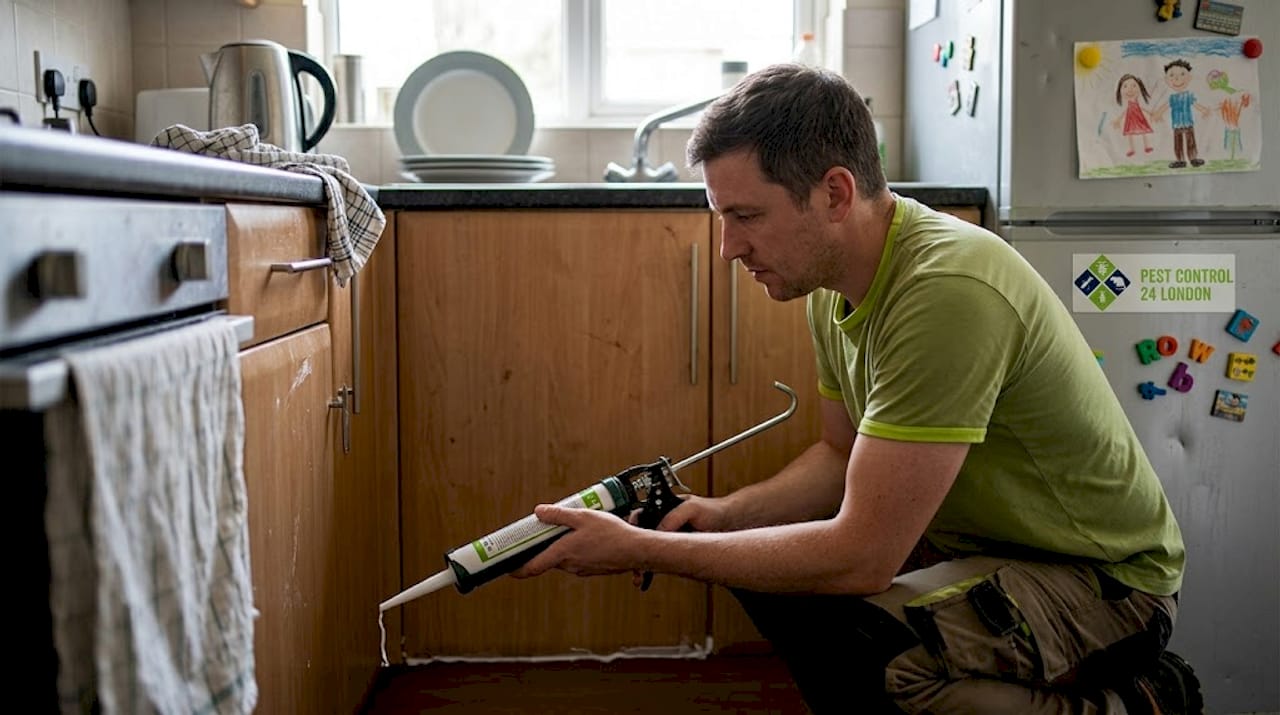
Integrated Pest Management prioritises prevention, monitoring, and non-chemical controls as the foundation of any sound pest strategy. This approach is not just environmentally responsible; it is also far more cost-effective than repeated reactive treatments.
Key prevention measures for homes and businesses:
- Seal gaps around pipes, doors, and window frames using wire wool or caulk
- Store refuse in sealed bins and arrange regular collections
- Vacuum frequently, paying attention to skirting boards, under furniture, and carpeted areas
- Wash bedding and soft furnishings at 60°C to kill bedbug eggs and larvae
- Keep gardens tidy; overgrown vegetation and compost heaps attract rodents
- Fix leaking pipes promptly, as moisture draws cockroaches and silverfish
“Prevention is not a one-off task. It is an ongoing commitment that saves money, protects health, and keeps businesses compliant.”
Pro Tip: Walk the perimeter of your property at least twice a year and look for any new gaps or damage. Even a gap the width of a pencil is enough for a mouse to squeeze through.
For seasonal guidance, our autumn pest-proofing article and broader seasonal pest advice are useful starting points throughout the year.
Integrated Pest Management: Smarter solutions for long-term control
Prevention is vital, but sometimes pests still slip through. When that happens, integrated and strategic management becomes the key to lasting results.
Integrated Pest Management (IPM) is a structured, evidence-based approach that reduces reliance on chemical pesticides. IPM reduces infestations by 70 to 80 per cent within three to four months when applied correctly, according to the UK Pesticides National Action Plan 2025.
The core IPM steps:
- Inspect the property thoroughly to locate entry points, harbourage areas, and signs of activity
- Identify the specific pest species accurately
- Monitor activity levels using traps or visual checks over time
- Apply non-chemical controls first: physical traps, exclusion barriers, habitat modification
- Use targeted chemical treatments only where necessary and as a last resort
| Approach | Chemical use | Long-term effectiveness | Cost over time |
|---|---|---|---|
| Traditional pesticide | High | Moderate | Higher |
| IPM | Minimal | High | Lower |
Pro Tip: If you have tried two rounds of DIY treatment without success, that is a clear signal to bring in a qualified professional. Persistent infestations often indicate a structural entry point or a colony size that requires specialist equipment.
For tailored support, explore our domestic pest solutions or our business pest management services.
When to use treatments and seek professional help
Even with solid prevention and IPM in place, action is sometimes needed. Here is how to gauge your options responsibly.
For minor pest activity, DIY treatments can be effective if used correctly. Always read product instructions in full, ventilate rooms thoroughly after applying any chemical, and keep children and pets away from treated areas until surfaces are dry. Never exceed the recommended dosage, as this rarely improves results and increases health risks.
DIY versus professional treatment:
- Use DIY for isolated ant trails, a single wasp nest in an accessible location, or early-stage flea activity
- Call a professional for rat or mouse infestations, cockroach colonies, bedbug outbreaks, or any pest in a food business
- Contact your GP if you experience bites, rashes, or respiratory symptoms that may be linked to pest activity
Not all pests are treated by local councils, and charges vary considerably between boroughs. Bees, foxes, and wood-boring insects are commonly excluded from council services.
| Service type | Typical pests covered | Indicative cost |
|---|---|---|
| Council pest control | Rats, mice, bedbugs | Free to £150+ |
| Private pest control | All pests | £80 to £300+ |
| Emergency call-out | Any pest, urgent response | £150 to £400+ |
For urgent situations, our emergency pest help service is available across London. After treatment, professional post-infestation cleaning is strongly recommended to remove contamination and reduce the risk of recurrence.
Why prevention beats costly cures: Our perspective for Londoners
After more than ten years working across London, from hotel kitchens to residential flats, one pattern stands out clearly. Most serious infestations we attend could have been avoided with earlier, consistent action.
Many property owners wait until the problem is visible and severe before seeking help. By that point, treatment is more complex, more disruptive, and more expensive. Quick fixes rarely offer lasting control. Consistent prevention and IPM mean fewer crises and lower long-term costs.
London’s urban density makes year-round vigilance a necessity, not a choice. We have seen winter pest lessons repeat themselves year after year because the same entry points go unaddressed. The properties that stay pest-free are the ones where owners treat prevention as a routine, not a reaction.
Professional pest control services for peace of mind in London
With these strategies in hand, professional support can make pest control even more manageable for your home or business.

At Professional Pest Control Services, we have been protecting London properties since 2015, working with hotels, restaurants, retailers, and homeowners across the city. Our BPCA-qualified team combines IPM principles with targeted treatments to deliver results that last. Whether you need London business pest management or reliable post-treatment cleaning, we are here to help. Contact our London pest control experts today for a consultation and take the first step towards a pest-free property.
Frequently asked questions
What are the signs of a pest infestation at home?
Common signs include droppings, chew marks, odd smells, shed wings, and sightings of pests or their nests. Acting on early signs prevents a minor issue from becoming a full infestation.
Does my local council remove all types of pests?
Councils treat most pests like rats and bedbugs, but usually not bees, foxes, or wood-boring insects. Charges and policies vary between London boroughs, so always check with your local authority first.
Are chemical pesticides always required for pest control?
No. IPM prioritises non-chemical controls and prevention, meaning many minor or moderate infestations can be managed without pesticides at all.
When should I call a professional pest controller?
Professional services are recommended for large infestations, recurring pest issues, or when the pest poses a direct health or safety risk to occupants.