

Running a restaurant in London means operating under constant scrutiny, from Environmental Health Officers (EHOs) to online reviewers who will not hesitate to share a sighting of a rodent or cockroach. Pest threats are not occasional nuisances; they are frequent, costly, and capable of shutting a business down. A systematic approach to pest control is the only way to stay compliant, protect your reputation, and keep your kitchen genuinely clean. This article sets out proven, practical strategies drawn from real experience working with London’s food businesses.
Table of Contents
- Understanding integrated pest management (IPM)
- Sanitation: The cornerstone of pest prevention
- Exclusion and proofing: Keeping pests out
- Professional contracts, compliance and record-keeping
- Our perspective: Why smart hygiene outperforms chemicals
- Professional pest control services for London restaurants
- Frequently asked questions
Key Takeaways
| Point | Details |
|---|---|
| IPM is fundamental | Integrated pest management combines prevention, exclusion, and monitoring for long-term control. |
| Sanitation trumps chemicals | Regular cleaning and staff vigilance do more to prevent infestations than reactive treatments. |
| Proofing keeps pests out | Physical barriers and exclusion practices are essential for blocking pest entry into food areas. |
| Compliance requires records | Accredited contractors and thorough documentation protect your business during EHO inspections. |
| Professional help matters | Expert pest control support ensures safety, hygiene, and swift intervention when issues arise. |
Understanding integrated pest management (IPM)
Integrated Pest Management, or IPM, is the most robust framework available for restaurant pest control. Rather than reaching for a spray can whenever something moves, IPM is a structured, tiered system that prioritises prevention, then exclusion, then monitoring, and only uses targeted treatments when necessary. This approach is particularly important in food environments where chemical use must be minimised to protect both customers and staff.
The four pillars of IPM work together:
- Prevention via sanitation: Daily deep cleans, drain maintenance, and tightly controlled waste management remove the food and moisture that pests depend on.
- Exclusion: Sealing gaps larger than 5 to 6mm, fitting door sweeps, installing fly screens, and using air curtains at entry points creates a physical barrier. Well-designed pest exclusion systems are one of the most cost-effective investments a restaurant can make.
- Monitoring: Weekly checks of glue boards, pheromone traps, and insect light traps (ILTs) catch problems early, before they become full infestations.
- Targeted low-toxicity treatments: Gel baits work well for cockroaches. Snap traps are preferred over rodenticides in food areas because poisons can leave dead rodents decomposing inside walls. Insect growth regulators (IGRs) disrupt larval development and are a practical last-resort tool.
The following table compares reactive pest control against an IPM approach:
| Factor | Reactive treatment only | IPM approach |
|---|---|---|
| Primary method | Chemical spraying | Prevention and exclusion first |
| Chemical use | High | Minimal and targeted |
| Food safety risk | Higher | Lower |
| EHO compliance | Variable | Consistently strong |
| Long-term cost | Higher (repeat callouts) | Lower (prevention reduces infestations) |
As kitchen pest control guidance confirms, prioritising non-chemical methods protects food safety and supports compliance far more reliably than reactive spraying alone.
Pro Tip: Schedule weekly trap checks yourself and monthly professional visits. The combination of in-house monitoring and expert assessment closes the gaps that reactive-only services leave open.
For specific advice on rodent risks in your kitchen, guidance on handling mice in commercial properties is worth reviewing before a problem develops.
Sanitation: The cornerstone of pest prevention
With IPM principles understood, let us focus on the most impactful step: sanitation. No treatment will hold if the underlying conditions that attract pests remain in place. Poor cleaning is, without question, the number one reason pest problems return after treatment.
High-risk zones in a London restaurant kitchen deserve daily attention:
- Drains: Food debris and grease accumulate rapidly. Enzymatic drain cleaners break down organic matter and should be used nightly.
- Behind and beneath equipment: Grease traps, the undersides of fryers, and the backs of refrigeration units are warm, dark, and rarely disturbed. These are precisely the conditions cockroaches and mice seek out.
- Waste areas: Bins must be emptied and cleaned daily. Outdoor waste storage should have tight-fitting lids and be kept away from kitchen entry points.
- Delivery inspections: Every delivery is a potential entry point for pests. Cardboard boxes are a known harbour for cockroach egg cases. Train staff to inspect incoming goods before they reach storage areas.
“Poor cleaning undermines treatments; nightly drains and behind-equipment cleans, combined with thorough delivery inspections, are the highest-impact preventive measures available to food businesses.” Food safety pest control SOP
Store all dry goods at least 15cm off the floor. This is not simply good practice; it allows proper inspection beneath shelving and denies rodents easy nesting material. Moisture leaks sustain pests long after a treatment has been applied, so regular checks of pipework and drainage are essential. As restaurant pest prevention cleaning habits research confirms, staff training is critical. Your team needs to know what signs to look for and who to report them to immediately.
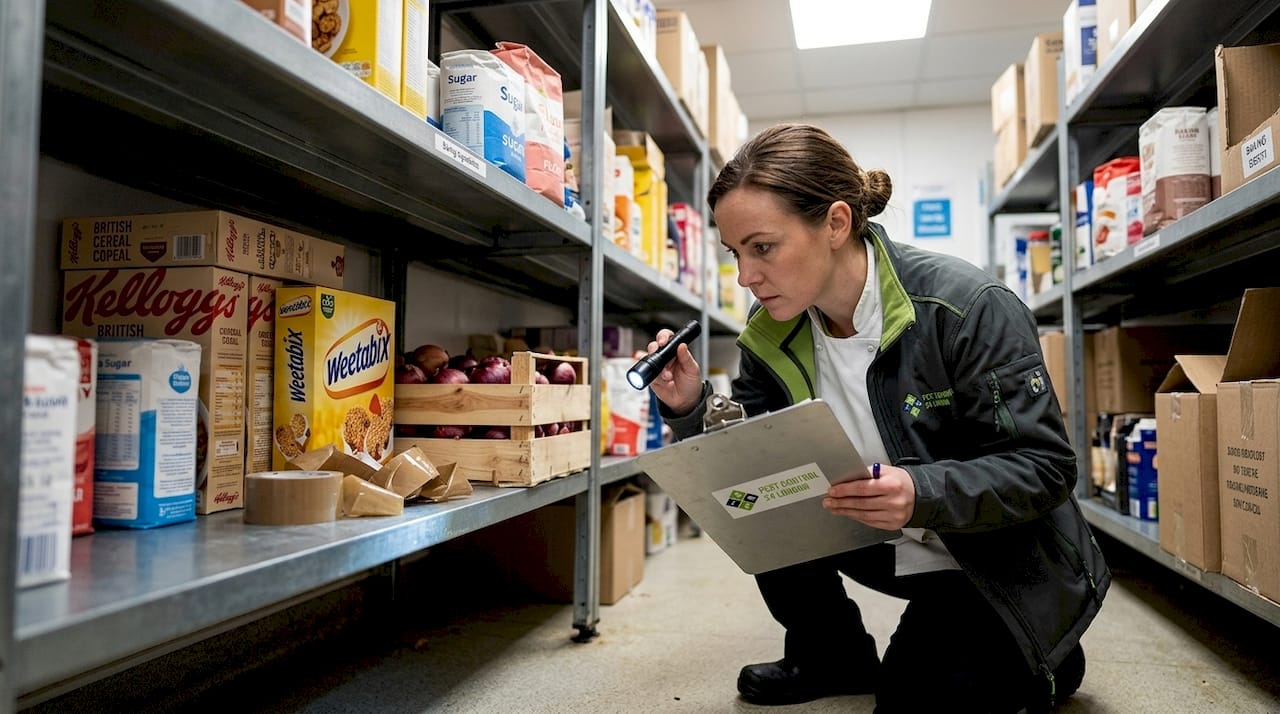
Connecting cleaning protocols to your broader hygiene programme is straightforward with the support of specialist commercial cleaning services designed for food businesses.
Pro Tip: Create a simple nightly checklist that covers drains, equipment voids, and waste areas. When staff sign off on it, accountability improves and problems get caught earlier.
Exclusion and proofing: Keeping pests out
Proper cleaning is vital, but exclusion stops pests before they even get in. A kitchen that is thoroughly cleaned but poorly sealed will still attract rodents and insects from neighbouring premises, sewers, and delivery yards. In London, where restaurants often occupy ground-floor units in older buildings, structural gaps are extremely common.
Follow these steps to establish effective exclusion:
- Survey all external gaps. Any gap larger than 5 to 6mm must be sealed. Mice can squeeze through gaps as small as a 50p coin; rats require a gap no bigger than a two-pound coin. Use wire wool combined with caulk or expanding foam for a durable seal.
- Fit door sweeps to all external doors. The gap beneath a standard commercial door is more than large enough for a mouse to enter.
- Install fly screens on opening windows and vents. Mesh size matters; a screen designed for houseflies will not exclude fruit flies or drain flies without a finer grade.
- Use air curtains at high-traffic entry points. Delivery bays and customer-facing doors benefit greatly from a strong downward airflow that deters flying insects.
- Elevate all food storage. Keeping products at least 15cm above floor level removes harbourage and makes inspections straightforward.
- Address shared spaces. Dark kitchens and shared commercial units present additional challenges. Pest migration through shared ducting, drainage, and walls means proofing must be coordinated across the whole building, not just your unit.
| Exclusion measure | Pests targeted | Approximate cost |
|---|---|---|
| Gap sealing (wire wool and caulk) | Rodents, cockroaches | Low |
| Door sweeps | Rodents, insects | Low to medium |
| Fly screens | Flying insects | Medium |
| Air curtains | Flying insects, wasps | Medium to high |
| Drain covers and guards | Cockroaches, flies | Low |
Investing in quality proofing netting solutions is particularly valuable for restaurants with outdoor dining areas or roof-level ventilation points that are often overlooked during routine checks.
As IPM guidance confirms, sealing entry gaps over 5 to 6mm is one of the most effective structural interventions a restaurant can implement.
Professional contracts, compliance and record-keeping
Physical barriers help, but regulatory compliance is equally crucial. Environmental Health Officers inspect London restaurants unannounced, and a failure to demonstrate active, documented pest management can result in improvement notices, closure orders, or a damaging drop in your Food Hygiene Rating.
Engaging an accredited contractor is not optional for a serious food business. Look for membership of the British Pest Control Association (BPCA) or the National Pest Technicians Association (NPTA). Accredited professionals will provide a site survey, written reports after each visit, staff training, and documentation that forms part of your Hazard Analysis and Critical Control Points (HACCP) due diligence file.
Key compliance requirements for London restaurants:
- Monthly professional visits as a standard contract frequency for medium to high-risk premises.
- Written reports retained for a minimum of two years and kept onsite for EHO inspection.
- Site plans showing trap and monitor locations.
- Corrective action logs documenting any pest activity found and the steps taken.
- HACCP due diligence supported by pest control procedures in the food industry standards.
Annual contract costs in London typically range from £800 to £2,500 depending on premises size, pest risk, and visit frequency. This is modest compared to the cost of a single EHO closure or a viral social media incident. For a detailed breakdown of what compliance looks like in practice, our compliance guide covers the full regulatory picture for London food businesses.
You can also explore the full scope of commercial pest management services available to restaurants across Greater London.
Our perspective: Why smart hygiene outperforms chemicals
Let us be direct about something many pest control providers will not say: chemicals alone do not solve pest problems in restaurants. We have been working across London since 2015 and the pattern is consistent. The kitchens that remain pest-free long term are not the ones with the most aggressive treatment programmes. They are the ones with disciplined cleaning routines, trained staff who report signs early, and meticulous records.
Reactive spraying addresses symptoms. Sanitation removes the cause. As food safety SOP guidance makes clear, nightly cleaning of drains and equipment, combined with systematic delivery checks, outperforms any chemical regime applied to a poorly maintained kitchen.
Staff engagement is undervalued in this industry. A single member of your team who knows what a cockroach egg case looks like, or recognises fresh gnaw marks on a pipe, is worth more than an expensive treatment applied to a dirty kitchen. Pair that vigilance with a solid compliance guide and a BPCA-accredited contractor, and you have a genuinely proactive system rather than a reactive one.
Professional pest control services for London restaurants
Maintaining a pest-free restaurant is a long-term commitment, and having the right professionals behind you makes it significantly more manageable.

Pest Control 24 London has been supporting restaurants, takeaways, hotels, and food businesses across Greater London since 2015. We are BPCA fully qualified and provide HACCP-compliant pest management contracts tailored to the specific demands of the food sector. From monthly monitoring visits to rapid-response emergency pest control when an issue cannot wait, we deliver reliable, documented service that stands up to EHO scrutiny. Contact us today for a free quote and find out how our commercial pest management services can protect your business.
Frequently asked questions
How often should a London restaurant inspect for pests?
Restaurants should conduct weekly inspections themselves and schedule monthly professional pest control visits to ensure compliance and minimise risk.
What records must be kept for EHO inspections?
Keep contracts, visit reports, site plans, logs, and corrective action records onsite for at least two years to comply with HACCP requirements and support due diligence.
Is it safe for staff to handle pest control treatments themselves?
DIY pest control in restaurants carries significant risk; chemical hazards and misapplication can make infestations worse, so always engage an accredited professional.
What causes recurring pest issues after treatment?
Moisture leaks and poor cleaning habits sustain pest populations even after professional treatments, so ongoing sanitation is essential to prevent reinfestation.