

Birds nesting on your commercial premises can cost far more than most business owners expect. A single infestation left unaddressed can trigger health authority notices, drive away customers, and result in remediation bills running into thousands of pounds. London’s dense urban environment makes commercial properties especially vulnerable, with pigeons, starlings, and seagulls all seeking food and shelter in close proximity to your operations. This guide sets out practical, evidence-based bird control strategies to help you protect your premises, stay compliant, and avoid the steep financial penalties of inaction.
Table of Contents
- Why bird control is critical for London businesses
- Comparing popular bird control methods for commercial properties
- Choosing the right approach for your premises
- Prevention, maintenance, and compliance: sustaining a bird-free environment
- A smarter, long-term view on bird control in London
- Take action: professional bird control for your London business
- Frequently asked questions
Key Takeaways
| Point | Details |
|---|---|
| Prevention saves money | Preventative bird control costs less than expensive, disruptive remediation. |
| Professional installation essential | Expertly fitted netting and spikes are far more effective and durable for business environments. |
| Tailor solutions to site | London businesses need bespoke deterrent approaches based on local risk and premises. |
| Ongoing maintenance required | Regular inspections and record keeping are critical for compliance and lasting results. |
Why bird control is critical for London businesses
Bird infestations pose risks that go well beyond a messy roof. For food businesses and public-facing premises, the consequences can be severe and rapid.
The most immediate concern is health. Bird droppings, known as guano, carry over 60 transmissible diseases including salmonella, E. coli, and histoplasmosis. When guano dries and becomes airborne, staff and customers can inhale particles without realising. For restaurants, hotels, and takeaways, this creates a serious liability that food safety inspectors will not overlook.
Property damage is equally significant. Guano is highly acidic and degrades roofing materials, stonework, and metal surfaces over time. Blocked gutters from nesting materials can lead to flooding and structural damage that is expensive to repair.
Reputational harm should not be underestimated either. Customers who witness birds fouling an entrance, terrace, or car park will draw their own conclusions about hygiene standards. In an era when online reviews are instant and public, a single incident can cost you business for months.
Key risks for London commercial premises include:
- Health violations resulting in enforcement action or closure orders
- Accelerated building deterioration from acidic guano deposits
- Pest species attracting secondary infestations, such as bird mites and flies
- Regulatory fines under the Health and Safety at Work Act and food hygiene legislation
“Guano clean-up costs can run into thousands of pounds, making prevention strategies far more cost-effective.”
Using bird deterrents early avoids this expense entirely. A commercial pest management programme tailored to your site is almost always cheaper than remediation after an infestation has taken hold.
Comparing popular bird control methods for commercial properties
There is no single solution that works for every building. The right method depends on the species involved, the structure of your premises, and the level of bird pressure you face.
| Method | Typical cost | Best suited for | Effectiveness |
|---|---|---|---|
| Netting | £2–5 per m² | Large open areas, loading bays | Very high |
| Stainless steel spikes | £3–8 per 30 cm | Ledges, signage, gutters | High |
| Tension wire systems | £4–7 per m | Rooftops, parapets | High |
| Optical gel | £1–3 per unit | Flat surfaces, small areas | Moderate |
| Electronic deterrents | £150–400 per unit | Open rooftops, car parks | Variable |
Netting has a 95% efficacy rate for exclusion when correctly installed, while stainless steel spikes are valued for durability but must be fitted by a professional to avoid gaps that birds exploit. Poorly fitted spikes or netting can actually create sheltered nesting pockets, making the problem worse.
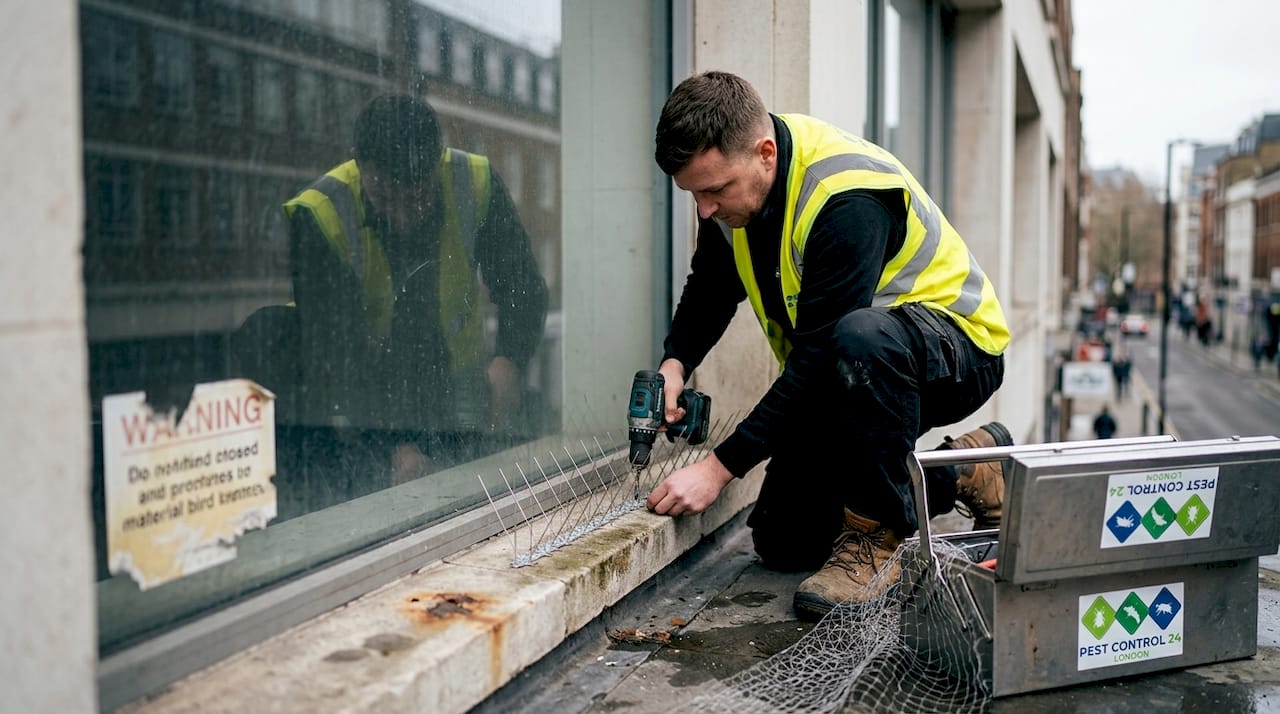
For bird netting solutions to perform as advertised, installation must be precise. Mesh size matters: too large and smaller birds slip through; too small and blockages from debris become a maintenance issue.
Pro Tip: Avoid DIY installs entirely on commercial properties. What appears straightforward on a residential garden rarely translates to a multi-storey warehouse or restaurant rooftop. Failed installations are among the most common and avoidable causes of recurring bird problems we see as pest control professionals.
Solid bird proofing advice from a qualified specialist will identify which method, or combination of methods, is appropriate before a penny is spent on hardware.
Choosing the right approach for your premises
Selecting an effective bird control strategy means accounting for the specific characteristics of your building and surroundings.
Factors to assess before choosing a solution:
- Building height and access — high-level installations require specialist equipment and training
- Nearby food sources — proximity to markets, waste areas, or food outlets increases bird pressure significantly
- Customer-facing areas — entrances, terraces, and delivery zones need discreet solutions that do not affect aesthetics
- Species identification — pigeons, seagulls, and starlings each behave differently and respond to different deterrents
- Listed building status — some London properties require consent before physical deterrents are installed
| Species | Common problem areas | Recommended solutions |
|---|---|---|
| Feral pigeon | Rooftops, window ledges, loading bays | Netting, spikes, wire systems |
| Seagull | Flat roofs, bins, open terraces | Optical gel, wire, exclusion netting |
| Starling | Roof voids, ventilation points | Proofing mesh, one-way excluders |
Professional installation is essential to achieve the quoted effectiveness for bird netting and spike systems. A specialist will also factor in local bird behaviour patterns, which vary across London boroughs depending on green space, water proximity, and food availability.
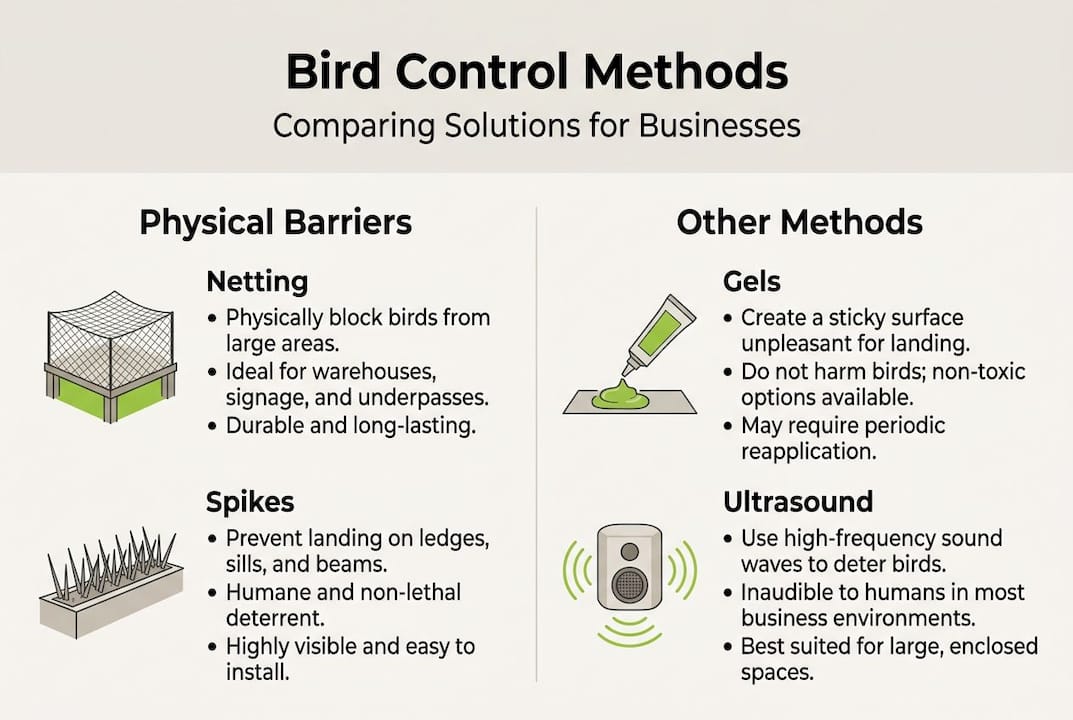
For businesses near the Thames or coastal-influenced areas, seagull deterrence requires a distinct approach from standard pigeon management. Similarly, pigeon removal advice specific to your borough type, whether industrial, retail, or hospitality, will sharpen the strategy considerably.
Prevention, maintenance, and compliance: sustaining a bird-free environment
Installing bird control measures is only the beginning. Long-term success depends on consistent maintenance and staff awareness.
A structured prevention routine should include:
- Annual bird audit — a qualified professional inspects all deterrent systems, identifies new roosting activity, and checks for damage or wear
- Quarterly gutter and roof checks — clear nesting materials and guano before they accumulate and cause structural problems
- Staff training — all employees should understand correct food waste disposal and the importance of not feeding birds near the premises
- Maintenance log — record every inspection, cleaning visit, and sighting of bird activity on site
- Signage review — ensure customers and delivery staff are not inadvertently creating attractants through open waste areas
“Prevention is always cheaper than remediation, especially when considering guano removal costs in the thousands.”
Pro Tip: Keeping a detailed log of maintenance activities and bird sightings provides documented evidence of proactive management. If a regulatory inspection occurs or a complaint is raised, this record forms your primary line of defence.
Food businesses in particular should integrate bird control into their existing pest-proofing tips framework to demonstrate due diligence. Inspectors from the Food Standards Agency look favourably on documented prevention programmes over reactive responses.
A smarter, long-term view on bird control in London
In our experience working with London businesses since 2015, the pattern is consistent. Businesses that invest in a professionally assessed, properly installed bird control programme spend considerably less over five years than those who cycle through DIY fixes and reactive clean-ups.
London’s urban density means birds are under constant pressure to find new roosting and feeding sites. A building without proper proofing becomes a target. Generic, off-the-shelf products rarely account for the specific angles, materials, and access points unique to each building.
The businesses that handle this well treat bird proofing for businesses as infrastructure investment, not a discretionary spend. That shift in thinking is what separates a compliant, well-managed premises from one that is one bad inspection away from a closure notice.
Take action: professional bird control for your London business
If birds are already active on your premises, or you want to prevent problems before they start, a professional assessment is the most efficient first step you can take.

At Professional Pest Control Services, we have worked with London hotels, restaurants, retail outlets, and warehouses since 2015. Our BPCA-qualified team designs bespoke solutions based on your building type, location, and the species causing concern. Explore our commercial pest control services or contact us today for a free quote and site assessment. Protecting your business starts with one call.
Frequently asked questions
How much does professional bird control cost for a London business?
Netting costs £2–5 per square metre and spikes range from £3–8 per 30 cm section, though final pricing varies considerably depending on building size, height, and the complexity of installation required.
Why is professional installation recommended for bird proofing?
Professionally installed systems achieve maximum effectiveness and help businesses meet regulatory requirements, whereas poorly fitted deterrents often create new nesting opportunities and fail within months.
Can I use DIY solutions for bird problems on my business premises?
DIY products rarely provide lasting protection at a commercial scale; professional installation is strongly recommended for business premises to avoid repeated expenditure on ineffective measures.
How often should bird control measures be checked and maintained?
A yearly inspection and clean is the minimum recommended for most commercial properties, with higher-risk sites such as food businesses or riverside premises benefiting from more frequent checks to maintain effectiveness and compliance.
Recommended
- Bird Proofing London | Professional Pigeon & Seagull Deterrents – Pest Control 24 London
- Bird Control London | Professional Bird Deterrents & Management – Pest Control 24 London
- Commercial Pest Control London | Business Pest Management 24/7 – Pest Control 24 London
- Proofing Netting London | Professional Pest Exclusion Systems – Pest Control 24 London
- Commercial Door Security Guide for Business Owners – A To Z Locksmith Inc