

A single bed bug report can cost a hotel far more than a lost booking. In environments with constant guest turnover, bed bugs spread quickly and quietly, often going undetected until the damage to your reputation is already done. Documented infestation costs run into hundreds of thousands of pounds once closures and remediation are factored in. This guide equips hotel managers and owners with practical, evidence-based strategies for detection, treatment, and long-term prevention.
Table of Contents
- Why bed bugs are a unique threat to hotels
- How to detect bed bugs early in hotel settings
- Best hotel bed bug control methods: What really works
- Preventing repeat infestations: Long-term bed bug management
- What hotel managers often overlook in bed bug control
- Protect your hotel with expert pest control support
- Frequently asked questions
Key Takeaways
| Point | Details |
|---|---|
| High costs of outbreaks | A single bed bug incident can lead to substantial financial losses and negative publicity. |
| Early detection is vital | Train staff for routine inspections to stop infestations before they spread. |
| Heat treatment effectiveness | Heat procedures are the most reliable and resistance-free method for eradicating hotel bed bugs. |
| Prevention protocols matter | Ongoing checks, staff education, and professional support prevent repeat infestations. |
Why bed bugs are a unique threat to hotels
Hotels face a bed bug challenge that no other property type quite matches. Every new guest arrival is a potential introduction event, whether bugs hitchhike in luggage, clothing, or second-hand items brought on site. With rooms turning over daily and housekeeping operating under time pressure, a small infestation can spread across multiple floors before anyone notices.
The financial exposure is severe. Consider that a hospital bed bug outbreak cost approximately $400,000 USD and forced a 24-day closure. For a busy London hotel, equivalent disruption could easily exceed that figure when you account for:
- Lost room revenue during closure
- Emergency pest control fees
- Deep cleaning and replacement of bedding and furniture
- Potential legal claims from affected guests
- PR and crisis management costs
Reputation damage is often the longest-lasting consequence. A single negative review mentioning bed bugs can suppress booking rates for months, particularly on platforms like TripAdvisor and Booking.com where visibility is algorithm-driven.
Guests increasingly share experiences in real time. One photograph of a live bug or a blood-stained sheet, posted publicly, reaches thousands of potential customers within hours. Understanding this unique vulnerability is the first step towards building a credible, proactive control programme.
With the stakes set, let’s clarify what signs hotel teams should watch for.
How to detect bed bugs early in hotel settings
Early detection is everything in a hotel environment. The sooner a problem is identified, the less it costs to resolve and the lower the risk of guest exposure. Bed bugs (scientific name: Cimex lectularius) are small, flat, reddish-brown insects roughly the size of an apple seed. They hide in dark, narrow gaps and feed nocturnally, making them easy to miss during a routine room clean.
Housekeeping staff are your first line of defence. Train them to look beyond surface tidiness and inspect for specific signs during every room turnover:
- Dark brown or rust-coloured spots on mattress seams, headboards, and bed frames (these are faecal deposits)
- Blood stains on sheets or pillowcases, indicating a guest has been bitten overnight
- Shed skins or eggs in mattress tucks, behind headboards, or in furniture joints
- Live bugs hiding in cracks, skirting boards, electrical outlets, and upholstered chairs
A structured inspection process helps. Follow these steps during each deep clean:
- Strip all bedding and inspect the mattress on both sides, paying close attention to seams and tufts
- Lift and check behind the headboard
- Examine all upholstered furniture seams and underneath cushions
- Inspect skirting boards and any wall cracks near the bed
- Check luggage racks, as guests often place bags directly on them
Pro Tip: Use a flat torch and a credit card-sized tool to probe mattress seams and narrow gaps. Bed bugs compress their bodies to fit into spaces as thin as a piece of paper.
If any signs are found, the room must be taken out of service immediately and specialist bed bug removal arranged without delay. While some anecdotal voices claim no treatments are reliable, expert consensus is clear: targeted, evidence-based methods absolutely work when applied correctly.
Once signs are spotted, a clear control plan is essential.
Best hotel bed bug control methods: What really works
Choosing the right treatment is one of the most consequential decisions you will make when managing an infestation. There is no shortage of opinion, but separating fact from myth matters enormously in a commercial setting.
| Method | Efficacy | Room downtime | Resistance risk | Best use case |
|---|---|---|---|---|
| Heat treatment | Very high | Hours | None | Whole-room clearance |
| Chemical (IPM) | Moderate to high | Days | Possible | Targeted follow-up |
| DIY sprays | Low | Minimal | High | Not recommended |
Heat treatment works by raising the room temperature to around 50°C, killing bugs and eggs at every life stage simultaneously. There is no chemical residue, no resistance develops, and a single treatment often resolves the problem entirely. Heat is considered the gold standard by pest control professionals, precisely because it leaves no surviving population behind.
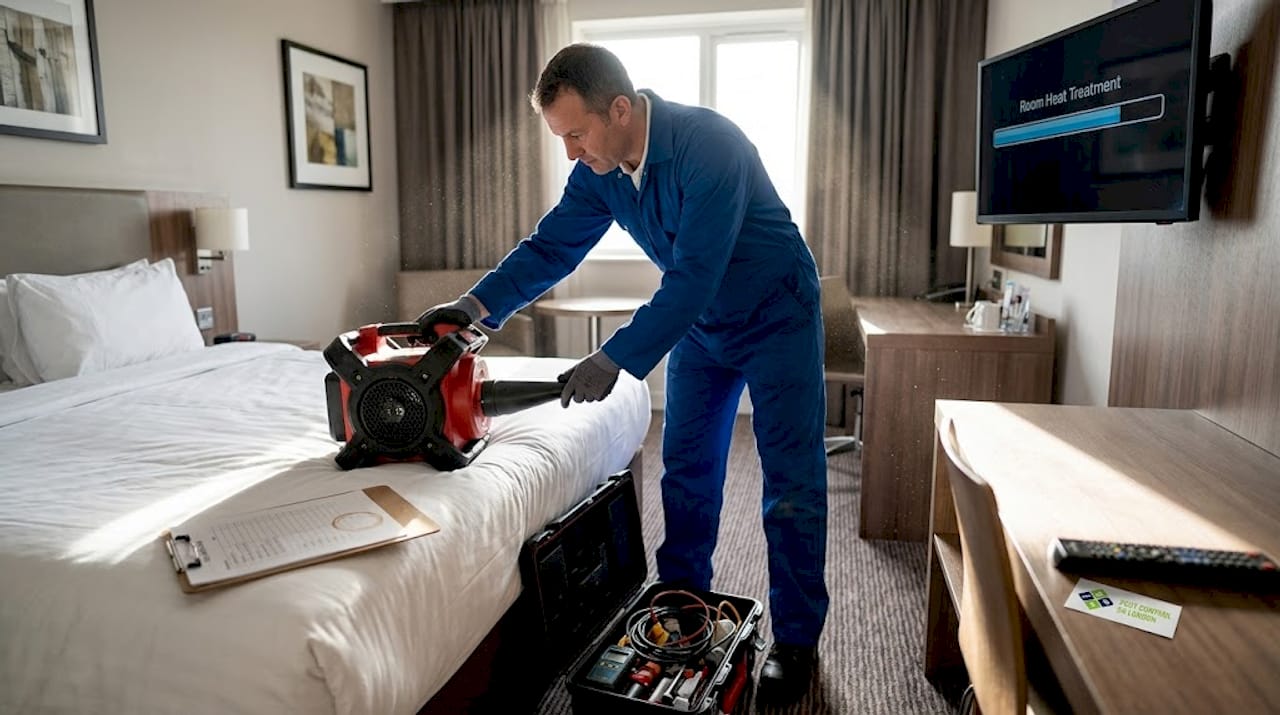
Chemical treatments, when part of an integrated pest management (IPM) approach, do have a genuine role. IPM combines targeted pesticide application with monitoring, physical exclusion, and staff protocols. The key word is targeted. Blanket spraying is ineffective and can scatter bugs further into the building.
Pro Tip: Never allow a single treatment method to become your only strategy. Combining heat with a follow-up IPM inspection gives hotels the strongest possible assurance of a complete clearance.
For ongoing protection, explore commercial pest control options that include scheduled monitoring visits, not just reactive callouts. Having an established contract means your pest controller already knows your building layout, reducing response times considerably.
Having covered treatment success, it’s vital to focus on ongoing prevention.
Preventing repeat infestations: Long-term bed bug management
Successful treatment solves today’s problem. Preventing tomorrow’s requires a structured, ongoing programme embedded into your hotel’s daily operations.
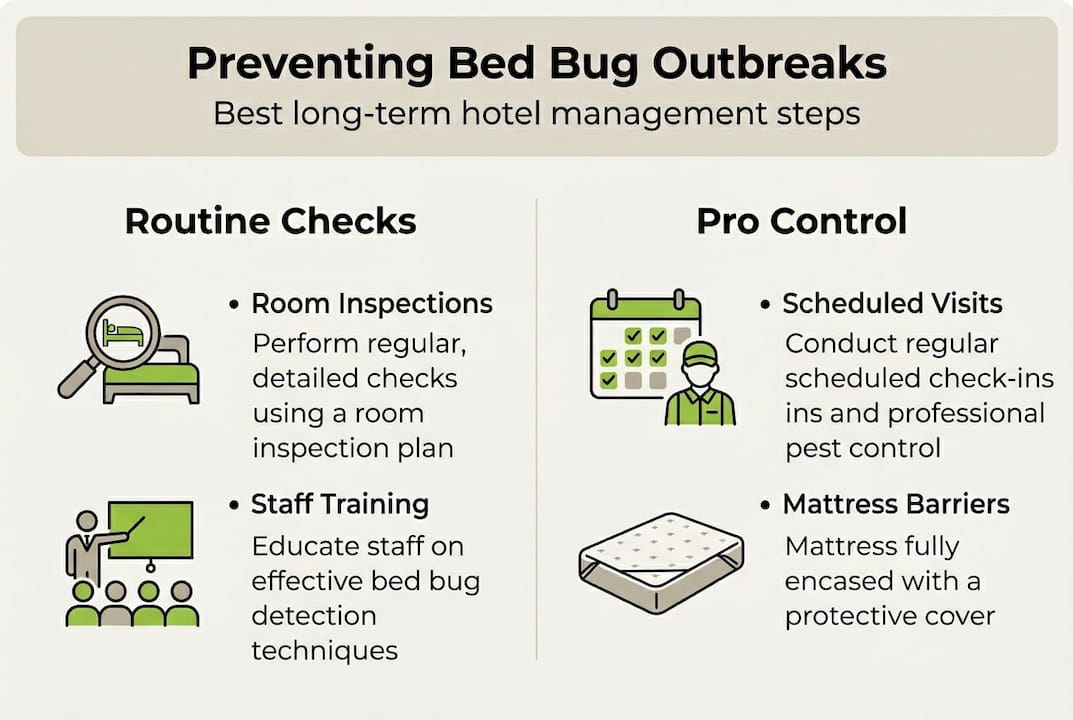
| Prevention activity | Frequency | Responsible party |
|---|---|---|
| Full room inspection | Monthly | Trained housekeeping or pest controller |
| Mattress encasement check | Quarterly | Housekeeping supervisor |
| Luggage rack inspection | Weekly | Housekeeping staff |
| Professional monitoring visit | Quarterly | Licensed pest controller |
| Staff bed bug awareness training | Annually | Management |
A few core principles underpin effective long-term management:
- Mattress and box spring encasements trap any surviving bugs and make new infestations visible much sooner
- Clear reporting channels encourage staff to flag concerns without fear of blame, which speeds up response times
- Guest communication policies should be prepared in advance so that if a complaint arises, your team responds calmly, professionally, and with a clear remediation plan
- Post-treatment disinfection protocols are essential before a room is returned to service, reducing the risk of secondary issues
The documented costs of unmanaged infestations make a compelling business case for preventive investment. A quarterly pest control contract costs a fraction of a single closure event.
Beyond established practice, consider a frank perspective from industry experts.
What hotel managers often overlook in bed bug control
After more than ten years working with hotels across London, we have noticed a consistent pattern: most managers treat bed bug control as a reactive problem rather than a continuous process. The assumption is that once a treatment is complete, the issue is resolved. It rarely is that simple.
Staff vigilance is genuinely undervalued. A well-trained housekeeper who knows what to look for is worth more than the most expensive treatment contract. Investing in regular awareness sessions pays dividends far beyond any single infestation event.
Transparent communication with guests also matters more than people expect. Handled professionally, a guest complaint can actually reinforce trust in your brand. Explore professional cleaning insights to understand how thorough post-treatment cleaning further supports your reputation recovery.
Protect your hotel with expert pest control support
Managing bed bugs effectively means having the right partner ready before a problem escalates.

At Professional Pest Control Services, we have supported big brand hotels and hospitality businesses across London since 2015. Our BPCA-qualified team offers rapid-response commercial pest control service alongside targeted fast bed bug removal treatments. Whether you need a one-off emergency callout or a proactive service contract with regular monitoring, we are ready to help. Contact us today to arrange a professional assessment and protect your hotel’s reputation.
Frequently asked questions
What is the most effective bed bug treatment for hotels?
Heat treatment is the gold standard, eliminating bed bugs at every life stage quickly and without the risk of chemical resistance building over time.
How can hotels prevent recurring bed bug problems?
Regular room inspections, mattress encasements, trained staff, and a structured partnership with professional pest controllers are the most reliable combination for preventing recurrence.
Can guests detect bed bugs during their stay?
Guests may notice small reddish bite marks, blood stains on bedding, or occasionally a live bug near the mattress, but consistent detection requires trained staff conducting systematic inspections.
Do chemical sprays work against hotel bed bugs?
Targeted, approved treatments used within an integrated pest management plan can be effective, though heat treatment consistently delivers the most reliable and complete results.
How much can a hotel bed bug outbreak cost?
Costs can reach hundreds of thousands of pounds once room closures, professional treatment, deep cleaning, and reputational damage are all accounted for.
Recommended
- Bed Bug Removal London | Fast Treatment & Guaranteed Results – Pest Control 24 London
- Pest Disinfection London | Professional Sanitization After Infestations – Pest Control 24 London
- Domestic Pest Control London | Professional Home Pest Removal – Pest Control 24 London
- Pest Control News – Pest Control 24 London
- Why automate hotel compliance: Boost efficiency, cut risks