

Drain fly treatment succeeds only when you remove the organic biofilm the larvae feed on, not when you pour something down the plughole and hope. Traps and sprays reduce the adults you see flying around your bathroom, but they leave the breeding material untouched. If mechanical cleaning does not reach the source, or the flies keep returning after a genuine clean, that is your signal to bring in a professional.
TL;DR:
- Mechanical cleaning, including brushing and augering, is essential because it physically removes the biofilm that larvae feed on, unlike chemical treatments.
- Confirming breeding sites with traps or visual checks over suspect drains ensures resources are focused on actual sources rather than wandering adults.
- Proper identification distinguishing drain flies from fruit flies prevents ineffective treatments by targeting the correct breeding area.
- Repeated chemical treatments are ineffective unless combined with thorough mechanical removal of biofilm, which typically requires professional intervention for hard-to-reach sites.
- Ongoing maintenance, such as regular enzymatic cleaners and fixing leaks, is key to preventing recurrent infestations once the source is eliminated.
Table of Contents
- Quick checklist: what to do in the first 24 to 48 hours
- How do you tell drain flies from fruit flies?
- Step-by-step mechanical drain cleaning to remove biofilm
- What chemical and enzymatic treatments work?
- When is it time to call a professional?
- How to stop drain flies returning: a maintenance schedule
- Why most drain fly advice stops one step too early
- Book a proper drain fly inspection with Pestcontrol24london
- Sources
Quick checklist: what to do in the first 24 to 48 hours
Before you strip a drain apart, spend a day confirming where the flies are actually breeding and slowing the adult population down. This costs you nothing but a few household items and gives you evidence to work from.
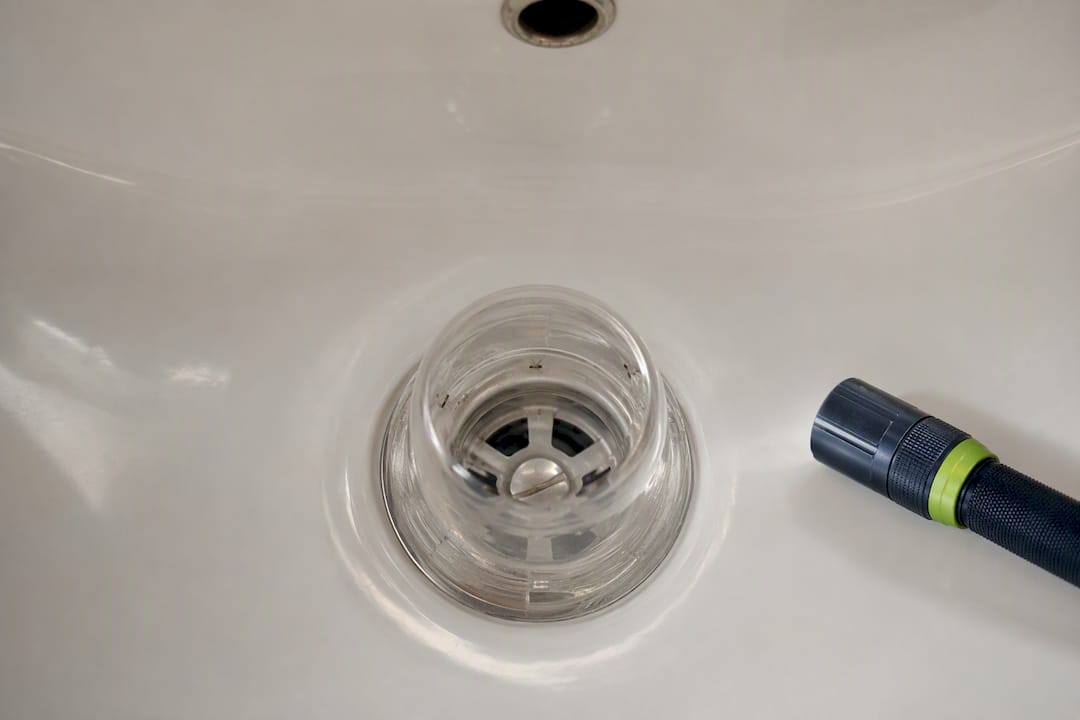
- Set a trap over each suspect drain. Coat the inside of a cup or jar with petroleum jelly or vegetable oil and invert it over the drain opening overnight; emerging adults get caught as they try to fly out.
- Vacuum or collect any flies you can see on walls or ceilings near sinks and showers, rather than swatting them.
- Add a sticky trap or two near affected fittings to cut down on egg-laying while you plan the full clean.
- Run hot water through the drain as a stopgap to loosen surface debris, not as your fix.
- Leave the household chemicals alone for now. Do not mix bleach with anything, and do not pour insecticide down the drain.
Pro Tip: Label each trap with the date and drain it covers. If you have several bathrooms or a kitchen and utility room, this is the only reliable way to work out which drain is actually breeding flies rather than just collecting the ones that wander in from elsewhere in the house.
How do you tell drain flies from fruit flies?
Drain flies and fruit flies get confused constantly, and the mix-up matters because the fix for each is completely different. Fruit-fly control means clearing food waste and ripe produce; drain-fly control means physically removing biofilm from pipework. Treat the wrong target and you will still have flies next week.
Visual identification:
- Drain flies are small, fuzzy, moth-like, with rounded, roofed wings held tent-fashion over the body at rest.
- Their flight is short and hovering, often just a few inches at a time, unlike the quicker, more direct flight of fruit flies.
- Fruit flies are smaller, tan or brown with red eyes, and cluster around bins, fruit bowls, and food waste rather than plumbing fixtures.
Confirming the source with a simple test:
Leave a Vaseline or vegetable oil coated cup, or a small glue board, over each suspect drain for a full 24 hours. Any flies trapped inside confirm that particular drain as an active breeding site, a method recommended by university IPM programmes precisely because it is cheap and conclusive. Look out for supporting plumbing signs too: slow drainage, gurgling when water runs elsewhere in the house, or a faint sewage-like odour around the fitting. Lift the grate or stopper with a torch to hand and check for a dark, gelatinous slime coating the pipe walls; that film is the larval habitat. If every indoor drain comes back clean, widen the search to mop buckets, condensate lines from air conditioning units, and any external drains near the property.
Step-by-step mechanical drain cleaning to remove biofilm
Mechanical cleaning is the treatment that actually works, because extension research consistently points to removing the breeding source itself as the decisive step, rather than any pour-in product. Gather your kit first: rubber gloves, safety goggles, a long-handled stiff brush or bottle brush, a bucket, a drain auger or snake, a screwdriver, and a torch.
- Remove the grate or stopper. Most lift straight out or unscrew; keep the screwdriver handy for stubborn fittings.
- Access and clean the P-trap. This U-shaped section under sinks holds standing water and is a common breeding spot; unscrew the trap over a bucket to catch the contents, then scrub it out separately.
- Scrub several inches into the pipe. Push the brush past the visible opening and work it against the pipe walls, where the slime layer actually sits.
- Run the drain auger through deeper sections. A snake reaches blockages and biofilm beyond arm’s reach that brushing alone cannot touch.
- Rinse everything and reassemble. Clean the trap, grate, and stopper under running water before refitting them.
- Run water through to confirm free flow and watch for any lingering odour or slow drainage.
- Repeat after three to five days. Given how quickly the flies breed, a second clean within that window catches anything the first pass missed.
Pouring boiling water or bleach down the same drain without this scrubbing step rarely finishes the job, because these treatments do not remove the embedded organic film where larvae actually live. If you would rather not dismantle plumbing yourself, our guide to removing pests safely covers the basic safety precautions for DIY work around fittings and chemicals.
Pro Tip: If the same drain keeps breeding flies after two full mechanical cleans, stop repeating the process. That pattern usually means the biofilm sits somewhere the brush and auger cannot reach, and it is time to consider a proper survey rather than a third scrub.
What chemical and enzymatic treatments work?
Boiling water, vinegar, and household bleach are the default reach for most people, and they do knock back the adults you can see. The trouble is they rarely shift the organic film coating the pipe, so the flies are usually back within a week or two.
Enzymatic and foaming drain cleaners sit in a different category. These products work by breaking down organic matter biologically rather than by burning it away chemically, so they help loosen residual biofilm after you have already scrubbed the accessible sections by hand. Apply them at night, when the drain will sit undisturbed for several hours, and repeat weekly until the flies stop appearing.
- Never mix bleach with ammonia-based products; the combination produces toxic fumes.
- Avoid strong caustic drain cleaners as a routine fix; they are designed for blockages, not biofilm, and repeated use can damage older pipework.
- Skip pouring insecticide down the drain, which offers only temporary knockdown of adults and does not touch the larvae.
Insect growth regulators (IGRs) exist for genuinely stubborn cases, but treat them as a specialist, labelled option rather than a shelf purchase. Guidance from Virginia Cooperative Extension notes that chemical control is largely unnecessary for residential infestations once the breeding material is physically removed, which is exactly why mechanical cleaning comes first every time.
When is it time to call a professional?
Some breeding sites simply are not reachable with a brush and an auger. Wall voids, pipework beneath a concrete slab, or a fault feeding into an external sewage or septic connection all fall into this category, and off-site sources demand exclusion work and proper assessment rather than another round of home scrubbing.
Book a professional visit when:
- You have cleaned the same drain mechanically twice and adults still appear within a week.
- Traps confirm a drain is active, but you cannot access or dismantle the section responsible.
- You notice a persistent sewage smell alongside the flies, suggesting a fault beyond the visible pipework.
A CCTV drain survey locates blockages and breeding pockets that sit out of reach, and professional teams typically follow that with targeted mechanical clearing and, where removal genuinely is not possible, an IGR application, a combination BPCA-aligned practice recommends for exactly this scenario. Before booking, note which fittings the traps confirmed, when you first saw adults, and what cleaning you have already tried; it saves the surveyor time and speeds up the diagnosis.
How to stop drain flies returning: a maintenance schedule
Prevention is cheaper than repeat treatment, and most of it takes minutes. Drains that sit unused for days develop a dry biofilm that flies find just as attractive as a wet one, so the schedule below keeps every fitting in the house inhospitable to them.
Weekly:
- Run water through rarely used drains, including guest bathrooms and utility sinks.
- Clean strainers and stoppers under running water to stop debris building back up.
- Vacuum walls near fittings if you notice adults gathering.
Monthly:
- Run an enzymatic cleaner through every drain in the property, not just the one that had flies.
- Inspect and clean P-traps wherever they are accessible without a plumber.
Ongoing and seasonal:
- Fix dripping taps and slow leaks promptly; standing water anywhere is a breeding opportunity.
- Improve ventilation in bathrooms to reduce the damp conditions biofilm needs to establish.
- Check external drains and condensate outlets from air conditioning or dehumidifiers, which are easy to overlook.
- If flies reappear as the weather warms, inspect septic or external sewer connections, since off-site breeding grows more active in warmer months.
Our guide to spotting drain fly infestations is worth bookmarking if you want to catch the early signs before the population builds.
Why most drain fly advice stops one step too early
Most guidance on this topic gets the first half right and then quietly drops the reader. It correctly says boiling water and bleach are weak fixes, then offers a shopping list of alternative pours instead of pushing the reader towards the brush and the auger, which is the part that actually solves the problem. That gap exists because scrubbing out a P-trap is unglamorous advice compared to naming a product.
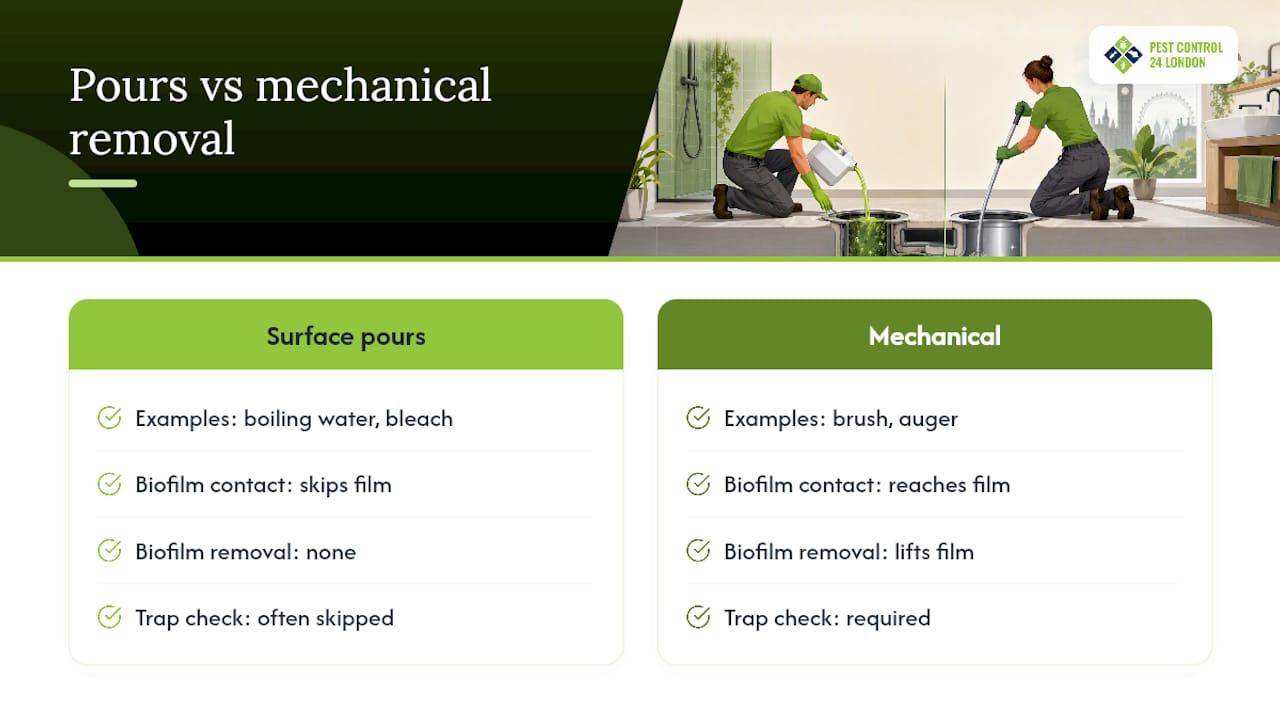
The conventional wisdom I would push back on hardest is the idea that chemical strength matters more than mechanical access. It doesn’t. A caustic cleaner cannot scrub slime off a pipe wall any better than vinegar can; both skip past the film rather than lifting it away. What separates a one-off nuisance from a recurring infestation is almost always whether someone physically removed the biofilm, and whether they checked the P-trap rather than assuming the visible grate was the whole problem.
If you take one thing from this piece, prioritise the trap test before you touch a single tool. Knowing which drain is actually breeding saves you from cleaning three fittings when only one was ever the source.
— Dan
Book a proper drain fly inspection with Pestcontrol24london
If you have already scrubbed the P-trap twice and the flies are still turning up, the issue is almost certainly somewhere a bottle brush cannot reach, and that is exactly where Pestcontrol24london’s approach pays off over another round of home remedies. As a BPCA-qualified team working across London since 2015, we combine drain surveys with targeted mechanical treatment rather than guessing with another pour-in product.

Our drain survey service uses CCTV inspection to locate breeding pockets inside wall voids, under slabs, or along external connections, the sites that genuinely defeat DIY cleaning. For households dealing with wider pest pressure alongside the flies, our domestic pest control service covers the full property, and our post-treatment sanitisation work clears residual biofilm properly once the source is identified. Get in touch through our London booking page for a free quote and tell us which drains your trap test flagged; it lets us prepare the right equipment before we arrive.
Sources
For readers who want to check the science behind this advice, the Alabama Cooperative Extension System, NC State Extension, and BPCA’s drain fly guidance all cover identification and control in more depth. Our own signs of infestation page and drain survey service go further into the London-specific side of things.
- Drain Flies in the Home: Identification & Management – Alabama Cooperative Extension System
- Moth or drain flies | UC IPM
- Drain Flies | NC State Extension Publications
- I spy, my little drain fly: an in-depth look at drain fly control (BPCA)