

Pests are far more common in London homes than most people realise, and assuming the problem only affects other households is one of the most costly mistakes a homeowner can make. Many people also believe that pest control means calling someone out to spray chemicals everywhere. In reality, modern Integrated Pest Management focuses on inspection, targeted treatment, and lasting prevention, using pesticides only when genuinely necessary. This guide explains what domestic pest control actually involves, how the process works, and what every London homeowner needs to know to protect their property effectively.
Table of Contents
- Understanding domestic pest control
- Key steps in effective household pest control
- Professional methods versus DIY approaches
- Key considerations and legal responsibilities in London
- Our perspective: getting pest control right in London
- Expert domestic pest control help in London
- Frequently asked questions
Key Takeaways
| Point | Details |
|---|---|
| Integrated approach works best | Inspection, identification, targeted action, and prevention deliver long-term pest solutions. |
| Professional help is often essential | Experts use safer products and more effective methods for persistent or hazardous pests. |
| Legal protections must be respected | Special care is needed when protected wildlife like bats are present in your home. |
| Year-round vigilance required | London homes face seasonal pest risks, so consistent action prevents infestations. |
Understanding domestic pest control
Domestic pest control is the inspection-based, targeted management of pests in and around a home to identify the pest, eliminate or reduce it, and prevent it from coming back. It is not simply a matter of reaching for a can of spray and hoping for the best. True pest management follows a structured approach that addresses the root cause of an infestation rather than masking its symptoms.
The principle behind Integrated Pest Management, or IPM, is to make the environment as inhospitable to pests as possible. This means reducing food sources, eliminating water access, sealing entry points, and only applying pesticides where they are genuinely needed and where safer alternatives will not suffice. The result is a more effective outcome and a reduced risk to your household and the wider environment.
London homes face a particular range of pest pressures due to the city’s density, age of housing stock, and year-round mild temperatures. The most common pests encountered include:
- Rats and mice, which enter through gaps in brickwork, pipework, and flooring
- Cockroaches, which harbour in warm, damp areas such as behind appliances and under sinks
- Wasps and hornets, which nest in roof spaces, wall cavities, and garden structures
- Bedbugs, which spread rapidly through furnished properties and communal living spaces
- Ants, which can establish large colonies beneath floors and within wall voids
- Fleas, particularly in homes with pets or where infested furniture has been acquired
Understanding which pest you are dealing with is critical, because each species requires a different approach. Treating a cockroach infestation the same way you would treat an ant problem will almost certainly fail.
“Effective pest management is not about the volume of product used. It is about using the right method in the right place at the right time.” This principle sits at the heart of professional pest control.
Pro Tip: If you spot signs of pest activity, such as droppings, gnaw marks, or unusual smells, do not delay. Early intervention is far easier and less costly than tackling a well-established infestation. Our domestic pest control services cover all common household pests across London.
Key steps in effective household pest control
With the fundamentals understood, let us walk through exactly how pest control unfolds in a typical home. The process follows a logical and consistent sequence that professionals apply regardless of the pest involved.
Inspection: A thorough inspection of the property identifies where pests are active, how they are gaining access, and what conditions are supporting them. This includes checking roof spaces, sub-floor areas, kitchens, utility rooms, and external walls.
Identification: Correctly identifying the species is essential. Misidentification leads to wasted effort and unnecessary product use. For example, distinguishing between a German cockroach and an Oriental cockroach matters greatly because their harbourage preferences differ significantly.
Treatment: Once identified, treatment is applied using the most targeted and appropriate method for that species. The IPM sequence moves from non-chemical methods first, such as physical removal, trapping, or exclusion work, to the safest effective pesticide only when other options are insufficient.
Prevention: Proofing, sanitation advice, and moisture reduction are put in place to stop pests returning. This might involve sealing gaps around pipes, improving ventilation, or advising on food storage practices.
The table below summarises each step, the typical actions involved, and what to look out for during the process.
| Step | Actions taken | What to look for |
|---|---|---|
| Inspection | Check all rooms, roof voids, and external walls | Droppings, gnaw marks, grease trails, nests |
| Identification | Examine pest specimens, activity signs | Species-specific features such as size, colour, behaviour |
| Treatment | Apply baits, gels, powders, traps, or exclusion work | Correct placement, minimal disruption to household |
| Prevention | Seal entry points, advise on hygiene and storage | Gaps around pipes, damp areas, open food containers |
A common pitfall for homeowners attempting DIY pest control is missing hidden entry points. Rats, for example, can squeeze through a gap the size of a 50 pence coin, and missing even one access point can render an otherwise effective treatment completely useless.
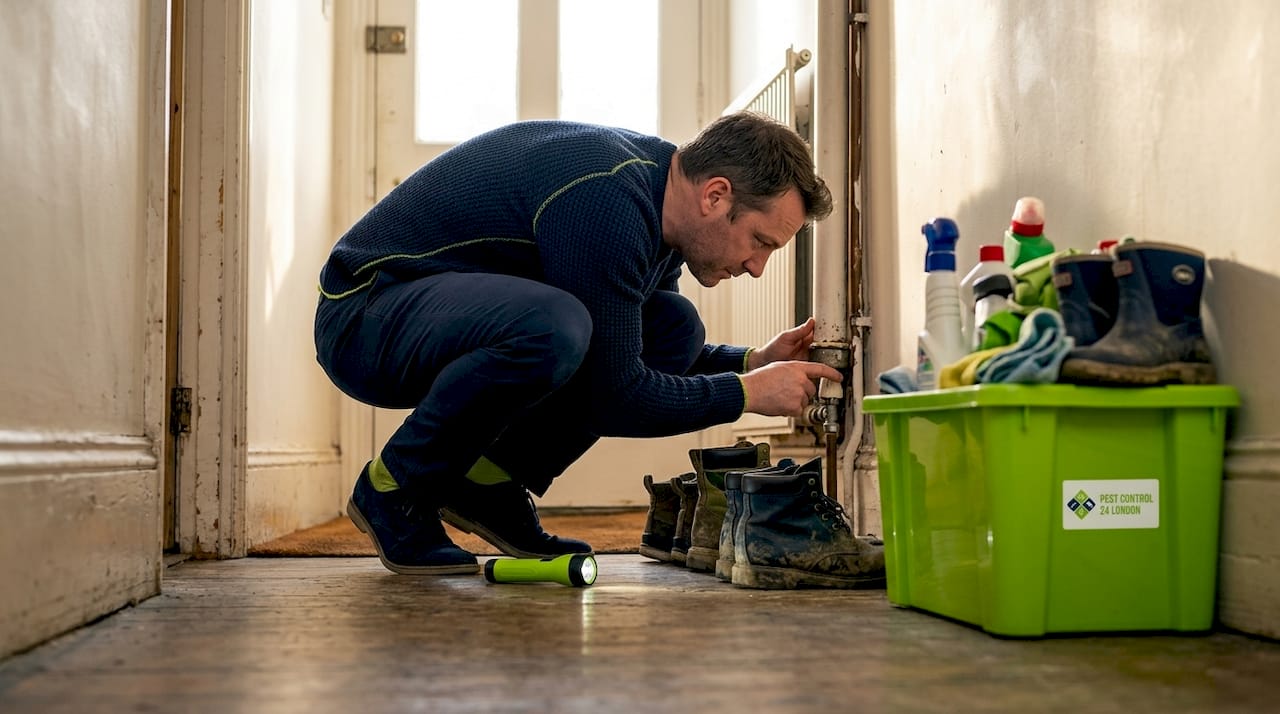
Pro Tip: Look beyond the obvious. Check where utility pipes enter the property, inspect air bricks for damage, and examine the junction between roof tiles and fascia boards. You will find useful practical pest control tips on our website that can help you spot vulnerabilities before they become problems.
Professional methods versus DIY approaches
Having covered the process, it is important to know your options and their limitations. DIY pest control has its place, but it is rarely sufficient for established or complex infestations.
For minor issues, such as a small number of ants entering through a window frame or a single wasp spotted indoors, basic DIY measures can be appropriate. Sealing entry points, removing attractants, and using commercially available baits can manage low-level activity. However, DIY approaches carry significant limitations.
Professionals have access to products, equipment, and techniques that are simply not available to the public. For cockroach infestations, the BPCA guidance is clear: effective control requires a thorough survey to determine harbourage locations and infestation levels, followed by targeted application of baits, gels, powders, and residual insecticides. Sticky traps, which are widely available in shops, serve only as monitoring tools and are not recommended for controlling cockroaches. Relying on them as a primary treatment will not resolve the problem.
| Factor | DIY approach | Professional service |
|---|---|---|
| Product availability | Limited to retail products | Regulated professional-grade treatments |
| Accuracy of identification | Often unreliable | Trained and qualified assessment |
| Access to harbourage areas | Frequently missed | Systematic survey of all areas |
| Effectiveness on severe infestations | Low to moderate | High, with follow-up monitoring |
| Legal compliance | Risk of misuse | Fully compliant with regulations |
For persistent or recurring problems, professional help is always the wiser choice. Applying the wrong product in the wrong place does not just fail: it can cause pests to scatter and become harder to treat. Good autumn pest-proofing tips and preparation for the colder months can also reduce the need for reactive treatment. Equally, knowing how to approach dealing with winter pests is essential as rodents and cockroaches seek warmth indoors.
“Monitoring is not control. For serious infestations, it takes trained identification, targeted treatment, and structured follow-up to resolve the problem safely.”
Key considerations and legal responsibilities in London
Knowing methods is one thing, but legal and practical details matter just as much for London households. Pest control in the capital is not simply a matter of choosing a treatment and getting on with it.
One of the most important legal considerations involves protected species. If your property contains bats or their roosts, all pest control activities must be carefully managed. The BPCA advises that it is illegal to damage, destroy, or disturb bats or their roosts without taking the necessary precautions. If you discover bat activity during pest control work, you must stop immediately and seek specialist wildlife advice before continuing. Failure to do so can result in serious legal consequences.
Beyond wildlife protection, there are several other considerations London homeowners should keep in mind:
- Year-round vigilance is necessary, as pests do not follow a simple seasonal pattern in London’s relatively mild climate
- Rodents can cause structural damage by gnawing through wiring, pipework, and insulation, making prompt action essential
- Wasps require species-specific strategies, as disturbing a large nest without proper equipment and protection can be extremely dangerous
- Cockroach infestations can develop rapidly in warm, humid conditions typical of older London properties
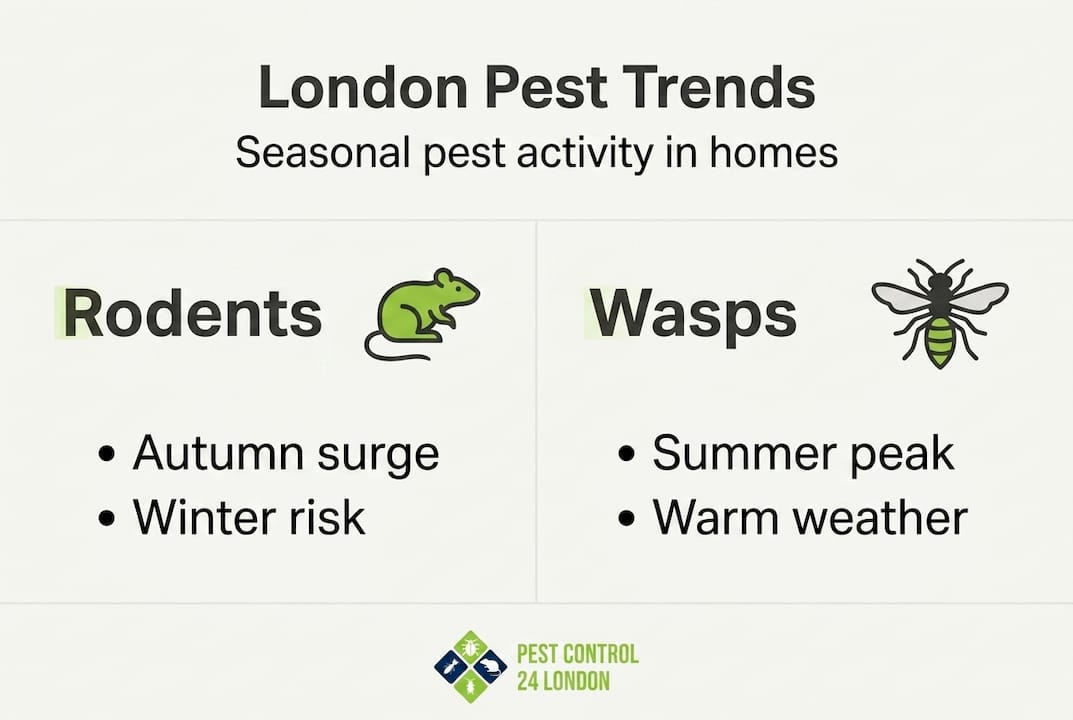
Rodents and wasps are the leading causes of domestic pest call-outs recorded across London, based on BPCA pest activity statistics from 2025, which reflects why these two pest types demand specific, well-informed responses rather than generic solutions.
Seasonal awareness is also critical. Rodent pressure increases sharply in autumn and winter as temperatures drop. Wasp activity peaks in late summer. Cockroach infestations can worsen during warmer months. Adapting your approach to the season is a straightforward but often overlooked part of effective pest management. For up-to-date guidance, the latest pest control advice on our blog covers seasonal threats and what to do about them.
Pro Tip: If you are unsure whether wildlife protection laws apply to your property, always err on the side of caution. Stop work and contact a qualified pest control professional or the relevant wildlife authority before proceeding.
Our perspective: getting pest control right in London
Having explored practical and legal details, let us share what our experience reveals about what really works for Londoners.
After more than ten years working across London properties, from Victorian terraces in Hackney to modern flats in Chelsea, one thing is consistently clear: shortcuts almost always lead to repeat problems. A one-off treatment without proper inspection and proofing simply delays the next infestation rather than preventing it. Homeowners sometimes underestimate how persistent pests like rodents and cockroaches can be, and how quickly a small issue becomes a serious one.
London’s older housing stock, mixed-use buildings, and shared walls create unique conditions that generic pest control approaches simply do not account for. Reactive, one-size-fits-all treatments rarely deliver lasting results in this environment. The properties that remain pest-free are almost always those where the homeowner or landlord commits to proactive monitoring and seasonal pest-proofing advice rather than waiting for a visible problem to appear.
We firmly believe that IPM, carried out by qualified local professionals who understand the specific challenges of London homes, is not just the best approach. It is the only approach that genuinely works over the long term.
Expert domestic pest control help in London
Ready to take control of pests in your home? Working with qualified professionals removes the guesswork, ensures full legal compliance, and delivers targeted solutions that are tailored to your specific property and pest type.

Our team of domestic pest control specialists has been serving London households since 2015, with BPCA qualifications and a track record of thousands of successful treatments. Whether you need Chelsea pest control experts or support anywhere across the capital, we respond quickly and work with minimal disruption to your household. Contact our London 24/7 pest control team today for a fast, professional assessment.
Frequently asked questions
What is the main goal of domestic pest control?
The main goal is to identify and eliminate pests in and around the home and prevent their return through safe, targeted management that addresses both the infestation and its underlying cause.
Is it safe to do pest control on your own?
Some minor pest issues can be managed safely with basic methods, but for stubborn infestations like cockroaches, professional techniques and regulated products are necessary to achieve safe and lasting control.
Can I remove pests if bats are present?
No. If bats or their roosts are discovered, you must stop all pest control activity and seek specialist advice, as disturbing or harming bats is illegal without proper precautions in place.
What pests are most common in London homes?
Rodents and wasps are the most frequently recorded pests in London, according to BPCA pest activity statistics from 2025, and both require species-specific strategies for effective control.