

Disinfection is the process of destroying harmful microorganisms on surfaces, while pest control manages insects, rodents, and other macroscopic organisms that threaten health and property. These two services address entirely different threats, yet both are complementary health and safety measures for any home or business. Disinfection targets pathogens you cannot see. Pest control targets creatures you can. Understanding the difference between the two helps you choose the right service, at the right time, for the right problem. Integrated Pest Management (IPM), biocidal products, and professional disinfection services each play a distinct role in keeping your environment safe.
Disinfection vs pest control: what is the difference?
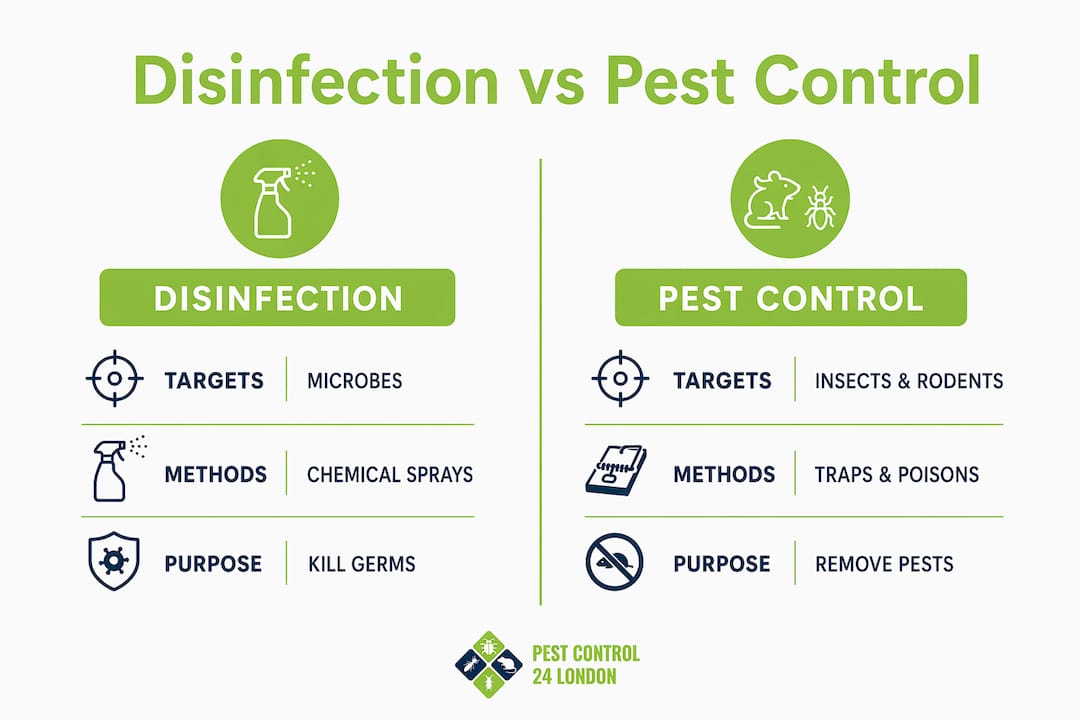
Disinfection destroys or irreversibly inactivates 99.9% of disease-carrying microorganisms on hard surfaces, targeting viruses, bacteria, and fungi. Pest control, by contrast, manages or eradicates insects and rodents that cause health risks or structural damage. One operates at the microscopic level. The other addresses threats you can physically see and hear.
The table below shows the core differences at a glance.
| Feature | Disinfection | Pest Control |
|---|---|---|
| Target threat | Bacteria, viruses, fungi | Insects, rodents, vermin |
| Method | Chemical biocidal agents | Traps, pesticides, exclusion |
| Primary goal | Eliminate pathogens on surfaces | Remove or prevent pest activity |
| Typical setting | Kitchens, bathrooms, healthcare | Homes, restaurants, warehouses |
| Regulation | Biocidal Products Regulation | Health and Safety at Work Act |
Sanitising reduces most germs but does not kill all viruses. Disinfection is more potent and is used in high-risk areas such as healthcare facilities and childcare settings where vulnerable populations require a higher standard of protection. This distinction matters when you are deciding between a standard clean and a professional disinfection treatment.
A common misconception is that cleaning a surface also controls pests. It does not. Cleaning removes visible dirt and reduces surface contamination. It does not address a rodent nest behind your skirting board or a bed bug colony in your mattress. These require entirely separate interventions.
Legally, disinfectants are classified as pesticides because they kill or repel harmful organisms, including microbes. This overlap in classification is worth knowing, but it does not mean the two services are interchangeable in practice.
What are the main pest control methods?
Professional pest control methods include physical, cultural, and chemical approaches, all managed under the principles of Integrated Pest Management. IPM prioritises prevention and minimal chemical use, making it the most responsible framework for both homes and businesses.
The three core method categories are:
- Physical methods: Traps, sticky boards, exclusion proofing, and ultrasonic deterrents. These target specific pest species without introducing chemicals into the environment.
- Cultural methods: Sanitation, moisture control, and waste management. Removing food, water, and shelter is the single most effective way to reduce pest pressure before it becomes an infestation.
- Chemical methods: Targeted pesticides applied by trained professionals to harborage sites, entry points, and active pest pathways.
Pro Tip: Environmental modification is more sustainable than repeated chemical application. Sealing entry points, fixing leaking pipes, and storing food in airtight containers removes the conditions pests need to survive. The US EPA confirms that pest prevention through sanitation is the foundation of effective control.
Disinfection services are often employed after a pest infestation has been resolved. Biocidal treatments post-infestation reduce pathogens left behind in pest waste, urine, and droppings, restoring health safety to the affected area. This combined approach is standard practice in commercial kitchens, food storage facilities, and rental properties following a confirmed infestation.
Over-application of pesticides can cause pests to scatter or develop resistance, making future control harder and more expensive. More chemicals do not equal better results. A targeted, evidence-based approach always outperforms a blanket spray.
When do you need professional pest control or disinfection services?
Knowing when to call a professional is the most practical question most property owners face. The answer depends on the type of threat, its severity, and the risk it poses to occupants.
- Visible pest activity: Droppings, gnaw marks, larvae, or live insects signal an active infestation. Call a pest control professional, not a cleaning company.
- Health-risk pests: Bed bugs, rodents, and cockroaches require professional pest control because DIY products lack the longevity and application tools needed for full elimination.
- High-risk hygiene zones: Bathrooms, commercial kitchens, and healthcare areas require scheduled professional disinfection to maintain safe pathogen levels, regardless of pest activity.
- Post-infestation cleanup: Once pests are removed, disinfection services address the biological contamination they leave behind.
- Recurring problems: If pests return within weeks of treatment, the root cause has not been addressed. A professional assessment of entry points and harborage sites is needed.
Delaying professional treatment until pests reach dangerous levels leads to higher costs and more intrusive cleanups. Early intervention is always cheaper and less disruptive than a full-scale remediation.
Pro Tip: Never apply a pesticide and a disinfectant to the same surface simultaneously. Allow at least 24 hours between treatments to avoid chemical interaction and to assess the effectiveness of each product independently.
DIY solutions frequently fall short for severe infestations. Professional-grade equipment such as commercial dusters and injection tools reaches hidden harborage sites that consumer products simply cannot access. A trained technician also understands pest biology well enough to target the colony, not just the individuals you can see.
Practical steps to maintain health and safety through both services
A consistent, preventive approach is more effective than reactive emergency treatments. Ongoing pest protection combined with scheduled disinfection keeps both pathogens and pests under control throughout the year.
Key steps for homes and businesses:
- Sanitation first: Remove food debris, seal bins, and clean behind appliances regularly. Pests cannot establish themselves without a food source.
- Seal entry points: Fill gaps around pipes, cables, and door frames. Proofing is the most cost-effective long-term pest prevention measure.
- Control moisture: Fix leaking pipes and improve ventilation in damp areas. Many pest species, including silverfish and cockroaches, are drawn to moisture.
- Schedule professional disinfection: Sensitive premises such as restaurants, nurseries, and care homes benefit from regular disinfection services on a fixed schedule.
- Monitor consistently: Use sticky traps and conduct regular inspections to catch activity early. Early monitoring and exclusion are the keys to controlling infestations before they escalate.
The table below compares DIY and professional interventions across common scenarios.
| Scenario | DIY Approach | Professional Approach |
|---|---|---|
| Single mouse sighting | Snap trap, seal entry point | Full survey, proofing, bait stations |
| Cockroach activity in kitchen | Gel bait from hardware store | Targeted treatment, disinfection post-treatment |
| Bed bug signs in bedroom | Mattress covers, heat wash | Heat treatment or chemical treatment of full room |
| Surface contamination post-infestation | Household disinfectant spray | Biocidal treatment with professional-grade products |
Property owners benefit most from a consistent, monitored, preventive pest control programme rather than reactive emergency services. Prevention maintains health and saves money over the long term.
Key takeaways
Disinfection and pest control address different threats and require different methods, but combining both delivers the highest standard of health and safety for any property.
| Point | Details |
|---|---|
| Distinct threats, distinct solutions | Disinfection targets pathogens; pest control targets insects and rodents. Never substitute one for the other. |
| IPM is the gold standard | Integrated Pest Management prioritises prevention over chemicals, reducing resistance and long-term costs. |
| Professional services outperform DIY | Professionals access hidden harborage sites and apply treatments that consumer products cannot replicate. |
| Post-infestation disinfection is necessary | Pest waste leaves pathogens behind; biocidal treatment after pest removal restores full health safety. |
| Prevention saves money | Consistent monitoring and exclusion costs far less than emergency treatment after a full infestation. |
Why most people get this wrong, and what i have learned
From over a decade working in pest control across London, the most common mistake I see is treating disinfection and pest control as interchangeable. A client calls asking for a “deep clean” when what they actually need is a rodent survey. Or they book a pest treatment and assume the pathogens left behind by the infestation have disappeared along with the pests. They have not.
The second most common mistake is waiting. People delay calling a professional because the problem seems manageable. By the time they do call, the infestation has spread to multiple rooms, the cleanup is more complex, and the cost is significantly higher. Early intervention is not cautious. It is the rational choice.
What I have also found is that over-reliance on chemicals is just as problematic as under-treating. Clients who apply repeated DIY pesticide treatments often scatter pests into new areas or create resistant populations. A targeted, biology-informed approach always produces better results than volume.
The most effective property owners I work with treat pest control as ongoing property maintenance, not a one-off fix. They schedule inspections, address structural vulnerabilities, and book disinfection services after any confirmed infestation. That combination is what keeps a property genuinely safe.
— Dan
Professional pest control and disinfection services in london
Pestcontrol24london has been protecting London homes and businesses from pests since 2015. Whether you need a routine inspection, emergency treatment, or professional disinfection after an infestation, the team is available 24 hours a day, seven days a week.

BPCA-qualified technicians cover all London boroughs, serving hotels, restaurants, takeaways, and residential properties. Free quotes are available with no obligation. For commercial pest control or domestic pest removal, contact Pestcontrol24london today and get the right service for your specific situation.
FAQ
What is the difference between disinfection and pest control?
Disinfection destroys microscopic pathogens such as bacteria and viruses on hard surfaces. Pest control manages macroscopic organisms including insects and rodents that cause health or structural damage.
Do i need pest control if i already disinfect regularly?
Yes. Regular disinfection does not remove or deter insects and rodents. Pest control addresses the physical presence of pests, which disinfection cannot resolve.
When should i use disinfection services after a pest infestation?
Disinfection services should be applied after pest removal is confirmed. Pest waste, urine, and droppings leave pathogens behind that require biocidal treatment to eliminate safely.
Can i do pest control myself or do i need a professional?
DIY products can manage minor, isolated pest activity. For infestations involving bed bugs, rodents, or cockroaches, professional treatment is recommended because specialist equipment and knowledge of pest biology are required for full elimination.
How often should businesses schedule pest control and disinfection?
Most commercial premises benefit from quarterly pest control inspections and monthly or bi-monthly disinfection, depending on the nature of the business and the level of foot traffic or food handling involved.