

The most common pests in university canteens are rodents (rats and mice), cockroaches, ants, flies, stored-product insects, bed bugs, wasps, and birds. According to Healthy School Buildings, these pests appear even in otherwise well-maintained buildings when food is stored incorrectly or leaks go unaddressed. If you suspect an infestation right now, take these three steps immediately:
- Isolate the affected area and restrict access to prevent cross-contamination of food preparation zones.
- Secure or remove exposed food from the area; bag and seal anything that may have been in contact with pests.
- Document what you have found with timestamped photographs, log the date and location, and notify your line manager or facilities lead.
Professional pest management for food service environments follows the Integrated Pest Management (IPM) framework, the accepted industry standard for commercial food sites. Any contractor you engage should hold BPCA qualification and provide a written inspection report. This guide is produced by Pestcontrol24london, a BPCA-qualified pest control service established in London in 2015.
Key takeaways
Proactive IPM and routine monitoring, backed by a BPCA-qualified contractor, are the most reliable way to protect a university canteen from pest-related food safety failures and reputational damage.
| Point | Details |
|---|---|
| Priority pests to know | Rodents, cockroaches, ants, flies, stored-product insects, bed bugs, wasps, and birds are the most common threats in canteen environments. |
| First response matters | Isolate, secure food, photograph evidence, and log the event within 30 minutes of any sighting. |
| IPM over reactive sprays | Proofing, monitoring, and sanitation resolve infestations; chemical treatments alone without source removal lead to repeat problems. |
| HACCP documentation is non-negotiable | Inspection logs, corrective-action notes, and contractor reports are standard audit evidence under HACCP requirements. |
| Pestcontrol24london | BPCA-qualified, London-based since 2015, offering IPM programmes, emergency call-outs, and written reports for food service environments. |
Table of Contents
- Which pests are most common in university canteens?
- How to inspect your canteen and log what you find
- Day-to-day prevention that actually reduces pest pressure
- How does integrated pest management work in food service?
- When should you call a pest control professional?
- What experienced pest controllers see on campus sites
- What staff should do in the first 30 minutes and 24 hours
- Why proactive pest management saves money and reputation
- How Pestcontrol24london supports campus canteens
- Sources
Which pests are most common in university canteens?
Cafeterias and campus food service areas face a consistent set of pests that contaminate food, damage property, and create serious health and compliance risks. Here is what to expect and where to look for each one.
Rodents (rats and mice)
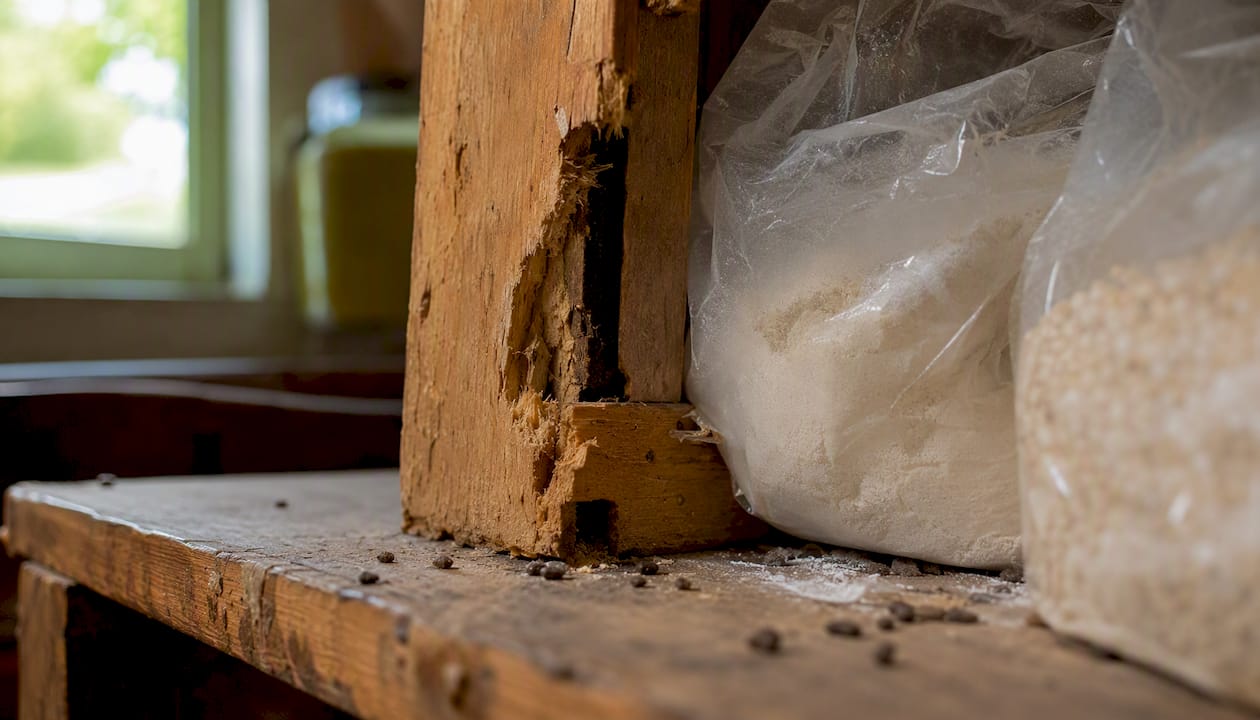
Rats and mice are drawn to canteens by the combination of warmth, food debris, and water. Mice can squeeze through very small gaps; rats require slightly larger openings. Both gnaw through packaging, contaminate surfaces with droppings and urine, and carry pathogens including Salmonella and Leptospira. Look for them behind cooking equipment, inside wall voids, under sinks, and in dry-goods stores. Monitoring traps at delivery bays are particularly useful because rodents are frequently introduced via incoming deliveries and can nest in wall voids before staff notice them.
Cockroaches
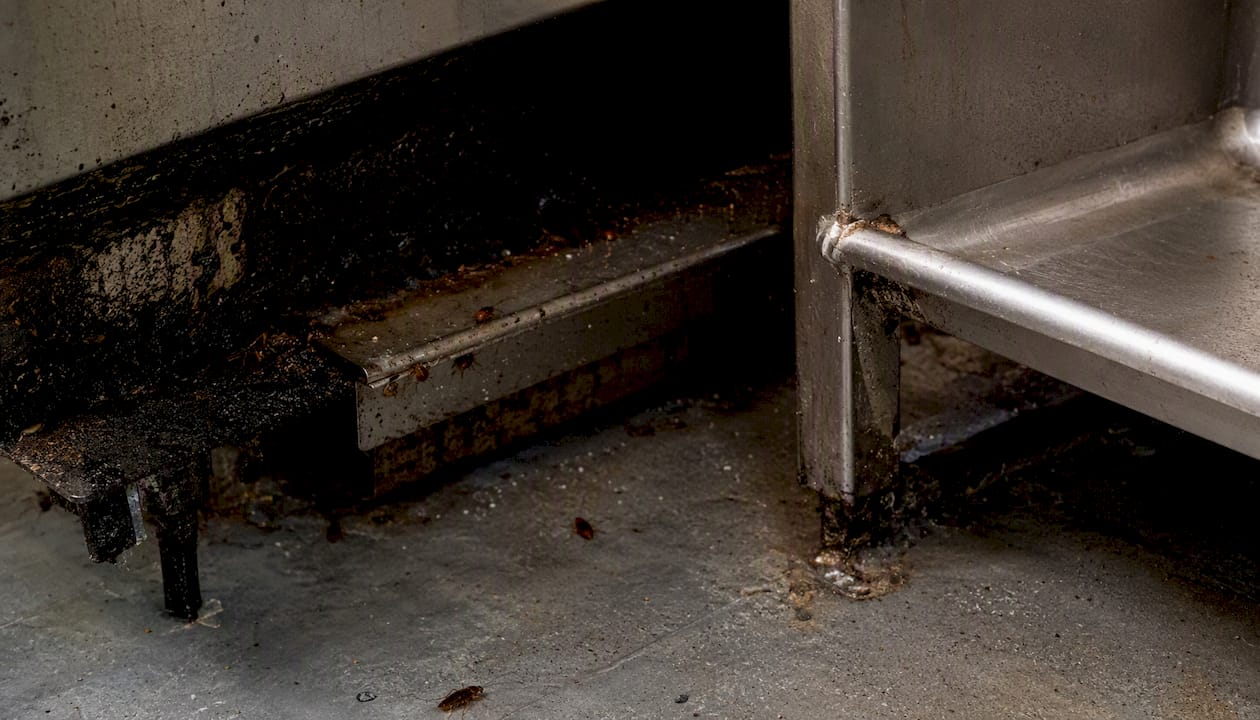
German cockroaches (Blattella germanica) are the species most commonly found in commercial kitchens. They are 10–15 mm long, pale brown, and prefer warm, humid harbourage sites: behind dishwashers, inside motor housings, under refrigeration units, and inside drain covers. Cockroaches contaminate food with bacteria and shed skins that act as allergens. A single cockroach sighting during daylight hours usually indicates a significant hidden population.
Ants
Black garden ants and pharaoh ants both appear in canteens, though pharaoh ants (1.5–2 mm, pale yellow) are the more serious food-safety concern because they actively seek out protein and sweet foods and can spread bacteria including Salmonella. Trails typically run from outdoor nests along wall edges, under door frames, and into storage areas. IPM training for food service classifies ants among the primary problematic pests in food-preparation areas and recommends zero tolerance.
Flies
Three species dominate in canteen environments: house flies (Musca domestica), fruit flies (Drosophila spp.), and drain flies (Psychoda spp.). House flies breed in outdoor waste and decaying organic matter; fruit flies are attracted to fermenting produce and overripe fruit; drain flies develop in the organic film lining floor drains and buckets. Insecticide applications rarely solve indoor fly problems without first removing the breeding source, so identification of the species matters before any treatment is chosen. For practical examples of fly monitoring in food service, see fly control in restaurants.
Stored-product insects
Grain weevils, flour beetles, Indian meal moths, and spider beetles target dry goods: flour, rice, cereals, dried pulses, and nuts. Stored-product pests can ruin entire inventory batches if sealed storage and stock rotation are not enforced. They are often introduced inside incoming deliveries rather than entering from outside, making delivery checks a critical control point.
Bed bugs
Bed bugs (Cimex lectularius) are less common in canteens than in residential areas, but campus settings carry a higher risk because students and staff move between accommodation and food service areas. They are 4–5 mm, oval, and reddish-brown. Look for them in upholstered seating in dining areas, along seams of soft furnishings, and in staff rest rooms.
Wasps and bees
Wasps are attracted to sugary waste and exposed food during late summer. Nests established in roof voids, wall cavities, or outdoor bin areas can pose a direct stinging risk to staff and students. Bees are generally protected and require specialist removal rather than extermination; always confirm the species before acting.
Birds
Pigeons and gulls congregate around outdoor dining areas and bin stores. Their droppings carry Cryptococcus and Salmonella, block drainage, and create slip hazards. Bird activity near delivery bays and loading areas can also introduce secondary pests.
Quick identification checklist:
- Droppings (size and shape identify the species)
- Gnaw marks on packaging or structural materials
- Grease smears along skirting boards and pipe runs (rodents)
- Live sightings, shed skins, or egg cases (cockroaches)
- Frass (fine powder or pellets near stored goods)
- Webbing or larvae in dry-goods containers
- Fly specks on surfaces near light fittings
- Feathers, nesting material, or bird droppings near vents
Pro Tip: Photograph any live pest or evidence with your phone, include a coin or pen for scale, and enable the timestamp. A clear photo sent to a contractor saves time and helps them bring the right equipment on the first visit.
How to inspect your canteen and log what you find
The most reliable inspections are systematic and area-by-area. Pest pressure in a canteen is rarely uniform; it concentrates in specific micro-environments. Use the numbered sequence below as your inspection routine.
- Kitchen and cooking line. Check behind and beneath all fixed equipment (fryers, ovens, dishwashers, refrigeration units). Look for droppings, grease smears, cockroach egg cases, and live insects. Pull out equipment where possible.
- Drainage and wet areas. Lift drain covers and inspect the organic film inside. Drain fly larvae are visible as small, pale worm-like forms in the film. Check floor channels under dishwashers and pot-wash areas.
- Dry-goods storeroom. Inspect every shelf, particularly the back and underside. Look for frass, webbing, larvae, or damaged packaging. Check the floor beneath racking for rodent droppings.
- Delivery bay and goods-in area. Examine incoming cartons before they enter the building. Look for gnaw holes, insect activity, or contaminated packaging. Check the floor and wall junctions for rodent entry points.
- Bin stores and waste areas. Check for rodent burrows, wasp nests, and fly breeding sites. Bins should have tight-fitting lids; any pooled liquid or organic residue is a breeding site.
- Staff rooms and changing areas. Check upholstered furniture seams and lockers for bed bug signs. Look for ant trails along skirting boards.
- Ceiling voids and external fabric. Note any gaps around pipe penetrations, damaged air bricks, or missing mortar that could serve as entry points.
What to record in your inspection log
| Log field | What to capture |
|---|---|
| Date and time | When the inspection or sighting occurred |
| Location | Specific area and surface (e.g. “behind fryer, south wall”) |
| Evidence type | Droppings, live pest, gnaw marks, odour, larvae, etc. |
| Pest species (if known) | Or a description and photo reference |
| Immediate action taken | Food removed, area isolated, manager informed |
| Follow-up required | Contractor call, proofing repair, deep clean |
HACCP audits increasingly require inspection records, corrective-action notes, and contractor reports as standard evidence. Keeping this log consistently means you are audit-ready at any point.
Photo tip: Take photos from two angles: one wide shot showing the location in context, and one close-up of the evidence itself. Always include a scale reference and check that your phone’s timestamp is enabled. Send both images to your contractor before the visit.
Day-to-day prevention that actually reduces pest pressure
Good sanitation and structural proofing reduce pest pressure more reliably than reactive chemical treatments. The goal is to remove the four conditions pests need: food, water, shelter, and entry points. Focusing on these four factors removes the underlying conditions that sustain infestations rather than simply suppressing the visible population.
Align these routines with your HACCP plan and food-safety cleaning schedule. For a detailed framework, the food safety pest control guide for restaurants covers cleaning, storage, and hygiene steps that translate directly to canteen environments.
Daily tasks
- Clear all food debris from cooking surfaces, floors, and equipment at the end of each service.
- Empty bins before they overflow; replace liners with sealed bags.
- Check floor drains and clear any organic build-up.
- Store all open food in sealed, hard-sided containers.
- Wipe down surfaces behind and beneath equipment where grease accumulates.
Weekly tasks
- Deep-clean behind fixed equipment (fridges, fryers, ovens).
- Inspect dry-goods shelving for signs of stored-product pests.
- Check door seals, fly screens, and any proofing materials for damage.
- Review bin store condition and wash bins if residue is present.
- Check drain covers are seated correctly and clear of blockage.
Monthly tasks
- Rotate stock using first-in, first-out (FIFO) discipline and discard any damaged or suspect packaging.
- Inspect structural proofing: fill gaps around pipe penetrations, replace worn door brushes, repair damaged air bricks.
- Review monitoring trap catches and log results.
- Arrange a professional inspection if any threshold has been reached or if evidence of pests has been found.
Delivery and storeroom controls
Check every incoming delivery before it enters the building. Reject any carton with gnaw holes, insect activity, or evidence of moisture damage. Remove cardboard packaging at the goods-in point where possible; cardboard is a preferred harbourage for cockroaches and stored-product insects. Apply FIFO rotation strictly: older stock at the front, new stock behind. Keep racking clear of the floor and walls to allow inspection access.
Pro Tip: Condensation behind refrigeration units and in poorly ventilated storerooms creates the moisture conditions that cockroaches and drain flies need. Add a monthly check of these areas to your cleaning schedule, and consider a dehumidifier in persistently damp stores.
For canteens exploring lower-chemical approaches, environmentally friendly café operations guidance offers useful context on reducing chemical dependency in food service settings.
How does integrated pest management work in food service?
IPM is the accepted standard for commercial food sites and, when implemented properly, reduces both pest pressure and the frequency of emergency call-outs. The framework prioritises prevention and monitoring over reactive chemical use, with treatments applied only when monitoring data shows a threshold has been reached.
The practical IPM steps for a canteen are:
- Site inspection. A qualified contractor surveys the building to identify pest species, entry points, harbourage sites, and contributing conditions.
- Proofing. Structural gaps, damaged seals, and entry points are identified and repaired to prevent pest access.
- Monitoring. Traps (glue boards, pheromone traps, rodent bait stations) are placed at high-risk points: delivery bays, drain areas, dry-goods stores, and kitchen perimeters.
- Action thresholds. A pre-agreed catch level triggers treatment rather than a fixed calendar schedule. This avoids unnecessary chemical use.
- Treatment selection. Food-safe, child-safe treatments are chosen first. Chemical controls are used as a last resort and only by qualified operatives.
- Verification and recordkeeping. Post-treatment monitoring confirms efficacy. All findings, treatments, and corrective actions are documented.
IPM training for food service identifies ants, cockroaches, flies, and rodents as the primary pests requiring zero tolerance in food-preparation areas, and recommends monitoring and proofing as the primary controls.
Monitoring placement and record fields
Contractors should provide monitoring reports after each service visit. These records form part of your HACCP documentation and are commonly requested during food-safety audits.
When should you call a pest control professional?
Call a professional contractor when you observe any of the following: a live rodent sighting, cockroach activity during daylight, evidence of rodent gnawing on food packaging or structural materials, repeated fly infestations despite source removal, or any confirmed stored-product pest infestation. A single sighting of certain pests, particularly rodents or cockroaches, warrants professional assessment rather than in-house treatment.
What to check before booking a contractor
- BPCA membership. The British Pest Control Association sets training and conduct standards for the industry. Ask for the operative’s BPCA qualification number.
- Public liability insurance. Confirm the contractor holds adequate cover for commercial food environments.
- Written inspection report. A professional visit should produce a written report covering findings, recommended actions, and a follow-up schedule.
- HACCP awareness. The contractor should understand food-safety requirements and use food-safe treatment methods appropriate for areas where food is prepared or stored.
- Emergency availability. For campus canteens serving hundreds of people daily, 24/7 emergency response capability matters. Check whether the contractor offers emergency pest control with a rapid response.
What a professional visit looks like
- Initial inspection: The operative surveys the site, identifies the pest species and extent of infestation, and locates entry points and harbourage sites.
- Proofing recommendations: A written list of structural repairs is provided, with priority ratings.
- Treatment: Food-safe methods are applied. For rodents, this typically means tamper-resistant bait stations and trapping. For cockroaches, gel baits and insect growth regulators. For flies, UV light traps and source removal.
- Follow-up monitoring: A return visit (typically within 2–4 weeks) confirms efficacy and adjusts the programme if catches remain above threshold.
- Documentation: A service report is issued after each visit for your HACCP file.
Realistic timelines and cost factors
Detection to first treatment typically takes 24–72 hours for an emergency call-out, or 3–5 working days for a scheduled inspection. Verification of treatment efficacy usually requires 2–6 weeks of follow-up monitoring depending on the species and severity.
Commercial treatment costs vary considerably based on site size, pest species, severity of infestation, access constraints, and the number of follow-up visits required. A multi-storey campus canteen with a rodent infestation will cost more to treat than a single-room café with a minor ant problem. Request an itemised quote that distinguishes the initial treatment from the ongoing monitoring programme.
What experienced pest controllers see on campus sites
Reactive chemical sprays alone do not resolve canteen infestations. Proofing and monitoring win long term. This is the consistent finding from IPM practitioners working in food service environments, and it aligns with the core principle that IPM is the accepted framework for food service: the most common operational failure is relying on chemical treatments while leaving structural entry points and harbourage sites unaddressed.
Common patterns seen on campus canteen sites:
- Deliveries as the entry route. A significant proportion of infestations originate in incoming supplies or packaging rather than from the building fabric itself. Cockroach egg cases and stored-product insects arrive inside cardboard cartons. Monitoring at the delivery bay is a high-yield control point that many sites overlook.
- Missed harbourage behind equipment. Grease accumulation behind fryers and beneath refrigeration units creates ideal cockroach harbourage. Sites that clean visible surfaces but neglect equipment backs tend to see recurring infestations despite repeated treatments.
- Drain film ignored. Drain flies are frequently misidentified as fruit flies, leading to the wrong control approach. The larvae live in the organic film inside floor drains; without removing that film, any surface treatment is temporary.
Seasonality patterns for campus canteens
Fly activity peaks during warmer months, typically May through September, when outdoor breeding sites become active and windows and doors are left open. Rodent pressure increases in autumn and winter as temperatures drop and animals seek warmth and stored food indoors. Wasp activity spikes in late summer, particularly around outdoor bin areas and dining terraces. Scheduling inspections around these seasonal patterns improves early detection and reduces the likelihood of a full infestation developing.
Pest presence also increases allergen levels in buildings, posing a higher health risk in older structures or those with poor maintenance. Regular monitoring reduces these risks and provides the documented evidence that food-safety auditors expect. Healthy School Buildings notes that even well-kept campuses face pest problems when food storage or building maintenance falls short.
Pestcontrol24london has been BPCA-qualified and operating in London since 2015, working with hotels, restaurants, and commercial food environments. Understanding the seasonal rhythms and entry routes specific to food service is what separates a contractor who solves the problem from one who simply treats the symptom.
What staff should do in the first 30 minutes and 24 hours
Speed and documentation matter. The actions taken in the first half-hour after a sighting directly affect food safety, audit compliance, and the effectiveness of any subsequent treatment.
First 30 minutes
- Isolate the affected area immediately; restrict access to prevent further contamination.
- Secure all exposed food: bag, seal, and remove it from the area or quarantine it pending inspection.
- Empty bins in the affected zone and replace liners with sealed bags.
- Photograph all evidence (droppings, live pests, gnaw marks) with a scale reference and timestamp.
- Log the event: date, time, location, evidence type, and your name.
- Inform your line manager or facilities lead.
First 24 hours
- Increase monitoring frequency in the affected area and adjacent zones.
- Disinfect affected surfaces using food-safe products where it is safe to do so without disturbing evidence needed for contractor assessment.
- Quarantine any suspect food items and retain them for inspection; do not dispose of them until the contractor has assessed the situation.
- Review recent delivery records for any cartons or suppliers that may have introduced the pest.
- Secure storerooms and check dry-goods stock for signs of stored-product pests.
- Arrange a professional inspection if the evidence suggests rodents, cockroaches, or a significant fly infestation.
Keep all records from both phases in your pest log. HACCP documentation requirements include corrective-action notes and inspection records; a well-maintained log demonstrates a demonstrable, documented approach to pest management and is frequently the difference between a pass and a corrective action notice during a food-safety audit.
A documented response to a pest sighting is as important as the sighting itself. Auditors look for evidence that the site identified the problem, took immediate corrective action, and arranged professional follow-up. A gap in the log is treated as a gap in the system.
Why proactive pest management saves money and reputation
The case for proactive IPM over reactive treatment is straightforward when you consider the full cost of an infestation. A single confirmed rodent infestation in a university canteen can mean temporary closure, disposal of contaminated stock, emergency contractor fees, deep cleaning and sanitisation costs, and the reputational damage of a food-safety enforcement notice. Each of those costs individually exceeds the annual cost of a structured monitoring programme.
Proactive monitoring catches problems at the earliest stage, when a single trap catch or a handful of droppings is the only evidence. At that point, a proofing repair and a targeted treatment resolve the issue. By contrast, a reactive approach means the infestation has already reached the point where it is visible to staff or, worse, to students and inspectors.
The BPCA and IPM framework exist precisely because the food service industry learned this lesson repeatedly. Routine service visits, written reports, and monitoring logs are not administrative overhead; they are the mechanism by which small problems stay small. For facilities managers responsible for a canteen serving hundreds of people daily, that distinction carries real financial and legal weight.
How Pestcontrol24london supports campus canteens
University canteens need a contractor who understands food-safety requirements, not just pest biology. Pestcontrol24london offers BPCA-qualified inspections, structured IPM programmes for food service environments, 24/7 emergency call-outs, and post-treatment sanitisation to restore food-safe conditions after confirmed infestations. Every service visit produces a written report suitable for your HACCP file, and all treatments use food-safe, child-safe methods appropriate for active food preparation areas.
To arrange a site inspection, have the following ready when you call: the size of your canteen and storeroom areas, the pest species or evidence you have observed, your most recent inspection log entries, and any relevant food-safety audit dates. Pestcontrol24london will provide a written quote, a clear treatment plan, and a follow-up monitoring schedule. Book a site inspection or request a free quote today and get a written report within 24 hours of the visit.
Sources
- Pest infestations | Healthy School Buildings
- IPM for food service staff (training presentation) | BugwoodCloud
- Safeguarding school cafeterias with preventative pest control | Sprague Pest Solutions