

Ants most commonly enter UK homes through door thresholds, window frames, skirting board gaps, cracks in exterior walls and air bricks, vents, and pipe penetrations around kitchens and bathrooms. The single most useful first step is to follow the live trail back to its source and seal the nearest obvious gap before doing anything else. A scout ant that finds food or moisture inside your home returns to the nest and lays a pheromone trail that can recruit thousands of workers within minutes. Disrupting that trail with a spray is only temporary unless you locate and close the physical entry point.
Three immediate actions worth taking right now:
- Follow the trail to its origin point, ideally at dusk or with a torch at night when activity can peak.
- Remove food residue and standing water near the trail, since both are primary attractants.
- Temporarily block the most obvious gap with masking tape or a draught strip while you plan a permanent fix.
Key takeaways
Sealing the physical entry point is the only step that stops ants returning after treatment, making proofing as important as any bait or spray.
| Point | Details |
|---|---|
| Top entry points to check first | Door thresholds, window frames, skirting board gaps, air bricks, and pipe penetrations are the most common routes. |
| Pheromone trails multiply fast | A single scout can recruit thousands of workers within minutes; seal the source, not just the trail. |
| Match the material to the gap | Use silicone caulk for frames, galvanised mesh for air bricks, and flexible sealant for utility penetrations. |
| Baits outperform sprays | Gel baits reach the nest via trophallaxis; sprays kill only surface ants and disperse trails. |
| Call a BPCA-qualified pro | Persistent trails, multiple rooms, or structural entry points need a professional inspection and written report. |
Table of Contents
- 1. Door thresholds and worn weatherstripping
- 2. Window frames and failed sealant
- 3. Skirting boards and floorboard gaps
- 4. Cracks in exterior walls, foundations, and air bricks
- 5. Vents, ductwork, and pipe penetrations
- 6. Patios, paving, and garden edges
- 7. Utility meter boxes and external electrical fittings
- 8. Roof edges, soffits, and high-level gaps
- 9. Internal wall sockets and switch plates
- 10. Gaps around kitchen and bathroom units
- Why ants come indoors: behaviour, seasonal patterns, and pheromone trails
- How to find where ants are entering your home
- How to seal each entry point effectively
- DIY control: baits, traps, and sprays
- When to call a professional pest controller
- Sources
1. Door thresholds and worn weatherstripping
Back doors, patio doors, and garage side doors are among the most frequently used ant entry points in walls and at floor level. Weatherstripping degrades over time, and even a 1–2 mm gap at the base of a door is more than enough: ants can squeeze through openings as small as around 1/64 of an inch, making worn door seals a significant vulnerability. Look for trails running along the door frame or across the threshold mat, particularly after rain when outdoor nests can become waterlogged.
Pro Tip: Press a piece of white paper under the closed door in daylight. If you can see light through any section, the seal is inadequate for ant proofing.
2. Window frames and failed sealant
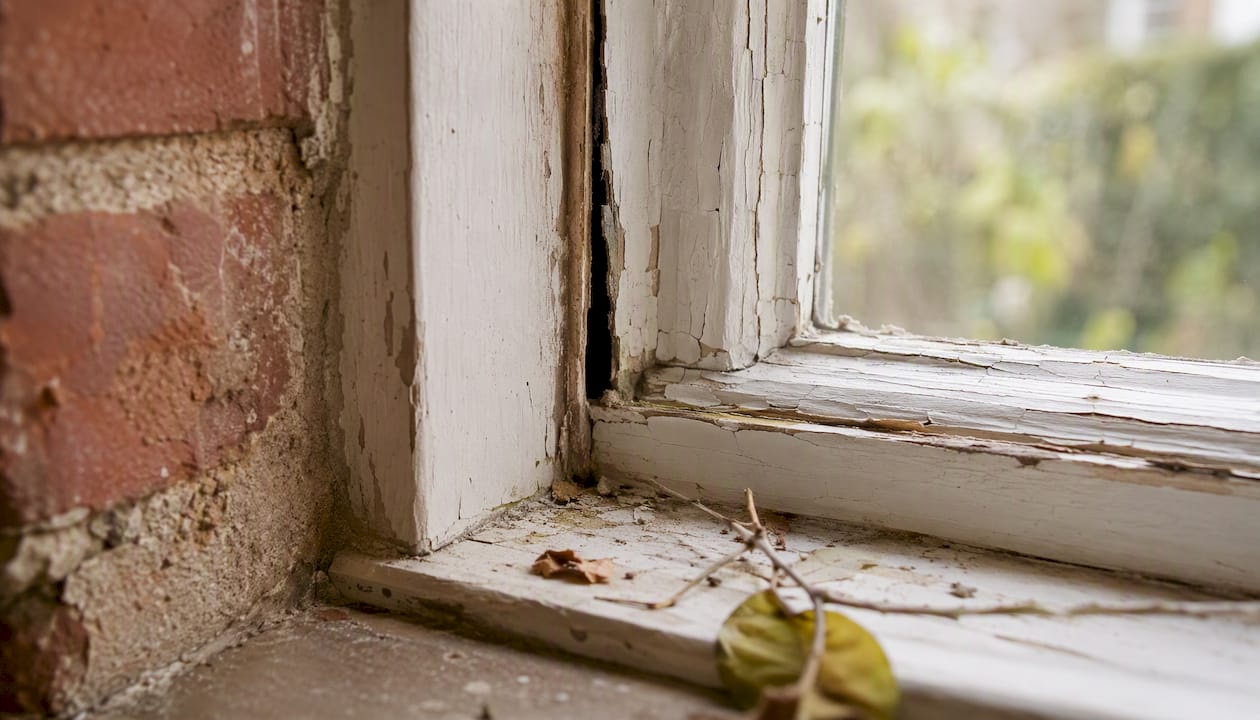
Older timber window frames are especially prone to cracking as the wood expands and contracts through UK winters and summers. Failed silicone sealant around the frame perimeter, or gaps where the frame meets the brickwork, creates a direct corridor from outside to inside. Check ground-floor windows first, particularly those adjacent to flower beds or paving where nests are common. Ants running along the window sill or appearing on the internal ledge are a reliable indicator.
3. Skirting boards and floorboard gaps
Indoor ant trails frequently begin at skirting boards, particularly in older properties where boards have pulled away from the wall or floor. Gaps between floorboards, especially in Victorian and Edwardian terraces common across London, can connect directly to sub-floor voids where ant colonies establish satellite nests. Under-sill gaps, where the window board meets the wall, are another overlooked route. If you see ants appearing mid-room with no obvious wall trail, check the skirting boards and any gaps around radiator pipes at floor level.
4. Cracks in exterior walls, foundations, and air bricks
Hairline cracks in render or brickwork, particularly around bay windows and at the junction between extensions and the main structure, are common ant entry points in walls. Air bricks, which are required for sub-floor ventilation in older UK properties, have open perforations that ants pass through freely. Check the external face of your property at ground level, paying attention to any visible cracks. Foundation cracks and gaps around utilities are among the most consistently reported structural routes, and in UK homes, soil movement after dry periods followed by rain may open new cracks.
Understanding why basement and foundation cracks appear helps you assess whether a crack is cosmetic or a genuine structural concern that needs a builder’s attention before sealing.
5. Vents, ductwork, and pipe penetrations
Dryer vents, bathroom extractor fans, and the gaps around boiler flues are concealed routes that homeowners rarely inspect. The gap between a pipe and the wall it passes through is often left unsealed during installation, particularly in older properties or after renovation work. Ants travelling through wall cavities can emerge anywhere along a pipe run, which is why trails sometimes appear in unexpected locations such as upstairs bathrooms or behind kitchen units. Check where gas pipes, water pipes, and electrical conduits enter the building externally.
6. Patios, paving, and garden edges
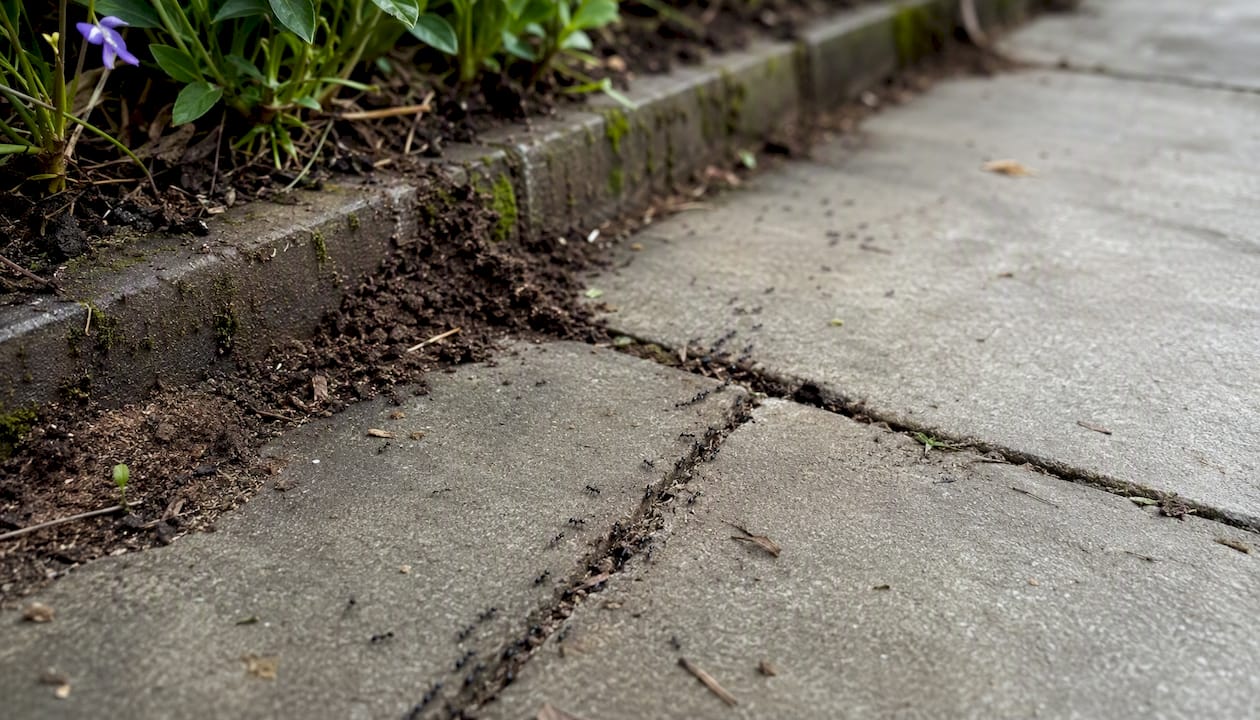
Ants nest readily beneath paving slabs, in the joints between flags, and along the mortar line where a patio meets the house wall. These nests sit within metres of the property, and a direct trail from nest to threshold can form overnight. Look for fine soil or sand pushed up between paving joints, which is a reliable sign of a nest below. The trail from a patio nest typically runs along the wall base before entering through a door threshold or a crack in the pointing.
7. Utility meter boxes and external electrical fittings
Meter boxes, junction boxes, and external socket covers are rarely sealed tightly against the wall. The cavity behind them connects to the internal wall void, giving ants a sheltered, undisturbed route indoors. This is a particularly common route for black garden ants (Lasius niger), the species responsible for the majority of domestic infestations in the UK. Check the seal around any external fitting at ground or low level.
8. Roof edges, soffits, and high-level gaps
While most ant activity is at ground level, some species, particularly ghost ants and pharaoh ants in heated buildings, travel along external walls and enter at roof level through gaps in soffits, fascia boards, or where roof tiles meet the wall. This is less common in standard domestic properties but worth noting in flats and converted buildings where the roof space is shared. Ants entering at height tend to appear in upper-floor rooms or in ceiling voids.
9. Internal wall sockets and switch plates
Electrical back boxes are rarely sealed to the wall cavity, and ants moving through internal wall voids can emerge through the gap around a socket or switch plate. This is often a secondary entry point rather than the primary one, meaning the ants are already inside the wall structure and using the socket as an exit. If ants appear around a socket, the primary entry point is almost certainly external and lower down.
10. Gaps around kitchen and bathroom units
The junction between fitted kitchen units and the wall, particularly where units meet the floor, is a frequent indoor emergence point. Silicone sealant in kitchens and bathrooms degrades with heat and moisture, and once it fails, the gap behind the unit connects to the wall void. Ants are drawn to these areas by food residue, grease, and moisture, making them both an attractant and a route simultaneously.
Why ants come indoors: behaviour, seasonal patterns, and pheromone trails
Ants enter homes for three reasons: food, moisture, and shelter. In the UK, ant activity can peak between April and September, with the busiest period typically falling in June and July when colonies are at maximum size and foraging pressure is highest. After heavy summer rain, flooded nests push workers indoors in search of dry ground, which is why moisture and shelter drive indoor movement as much as food does. Kitchens and bathrooms see surges after prolonged wet weather for exactly this reason.
The pheromone trail mechanism is what turns a single scout into a full infestation. A scout finds a food or moisture source, returns to the nest, and lays a chemical trail that nestmates follow. The trail strengthens with each returning worker, producing rapid recruitment. This is why a handful of ants on a Monday morning can become a dense trail by Tuesday afternoon. Cleaning the trail with a surface spray removes the chemical signal temporarily, but unless the entry point is sealed, scouts will re-establish a new trail within hours.
Key seasonal notes for UK homeowners:
- Spring (March–May): Queens emerge to establish new nests; scout activity increases near foundations and patios.
- Summer (June–August): Peak foraging; flying ant days occur when humidity and temperature align, typically in July.
- Autumn (September–October): Colonies begin retreating; ants may enter seeking warmth as outdoor temperatures drop.
- Winter: Black garden ants are largely dormant outdoors, but pharaoh ants and ghost ants in heated buildings remain active year-round.
How to find where ants are entering your home
A systematic approach is far more effective than random sealing. Follow these steps in order.
- Follow the live trail. Start where you see the most ants and trace the line in both directions: towards the food source and back towards the wall or floor. Use a torch at night when trails are often more active and easier to follow.
- Check the external face of the building. Go outside and look at the point on the wall that corresponds to where the trail disappears indoors. Look for cracks, failed pointing, or gaps around pipes.
- Use talc or flour as a detection aid. Dust a thin line of talc across a suspected entry area. Ants disturb the powder as they cross it, confirming the exact crossing point.
- Place sticky-paper checkpoints. Lay strips of sticky paper perpendicular to the suspected trail near skirting boards or door thresholds. The pattern of trapped ants shows the direction of travel.
- Check utility penetrations. Run your hand along external pipe entries and vent covers, feeling for air movement that indicates an unsealed gap.
- Inspect wall sockets near the trail. Remove the socket cover plate carefully and look for ant activity in the back box cavity.
Pro Tip: Renter-safe temporary blocking: press a strip of removable draught-seal foam tape over a suspected gap. If the tape shows disturbance or ants appear around its edges within 24 hours, you have found the entry point. Remove the tape cleanly without damaging the surface.
For a broader look at signs of insect infestations that may indicate more than one pest species is active, a property-wide check is worth doing at the same time.
Avoid using aerosol sprays near children or pets during the detection phase. If you need to deter ants temporarily while locating the source, use a physical barrier rather than a chemical one.
How to seal each entry point effectively
The right material depends on the gap type, the surface, and whether you own or rent the property.
Materials for permanent sealing (homeowners):
- Silicone caulk: Best for window frames, skirting board junctions, and gaps around pipe penetrations. Use a low-modulus silicone rated for exterior use on external gaps.
- Expanding foam: Suitable for larger voids around utility entries and behind meter boxes. Trim flush once cured and paint over if visible.
- Galvanised mesh or air-brick covers: Fit over air bricks to maintain ventilation while blocking ant access. Mesh aperture of 1.5 mm or smaller is effective against black garden ants.
- Door draught excluders: Replace worn threshold seals with brush-strip or rubber-fin excluders rated for external doors.
- Flexible sealant for utilities: Use a permanently flexible sealant (not rigid filler) around boiler flues and pipe penetrations to accommodate thermal movement.
Renter-friendly alternatives:
- Adhesive-backed draught-seal foam tape for door and window frames, removable without surface damage.
- Temporary mesh held with removable adhesive clips over air bricks.
- Removable silicone strips (sold as bath sealant tape) for skirting board junctions.
If the entry point involves a structural crack or a failed seal around a landlord’s fixture, notify your landlord in writing. Structural proofing is the landlord’s responsibility under the Landlord and Tenant Act 1985 where it relates to the structure and exterior of the property.
Pro Tip: Never seal an air brick completely. Sub-floor ventilation prevents timber decay and condensation, which would create a far more serious problem than ants. Use a mesh cover, not solid filler.
For UK homeowner sealing steps specific to each room type, the Pestcontrol24london guide covers room-by-room proofing in detail.
DIY control: baits, traps, and sprays
Gel baits and bait stations consistently outperform surface sprays for colony control. The reason is trophallaxis: worker ants carry bait back to the nest and share it with nestmates, including the queen. A surface spray kills only the ants it contacts, leaving the colony intact and able to send new foragers within days. Understanding ant colony structure makes it clear why targeting the nest through baiting is the only approach that produces lasting results.
| Approach | Pros | Cons |
|---|---|---|
| Gel bait / bait station | Reaches the nest via trophallaxis; low disruption | Takes several days; must not be disturbed |
| Surface spray | Fast knockdown of visible ants | Does not reach the nest; disperses pheromone trails |
| Powder insecticide | Useful in dry voids and cracks | Hazardous if inhaled; not suitable near food prep |
| DIY home remedies | No chemical exposure | Largely ineffective against established colonies |
Placement and safety guidance:
- Place bait stations directly on the ant trail, as close to the entry point as possible, not in food preparation areas.
- Keep bait stations out of reach of children and pets. Most gel baits contain boric acid or fipronil; check the product label for specific precautions.
- Do not spray near bait stations. Insecticide residue deters ants from taking the bait, which defeats the purpose entirely.
- Avoid random spraying that disperses the pheromone trail into multiple smaller trails, making the infestation harder to track.
For safe pest removal guidance covering households with children and pets, the Pestcontrol24london safety guide is a practical reference before you purchase any product.
Good sanitation reduces the attractant load significantly. Commercial cleaning regimes that remove grease and food residue are a useful model for domestic kitchens, particularly around appliances and under units where residue accumulates unseen.
When to call a professional pest controller
DIY baiting works well for straightforward black garden ant trails entering through a single, identifiable point. Call a professional when:
- Trails persist for more than two weeks despite correctly placed bait.
- Ants are appearing in multiple rooms or on upper floors, suggesting internal wall void activity.
- You suspect carpenter ants or pharaoh ants, both of which require different treatment protocols.
- The entry point is structural (a foundation crack, a failed damp-proof course junction) and needs a builder’s assessment alongside proofing.
- There is a large indoor nest, identifiable by a consistent emergence point with no clear external trail.
A professional inspection from a BPCA-qualified technician covers more than surface treatment. It includes a systematic check of wall voids, sub-floor spaces, drainage runs, and external nest locations. The technician will identify the ant species, which matters because pharaoh ants, for example, respond poorly to standard gel baits and require a targeted programme. Ask for a written report detailing the entry points found, the species identified, and the treatment plan.
Pro Tip: Ask whether the inspection includes a drain survey. Ant activity around drains and utility runs is common in London properties, and a camera survey can identify concealed entry routes that a visual inspection misses.
Post-treatment, a sanitisation service removes pheromone residue and food debris that would otherwise attract new scouts, reducing the likelihood of re-infestation.
Cost and timescale vary by property size and infestation severity. A single-visit treatment for a standard domestic property typically resolves straightforward infestations, while structural proofing or repeat treatments for pharaoh ants may require a programme of visits. Ask for a written quote before work begins.
A practical perspective on ant entry points
The calls that come in most frequently at Pestcontrol24london involve kitchen thresholds and damp skirting boards, and that pattern holds across London properties of every age and type. What surprises most homeowners is not where the ants are entering, but how long the entry point has been there before the infestation becomes visible. A gap that has existed for years may only become active when a colony reaches a certain size, or when a wet summer pushes a waterlogged nest to seek drier ground indoors.
The counterintuitive pattern worth noting: in London’s older terraced stock, the entry point is often not at ground floor at all. Ants travelling through party wall cavities can emerge at first-floor level, appearing in bedrooms or around upstairs sockets, while the actual nest is in the garden two properties away. Treating the visible trail without tracing it to its external origin is why many DIY attempts fail.
Pestcontrol24london’s BPCA-qualified technicians carry out exactly this kind of systematic trace, from the visible trail back through the wall void to the external nest or entry point, before any treatment is applied. That sequence, inspect first, treat second, proof third, is what produces a lasting result rather than a temporary reduction in numbers.
Sources
The following sources informed the behavioural, structural, and practical guidance in this article: